Does Dead Mold Need to Be Removed? Yes, Here's Why
Yes. The EPA’s position is one sentence: “Dead mold may still cause allergic reactions in some people, so it is not enough to simply kill the mold, it must also be removed.” The allergenic material is in the spores, and the fragments carry the same antigens, so killing a colony does not take it out of the room.
The short answer, and the sentence it rests on
That EPA sentence comes from its Brief Guide to Mold, Moisture and Your Home, and it carries the whole answer. EPA puts it more bluntly in its remediation guide for schools and commercial buildings: “It is necessary to clean up mold contamination, not just to kill the mold. Dead mold is still allergenic, and some dead molds are potentially toxic.” Note the scope there: EPA says some, and it is describing the material, not predicting what any particular patch will do to any particular person. What the evidence does and does not support on mold and illness is its own subject, and we cover it in is black mold dangerous.
Killing mold and removing mold are two different jobs. The first changes whether something is growing. The second changes what is left in your home.
“Removed” is plain in practice. Porous material that is moldy comes out and goes in a bag. Hard surfaces get scrubbed clean. Then the water source gets fixed. That is the full definition, and the rest of this guide is the reasons behind it and how it plays out in a Phoenix house.
Most pages on this question quote the EPA line and stop. The more useful part is the mechanism, because it explains why a patch that looks dried out and finished is a bad candidate for leaving alone.
Why killing mold doesn’t remove the health problem
The allergy trouble does not come from a living colony alone. It comes from the material mold is made of: spores, and smaller pieces of the organism.
A 2002 laboratory study measured exactly that. Górny and colleagues, in Applied and Environmental Microbiology, aerosolized three common indoor molds (Aspergillus versicolor, Penicillium melinii, and Cladosporium cladosporioides) from agar plates and white ceiling tiles, and counted what came off with an optical particle counter. Their finding: “the fragments are released in higher numbers (up to 320 times) than the spores.” The fragments were smaller than a single spore: 1.6 µm was the cutoff the authors used to separate fragments from spores in the count. They reported that “fragments and spores share common antigens, which not only confirmed the fungal origin of the fragments but also established their potential biological relevance.”
The part that matters for dried-out mold is the humidity they chose. They ran the experiment at 32 to 40% relative humidity on purpose, to “represent the worst-case scenario, as fungal propagules have been shown to be aerosolized more easily when the air is dry.” Dry air makes this material easier to throw into the air, not harder.
Here is what that study does and does not show:
- It was a laboratory test with air blown across the surface, not a measurement of a disturbed attic or garage. The colonies were alive and actively grown for the test, raised at 97 to 99% relative humidity before the dry air was applied.
- It did not compare dead mold against living mold. It showed that fragments release far more readily than spores and carry the same antigens as the spores.
- So the honest reading is not “dead mold is 320 times more dangerous.” It is that dry, crumbly growth is the wrong thing to leave in place, and the wrong thing to scrape or brush around.
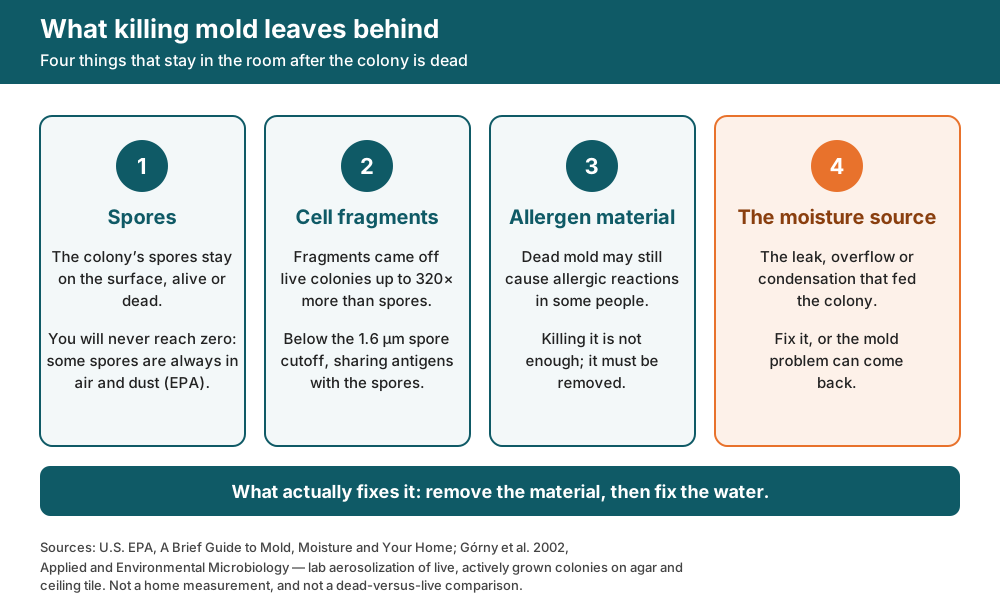
This is also why removal is the goal and sterility is not. EPA is blunt about the second one: “It is impossible to get rid of all mold and mold spores indoors; some mold spores will be found floating through the air and in house dust.” You are never chasing zero. You are taking out the growth, the material it grew on, and the water that fed it.
“Dried out” is not the same as “dead”
The second trap is the word dead. A patch that has dried, faded, and gone crumbly is usually described as dead. A 2016 study suggests that is often not what happened.
Segers and colleagues, also in Applied and Environmental Microbiology, held dormant spores (conidia) of three indoor species (Aspergillus niger, Cladosporium halotolerans, and Penicillium rubens) for one week at controlled humidity, then gave them moisture again. After a week at 33% relative humidity, “about 50% of the conidia (stage I) of the 3 species germinated after transfer to medium with an aw of 0.96.” About half woke up.
Keep that result at its real size: one week, three species, laboratory conditions. It does not say mold survives for years, and it does not say all mold survives. It says dry air alone is not a reliable kill. The same paper found the opposite for mold that had already started growing: swollen spores, germlings and microcolonies of two of the three species, A. niger and P. rubens, “could not reinitiate growth when retransferred from an RH below 75%.” The dormant spores are the ones that ride it out.
Whether sun, heat, or other treatments actually kill mold is a separate question, and we answered it where it belongs: does the Arizona sun kill mold and does heat kill mold. This guide picks up in the cases where something did kill it, and asks what still has to happen.
Can you even tell if mold is dead?
Not by looking. Color, texture, and dryness do not separate dormant from dead from living.
Spore-trap counts and tape-lifts will not settle it either, because they count particles whether those particles are alive or not. The method that tells living from dead is culture (viable) sampling, which grows what is alive in a lab, and it takes a week or two and misses what will not grow on the medium. Our guide to mold testing methods explains the difference.
Here is the take most pages avoid: for a patch you can already see, it is the wrong question. Whether the mold is dormant, dead, or growing, the answer to what you should do is identical. The material is removed or cleaned off, and the moisture source is fixed. Paying to find out which of the three it is changes nothing about the work.
The Phoenix version of this question
Phoenix makes this mistake more tempting than a humid city does. Our dry air and hot attics stop active growth for long stretches, and homeowners read that as the problem fixing itself. The stain is faded, nothing looks fuzzy, and the patch seems finished.
Two things go wrong from there.
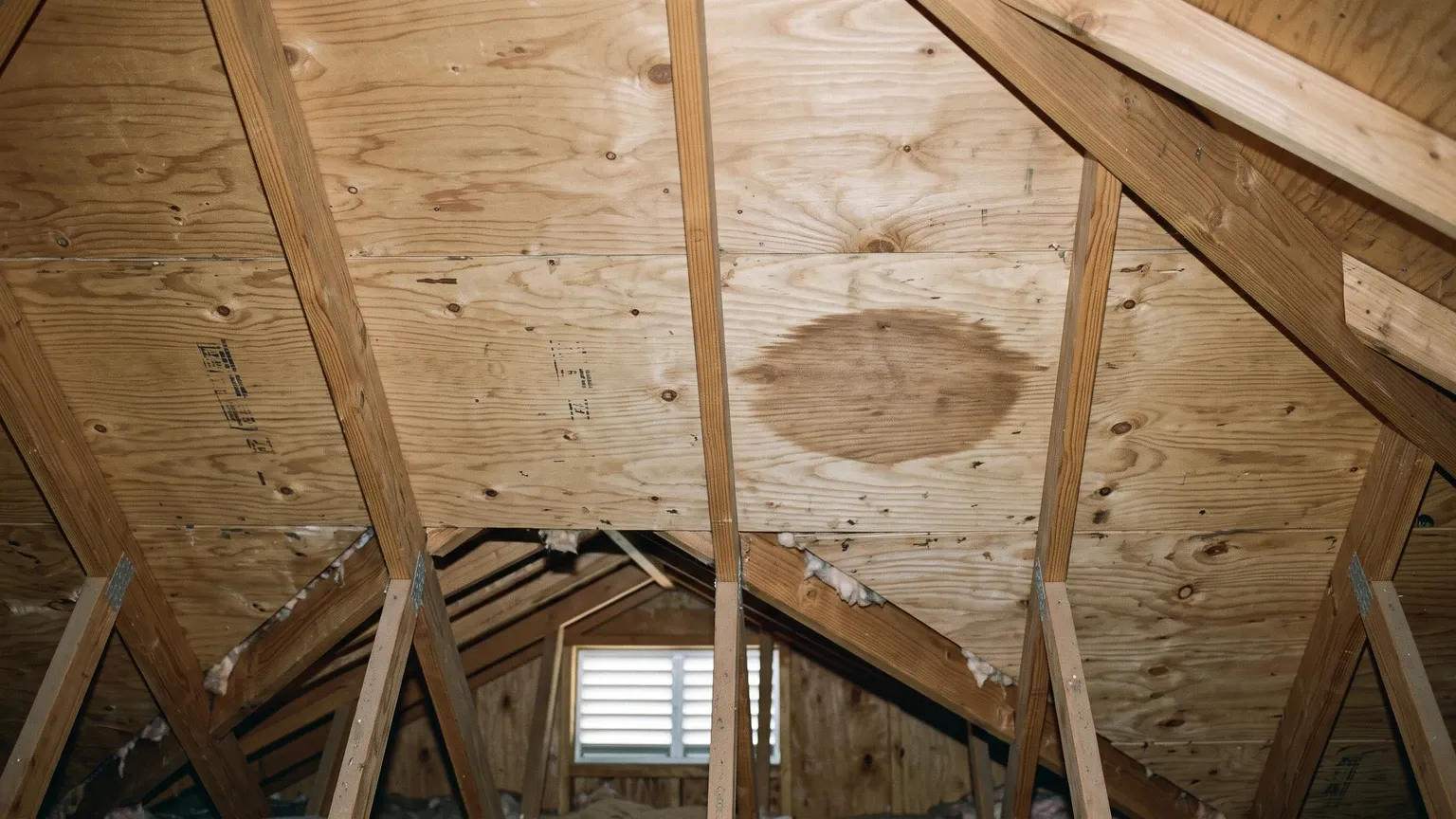
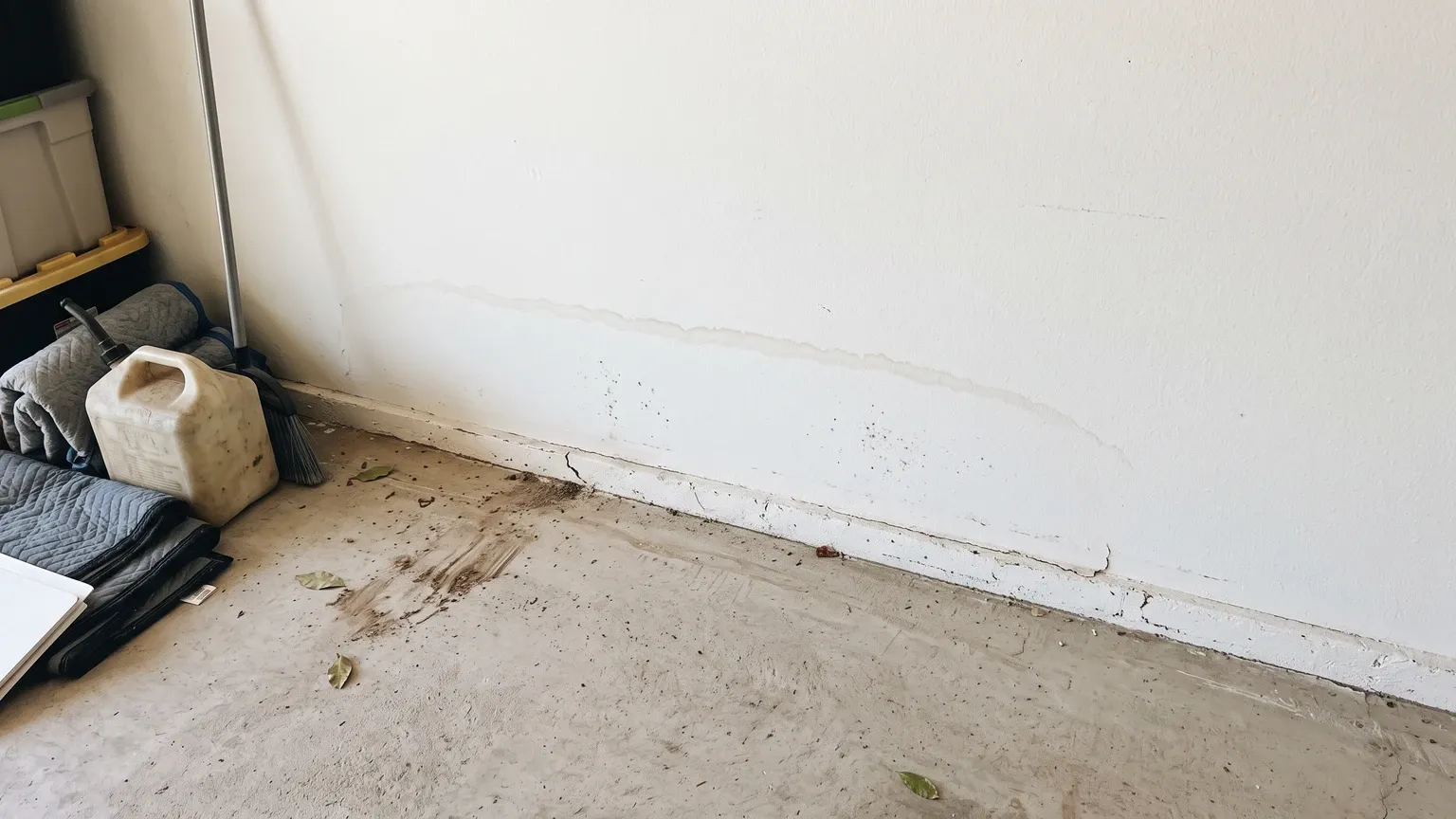
Dry, friable material gets left in place. Growth on attic sheathing or a garage wall that has been dried out is dry and friable, and the fragment study is the reason that matters: brittle material under moving air is what sheds. The 32 to 40% humidity those experiments used as their dry worst case is not an exotic condition either: it sits inside the band EPA calls ideal — the agency says to keep indoor humidity below 60%, ideally between 30 and 50%. Dry indoor air is the goal. It just does not make dried-out growth safe to leave. That is the material you least want to leave and disturb later with a broom or a storage-box shuffle.
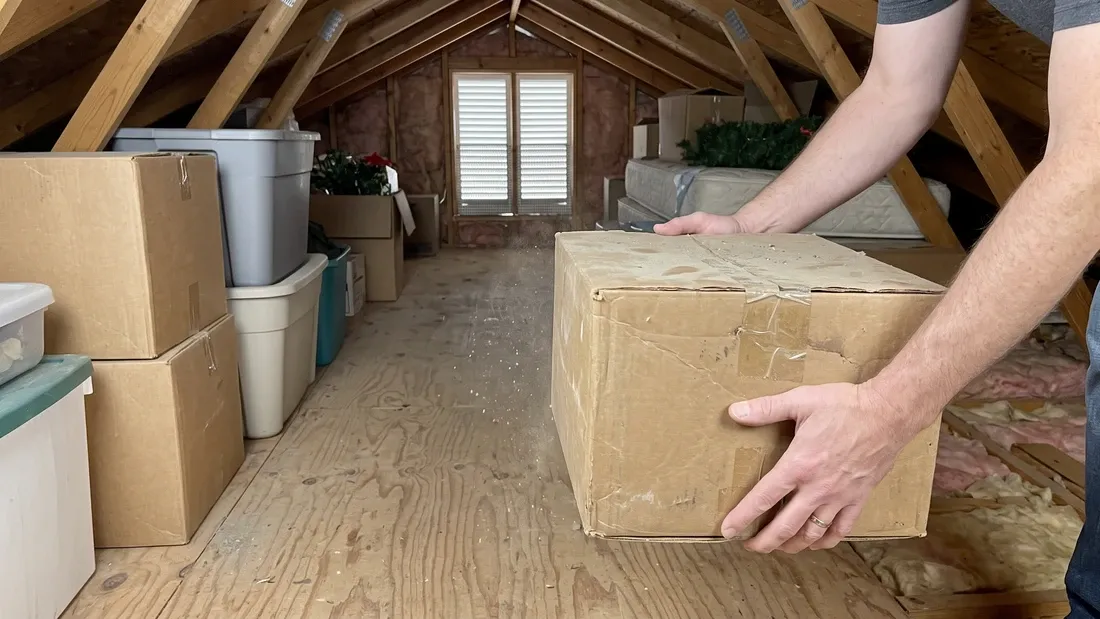
The next wetting event restarts it. If the patch is dormant rather than dead, the next monsoon roof leak, AC condensate overflow, slab leak, or burst pipe is what wakes it. Our attic mold guide walks through how those events show up above the ceiling.
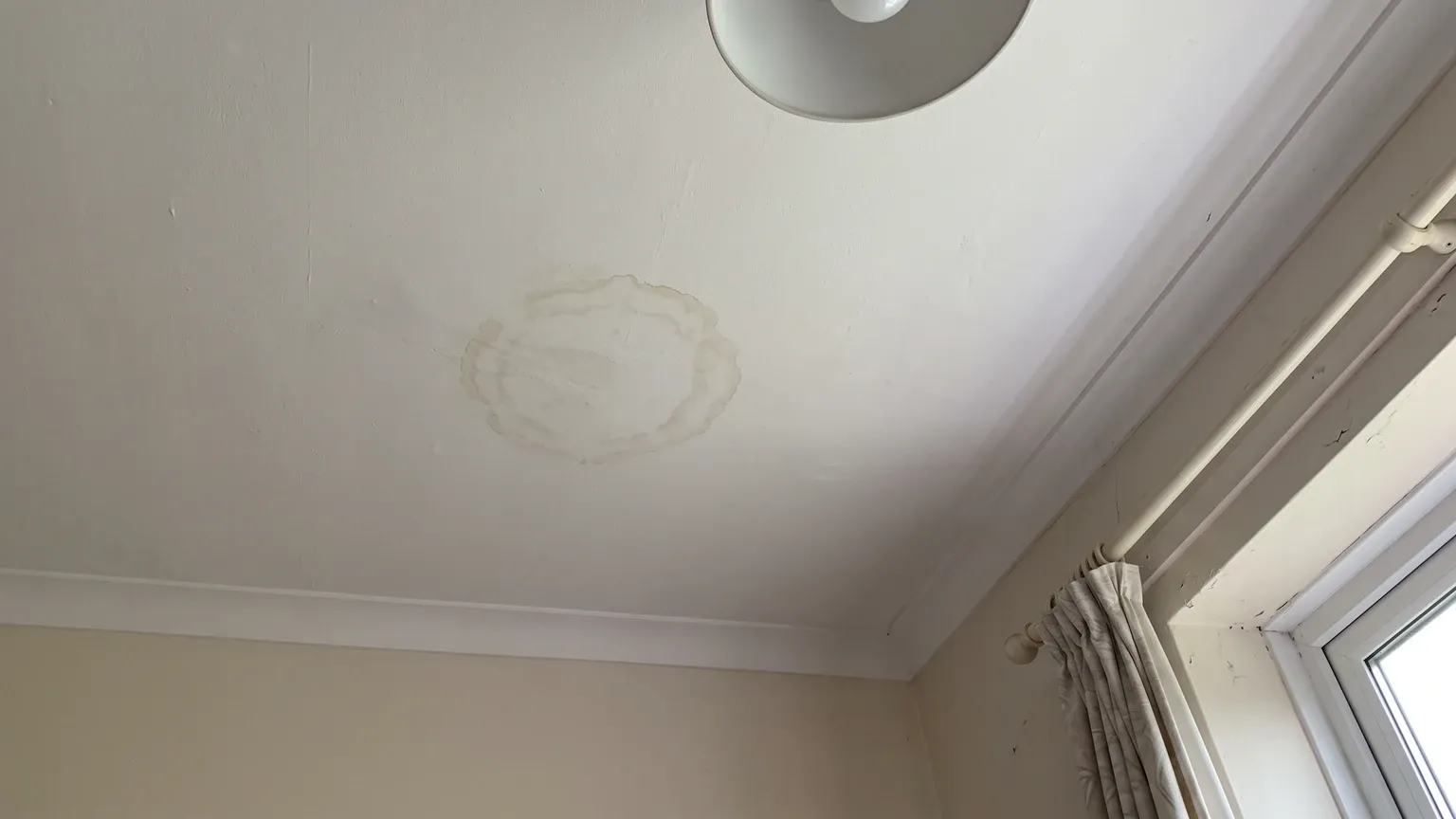
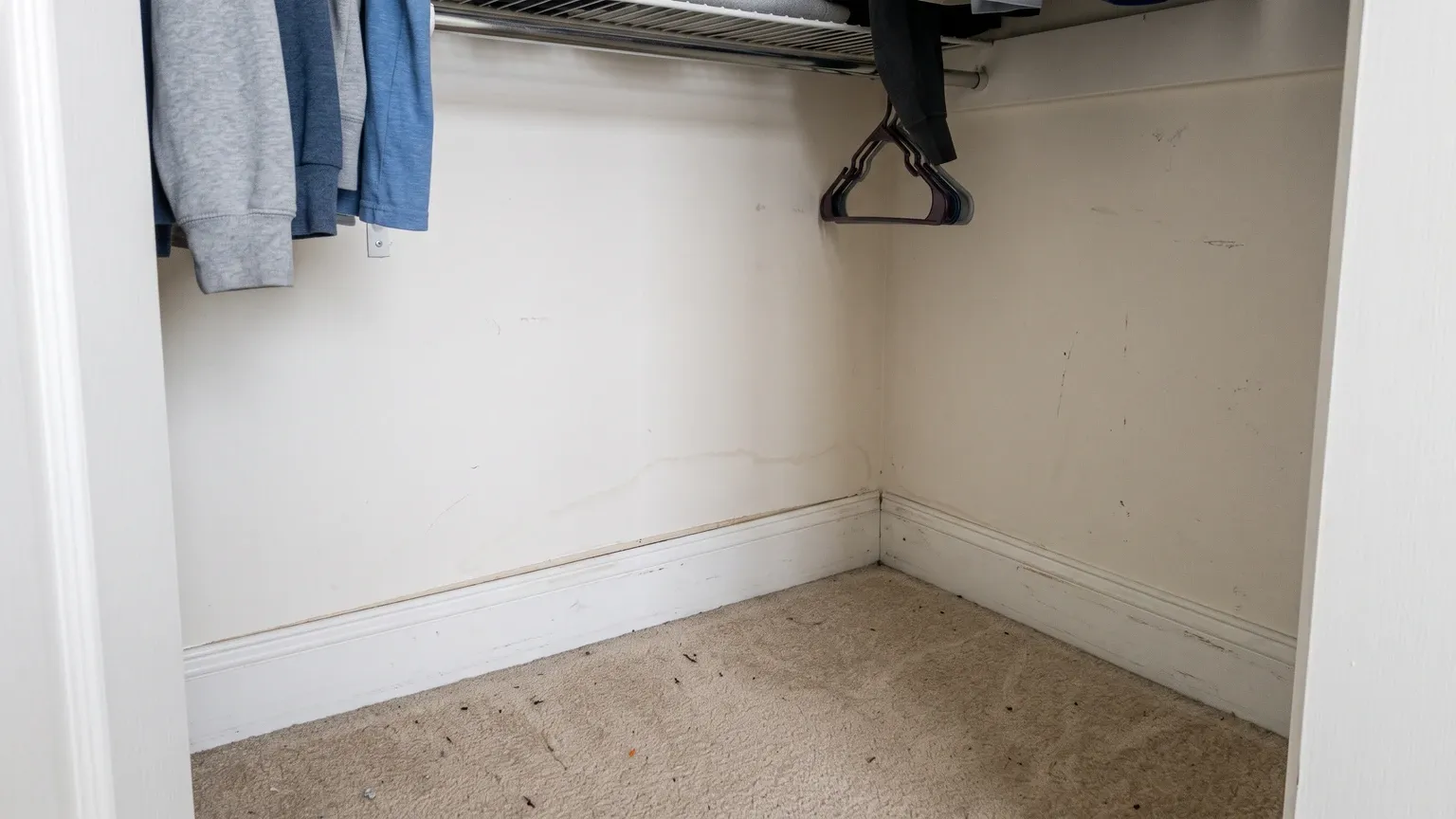
An old, dry ring on a ceiling is a record of water that got in once. The useful question is whether the source is fixed, not whether the stain looks active.
What “removed” actually means, material by material
Porous material. EPA is direct: “Absorbent or porous materials, such as ceiling tiles and carpet, may have to be thrown away if they become moldy.” The reason is in the same agency’s remediation guide: “Since molds will infiltrate porous substances and grow on or fill in empty spaces or crevices, the mold can be difficult or impossible to remove completely.” Cutting out the affected piece is removal.
Non-porous and hard surfaces. Glass, metal, painted trim, and sealed tile can be cleaned. EPA’s instruction is one line: “Scrub mold off hard surfaces with detergent and water, and dry completely.” For the dust, EPA recommends HEPA vacuums “for final cleanup of remediation areas after materials have been thoroughly dried and contaminated materials removed.” Damp wiping and a HEPA vacuum beat dry-scraping, which is the thing most likely to put this material in the air.
Wear the basics. EPA’s minimum for disturbing mold is specific and modest: “The minimum PPE is an N-95 respirator, gloves, and eye protection.” The reason is the thread running through this whole guide: “If the remediation job disturbs mold and mold spores become airborne, then the risk of respiratory exposure goes up.”
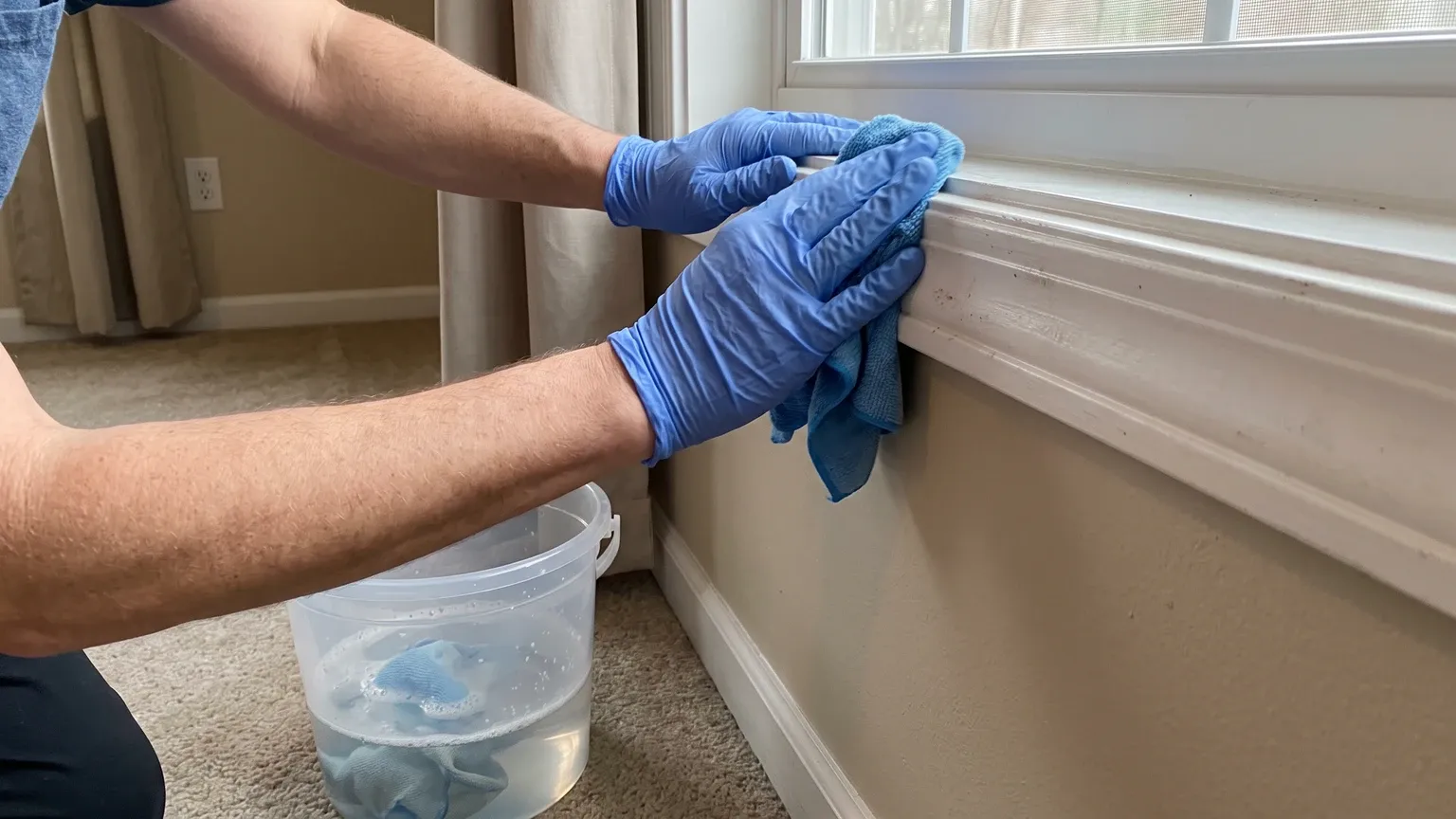
Skip the biocide. EPA says “the use of a chemical or biocide that kills organisms such as mold (chlorine bleach, for example) is not recommended as a routine practice during mold cleanup.” That follows from everything above: killing is not the job. We cover that in does bleach kill mold and does vinegar kill mold.
Know the size line. EPA says that if the moldy area is less than about 10 square feet (roughly a 3 ft. by 3 ft. patch), “in most cases, you can handle the job yourself.” Our guide on whether you can remove mold yourself covers the gear and the steps. Past that size, inside a wall, or in an attic with insulation involved, that is a mold removal job, and you can request a free quote to have it handled.
Don’t seal over it. Paint and sealant do not remove anything. Our comparison of encapsulation versus removal covers when coating is and is not appropriate.
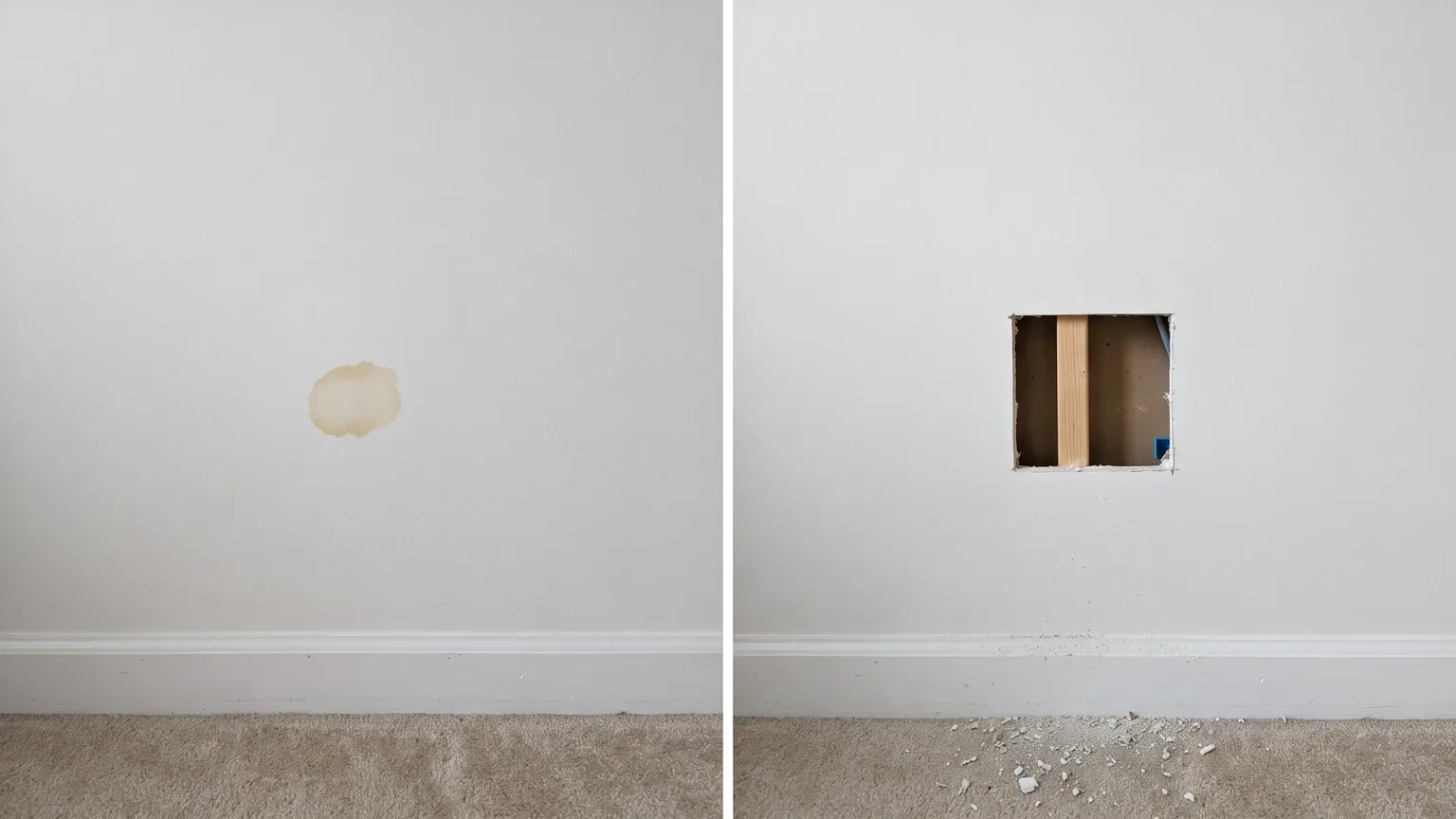
Fix the water, too. A clean, dry surface that stays damp or gets wet again is how the problem returns.
When a stain is just a stain
After correct removal, a stain can remain, especially on wood and concrete. A discolored board that has been cleaned and dried and stays dry is a cosmetic mark, not a regrowing colony.
What separates a leftover stain from residual growth is mostly behavior over time:
- Texture. A flat mark is likely a stain. Raised, fuzzy, powdery, or spreading material is not.
- Location. Growth keeps showing up at a moisture source: a corner that stays damp, a pipe, a roof penetration.
- Smell. A musty smell that returns points to active moisture, not a leftover tint.
Do not chase a stain with bleach, for the reasons above. Our guides to mold on wood and mold on concrete cover when a stain on those materials is worth worrying about. For the rest of the cluster, browse the mold guides hub.
Sources
- U.S. EPA — A Brief Guide to Mold, Moisture and Your Home: the dead-mold sentence, the biocide statement, the 10-square-foot DIY guideline, the porous-materials statement, the statement that mold spores cannot be fully eliminated indoors, and the indoor-humidity recommendation (below 60%, ideally 30 to 50%).
- U.S. EPA — Mold Remediation in Schools and Commercial Buildings: that it is necessary to clean up mold contamination and not just kill it, that dead mold is still allergenic and some dead molds are potentially toxic, the HEPA-vacuum recommendation, the N-95/gloves/eye-protection minimum PPE, the airborne-exposure statement, and why mold is difficult or impossible to remove completely from porous substances.
- U.S. EPA — Mold Cleanup in Your Home: scrubbing mold off hard surfaces with detergent and water and drying completely.
- Górny, Reponen, Willeke, Schmechel, Robine, Boissier, Grinshpun — Fungal Fragments as Indoor Air Biocontaminants, Applied and Environmental Microbiology, 2002: fragments released in up to 320 times higher numbers than spores, 1.6 µm as the counting cutoff separating fragments from spores, shared antigens with spores, and the 32 to 40% relative humidity worst-case setup. Laboratory aerosolization of live colonies grown at 97 to 99% relative humidity on agar and ceiling tile. It did not compare dead mold with living mold.
- Segers, van Laarhoven, Huinink, Adan, Wösten, Dijksterhuis — The Indoor Fungus Cladosporium halotolerans Survives Humidity Dynamics Markedly Better than Aspergillus niger and Penicillium rubens despite Less Growth at Lowered Steady-State Water Activity, Applied and Environmental Microbiology, 2016: about 50% of dormant conidia of three species germinated after one week at 33% relative humidity, while swollen conidia, germlings and microcolonies of A. niger and P. rubens could not reinitiate growth from an RH below 75%.