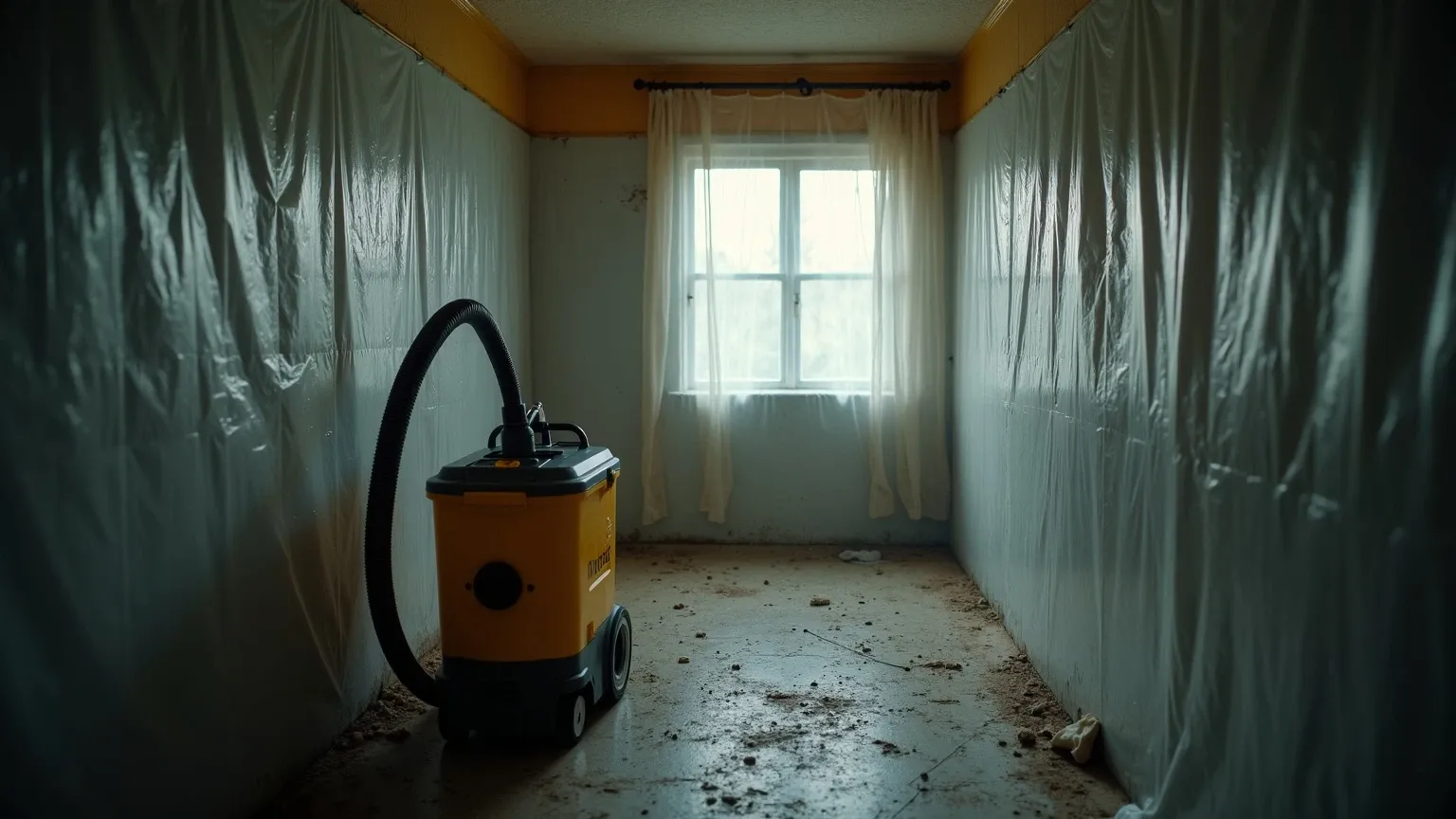
Phoenix Mold Remediation Services
Larger mold problem — after a flood, a slab leak, or hidden growth in the walls? Professional mold remediation to the IICRC S520 standard: contained, HEPA-filtered, and verified back to a healthy baseline. Free, no-obligation quote.
- IICRC S520 containment & HEPA air scrubbing
- Full removal of mold-damaged materials
- Structural drying & moisture-source repair
- Clearance testing on larger jobs — verified done
- Free, no-obligation quotes Know the cost before you commit
- Local Phoenix-metro pros People who know desert mold
- Fast response Mold spreads — we move quickly
- Honest pricing, no scare tactics Only fix what needs fixing
Professional mold remediation to the IICRC S520 standard
Mold remediation in Phoenix is the structured, industry-standard process for safely returning a home with widespread or hidden mold back to a normal, healthy condition. Remediation is more than wiping a surface: it seals off the affected area with plastic containment, filters the air with HEPA-scrubbing units running under negative pressure, physically removes mold-damaged porous materials (drywall, insulation, carpet padding, ceiling tile), dries the structure back to a normal baseline with commercial equipment, repairs the underlying moisture source, and verifies the result with post-work clearance testing on larger jobs. The reference framework is the ANSI/IICRC S520 Standard for Professional Mold Remediation — the industry consensus standard that reputable Phoenix mold remediation companies work to.
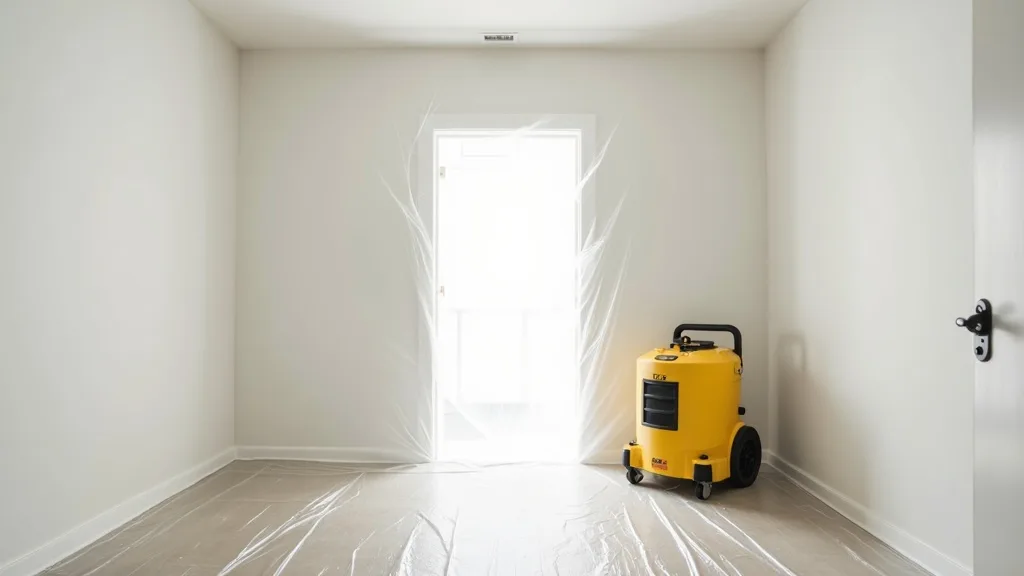
Remediation is what you want when mold is more than a small surface patch: after a slab leak, a monsoon-season flood, a burst pipe that saturated multiple rooms, a chronic hidden AC condensate leak that seeded mold behind a ceiling for months, or a swamp cooler that pushed mold spores through the ductwork. Remediation is also what you want when a real estate transaction requires the work to be documented — buyer, seller, agent, and insurance all need paperwork that a professional-scope remediation produces.
Mold remediation vs. mold removal — which service applies?
Mold removal generally describes smaller, contained cleanup jobs — a moldy shower surround, a bathroom ceiling spot, a corner of drywall under a bathroom vanity — where a small area of visible mold is cut out, the moisture source is fixed, and the space is rebuilt. Mold remediation is the larger-scope, more-documented process for widespread, hidden, or high-consequence mold: full containment, HEPA air scrubbing, comprehensive material removal, structural drying, and clearance testing. The terms overlap in casual usage and the boundary between them isn't legally defined in Arizona. The important thing is that the scope of the work matches the scope of the problem. When the extent is unclear, a mold inspection with moisture mapping is the honest first step — and smaller, contained jobs may only need straightforward mold removal.
When to reach for full mold remediation
Full IICRC S520 remediation is the right scope when any of these apply:
- The mold covers more than about 10 square feet (roughly a 3-by-3-foot patch) — the EPA threshold above which professional work is recommended.
- Mold is inside walls, ceilings, or the HVAC system, not just on the surface — HVAC contamination especially requires full remediation because untreated ductwork redistributes spores every time the system runs.
- It followed a Category 3 water event — sewage backup, flood-from-outside, or standing water more than 48 hours old — because these events introduce contaminants beyond mold that require full-scope remediation.
- The mold has been growing for months, not days — most often a slow slab leak, a chronic AC condensate drip, or a swamp-cooler duct issue where the moisture source ran uninterrupted long enough for large hidden mold colonies to form.
- Someone in the home has asthma, allergies, an autoimmune condition, or a compromised immune system — sensitive occupants raise the bar on containment and clearance testing.
- You're buying or selling a Phoenix home and the mold needs to be documented, remediated to standard, and cleared in writing before closing.
If none of these apply, the job may only need mold removal — smaller, less-involved, and less expensive.
The professional mold remediation process, step by step
- Assessment and moisture mapping. Before any containment goes up, the affected area is mapped with moisture meters and, for hidden mold, thermal imaging cameras. The mold's extent, the water source, and the affected materials are all documented. On larger jobs an independent pre-remediation inspection produces a written scope of work.
- Full containment. Plastic sheeting seals every opening into the work area — doors, HVAC registers, windows. A HEPA-filtered air scrubber (500 to 2,000+ CFM) pulls air out of the containment to create negative air pressure, so airborne spores can't drift into clean parts of the home. For larger jobs a decontamination chamber (a two-zip-door plastic vestibule) lets workers move in and out without breaking containment.
- Continuous HEPA air filtration. The air scrubbers run 24/7 throughout the remediation, filtering spores from the contained air. Air changes per hour (ACH) are calculated for the containment volume — typically 4–6 ACH minimum during active work.
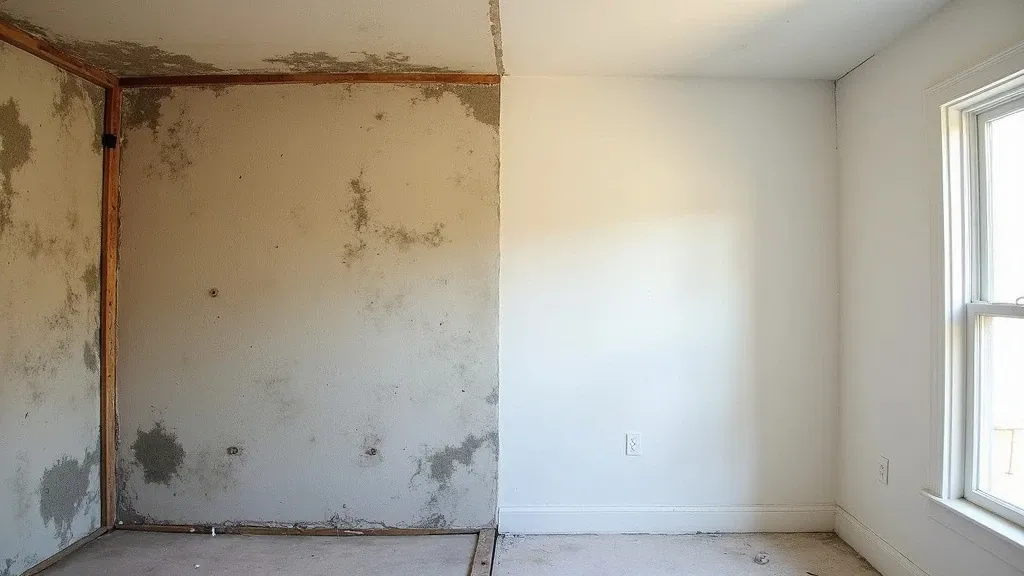
- Physical removal of mold-affected materials. Mold-damaged drywall, insulation, carpet, carpet padding, ceiling tile, and framing lumber with significant surface growth are cut out and bagged for disposal. The EPA and IICRC S520 both direct that porous materials with active mold be removed rather than cleaned in place, because mold hyphae grow into the material and cleaning the surface leaves the roots.
- HEPA vacuuming and antimicrobial cleaning of hard surfaces. Framing lumber, sealed wood, tile, sheet metal, and sealed concrete are HEPA-vacuumed and cleaned with EPA-registered antimicrobial products. Two HEPA-vacuum passes with wet-wipe cleaning in between is common practice.
- Structural drying. Commercial low-grain refrigerant (LGR) or desiccant dehumidifiers and centrifugal air movers run continuously until moisture readings in the framing, subfloor, and remaining materials return to a normal, dry baseline. In a Phoenix summer this typically takes 24–72 hours; in an evaporatively-cooled home with high indoor humidity it takes longer.
- Moisture-source repair. The AC condensate line is cleared and re-routed if needed. The slab leak is repaired by a licensed plumber. The roof breach is patched. The swamp-cooler ductwork is cleaned or replaced. This step is what makes the remediation a permanent fix rather than a temporary one.
- Clearance testing. On larger jobs and any real estate or insurance-driven remediation, an independent third-party inspector collects air samples from inside the remediated space and from an outdoor control. An AIHA-EMLAP-accredited lab analyzes and compares spore counts. The remediated area should have lower spore counts than outdoor air. Clearance testing is what turns "we finished the work" into "the home is verified back to baseline."
- Rebuild. Drywall goes back up, insulation is replaced, flooring and baseboards are reinstalled, and the finished surfaces are painted. Some remediation companies handle the rebuild in-house; others hand off to a general contractor.
Phoenix mold remediation: the jobs we see most
In the Valley, the biggest remediation jobs usually trace back to water that ran unseen for weeks or months. The pattern:
- Slab-leak remediation in older central Phoenix homes. Aging under-slab copper or galvanized plumbing in 1950s–1970s Arcadia, Coronado, Encanto, and Willo homes develops pinhole leaks that wick moisture up into subfloor and framing for months. By the time hardwood buckles or baseboards stain, mold has been growing under the floor across multiple rooms. Remediation here typically involves removing flooring, baseboards, and the lower 24 inches of drywall in affected rooms — the "flood cut" — plus subfloor drying and often subfloor replacement.
- Monsoon roof-leak attic remediation. Flat and low-slope roofs on Phoenix ranch and mid-century homes pond water during summer storms. A hairline crack in roofing membrane, a failed scupper flashing, or a lifted tile lets water into the attic where it soaks insulation and roof-deck sheathing. Attic remediation strips the affected insulation batts, cleans or removes the mold-stained sheathing, treats framing, and coordinates a roof repair to fix the source.
- Newer-build ceiling remediation from attic AC condensate. Two-story stucco homes in Ahwatukee, Desert Ridge, Laveen, Chandler, and Gilbert run AC through an attic air handler. When the condensate line clogs — which it does, with dust and algae — the overflow drips into the ceiling below the unit. Remediation cuts out the affected ceiling drywall (usually a 4-by-8 or larger section), addresses insulation, clears and reroutes the condensate line, and rebuilds.
- Whole-house water-damage remediation after a pipe burst or water-heater failure. A garage water heater failure or a burst supply line in the middle of the night can flood multiple rooms. If the water damage restoration crew arrives within 24 hours the remediation stays small. Beyond that window, especially in Phoenix summer heat, the job transitions to full remediation.
- Swamp-cooler HVAC remediation. Older Maryvale, Sunnyslope, and South Phoenix homes with under-maintained evaporative coolers grow mold inside the ductwork. HVAC remediation cleans or replaces the affected ducts, cleans registers, and coordinates a cooler service.
The common thread across all of these: by the time the mold is visible, it has been growing a while. That's why the desert actually hides bigger remediation jobs than a comparable humid-climate market — more on that in our desert mold guide.
Equipment and standards used in professional mold remediation
Professional Phoenix mold remediation uses commercial-grade equipment and follows documented protocols. HEPA-filtered air scrubbers (Nikro, Abatement Technologies, Phoenix, and similar) create negative-pressure containment. Commercial LGR dehumidifiers (Dri-Eaz, Phoenix, Ebac) with low-grain performance handle Phoenix's dry-air drying loads efficiently. Centrifugal and axial air movers speed structural drying. HEPA-filtered wet-dry vacuums clean settled spores from hard surfaces. Moisture meters (Delmhorst, Protimeter) and thermal imaging cameras (FLIR, Seek) find hidden wet zones. EPA-registered antimicrobials (Concrobium, Fiberlock, Sporicidin) are used on non-porous surfaces after physical removal. Air sampling for clearance testing goes to AIHA-EMLAP-accredited environmental labs (AeroTech, EMSL, EMLab P&K in Phoenix) for analysis.
If your mold problem started with active water — a burst pipe, an overflow, a flood — fast water damage restoration before mold takes hold can shrink or eliminate the remediation that would follow. Get a free, no-obligation quote for mold remediation using the form above, or see the Phoenix mold cost breakdown for pricing detail. For smaller contained jobs, straightforward mold removal may be the correct scope.
Frequently asked questions
What is professional mold remediation, and how is it different from mold removal?
Mold remediation is the structured, IICRC S520 process for returning a home with significant, hidden, or widespread mold back to a normal, healthy condition. Remediation includes containment, HEPA air scrubbing, physical removal of mold-damaged materials, structural drying, moisture-source repair, and post-work clearance testing. Mold removal typically describes a smaller, less-involved cleanup of a visible mold patch. The scope, safety controls, and documentation are what separate the two.
How much does mold remediation cost in Phoenix?
Most Phoenix mold remediation projects run $1,500 to $6,000, with smaller contained jobs sometimes coming in around $800–$1,200 and severe whole-house remediation after a slab leak, flood, or long-standing hidden mold running $10,000 or more. Cost drivers are the affected area size, the material involved, whether the HVAC system is contaminated, and clearance testing. For a full breakdown, see our Phoenix mold remediation cost guide.
Do I need full mold remediation or just mold removal?
The EPA suggests homeowners can generally handle mold under about 10 square feet themselves on hard surfaces. Above that threshold, or when mold is inside walls, ceilings, or HVAC ductwork, followed a sewage backup or flood, involves porous materials, or affects a home with someone who has asthma, allergies, or a compromised immune system — full remediation is the appropriate scope. A mold inspection settles the question when the extent is unclear.
What is containment and why is it a required step in mold remediation?
Containment is the sealed work area — plastic sheeting on all openings, with a HEPA-filtered air scrubber pulling air out of the space to create negative air pressure — that keeps mold spores from spreading through the home during removal. IICRC S520 treats containment as a fundamental control for any remediation beyond a small, localized job. Skipping it can turn a one-room mold problem into a whole-home spore contamination event and is one of the top reasons an amateur remediation fails.
How long does mold remediation take in a Phoenix home?
Most residential mold remediation projects take three to five days on the removal side, plus rebuild time afterward. Small contained jobs finish in one or two days. Severe water damage, whole-house mold contamination, or HVAC involvement can run a week or longer. Structural drying — moisture readings back to a normal, dry baseline — is often the pacing item, and in a Phoenix summer that happens faster than in more humid climates.
What is clearance testing after mold remediation?
Clearance testing is the third-party verification that confirms the affected area is back to a healthy baseline before drywall goes back up. An independent inspector collects air samples from inside the remediated zone and from an outdoor control, and an AIHA-EMLAP-accredited lab compares spore counts. The remediated space should have lower spore counts than outside. Clearance testing is not required for every job but is standard practice on larger remediation, HVAC contamination, and any situation where documentation is needed for a real estate transaction or insurance claim.
Does homeowners insurance cover mold remediation in Phoenix?
Sometimes. Arizona homeowners policies often cover mold remediation when it followed a sudden, covered event — a burst pipe, a water heater rupture, an appliance failure, or a wind-driven roof leak. Coverage is commonly capped ($5,000 or $10,000 caps are common) unless a specific mold rider was purchased. Gradual leaks, chronic AC condensate drips, deferred roof maintenance, and flood-from-outside water are commonly excluded. A licensed remediation contractor can document the cause professionally, which is what an adjuster needs.
Do you handle mold remediation companies work for real estate transactions?
Yes. Pre-listing remediation, disclosed-mold remediation before closing, and buyer-negotiated remediation are all common Phoenix jobs. These transactions require documentation the buyer and seller can both rely on: written scope, sourced moisture-cause documentation, containment photos, and post-work clearance test results from an independent inspector. See our guides on mold disclosure for Arizona home sales and mold found during a home inspection for the paperwork side.
Worried about mold in your Phoenix home?
Get a fast, free, no-obligation quote. No pressure, no scare tactics — just a straight answer.