How much does HVAC mold removal cost in Phoenix?
Removing mold from AC air ducts alone runs $600–$2,000. A full system job (air handler, coils, and ducts) runs $3,000–$10,000. HVAC mold is always its own line item, never folded into a room price. In Phoenix, the real surprise cost is the condensate-line or drain-pan repair, billed separately, and the mold returns if that source isn't fixed first.
Get my free HVAC mold quote
What HVAC mold removal actually costs in Phoenix
These ranges come from HomeGuide (2026), Bob Vila (2024), and SERVPRO (2026), cross-checked against our own 30-company Phoenix pricing study. They are estimates — not quotes. Your actual number depends on where the mold is, how far it has spread through the duct network, and whether the air handler and coils need treatment alongside the ducts.
| Scope | Typical Phoenix range | What it covers |
|---|---|---|
| HVAC — air ducts only | $600–$2,000 | Cleaning/sealing the duct runs alone. Spores distribute through the whole network, so this is its own line, never folded into a room price. |
| HVAC — full system (air handler, coils + ducts) | $3,000–$10,000 | Whole distribution system: air handler, coils, and ducts. Phoenix-disproportionate because of AC-condensate-driven mold. |
These figures cover containment, antimicrobial treatment, and cleaning of the specified components. They do not include the water-source repair (the condensate line, drain pan, or oversized-unit swap) — that is a separate HVAC technician call, covered below. To compare these against other job types, see the full Phoenix mold removal cost breakdown or run the mold cost calculator for your specific situation.
Why HVAC mold is always its own line item
If a remediation company rolls the duct job into a room price, that is a red flag. Here is why the two are separate:
A mold patch on a bathroom wall stays in the bathroom. Mold inside an evaporator coil or in the air plenum distributes through the duct network with every cycle — to every register, every room, all day. The contamination is house-wide from day one, so the scope, the containment approach, and the labor are categorically different from a single-room job that runs $800–$2,500.
Treating the ducts as a room-level line item under-estimates both the scope and the risk. If a quote folds duct cleaning into a standard room price without explaining why, ask them to itemize it.
The Phoenix-specific driver: why HVAC mold is disproportionately common here
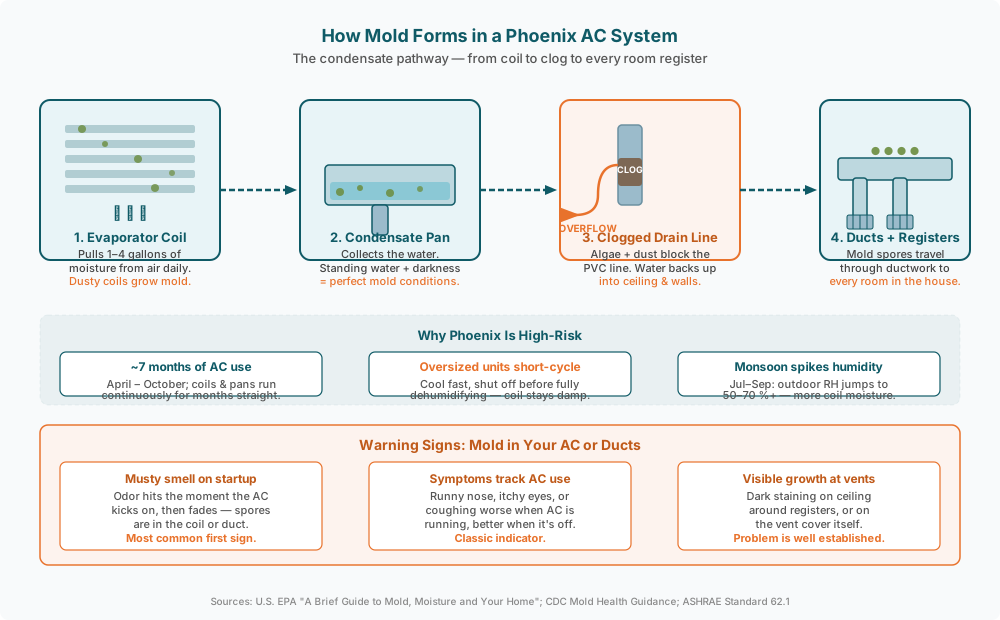
Phoenix homes run their air conditioning 7–8 months a year. The evaporator coil pulls moisture from the air every day it operates. That moisture drains through a PVC condensate line into a secondary drain pan or a floor drain. When the line clogs — from algae, dust, or calcium buildup — water backs up into the plenum and overflows into the ceiling or wall cavity. The result is exactly the mold-friendly environment the dry desert air was supposed to prevent.
The problem is compounded by Phoenix's oversizing habit. Many Valley homes have AC systems sized to meet peak July demand, which means they short-cycle on a mild spring day — cooling the air before the system runs long enough to dehumidify it fully. The coil stays damp, giving mold a persistent foothold even during months when outdoor humidity is low. Our guide to AC and air vent mold in Phoenix homes covers the full mechanics of how this happens.
The real surprise cost: fixing the condensate line
This is the #1 line homeowners do not budget for. Cleaning the ducts removes the existing mold. Fixing the condensate drain line or drain pan is what prevents it from coming back — and it is a separate call to an HVAC technician, not the mold crew.
The cost varies too widely to band (a simple flush of a clogged PVC line versus a full drain-pan replacement versus repairing a corroded pan in a second-floor air handler are very different jobs), but it is often the largest single line on the whole bill. The model note on this add-on is direct: "Mold WILL return if the source isn't fixed first."
Our Phoenix guide to clogged AC condensate drain lines walks through what causes them, how to spot the early signs, and what an HVAC tech actually does to fix one. Read it before you get the repair quote so you know what you are paying for.
What an HVAC mold inspection costs first
If you suspect HVAC mold but haven't confirmed it, an inspection before committing to a full cleaning makes sense. A visual inspection in Phoenix runs $200–$450; adding lab air sampling brings it to about $400–$850. An inspector can tell you whether the mold is in the coil, limited to certain duct runs, or house-wide — which determines whether you need the duct-only or full-system scope.
If you can already see dark growth at the registers or smell it the moment the AC kicks on, a test doesn't change what you do next — you're going straight to removal. See our mold inspection cost guide for when a test earns its cost and when it doesn't.
How to read an HVAC mold quote
When you get quotes for HVAC mold work, look for these lines:
- Scope itemized separately. Ducts only versus full system (air handler + coils + ducts) should be priced as distinct line items, not combined into a single number.
- Source repair called out. A reputable company will tell you the condensate line or drain pan needs separate attention. If no one mentions it, ask directly.
- Containment included. Full system work requires sealed poly containment and HEPA negative-air to keep spores from distributing during the cleaning. Duct-only work may involve less containment depending on access.
- Post-remediation clearance optional. A clearance test after the job (typically $250–$500) verifies it worked. It is not always required, but ask about it for whole-house HVAC jobs.
For context on how this fits the broader cost picture, an extensive whole-home mold job runs $6,000–$30,000. A large HVAC job that seeds every room and requires full system treatment plus ceiling repair from a condensate overflow can reach the upper end of that range when reconstruction is included. For a free, no-obligation look at your specific situation, see our mold remediation service page.
Get a real number for your HVAC mold job
Ranges set expectations, but your home is specific — the duct layout, how far the mold has spread, and whether the condensate line needs attention all affect the price. Tell us what you're seeing and we'll get you a free, no-obligation quote.
HVAC mold removal cost questions
How much does it cost to remove mold from AC ducts in Phoenix?
Cleaning and sealing mold from the duct runs alone typically costs $600–$2,000 in the Phoenix area. This covers the ductwork only — containment, antimicrobial treatment, and sealing of the runs. If the air handler, evaporator coils, or plenum are also affected, the job moves to the full-system band of $3,000–$10,000. Source: HomeGuide 2026, Bob Vila 2024, SERVPRO 2026.
Why is HVAC mold removal priced separately from a room mold job?
Mold inside ductwork is its own line because spores ride the entire duct network — a coil or plenum contamination distributes to every register in the house. You cannot fold it into a single-room price. Ducts-only removal runs $600–$2,000; a full system job runs $3,000–$10,000. Because the network is house-wide, the scope, containment approach, and labor are distinct from a bathroom or drywall job.
Does insurance cover AC or HVAC mold removal in Arizona?
Usually not on its own. Arizona homeowners policies typically exclude mold unless it follows a sudden, covered water event — like a burst pipe or an AC overflow that soaked a ceiling before it was discovered. A slow condensate drip that went unnoticed for months (the most common HVAC mold scenario) is usually treated as a maintenance issue, which most policies exclude. Get a quote first, then contact your insurer — some policies have a limited mold rider, and the outcome depends heavily on the specific language in your policy.
What stops HVAC mold from coming back?
Fixing the condensate drain line or drain pan is the only thing that stops the regrowth. If the moisture source — a clogged PVC drain line, a cracked pan, or an oversized unit that short-cycles and never fully dehumidifies — stays in place, mold will return regardless of how well the ducts were cleaned. The condensate-line repair is billed separately by an HVAC technician and is often the biggest single cost on the whole job.
Can I clean HVAC mold myself to save money?
For surface mold on a single vent cover or register (less than ~10 square feet, per EPA guidance), a careful DIY clean is reasonable once the moisture is fixed. But mold inside ducts, on the coil, or in the plenum is a different problem — access is tight, spores disperse through the house while you work, and an incomplete clean leaves the network re-seeding itself. The EPA warns against running an HVAC system you suspect is mold-contaminated, and recommends using a contractor experienced with mold cleanup for anything beyond a small surface area.
Does a mold inspection make sense before HVAC cleaning?
Yes, especially when the problem is suspected but not confirmed. A visual inspection ($200–$450) can locate the mold source — coil, pan, or specific duct runs — before you commit to a full cleaning scope. Adding lab sampling brings it to $400–$850 and can document the contamination level for insurance or a home sale. If you can already see visible dark growth at registers or in the plenum, a test rarely changes what you do next.