Clogged AC Drain Line: How to Clear It and Stop Mold (Phoenix)
To clear a clogged AC drain line: shut off the AC, vacuum the clog from the line’s exterior end with a wet-dry vac, then flush with white vinegar. Lines clog as dust and algae build up over Phoenix’s nine dry months; the monsoon condensate surge then backs up and overflows into the ceiling, where mold can take hold within 24 to 48 hours if the drywall stays wet.
What the condensate drain system is and where to find it
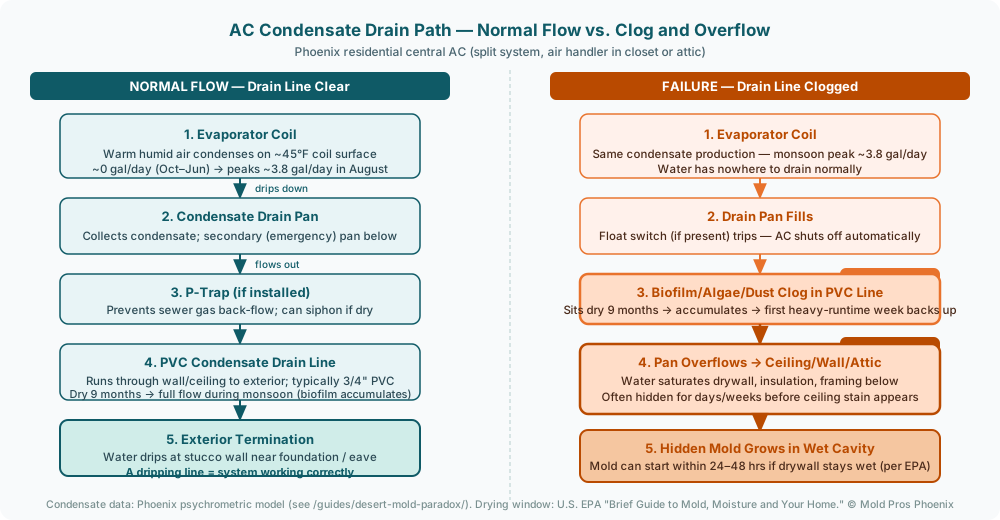
Understanding the path makes it easier to troubleshoot. The evaporator coil inside your air handler sits at roughly 40 to 50 degrees Fahrenheit while the system runs. Warm indoor air passes over the cold coil, and the moisture in that air condenses as liquid water — the same way a cold drink sweats in summer heat. That water drips into a shallow plastic tray called the condensate drain pan and then flows out through a PVC pipe called the condensate drain line.
Where to locate it:
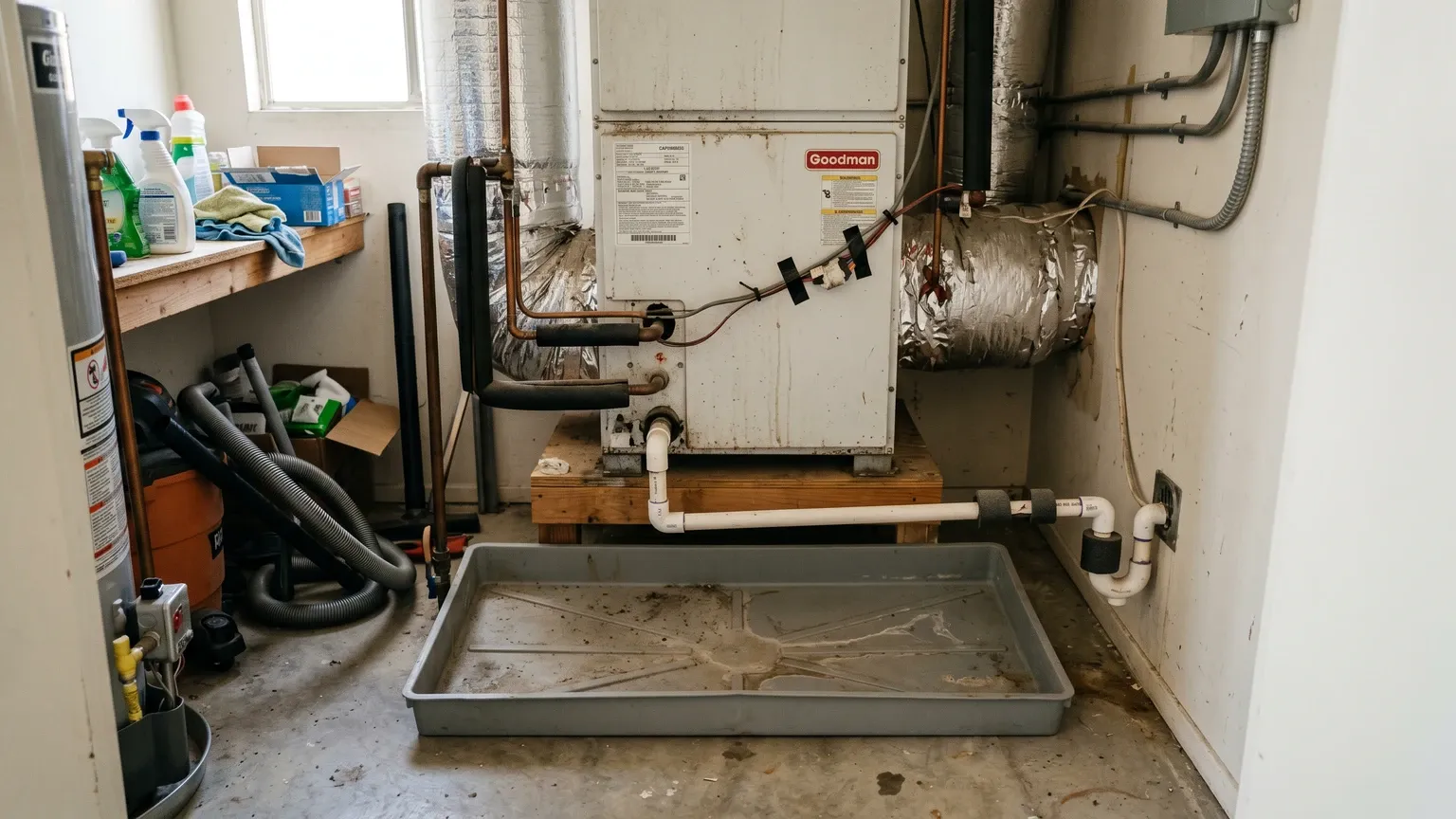
- The air handler (the indoor unit) is typically in a closet, a utility room, a garage, or the attic. The drain pan sits directly below the coil inside the cabinet, and the drain line is the white or grey PVC pipe that exits from the side or bottom.
- The line runs through the wall or ceiling, then terminates at a visible drip point outside — usually through the stucco near the foundation, or sometimes near an eave. You may also see a second, lower-mounted line nearby; that is the emergency overflow line from the secondary pan, and water coming from it is a warning sign.
- Many installations include a clean-out port on the indoor line — a capped T-fitting or a cap on top of a short riser near the air handler. That is where you pour a maintenance flush.
Why Phoenix AC drain lines clog more than most
This is a desert-specific failure pattern, and it explains why the condensate drain line is the single most common hidden mold source in the Valley.
Nine months of nothing, then a flood. According to our psychrometric analysis of Phoenix condensate production, Phoenix AC systems produce essentially zero condensate from October through June. The desert air is too dry to reach the coil’s dew point for most of the year — the AC does almost entirely sensible cooling, with no moisture removal. Condensate appears almost exclusively during monsoon season: roughly 2.1 gallons per day in July, a peak of around 3.8 gallons per day in August, and about 0.9 gallons in September.
During those nine dry months, the drain line sits still and dark. Desert dust, algae spores, and biological film accumulate along the pipe walls. Then July arrives, the system starts moving gallons per day, and the first heavy-runtime week pushes water through a partially blocked line faster than it can drain. That is the clog event.
This is not a coincidence. The same monsoon conditions that spike AC condensate production (rising humidity, heavy rainfall, and temperatures that keep the system running around the clock) also slow evaporative drying elsewhere in the house, so any overflow soaks deeper and stays wet longer. That is why Phoenix mold risk is compressed into this narrow window.
Signs your AC drain line is clogged
These are the indicators, roughly in order of when you’re likely to notice them:
The AC shuts off unexpectedly. Many air handlers have a float safety switch mounted in the primary drain pan. When the water level rises high enough to indicate the line isn’t draining, the switch cuts power to the system. This is the ideal outcome — the system protected itself before the pan overflowed. A unit that turns itself off on a hot day when nothing is wrong with the thermostat is very likely a float switch trip.
Standing water in or near the air handler. If the pan is visibly full, or if there’s water on the floor of the utility closet or on the platform below the unit, the pan has overflowed. How long it ran before you found it determines the extent of any damage.
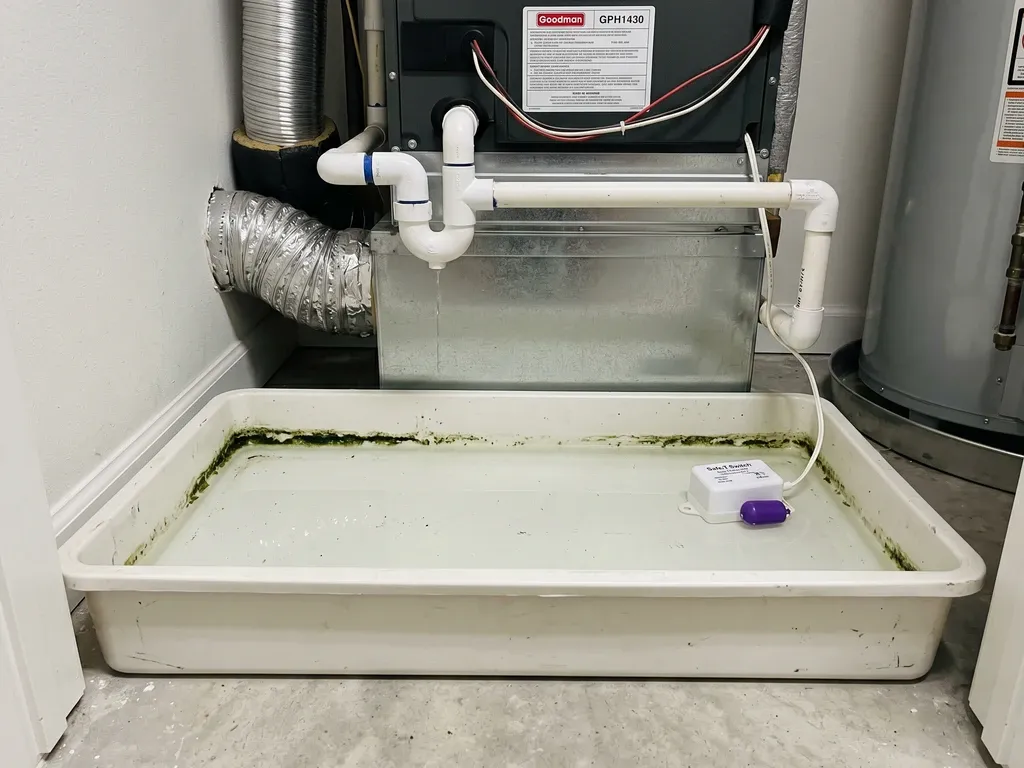
Water dripping from the emergency drain line. If your installation has a secondary (emergency) overflow pan with its own drain line, water coming from that secondary line means the primary pan already overflowed. The secondary pan caught it, but there may be water in the ceiling or wall between the two pans.
A musty smell when the AC turns on. Standing water in a drain pan grows mold and bacteria quickly in Phoenix summer heat. That smell circulates the moment the fan starts. If clearing the drain line and the pan eliminates the smell, the problem was the condensate system. If the smell persists after the drain is clear, see our companion guide on mold in your AC and air vents — the issue may be further upstream in the system.
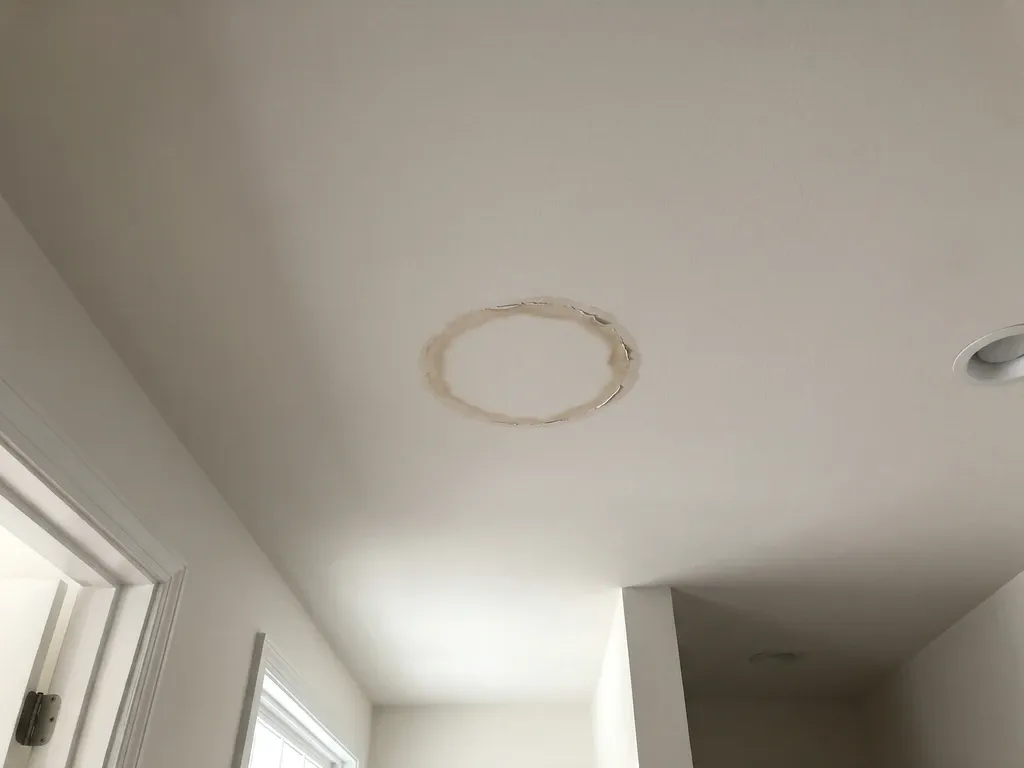
A water stain on the ceiling below the air handler. This means the overflow already reached the ceiling or wall cavity. Whether mold is growing behind it depends on how long the material was wet. The stain ring you see on the surface is not the boundary of the moisture — water spreads laterally through drywall and insulation.
How to clear a clogged AC drain line
Before doing anything: turn off the AC at the thermostat and then at the breaker. Working near the air handler with the system running is unsafe. The system should be completely off before you open the access panel, remove the float switch, or put any tool near the drain components.
Step 1: Remove standing water from the drain pan. Use a shop towel, a sponge, or a small wet-dry vac to empty the pan. This prevents it from spilling further when you disturb the line.
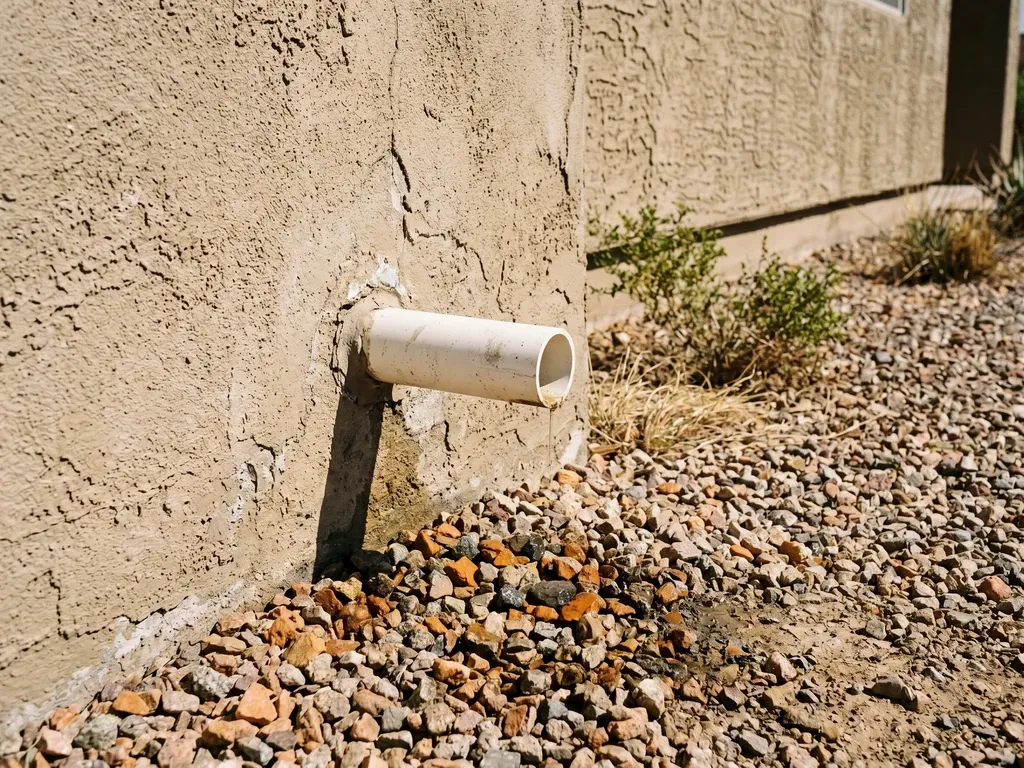
Step 2: Locate the exterior drain termination. Walk the outside of the house and find where the drain line exits — typically a white PVC pipe stub through the stucco, near the base of the wall or near a roofline, often where you’d see a small water drip stain from a functioning line.
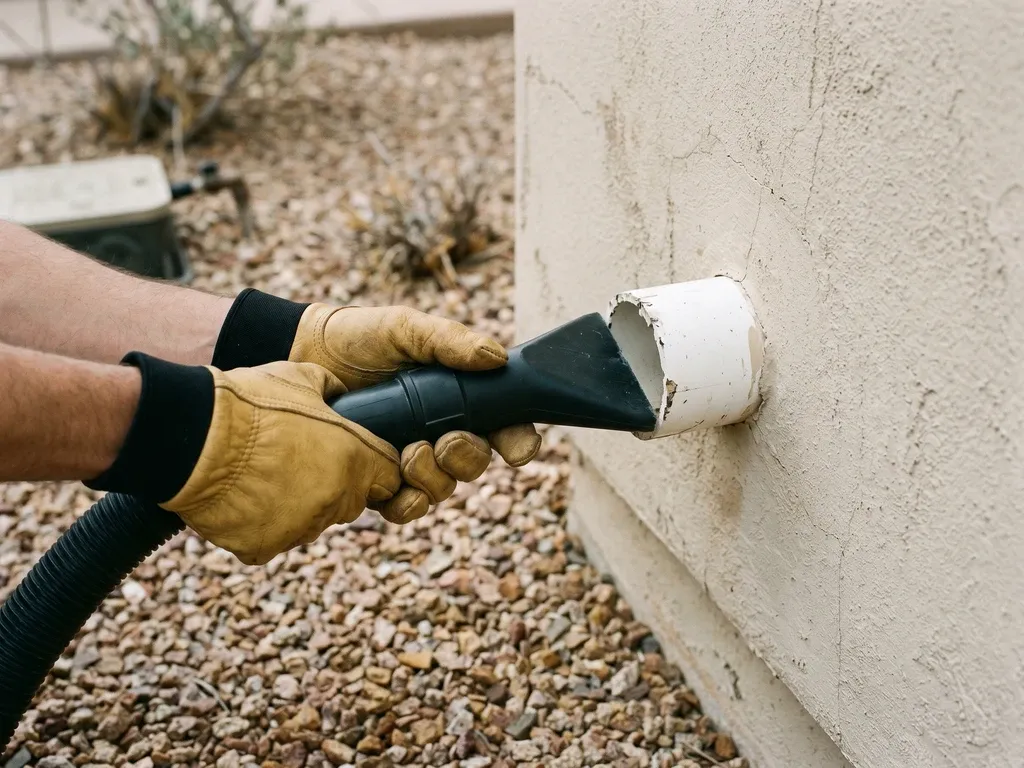
Step 3: Vacuum from the exterior end. Hold the nozzle of a wet-dry vac firmly against the drain pipe opening on the outside of the house and run it for 30 to 60 seconds. The suction pulls the clog back out toward you rather than pushing it further into the line. You’ll typically hear a change in pitch when the blockage clears and the vac starts pulling air rather than fighting resistance.
Step 4: Flush from the indoor access tee. Find the clean-out cap on the drain line near the air handler — typically a threaded cap or a cap on a short riser. Remove it and slowly pour about a cup of clean water through the opening. Watch at the exterior end; water should flow within a few seconds of pouring. If it doesn’t, repeat the vacuum step.
Step 5: Clean the line with a vinegar flush. Once flow is confirmed, pour roughly half a cup of undiluted white distilled vinegar through the access tee. This is standard HVAC maintenance: white vinegar’s mild acidity inhibits algae and biofilm regrowth inside the line. This is not a mold treatment. It is a routine preventive measure the same way you’d clean a dishwasher drain. Do not use full-strength bleach in the drain line; it can degrade rubber fittings in some systems, and there is no evidence it provides meaningfully better biological control than vinegar for this application.
Step 6: Replace the float switch (if tripped) and restore power. Reset any safety switch, restore the breaker, and run the AC briefly to confirm the pan stays empty and the line drains normally.
When to call a professional
The steps above handle the majority of clogged drain line situations. Stop and call a professional if:
- The float switch keeps tripping repeatedly after you’ve cleared the line — something else is causing the problem
- You cannot locate the exterior drain termination (some drain lines run to interior floor drains or plumbing stacks, which need different clearing methods)
- The vac-and-flush doesn’t restore flow after two attempts
- Water has already reached the ceiling, drywall, or insulation below the air handler
That last point is critical. A condensate overflow that soaked building materials for more than a day or two can start mold growth inside the wall cavity — a space you cannot see or dry from the surface. A mold inspection examines the hidden areas behind stains and inside wall cavities before any remediation work begins. If you’re already seeing a ceiling stain, an inspection is the right first move, not patching the drywall.
If water reached drywall and mold is confirmed, the work shifts from maintenance to mold removal — the affected materials need to come out, not just be dried. The EPA is explicit that mold-contaminated porous materials like drywall must be physically removed; treating or drying them in place is not sufficient.
How to prevent it from clogging again
Annual pre-season flush. The most effective single step is a preventive flush before monsoon season — aim for late March or early April in the Valley, before the system shifts into high-output use. Pour a half-cup of white vinegar through the access tee, confirm flow at the exterior, and you’ve reset the line before the season’s condensate peaks.
Install a float safety switch if you don’t have one. Many older Valley installations either never had one or had the switch removed during a service call. A float switch costs roughly $15 to $25 in parts; any HVAC technician can add one in a service call. It is the difference between a wet pan (recoverable) and a flooded ceiling (expensive).
Annual AC service before cooling season. A spring service call — checking refrigerant, cleaning the coil, and confirming condensate flow — addresses all the failure points at once before the system needs to run continuously. It also catches partial drain blockages before they complete.
Keep the secondary pan clean. The emergency overflow pan rarely has water in it in a functioning system. If it has silt, algae, or mineral deposits, it’s a sign the primary pan has been overfilling periodically. Clean both pans annually.
For a fuller picture of the hidden moisture sources that drive mold in Phoenix homes — including slab leaks, monsoon roof intrusion, and swamp cooler overflow — the mold in the desert guide covers each source in the same plain-language format.
When bad HVAC installation causes mold: what a Texas jury said
In August 2023, a Texas jury awarded $3.1 million in Baehr v. Woods Comfort Systems after finding the HVAC installer 40% liable for an oversized, short-cycling air handler that caused persistent coil-cabinet condensation and mold growth in the family’s home. Phoenix homes deal with the same physics: oversize a system in a Valley summer and the coil dew-points the surrounding sheet metal and drywall for months before anything visible shows up. Right-sized systems + a working condensate line + an annual pan check is the honest maintenance answer. Our documented mold illness cases reference has the full case file.
Sources
- U.S. EPA — A Brief Guide to Mold, Moisture and Your Home: moisture as the driver of indoor mold; the 24–48 hour drying window before mold typically starts; “it is not enough to simply kill the mold, it must also be removed.”
- U.S. EPA — Mold Cleanup in Your Home: physical removal requirement for mold-contaminated porous materials; the 10 sq ft DIY threshold.
- U.S. Department of Energy / Energy.gov — Air Conditioner Maintenance: “Clear the unit’s drain channels periodically with a stiff wire to prevent clogs”; clogged drains can cause the unit to shut off or overflow and cause water damage.
- National Weather Service (Arizona) — Monsoon Information: Arizona monsoon season “officially runs from June 15th to September 30th.”
- Mold Pros Phoenix — The Desert-Mold Paradox: Phoenix condensate psychrometric model: monthly condensate estimates for a typical Phoenix central AC, including the seasonal feast-famine pattern.