Attic Mold in Phoenix: Causes, Signs & How to Get Rid of It
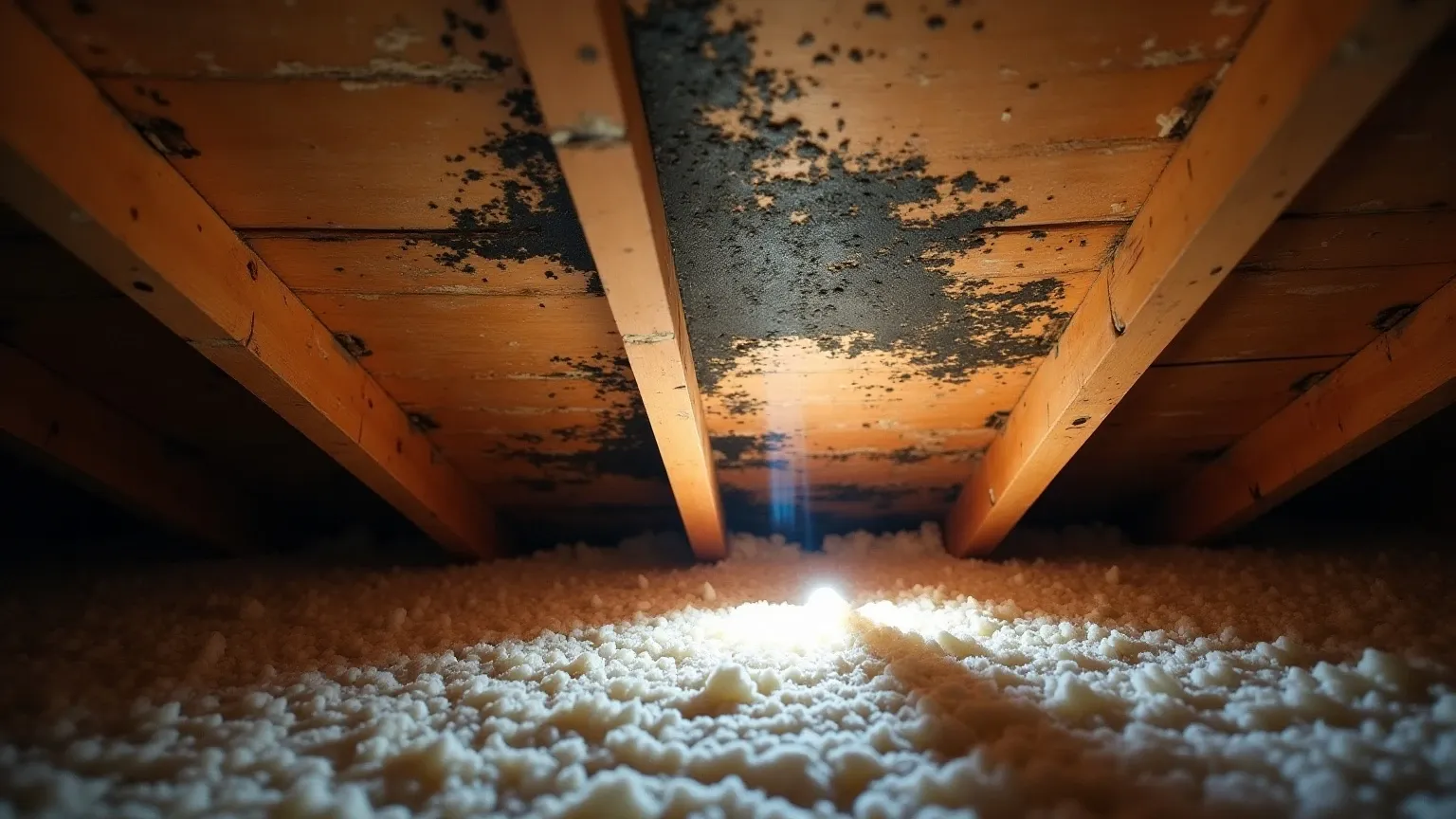
Attic mold in Phoenix is more common than most homeowners expect, and the desert climate is not the protection it sounds like. The moisture that feeds it isn’t outdoor humidity; it’s your AC condensate line, monsoon rain through failed roof flashing, or a bathroom fan venting into the attic instead of outside. Fix the source and the mold stops.
Why Phoenix attics get mold
The short version: “desert” describes the air outside your home, not what happens inside your attic.
A Phoenix attic runs extreme conditions year-round. Summer afternoon temps peak near 140 °F. At night, the same space drops 40 to 60 degrees. That thermal cycle alone — hot roof deck during the day, cooler underside of the insulation at night — creates condensation on wood surfaces. Add a single AC condensate leak and you have warm damp wood in a dark, poorly-ventilated space. Mold does not need much more than that.
National guides and Reddit threads written for humid climates focus on vapor barriers and outdoor humidity control. Those are the wrong solutions for Phoenix. The Valley’s attic mold drivers are specific to how Phoenix homes are built, and the right fix depends on knowing which driver applies to yours.
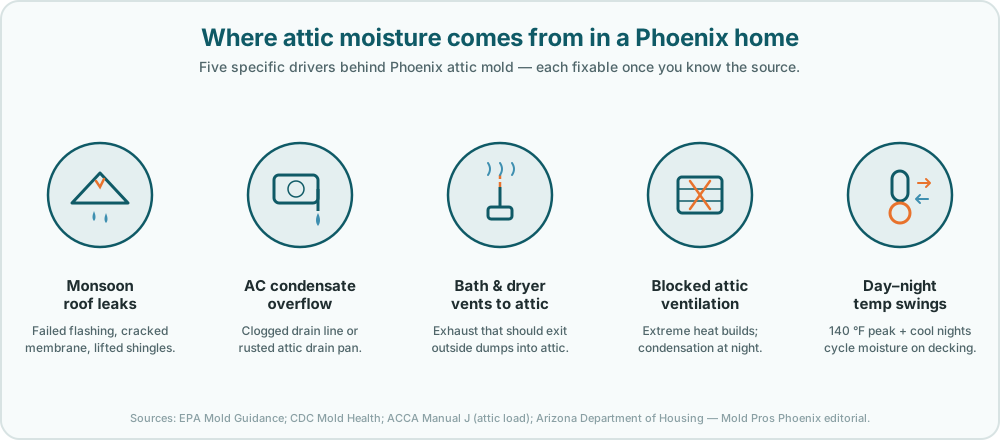
The five specific Phoenix attic mold drivers
1. AC air handler condensate overflow
In Phoenix homes with an attic-mounted air handler, condensate overflow is the most common attic mold driver of all.
In many Phoenix homes, particularly two-story stucco builds in Ahwatukee, Desert Ridge, Laveen, Estrella, and Chandler, the air handler is mounted in the attic. It runs from May through October at minimum, often year-round. Every hour it operates, it pulls moisture from the air and routes that water through a condensate drain line to the outside.
Two failure points matter: the drain line and the drain pan.
The drain line clogs with dust, algae, and debris over time. When it clogs, the drain pan fills. When the pan overflows, the water lands on the attic floor, soaks the insulation, and eventually reaches the roof decking. The pan itself rusts through on older units and produces the same result. Both failures are out of sight in a hot attic, so they often run for weeks before visible damage appears.
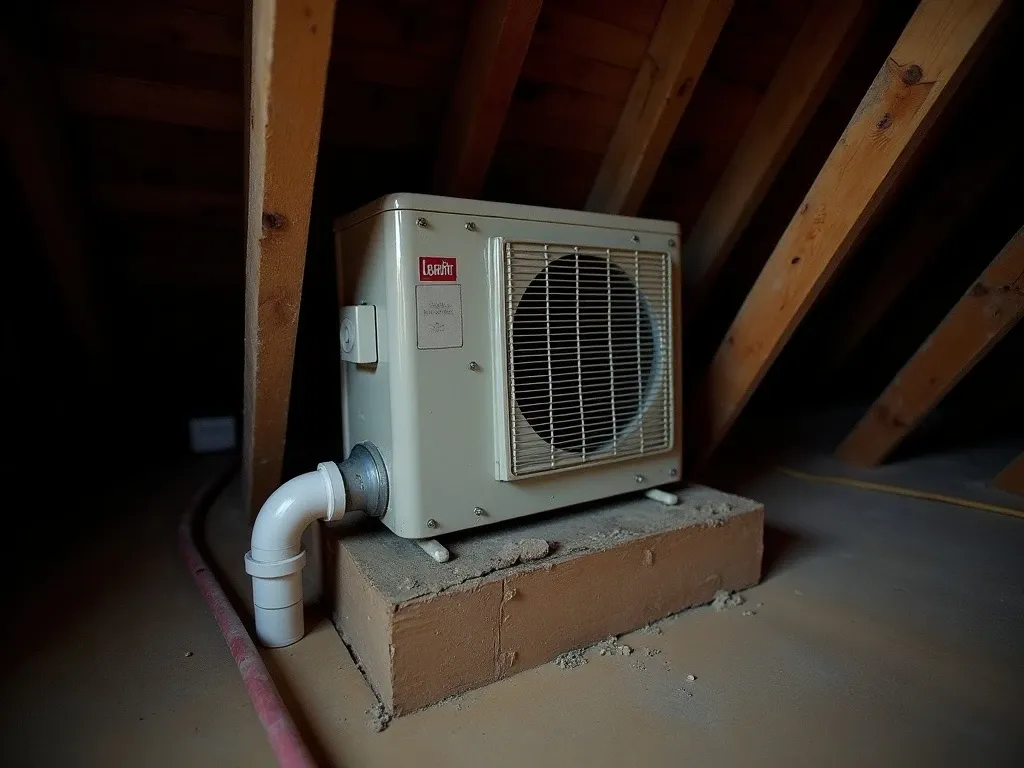
What to check: look at the drain pan under the air handler for standing water or rust staining. Trace the condensate line to confirm it exits the home and drains freely. A clogged line is a straightforward fix, but the mold that resulted from the overflow still needs to be addressed separately.
2. Monsoon roof leaks and failed flashing
June through September, Phoenix gets a real monsoon season. Storms arrive fast with heavy rain, and many Phoenix homes have flat or low-slope roofs that pond water during intense downpours.
The roof membrane on a flat or modified-bitumen low-slope roof can look intact and still have hairline cracks that only leak under hydrostatic pressure. Flashing around vents, AC penetrations, and roof transitions is the other common entry point. Poorly sealed or aged flashing is the most common roof entry point for water after monsoon storms.
When water gets through, it soaks the insulation first, then the roof decking. Mold can establish on wet wood within 24 to 48 hours at Phoenix summer temperatures, per EPA guidance on water-damaged materials. By the time a stain appears on the ceiling below, mold has typically been growing on the attic side of the drywall for days or weeks.
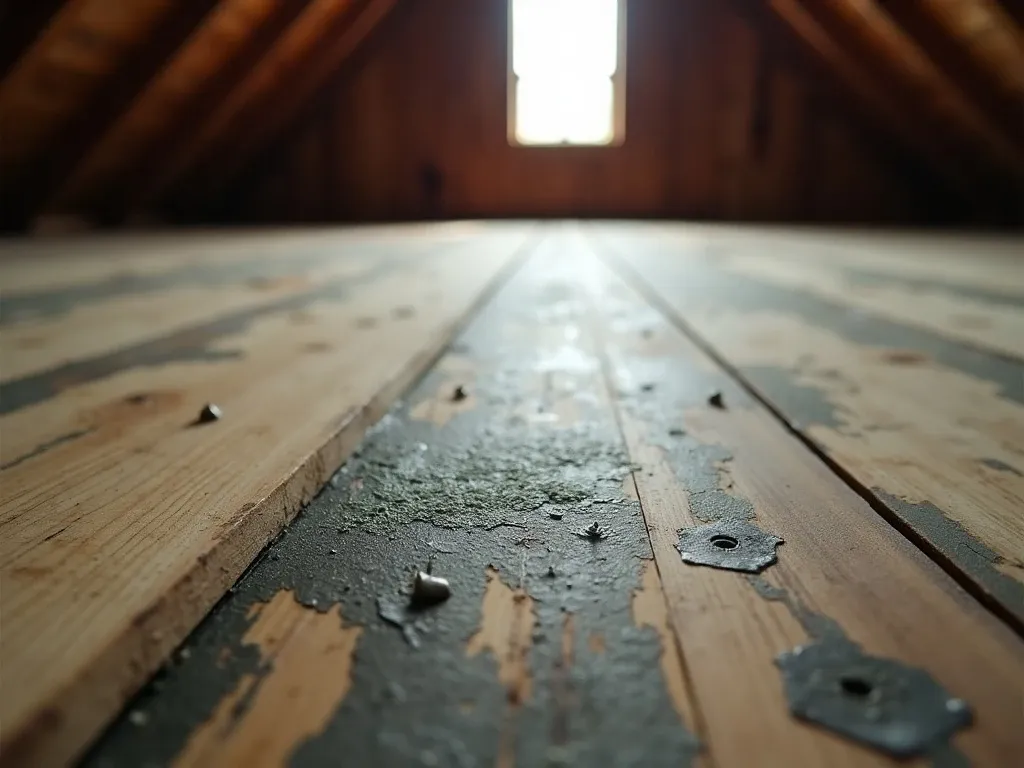
Practical rule for Phoenix: after any heavy monsoon storm, look at your ceilings. A fresh brown ring caught within a day is a small repair. The same leak ignored until a musty odor develops is a remediation job.
3. Bath, dryer, and kitchen vents that terminate in the attic
Building code requires exhaust fans to vent outside. Not every Phoenix home was built to current code, and older homes comply with what was standard at their time of construction.
A bathroom exhaust fan is designed to push warm, wet shower air through a duct to an exterior vent. In a number of Phoenix homes, that duct was never connected outside. The flex hose runs up through the attic floor and stops. Every shower sends a pulse of warm humid air directly onto the underside of the roof deck.
Dryer vents that terminate in the attic are worse. Dryers move far more moist air than bathroom fans, and the moisture load accumulates significantly over time.
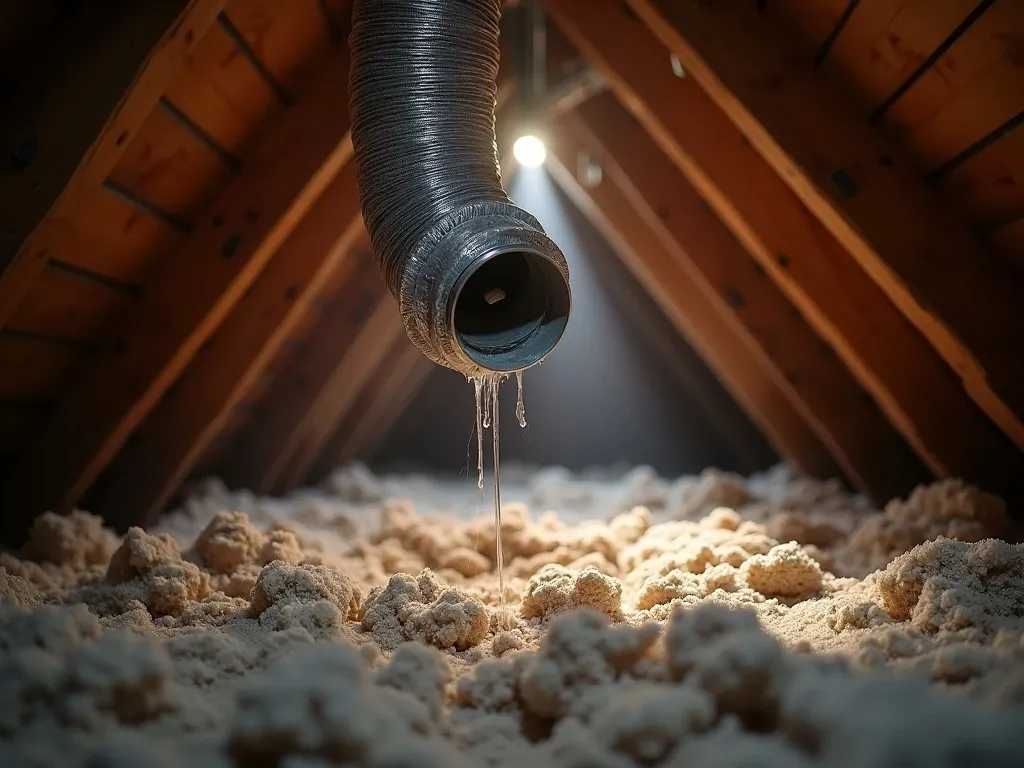
You can confirm this yourself: go into the attic with a flashlight and trace each exhaust duct to its end. If the end is hanging loose in the attic space, that is the problem. Re-routing the duct to a proper exterior vent is a relatively simple repair; the mold damage on the roof deck and rafters is a separate job.
4. Undersized or blocked attic ventilation
Attic ventilation is designed to exhaust heat that builds under the roof deck and allow air movement that limits moisture accumulation. A properly ventilated Phoenix attic still runs hot, but the goal is to prevent that heat from compounding every other moisture driver.
When soffit vents are blocked by insulation that has migrated against them, or when ridge vents were covered during a re-roof and not reinstated, or when ventilation was undersized for the roof’s square footage, the attic becomes a sealed oven. Extreme heat buildup through the day, followed by rapid cooldown at night, creates stronger condensation cycles on the roof deck and any metal in the space. Any other moisture source running in that attic compounds faster.
This driver rarely causes mold on its own, but it amplifies all the others on this list.
5. Day-to-night temperature swings
This is Phoenix-specific and underrepresented in national guides.
On a June or July afternoon, an unshaded roof deck can surface at 150 to 160 °F. By midnight, the same attic has dropped to 85–90 °F. That 60-to-70-degree swing over eight hours creates repeated condensation cycles on any surface with ambient moisture nearby: roof decking, AC ductwork, metal fasteners, and rafter faces. In a well-sealed attic with no other moisture source, this is manageable. In an attic where any of the above drivers are active, the temperature swing accelerates moisture distribution across wood surfaces.
Signs you have attic mold
The most reliable early signal is smell: a musty odor that strengthens when the AC starts up, or that appears after rainfall. Spores circulating from a moldy attic air handler often smell most strongly when the system first starts running.
Visible confirmation requires going into the attic. Check:
- The underside of the roof decking between the rafters. Black, green, or gray discoloration that looks fuzzy or powdery and does not wipe off easily is mold. Dark weathering staining is usually flat and does not spread at the edges.
- The rafters themselves, particularly near the ridge and around any AC or vent penetrations.
- The area around the air handler: the drain pan, the decking below the unit, and the section near where the condensate line exits.
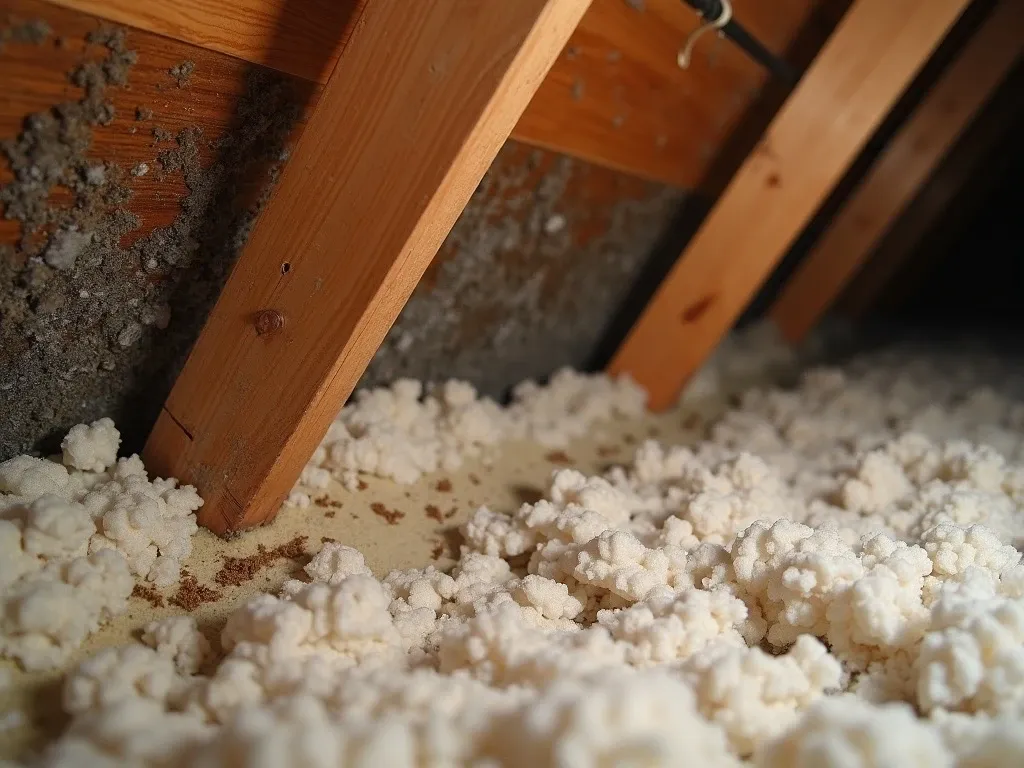
- Insulation that looks compressed, dark, or matted. Mold in insulation is less visible but common in areas that have sustained moisture.
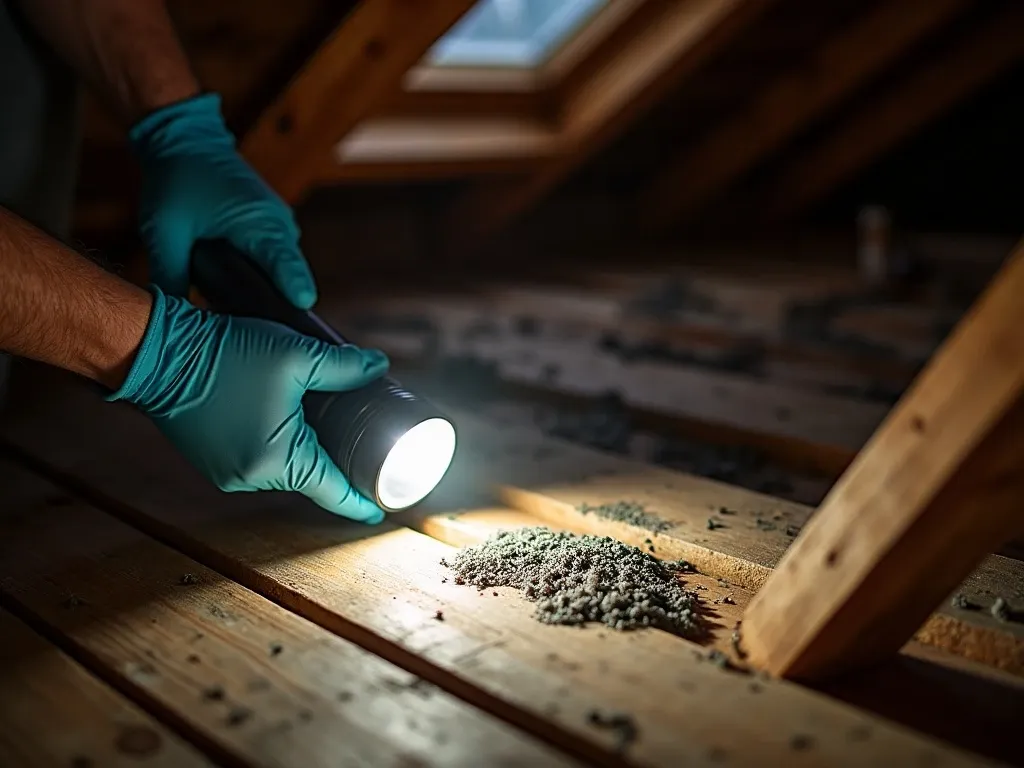
A few practical notes for self-inspection: go early, before the attic heats up, and bring a strong flashlight and an N95 respirator. Do not step off the joists. If you can see the problem, you have confirmed it. If you can smell it but cannot find it, a professional mold inspection with a moisture meter can trace the source through walls and insulation without guesswork.
What happens if you leave it
Two problems develop over time.
Structural damage. Mold feeds on the cellulose in wood. Given enough moisture and time, roof decking becomes soft and delaminates. Rafters develop rot. In Phoenix, a job that would have been a $2,000 surface treatment can become an $8,000 job once decking needs to be replaced.
HVAC distribution of spores. The more immediate health concern is an air handler sitting in a moldy attic. Return air entering the system from the attic space, or ductwork running through moldy sections, can carry spores into living areas. Per the CDC’s mold health guidance, mold exposure can cause respiratory symptoms including coughing, nasal congestion, and throat irritation; people with asthma, allergies, or weakened immune systems face a higher risk. Mold distributed through an AC system is different from a patch on a bathroom wall: the exposure is ongoing and repeated throughout the day.
DIY vs. professional remediation
The EPA’s rule of thumb is that moldy areas under about 10 square feet on hard, non-porous surfaces can be handled by a careful homeowner. Attic mold rarely fits that window:
- Attic mold typically spreads well past 10 square feet before it is found. A single month of slow condensate drip covers far more than that.
- Phoenix attics hit 140 °F by mid-afternoon from June through September. Heat exhaustion is a real risk for anyone working in that space without early starts and strict time limits.
- Disturbing mold in an open attic without containment can push spores through the attic hatch into the living space below.
- Mold in insulation cannot be cleaned. It must be removed and replaced.
If you find a genuinely small patch under about 10 square feet on roof decking, have already confirmed and fixed the moisture source, and are comfortable working safely in a hot attic with an N95 and protective gear, the EPA guidance supports self-treatment with a HEPA vacuum followed by a borate-based or EPA-registered antimicrobial solution on the wood.
For everything larger, or any job involving the air handler, insulation, or mold you can smell but cannot find, a professional has the right equipment: containment barriers, negative-air-pressure machines, HEPA vacuums, and moisture diagnostics to confirm the source is actually fixed before the attic is closed back up. Our mold removal page covers how the full remediation process works.
What attic mold remediation involves
A professional Phoenix attic mold job follows a set sequence:
- Moisture source confirmed and fixed first. No reputable contractor starts remediation without identifying and stopping what caused the mold. Otherwise it returns.
- Containment. The attic hatch and any HVAC openings are sealed to keep spores from moving into the home during work.
- HEPA vacuum and treatment. Affected roof decking and rafters are HEPA-vacuumed, then treated with an EPA-registered antimicrobial. Borate-based solutions penetrate wood and inhibit regrowth.
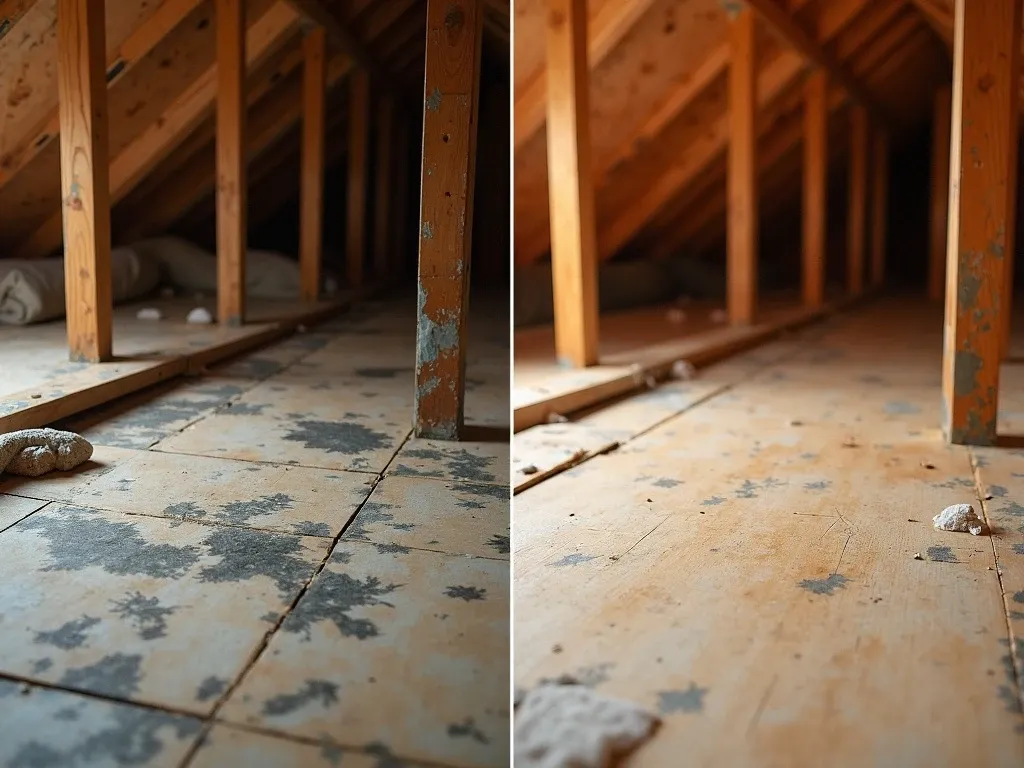
- Insulation removal where needed. Saturated or mold-affected insulation is bagged and removed. New insulation goes in after the surfaces are dry and confirmed clean.
- Post-remediation clearance. After work is complete and the area has dried, a clearance check confirms the job is done.
Cost for a Phoenix attic mold job runs roughly $1,500 to $4,000 for a straightforward surface treatment with no structural replacement. Larger attics, full-deck coverage, or jobs requiring insulation replacement can run $4,000 to $8,000 or more. See our mold removal cost guide for Phoenix ranges and what drives price up or down on a specific job. If your situation involves water intrusion that may need remediation before mold work begins, our water damage restoration page covers that step.
How to prevent attic mold
Prevention maps directly to the five drivers:
- Have the condensate drain line cleared annually, before peak cooling season in May. This is a routine HVAC maintenance item that prevents the most common cause of attic mold in Phoenix.
- Inspect flat and low-slope roofs before monsoon season, in April or early May. Check the membrane for cracking and inspect flashing at every penetration. Hairline cracks that do not leak in dry weather will fail during the first heavy monsoon storm.
- Confirm all exhaust vents exit the home. Trace every bathroom, dryer, and kitchen exhaust duct from inside the attic. Any duct that ends inside the attic needs to be rerouted to an exterior vent.
- Check soffit vents for insulation blockage. Blown insulation migrates against soffit vents over time, cutting ventilation flow. Push insulation back from vents during any attic inspection.
- Look at your ceilings after heavy storms. A new brown ring or water stain is the earliest visible sign that roof water is reaching the structure. Catching it early keeps a small repair from becoming a full remediation.
For more on the mold drivers specific to Phoenix homes, the Phoenix mold removal page covers the full range of Valley-specific conditions.
Get a free quote for your attic
If you have found mold in the attic, or if you have a musty smell and have not been up there to look, a free, no-obligation quote is the fastest way to know what you are dealing with. We handle attic mold removal across the Phoenix metro, from AC condensate overflows to monsoon roof-leak remediation, in Ahwatukee, Desert Ridge, Arcadia, Encanto, and the rest of the Valley. Fill out the form below and we will get you a local quote with no pressure and no commitment to anything until you know the full scope.