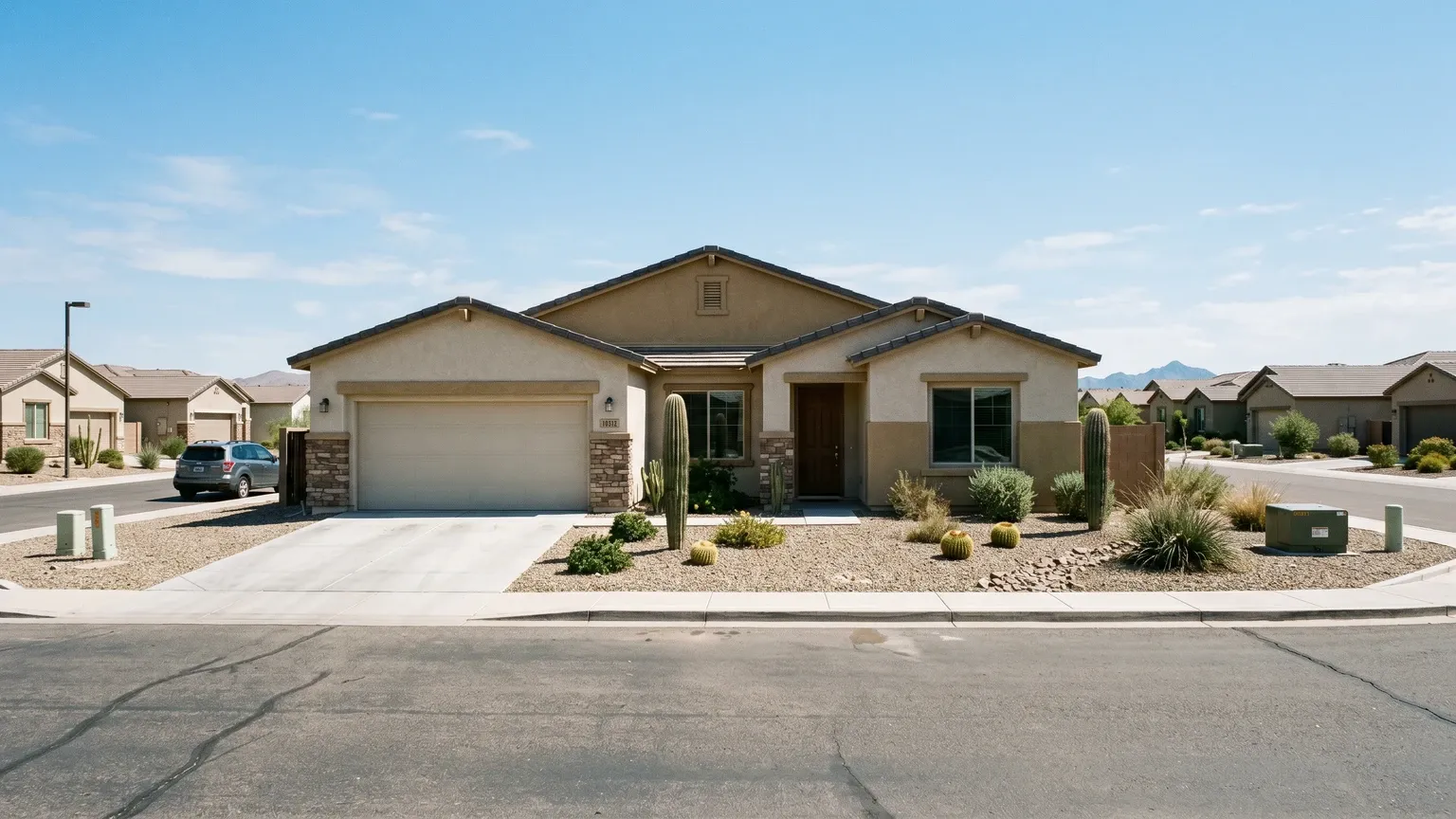
Peoria Mold Removal & Remediation
Found mold — or smelling something musty — in your Peoria home? Get a fast, free, no-obligation quote. We know Peoria, from aging homes near Old Town and Westbrook Village to brand-new stucco builds in Vistancia and Sonoran Mountain Ranch where construction moisture is still a real issue.
- Free, no-obligation quotes for Peoria homeowners
- We understand desert mold — yes, it’s real
- Black mold, water damage, attic & crawl space
- Fast response — mold spreads quickly in the heat
- Free, no-obligation quotes Know the cost before you commit
- Local Phoenix-metro pros People who know desert mold
- Fast response Mold spreads — we move quickly
- Honest pricing, no scare tactics Only fix what needs fixing
Mold in Peoria? Here's the straight talk.
Yes, Peoria homes get mold — and the city's unusual range of housing types means it shows up in different ways. Far-north Peoria has some of the Valley's newest master-planned communities, where lumber and drywall are closed up before all construction moisture has left the framing, and where brand-new AC systems face their first Phoenix summer. In the south, older neighborhoods near Old Town have aging plumbing with slow leaks that run unnoticed for months. And in between, Westbrook Village's snowbird residents close up their homes for entire summers — long enough for any small drip to become a serious mold problem. Because the air is dry, mold usually stays hidden until you smell it.
Peoria stretches nearly 30 miles from south to north, and its mold profile stretches with it. In the far north, Vistancia, Trilogy at Vistancia, and Sonoran Mountain Ranch are some of the Valley's most recently built master-planned communities. New construction is not immune to mold — lumber framing and OSB sheathing are often enclosed before they have fully dried, locking residual construction moisture inside walls. Add the first-summer AC load — a brand-new system working hard in July heat, generating condensate on coils that aren't yet fully balanced — and newer homes can develop hidden mold behind walls or in attics within their first few years.
In central Peoria, Westbrook Village is an established active-adult community with a large snowbird population. Part-time residents close their homes entirely from late spring through early fall. With the AC off or on a minimal hold setting and no human presence to catch a drip, even a small supply-line seep or a roof seam that opened in monsoon season can run unnoticed for months. Homeowners return in October to a musty smell that has been growing since June.
Black mold in Peoria homes
The black mold Peoria homeowners find is usually Stachybotrys chartarum or one of the darker Cladosporium species — and Peoria's unusual housing mix means we see it in three very different settings. In Vistancia and Sonoran Mountain Ranch new construction, Stachybotrys appears in attic sheathing or first-floor ceiling drywall where trapped construction moisture or a first-summer AC condensate overflow seeded growth in a home that isn't yet two years old. In Westbrook Village snowbird homes, it's usually on bathroom walls or ceiling drywall where an entire closed-up summer of stagnant heat plus one slow drip did the work. In Old Town Peoria and Original Townsite, it's behind baseboards and in subfloor cavities from pinhole leaks in 1950s–70s supply lines. Removal is the same in every case: contain, remove the affected material, fix the water source, verify dry.
Old Town Peoria and aging plumbing
South Peoria's Original Townsite and Old Town Peoria neighborhood contains some of the oldest residential housing in the West Valley — homes from the 1950s through 1970s with copper or galvanized plumbing that is well past its designed service life. Pinhole leaks in aging supply lines can wick moisture into slab edges, subfloor cavities, and wall framing for months before any stain or smell reaches the living space. The dry climate masks the problem: because the surface dries quickly, there is rarely a visible puddle — just a slow, hidden wet spot feeding mold in the dark.
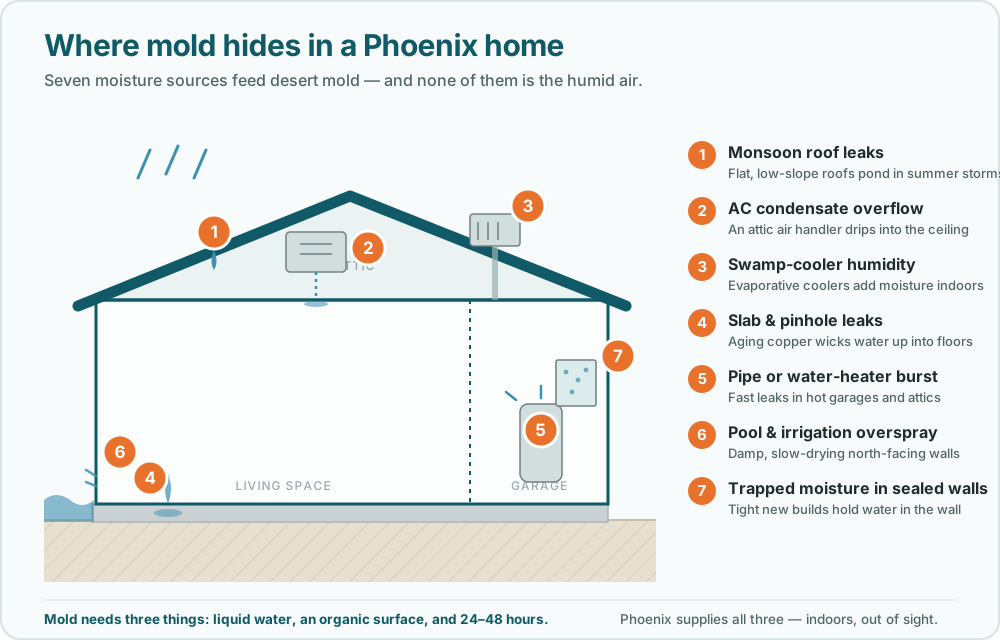
Why Peoria homes get mold
The moisture sources we see most often in Peoria — beyond the “it’s a dry climate” myth.
New-construction moisture in framing
Vistancia, Sonoran Mountain Ranch, and other north Peoria master-planned communities were built fast. Lumber and OSB framing often get enclosed before fully drying, trapping construction moisture inside walls and attic spaces where it can feed mold before the home is a year old.
First-summer AC condensate on new systems
Brand-new AC systems in north Peoria stucco builds face their first Phoenix summer with condensate lines that haven't been proven under load. A clogged or misrouted drain line drips into ceiling drywall — often in a bedroom or hallway — before the homeowner knows anything is wrong.
Westbrook Village seasonal-vacancy leaks
Snowbird residents close Westbrook Village homes from May through October. With the AC off or minimally running and no one inside to catch a drip, a small supply-line seep or monsoon roof entry can grow mold through an entire summer unnoticed.
Aging plumbing in Old Town Peoria
Older homes near Original Townsite and south Peoria have copper or galvanized plumbing from the 1950s–70s. Pinhole leaks in aging supply lines wick moisture into slab edges, subfloor, and wall cavities for months before any visible stain appears.
Lake Pleasant proximity and recreation-area humidity
Far-north Peoria near Lake Pleasant sits at slightly higher local humidity than the central Valley. Seasonal-use lake homes, RV storage areas, and properties that sit vacant between weekend visits are susceptible to condensation and hidden moisture that builds without regular ventilation.
Monsoon roof intrusion on stucco builds
Peoria's flat-roof sections and tile-roof seams take the full monsoon load. A blow-in at a flashing point or a cracked tile sends water into attic space and ceiling framing that dries slowly in sealed, poorly ventilated attics — especially in the larger north Peoria production homes.
Mold removal services in Peoria
Mold removal, remediation, inspection and water-damage restoration for Peoria homeowners — one team, honest quotes.
Mold Removal
Safe removal of visible mold — with the moisture source fixed so it stays gone.
Learn more →Mold Remediation
Containment, HEPA filtration & full removal after leaks, floods, or long-term moisture.
Learn more →Mold Inspection & Testing
Moisture mapping, visual inspection, and lab testing when you need proof.
Learn more →Water Damage Restoration
Emergency extraction & drying — the fastest way to stop mold before it starts.
Learn more →What a proper Peoria mold job includes
No guesswork, no upsell — here's what real mold removal in Peoria actually covers, start to finish.
- Find the moisture first. Moisture meters and a visual check trace the water source — an AC condensate line, slab leak, or roof intrusion — before any cleanup starts.
- Contain the area. Plastic sheeting and negative air pressure keep spores from spreading through the rest of your Peoria home during the work.
- Remove only what's affected. Mold-damaged drywall, carpet, and insulation come out; hard surfaces are HEPA-vacuumed and cleaned — nothing torn out that doesn't need to be.
- Fix the source. The leak or condensation problem gets repaired, because mold that isn't dried out comes right back.
- Verify it's done. On larger jobs, clearance testing confirms the home is back to a normal baseline before any rebuild.
- A clear, written quote. You get an honest price range up front — most Peoria jobs run $500–$4,000 — with no obligation to book.
How it works
No call centers. Three steps to a straight answer about mold in your Peoria home.
- 1
Tell us what’s happening
Fill out the quick form with your ZIP code and what you’re seeing or smelling. Takes about a minute.
- 2
We get you a fast, free quote
We review your details and your area and get back to you with a clear, no-obligation quote — no national call center, no runaround.
- 3
You decide, no pressure
Look it over, ask questions, and move forward only if it’s right for you. Honest pricing, no scare tactics.
Serving every Peoria neighborhood
From Old Town Peoria and Westbrook Village in the south to Vistancia, Sonoran Mountain Ranch, and Lake Pleasant in the far north — we handle mold across Peoria and understand the city's mix of older homes and fast-growing master-planned communities.
- Vistancia
- Trilogy at Vistancia
- Sonoran Mountain Ranch
- Westbrook Village
- Fletcher Heights
- Sundance
- Old Town Peoria
- Lake Pleasant Heights
- Tierra Del Rio
- North Peoria
ZIP codes we cover: 85345 · 85380 · 85381 · 85382 · 85383 · 85385
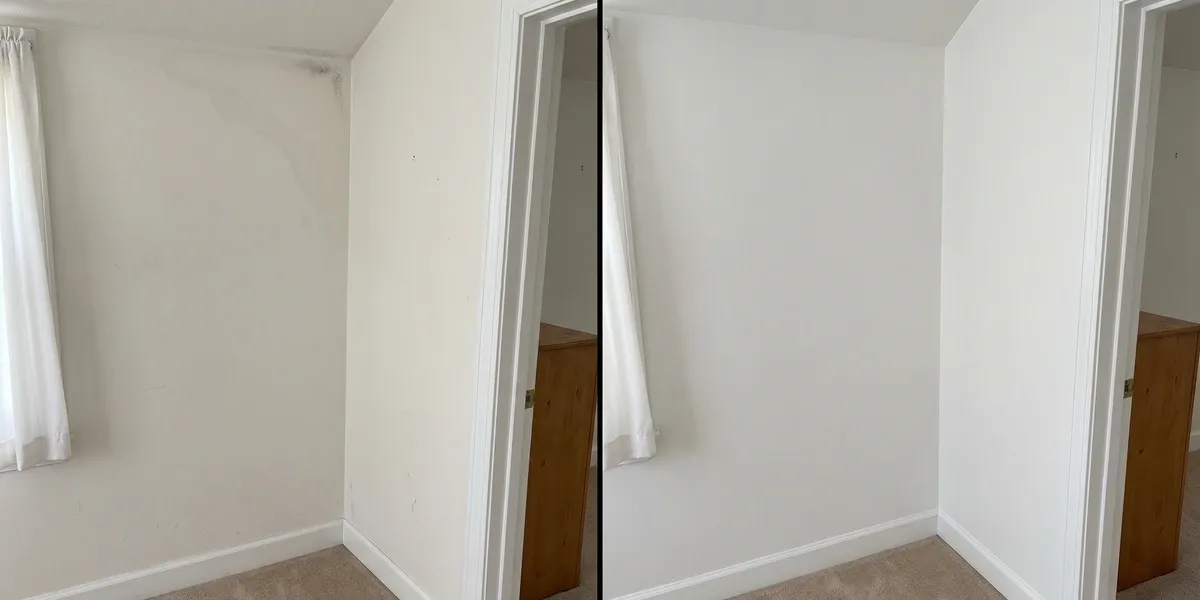
What does mold removal cost in Peoria?
Most Peoria mold jobs run $500–$4,000, depending on how much mold there is and what’s behind it. A small bathroom or closet can be a few hundred dollars; whole-room remediation after a leak or flood runs higher.
Peoria mold questions, answered
What mold removal services do you offer in Peoria?
Full-service mold work for Peoria homes, tuned to the city's three different mold profiles: inspection with moisture mapping (critical in new construction, snowbird returns, and older Original Townsite homes), containment and HEPA-filtered remediation, physical removal of mold-damaged drywall/insulation/framing/subfloor, moisture-source repair (first-summer AC condensate in Vistancia, seasonal-vacancy leaks in Westbrook Village, aging plumbing in Old Town), and post-work verification. We handle black mold, attic mold, HVAC mold, and mold from water damage across every Peoria ZIP.
Do you handle black mold removal near me in Peoria?
Yes. Black mold removal in Peoria most often means one of three jobs: Stachybotrys in a first-year Vistancia or Sonoran Mountain Ranch new-build from trapped construction moisture or a first-summer condensate overflow; ceiling or bathroom-wall mold in a Westbrook Village home closed up all summer where months of stagnant heat plus one drip did the work; or Stachybotrys behind baseboards in an Old Town Peoria home with 1950s-era slab plumbing. Same removal process regardless: contain, physically remove, fix the water, verify dry. Free quote for your address.
Is there a mold removal company that serves my Peoria neighborhood?
Yes — we're a Peoria mold removal company covering Vistancia, Trilogy at Vistancia, Sonoran Mountain Ranch, Westbrook Village, Fletcher Heights, Sundance, Old Town Peoria, Lake Pleasant Heights, Tierra Del Rio, and North Peoria. Peoria ZIPs 85345 through 85385. The city stretches nearly 30 miles south to north — if you're inside Peoria limits, we quote for your home.
How fast can you respond for mold removal near me in Peoria?
Fast quote turnaround — most Peoria homeowners get a call back the same day they request one, and an inspection scheduled within 1–3 business days. Snowbirds returning to a musty Westbrook Village home: tell us on the form and we'll prioritize the callback so nothing gets worse before the assessment. Fresh water events (pipe burst, monsoon roof leak, condensate overflow in a new build) get triaged first — the 24–48 hours after decide whether it's a small dry-out or a full remediation.
Can a brand-new home in Vistancia or Sonoran Mountain Ranch get mold?
Yes. New construction is not immune. Lumber framing and OSB sheathing are sometimes enclosed before they have fully dried, trapping residual moisture inside wall and attic cavities. A brand-new AC system running its first Phoenix summer also generates condensate, and if the drain line is clogged or misrouted it soaks the ceiling below. Mold in a home that is one to three years old is more common in fast-built master-planned communities than most homeowners expect.
I am a snowbird in Westbrook Village. Why does my home smell musty every fall?
Closing a home for five or six months in the Arizona summer is one of the most reliable ways to get mold. With no airflow and any small drip — a water heater, a toilet supply line, a roof seam that opened during monsoon — humidity and condensation build through the entire summer. Running the AC on a hold setpoint around 85°F, fixing any known leaks before you leave, and having a trusted neighbor check inside monthly can help. If you return to a musty smell, have it assessed before running the HVAC — spores ride the ducts.
My older south Peoria home is from the 1960s. What are the main mold risks?
Aging plumbing is the main one. Copper and galvanized water lines from that era are prone to slow pinhole leaks that can wick moisture into the slab edge, subfloor, and wall framing for months before any stain appears. The dry Phoenix climate masks it — the surface dries fast, so there is rarely a puddle, just a hidden wet spot feeding mold in the dark. A musty smell with no visible cause in an older home is worth taking seriously.
How much does mold removal cost in Peoria?
Most Peoria mold jobs run $500–$4,000. A small, contained area — a bathroom wall or a closet ceiling — can be a few hundred dollars. Whole-room remediation after a slab leak, a seasonal-vacancy leak, or a new-construction moisture issue costs more. A free, no-obligation quote gives you an exact number for your home and situation.
Worried about mold in your Peoria home?
Get a fast, free, no-obligation quote for your Peoria home. No pressure, just a straight answer.