Mold Inspection Plan for Homebuyers
Buying a home in the Valley? Answer a few questions about it and this free tool builds a prioritized mold-inspection plan — what to check first, what to ask the seller and your inspector, and the findings worth scoping before you remove your contingency. It plans an inspection; it doesn't test for mold or give legal advice.
Tell us about the home
Your prioritized plan
Your Phoenix mold-inspection plan
Inspect first
Ask the seller & your inspector
Negotiate / walk-away signals
This is an inspection-planning checklist based on Phoenix mold drivers and public EPA, Census, and Arizona-disclosure guidance — not a mold test, a home inspection, or legal advice. It can't tell you whether mold is present; it tells you where a qualified inspector should look. For legal questions about disclosure, consult an attorney.
How the plan is built
Mold in a Phoenix home almost always traces to one of a handful of local moisture drivers, and which ones matter most depends on the house: its age, its foundation, how it's cooled, whether it sat empty, and what's happened to it before. The tool above takes those details and prioritizes your inspection around the drivers that actually apply. Below is the complete checklist it draws from — use whichever you prefer.
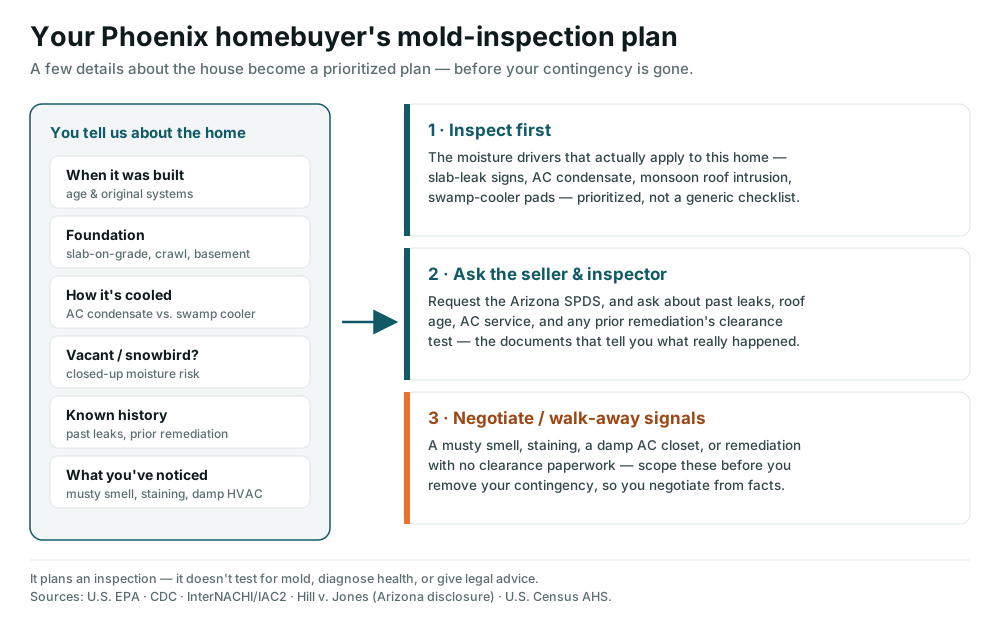
The Phoenix homebuyer's mold checklist
Inspect first
- Book a standard home inspection — and specifically ask the inspector to look for moisture and mold. A general inspection is your baseline; a moisture-focused look checks the roof, plumbing, attic, and foundation for the water sources mold needs to grow. (InterNACHI / IAC2 — Mold Inspection Standards of Practice)
- Trust your own eyes and nose on every walk-through. If you can see or smell mold, you already know to address it — the EPA notes that if visible growth is present, a lab test is usually unnecessary to warrant fixing it. (EPA — A Brief Guide to Mold, Moisture and Your Home)
- Prioritize the original plumbing, roof, and flashing on this older home. Older housing reports water problems somewhat more often in federal survey data, and original plumbing and roofing are typically past their service life. (U.S. Census Bureau / HUD — American Housing Survey)
- Look for slab-leak signs: warping or staining at the base of walls, and a musty odor in the middle of a room with no wall nearby. Slab-on-grade is the dominant Phoenix foundation; a slow slab leak wicks up into flooring and drywall from below, with no visible drip. (Mold Pros Phoenix — Phoenix mold drivers (building science))
- Inspect the AC condensate drain line and drip pan — and, if the air handler is in the attic, the sheathing beneath it for water staining. A clogged condensate line or overflowing pan is the most common indoor moisture source in a Phoenix summer. (Mold Pros Phoenix — Phoenix mold drivers (building science))
- Check the evaporative (swamp) cooler's pads, reservoir, and ducts for staining — and the home's indoor humidity. Swamp coolers add moisture to the air by design; neglected pads and a standing reservoir grow mold and feed it into the ductwork. (Mold Pros Phoenix — Phoenix mold drivers (building science))
- Treat a closed-up or seasonally-vacant home with extra care: check for musty air, run the AC and re-check, and look at anything that was shut off. A Phoenix home shut up for months with the cooling off loses its dehumidification, and a slow leak can run undetected the entire time it sat empty. (Mold Pros Phoenix — Phoenix mold drivers (building science))
- Inspect the repaired roof area AND the attic decking directly above it. Monsoon roof intrusion usually wets the attic sheathing; confirm the repair fixed the source, not just the ceiling stain. (Mold Pros Phoenix — Phoenix mold drivers (building science))
- Inspect the flooring, walls, and subfloor around the past plumbing or slab leak. Water damage is almost always larger than the visible repair; mold persists in materials that weren't fully dried or removed. (Mold Pros Phoenix — Phoenix mold drivers (building science))
- Look closely at any staining around the swamp cooler and its ducts. Cooler staining signals chronic moisture coming off the unit. (Mold Pros Phoenix — Phoenix mold drivers (building science))
Ask the seller & your inspector
- Request the Seller's Property Disclosure Statement (SPDS) and read the water, roof, and mold sections. In Arizona a seller has a common-law duty to disclose known defects that materially affect value and aren't readily observable (Hill v. Jones); the SPDS is the customary form where they're written down, and 'as-is' doesn't erase that duty for known problems. General info, not legal advice. (Hill v. Jones, 151 Ariz. 81, 725 P.2d 1115 (Ct. App. 1986))
- Ask for the prior mold remediation report AND the post-remediation clearance test. A clearance test is how you know the job actually worked. No clearance document is a reason to re-inspect the area. (ANSI/IICRC S520 — Standard for Professional Mold Remediation)
- Ask directly about past leaks, the age and repair history of the roof, and AC service records. Known past water events are the single best predictor of where mold hides. (Mold Pros Phoenix — Phoenix mold drivers (building science))
- Ask whether the home has been repiped and when the roof was last fully replaced. Original supply lines and a roof at end-of-life are two of the most common leak sources in older Phoenix homes. (Mold Pros Phoenix — Phoenix mold drivers (building science))
- Ask how long the home has been vacant and whether the AC ran while it was empty. A vacant home with the AC off through a Phoenix summer is the highest-risk version of this scenario. (Mold Pros Phoenix — Phoenix mold drivers (building science))
- Ask for documentation of the roof-leak repair — who did it, when, and whether the attic was checked. A patched ceiling tells you nothing about whether the wet framing above it was dried and cleared. (Mold Pros Phoenix — Phoenix mold drivers (building science))
Negotiate / walk-away signals
- Visible mold or a persistent musty smell the seller hasn't disclosed or resolved. It points to active moisture. Have it scoped by an inspection before you remove your contingency, not after. (EPA — A Brief Guide to Mold, Moisture and Your Home)
- A persistent musty smell anywhere in the home. A musty odor is one of the most reliable signs of active or hidden mold — find the source before you close. (EPA — A Brief Guide to Mold, Moisture and Your Home)
- Water staining on ceilings or walls — especially a single freshly repainted spot. Staining marks past or active water intrusion; a fresh repaint over one corner is worth questioning. (Mold Pros Phoenix — Phoenix mold drivers (building science))
- A damp or musty AC closet, attic, or air handler. Mold in the HVAC can spread spores through the whole house when the system runs — prioritize this one. (EPA — A Brief Guide to Mold, Moisture and Your Home)
- Prior remediation with no clearance test or paperwork. You can't verify it was done correctly, so treat that area as unconfirmed. (ANSI/IICRC S520 — Standard for Professional Mold Remediation)
Why Phoenix homes need a buyer's mold plan at all
"It's too dry in the desert for mold" is the assumption that costs buyers money. Phoenix homes mold for specific, local reasons — slab leaks wicking up through slab-on-grade foundations, AC condensate lines overflowing in attics, monsoon rain finding failed roof flashing, and evaporative coolers adding moisture to the air by design. A snowbird home that sat closed up through the summer can hide a leak that ran for months. The point of a buyer's plan is to inspect for those drivers before the contingency is gone, when you still have room to negotiate. For the full picture of why the desert isn't as dry-safe as it seems, see the mold in the desert guide.
Frequently asked questions
What should a mold inspection cover when buying a house in Phoenix?
A buyer’s mold inspection is really a moisture inspection: it should look for the water sources mold needs — slab-leak signs at the base of walls, AC condensate overflow (especially an attic air handler), monsoon roof and flashing intrusion into the attic, and, on swamp-cooled homes, the cooler pads and reservoir. The EPA notes that if you can see or smell mold, a lab test is usually unnecessary to know it needs addressing; the priority is finding and fixing the moisture source.
Do I need a separate mold inspection, or is the home inspection enough?
A standard home inspection is your baseline, and you should ask the inspector to look specifically for moisture and mold. If the home has risk factors — it is older, sat vacant, has a swamp cooler, or shows staining or a musty smell — a targeted moisture/mold look (and, where warranted, testing with a same-day outdoor control sample) is worth it before you remove your inspection contingency.
Does an Arizona seller have to disclose mold?
Arizona sellers must disclose known material defects that materially affect the home’s value and are not readily observable to a buyer — a duty established in Hill v. Jones (1986). Known mold or water damage falls under that duty, and it is customarily written on the Seller’s Property Disclosure Statement (SPDS). Selling a home “as-is” does not erase the duty to disclose problems the seller already knows about. This is general information, not legal advice.
Is a home more likely to have mold if it sat vacant?
It can be. A Phoenix home that was closed up for months — common with snowbird and seasonal properties — with the cooling switched off can accumulate moisture, and a slow leak can run undetected the entire time nobody was home. If the home you are buying was vacant, check for musty air, run the AC and re-check, and ask how long it sat empty and whether the AC ran.
What are the walk-away or negotiate signals for mold when buying?
The signals worth scoping before you remove your contingency: a persistent musty smell, water staining on ceilings or walls (especially a single freshly repainted spot), a damp or musty AC closet or attic, and any prior remediation with no clearance test or paperwork. None of these automatically means walk away — they mean get it inspected and priced so you can negotiate from facts, not guesses.
Under contract and something turned up?
Get a free, no-obligation Phoenix mold assessment
If your walk-through or inspection surfaced a musty smell, staining, or a damp AC closet, get a fast, free assessment before your contingency ends. No pressure and no scare tactics — a straight, honest read on what it is and what it takes to handle it, so you can negotiate from facts.
Sources
- EPA — A Brief Guide to Mold, Moisture and Your Home
- CDC — About Mold
- InterNACHI / IAC2 — Mold Inspection Standards of Practice
- ANSI/IICRC S520 — Standard for Professional Mold Remediation
- U.S. Census Bureau / HUD — American Housing Survey
- Hill v. Jones, 151 Ariz. 81, 725 P.2d 1115 (Ct. App. 1986)
- Arizona Association of REALTORS — Seller's Property Disclosure Statement (SPDS)
- Mold Pros Phoenix — Phoenix mold drivers (building science)