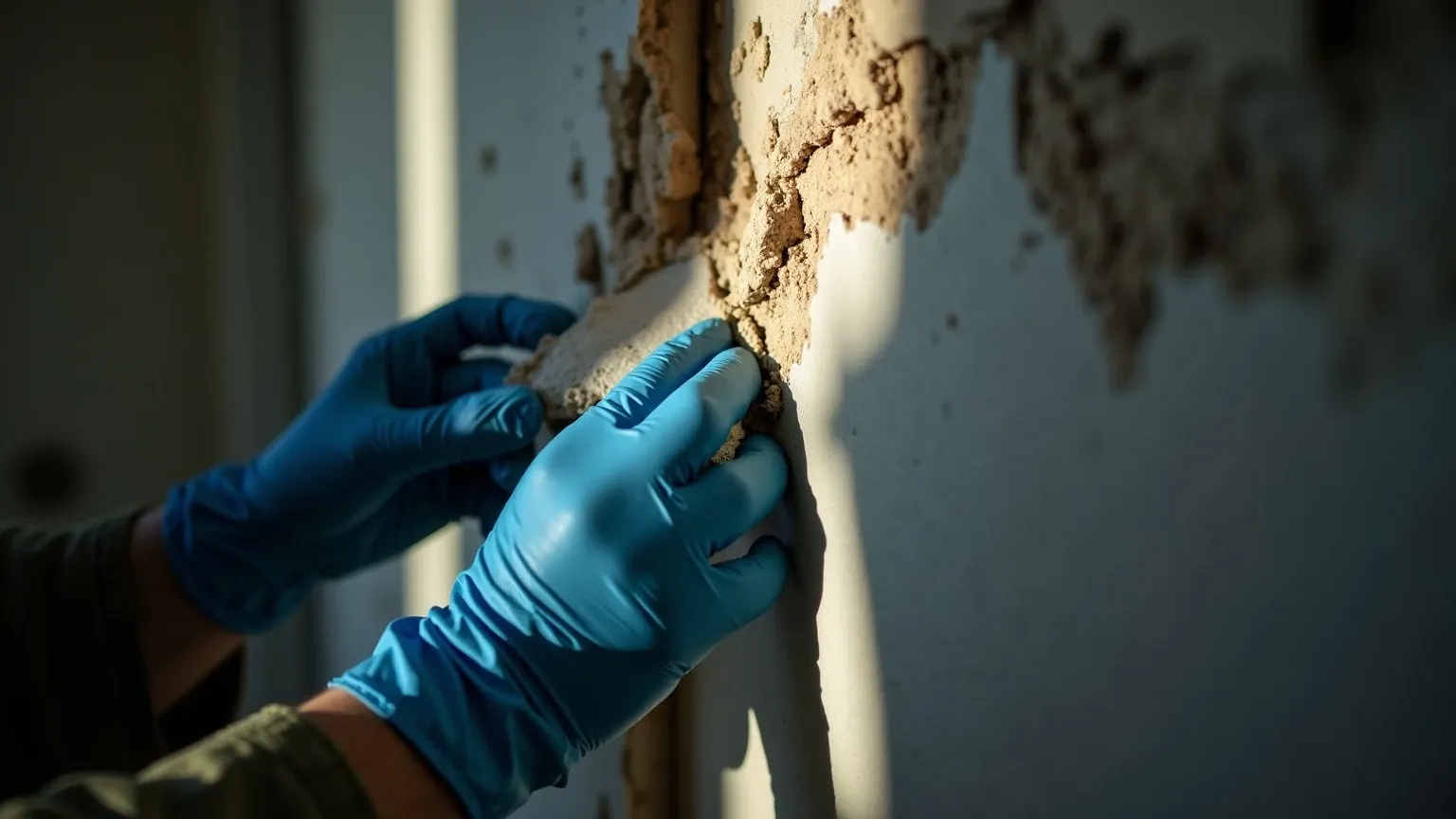
Phoenix Ceiling Mold Removal Services
Ceiling mold removal across the Phoenix metro — the most common Phoenix mold job. Attic AC condensate leaks, monsoon roof intrusion, and upstairs bathroom leaks. Section replaced, moisture source repaired, HEPA cleanup. Free quote.
- Phoenix's most common mold job — AC condensate ceiling leaks
- Attic AC, monsoon roof intrusion, upstairs bathroom leaks
- Section removal, HEPA cleanup, source-repair, rebuild
- Free quote & IICRC S520 standard
- Free, no-obligation quotes Know the cost before you commit
- Local Phoenix-metro pros People who know desert mold
- Fast response Mold spreads — we move quickly
- Honest pricing, no scare tactics Only fix what needs fixing
Professional ceiling mold removal in Phoenix
Ceiling mold removal is the single most common Phoenix mold job — driven almost entirely by attic-installed AC air handlers whose condensate lines clog and drip into the ceiling drywall below, monsoon-season roof intrusion soaking ceiling drywall from above, upstairs bathroom leaks dripping into downstairs ceilings, and (less often) inadequate bathroom ventilation causing condensation on ceiling drywall above showers. Every one of these has a specific pattern, a specific source repair, and a specific removal scope. The IICRC S520 process is the same across all four: identify and stop the moisture source, contain the affected area, physically remove the mold-damaged drywall and any insulation above it, HEPA-vacuum and treat the remaining framing, dry the cavity to a normal moisture baseline, and rebuild.
The four sources of ceiling mold in Phoenix homes
- Attic AC condensate line leak (most common). Two-story stucco homes in Ahwatukee, Desert Ridge, Laveen, Chandler, Gilbert, and newer Peoria and Surprise builds put the AC air handler in the attic. The condensate line clogs with dust and algae during summer cooling season, the primary drain pan overflows, and the water drips into the ceiling drywall below the unit. Pattern: a rectangular ceiling stain directly below where the AC unit sits in the attic. Repair: clear and reroute the condensate line, check the drain pan, often add a secondary pan with a float shutoff switch.
- Monsoon roof intrusion. From mid-June through September, Phoenix's flat and low-slope roofs pond monsoon water. A hairline membrane crack, a failed flashing, or a wind-lifted tile lets water into the ceiling drywall from above. Pattern: staining below a roof valley, scupper, skylight, plumbing vent, or roof penetration. Repair: roof source repair by a licensed roofer, coordinated with the mold removal.
- Upstairs bathroom leak. A supply-line leak, drain-line leak, or shower-pan failure in an upstairs bathroom drips into the ceiling below over weeks. Pattern: staining directly below the upstairs bathroom, often localized around the shower, tub, or toilet position. Repair: plumbing source repair coordinated with the removal.
- Ventilation-driven condensation. Ceiling mold above showers or over kitchens without adequate exhaust ventilation. Every shower or steamy cooking session dumps moisture into the room; without proper venting the moisture condenses on the coolest surface (typically the ceiling) and feeds mold on the drywall over time. Repair: install or upgrade exhaust fan and vent it through the roof or wall (not into the attic).
The ceiling mold removal process
A Phoenix ceiling mold job runs on the IICRC S520 process: identify the moisture source (attic AC, roof, upstairs bathroom, or ventilation), contain the room below the affected ceiling with plastic sheeting and floor protection, run a HEPA-filtered air scrubber during work, cut out the affected drywall in a rectangular section extending 12+ inches past visible staining, remove and dispose of wet insulation above the drywall, HEPA-vacuum the framing and cavity, apply antimicrobial to remaining framing, dry the cavity with air movers, and rebuild with new drywall, insulation, and paint. Total job time is typically 1-3 days on site plus rebuild.
Get a fast, free, no-obligation quote for professional ceiling mold removal in your Phoenix home using the form above. Related services: HVAC mold removal for the AC condensate source, attic mold removal if attic sheathing is also affected, water damage restoration for the acute leak response, and the Phoenix mold removal cost breakdown. See all our Phoenix mold services.
Frequently asked questions
What causes ceiling mold in Phoenix homes?
The most common cause is a leaking attic AC condensate line dripping into the ceiling drywall below the air handler. Second most common: monsoon roof intrusion soaking ceiling drywall from above. Third: bathroom-ventilation-driven condensation on ceiling drywall above showers. Fourth: an upstairs bathroom leak (supply line, drain, or shower pan) dripping into the ceiling below. All four are common Phoenix jobs and each has a specific removal-and-repair pattern.
How much does ceiling mold removal cost in Phoenix?
Ceiling mold removal in Phoenix typically runs $800 to $3,500 for a standard-size affected section (drywall cut-out, HEPA cleanup, moisture-source repair, drywall replacement and repaint). Larger jobs — multiple rooms, HVAC involvement, chronic monsoon roof intrusion — can run $5,000+. Cost drivers: affected area size, whether the HVAC air handler needs work, whether the roof needs repair, and rebuild scope.
Can you save the ceiling drywall or does it have to come out?
Drywall with active mold growth has to be physically removed per EPA and IICRC S520 guidance — mold hyphae grow into the material and surface cleaning leaves the roots. The standard scope cuts out the affected drywall in a rectangular section (typically extending 12+ inches past visible staining), removes and replaces insulation above it, HEPA-vacuums the framing and adjacent surfaces, and rebuilds. Ceiling drywall with only water staining but no mold growth may sometimes be saved after drying and moisture verification.
Do you fix the AC or roof source as part of the ceiling mold job?
The moisture-source repair is coordinated with the ceiling mold removal — either done first, or in coordination with the removal crew. For attic AC condensate leaks, that's clearing and rerouting the condensate line, checking the drain pan, and often adding a secondary drain pan with a float switch. For monsoon roof intrusion, that's a roofing repair. For upstairs bathroom leaks, that's a plumbing repair. Some source repairs are within our scope; some need a licensed plumber, HVAC tech, or roofer.
How do you know the source is the AC condensate line versus a roof leak?
Location and pattern. A ceiling mold pattern below the attic AC air handler almost always traces to the condensate line or drain pan. A pattern under a roof valley, a scupper, or a penetration (skylight, plumbing vent, chimney) usually traces to roof intrusion. Moisture-meter readings on the ceiling drywall, thermal imaging in the attic, and a visual inspection of both the attic air handler and the roof above the affected area confirm which source is driving the leak.
Worried about mold in your Phoenix home?
Get a fast, free, no-obligation quote. No pressure, no scare tactics — just a straight answer.