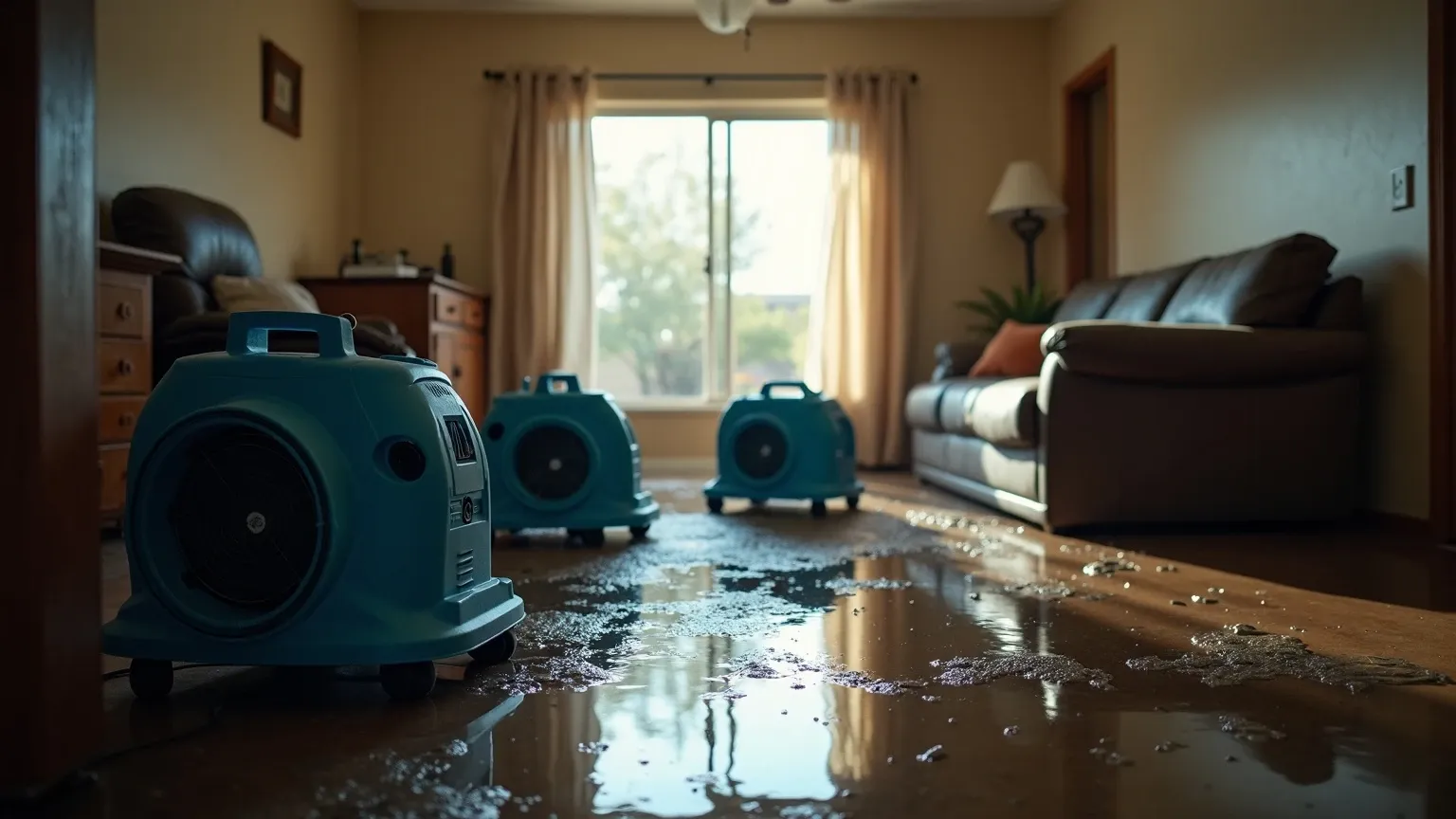
Phoenix Water Damage Restoration Services
Burst pipe, slab leak, water heater failure, or monsoon flooding? Professional water damage restoration to the IICRC S500 standard — fast emergency extraction and structural drying that stops mold before it starts. The first 24–48 hours matter most.
- IICRC S500 emergency extraction & structural drying
- Stops mold before it starts — speed is everything
- Burst pipes, slab leaks, water heaters & monsoon floods
- Free quote — fast response across the Valley
- Free, no-obligation quotes Know the cost before you commit
- Local Phoenix-metro pros People who know desert mold
- Fast response Mold spreads — we move quickly
- Honest pricing, no scare tactics Only fix what needs fixing
Emergency water damage restoration across the Phoenix metro
Water damage restoration in Phoenix is the race to extract the water and dry the structure before mold takes hold. The industry reference is the ANSI/IICRC S500 Standard for Professional Water Damage Restoration — the same standard reputable restoration companies work to. A proper restoration includes emergency water extraction, water-category assessment (Category 1 clean water, Category 2 grey water, Category 3 black water), removal of unsalvageable wet materials, structural drying with commercial-grade air movers and low-grain refrigerant (LGR) dehumidifiers, daily moisture monitoring with meters, and antimicrobial treatment where the water category requires it. Done fast, restoration prevents mold entirely. Done slowly, a water problem becomes a mold problem — and mold remediation costs several times what fast restoration does.
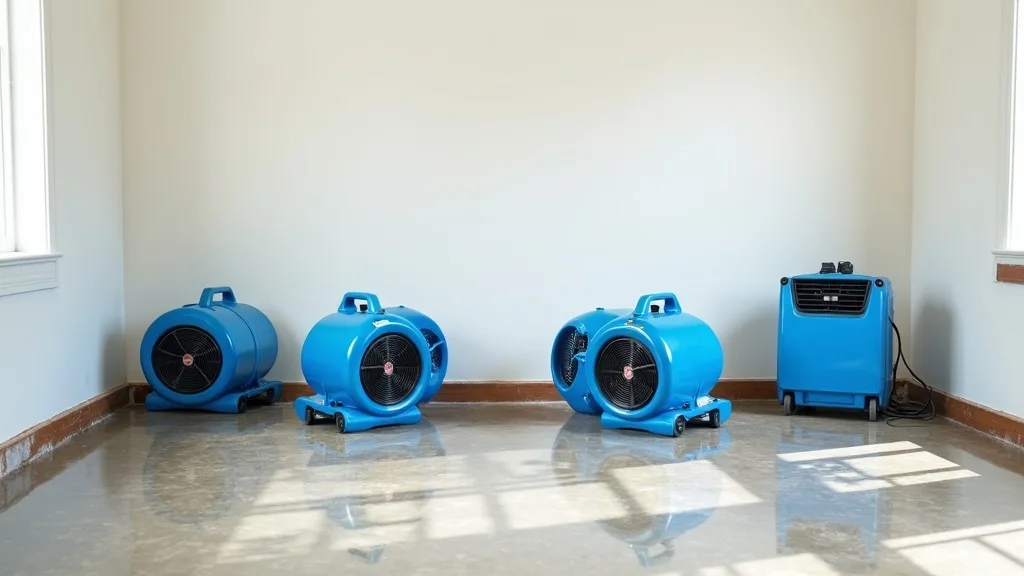
The 24-to-48-hour window is the whole game. The EPA is direct that mold can begin colonizing wet materials within 24 to 48 hours of the water event, and Phoenix's summer heat accelerates the microbial timeline. Every hour after the water starts is more mold risk. That's why emergency dispatch, same-day extraction, and continuous structural drying are the core of a restoration service — the fastest, cheapest way to deal with mold is to never let it grow.
The three water damage categories and why they matter
IICRC S500 classifies every water damage event into one of three categories that determine what work is safe, what materials can be saved, and what has to come out. The category drives the price and the scope:
- Category 1 — Clean water. Water from a sanitary source: a supply-line break, a water heater tank rupture, a rain-driven roof leak, an ice-maker line, a refrigerator supply. Safe to work with using standard PPE. Extraction and drying are the core service. Materials can typically be saved if dried within 24 hours. If left more than 48 hours, Category 1 can deteriorate to Category 2.
- Category 2 — Grey water. Water containing significant contamination that could cause illness on contact: dishwasher and washing-machine discharge, aquarium water, sink overflows carrying detergent or organic matter, toilet overflow from the bowl side (not the trap). Requires antimicrobial treatment and, for porous materials, removal rather than drying-in-place.
- Category 3 — Black water. Heavily contaminated water carrying pathogens or chemical hazards: sewage backflow from beyond the toilet trap, ground-water flooding, canal or drainage overflow, standing water more than 48 hours old that has become microbially active. Requires full containment, PPE, removal of all porous materials in affected areas, aggressive antimicrobial treatment, and often direct coordination with an environmental hygienist. Category 3 restoration is closer to full mold remediation than to standard water damage work.
The professional water damage restoration process, step by step
- Emergency dispatch and water shutoff. On an active water event, the first call is to stop the flow — main water shutoff, water heater isolation, supply-line valve. If the source is unclear, an emergency plumber may be dispatched with the restoration crew. Documentation photos are taken before any water is moved.
- Water extraction. Truck-mounted extractors and portable submersible pumps remove standing water. Extraction is aggressive in the first pass because every gallon left behind adds drying time.
- Category assessment and material triage. Water is categorized (1, 2, or 3). Affected materials are triaged: what can be dried in place, what must be removed. Saturated carpet padding, wet insulation, and severely damaged drywall typically come out; the "flood cut" (lower 24 inches of drywall) is standard IICRC S520 practice in Category 2 and 3 events, an industry standard rather than an EPA or FEMA rule.
- Removal of unsalvageable materials. Wet carpet pad, saturated batt insulation, water-damaged particleboard, swollen baseboards, and mold-prone porous materials are cut out and bagged. Hardwood floors are triaged separately — some can be dried with specialized floor mats; some require replacement.
- Structural drying setup. Commercial centrifugal and axial air movers are placed to create airflow across wet surfaces. Low-grain refrigerant (LGR) dehumidifiers pull moisture from the air. Air-mover count and dehumidifier capacity are calculated from the wet material load per IICRC S500 psychrometric drying models. In a Phoenix summer, drying happens quickly; during monsoon dew-point spikes it slows.
- Daily moisture monitoring. Moisture meters (pin and pinless) read framing, subfloor, and drywall daily. Progress is documented. The structure is not declared dry until readings return to a normal, dry baseline appropriate for the material.
- Antimicrobial treatment where required. Category 2 and 3 water events require EPA-registered antimicrobial application to hard surfaces after physical removal. Category 3 also requires sanitization.
- Final documentation and handoff. Final moisture readings, before/during/after photos, and the restoration scope document are provided for insurance and homeowner records. If mold has appeared during the drying window, the job transitions into professional mold remediation.
Common water damage sources in Phoenix homes
Water damage restoration calls across the Phoenix metro cluster around a handful of predictable sources:
- Slab leaks in older central Phoenix homes. Under-slab plumbing in 1950s–1970s Arcadia, Coronado, Encanto, Willo, and central Mesa homes develops pinhole leaks that soak subfloor and framing for weeks or months. By the time the leak is found (a hot spot on the floor, a jump in the water bill, buckled hardwood), significant water damage is already present.
- Water heater failures. A garage or attic tank rupture can dump 40 to 80 gallons of water into a Phoenix home in minutes. Older tanks (past their 10-year design life) and homes with hard water are at elevated risk. Water heater failure in a hot Phoenix garage often goes undetected until water reaches the interior.
- Burst supply lines and pinhole failures. A single supply line behind a wall or in a wall cavity can soak a room overnight. Older copper with pinhole corrosion, aging PEX fittings, and freeze-damaged lines from an unusual winter cold event are all common failure modes.
- Monsoon flooding and roof leaks. From mid-June through September, Phoenix's flat and low-slope roofs on ranch and mid-century homes pond monsoon water. Hairline membrane cracks, failed scupper flashings, and wind-lifted tiles let water into attics and ceilings during intense storms.
- AC condensate overflow into ceilings. Attic air handlers on two-story stucco homes across Ahwatukee, Desert Ridge, Laveen, Chandler, Gilbert, and newer Peoria and Surprise builds. A clogged condensate line overflows into the ceiling below.
- Appliance failures. Refrigerator ice-maker line breaks, dishwasher supply-hose ruptures, washing-machine hose failures. Failure of a decades-old rubber washing-machine hose is one of the most common single-source home floods across the Valley.
- Category 3 sewage backflow. Older sewer laterals under central Phoenix and Mesa homes, root-intruded lines, and heavy monsoon storm events that overwhelm municipal sewer capacity. Sewage backflow is Category 3 water and requires full-scope response.
Whatever the source, the clock starts the moment things get wet. If mold has already appeared, the job scope expands to include mold removal or full mold remediation.
Equipment used in professional Phoenix water damage restoration
Professional restoration uses commercial equipment sized to the drying load. Truck-mounted extractors (Sapphire, HydraMaster) pull standing water fast on the initial response. Portable extractors and submersible pumps handle smaller areas and hard-to-reach spaces. Commercial centrifugal air movers (Dri-Eaz Sahara, Phoenix AirMax) create high-velocity airflow across wet materials. Low-grain refrigerant (LGR) dehumidifiers (Dri-Eaz DrizAir, Phoenix R150, Ebac AD850) pull moisture from the air even at lower humidity levels — critical for Phoenix's dry conditions where standard refrigerant dehumidifiers are less efficient. Specialty hardwood-floor drying mats (Injectidry, InteliDri) dry saturated hardwood in place when possible. Moisture meters (Delmhorst, Protimeter) monitor drying progress daily. Thermal imaging cameras identify hidden wet zones behind walls. EPA-registered antimicrobials (Concrobium, Fiberlock, Sporicidin) are applied on Category 2 and 3 events.
Water damage insurance in Arizona
Arizona homeowners policies often cover water damage restoration when the water was sudden and accidental. The most commonly covered events: burst supply lines, water heater ruptures, dishwasher and washing-machine failures, wind-driven roof leaks during a covered storm. Commonly excluded: gradual leaks (a slow slab leak that ran for months), deferred maintenance (a known dripping AC condensate line), flood from outside water (monsoon flash flooding, ground water — these require separate NFIP flood insurance), and mold that predates the covered water event. A restoration company can document cause, source, and scope for the insurance claim, which is what the adjuster needs. Keep every receipt, photograph everything at first sight, preserve the failed component if you replaced it, and notify your insurer within the timeline your policy requires. See our Arizona water damage and mold insurance guide for the deeper coverage picture.
Have active or recent water damage in a Phoenix home? Get a fast, free, no-obligation quote using the form above — tell us you have active water and we prioritize the callback. If mold has already started to appear, see mold removal or mold remediation. For cost detail, our Phoenix mold and water-damage cost breakdown covers typical Valley pricing.
Frequently asked questions
How fast do I need to act after water damage in Phoenix?
Fast — the first 24 to 48 hours are decisive. Mold can begin colonizing wet materials within 24 to 48 hours per the EPA, and Phoenix summer heat accelerates that timeline. Emergency water extraction and structural drying started within the first day is what determines whether the job stays a water-damage restoration or transitions into a full mold remediation. If you have active or standing water, treat it as urgent.
What does professional water damage restoration include?
Professional water damage restoration in Phoenix follows the IICRC S500 standard and includes: emergency water extraction, water-category assessment (Category 1 clean, Category 2 grey, Category 3 black), removal of unsalvageable wet materials, structural drying with commercial air movers and LGR dehumidifiers, daily moisture monitoring until readings return to a normal baseline, and antimicrobial treatment where the water category requires it. If mold has already started, restoration transitions into mold remediation.
How much does water damage restoration cost in Phoenix?
Most Phoenix water damage restoration jobs run $1,500 to $6,000 for a single-room dry-out. Larger multi-room water events, Category 3 water requiring sanitization, or work involving hardwood floors that need specialized drying can run $10,000 to $25,000. Emergency after-hours dispatch and weekend response typically carries a premium. Insurance frequently covers water damage restoration when it followed a sudden covered event — coordinate with your adjuster early.
What are the three water damage categories?
IICRC S500 classifies water damage into three categories that determine the restoration approach. Category 1 (clean water): supply-line leaks, water heater tank failures — safe to work with, standard extraction and drying. Category 2 (grey water): dishwasher and washing-machine discharge, sink overflows — contains contaminants, requires antimicrobial treatment. Category 3 (black water): sewage, ground-water flooding, toilet backflows from beyond the trap — heavily contaminated, requires full containment and often removal of all porous materials.
Will water damage always cause mold in a Phoenix home?
Not always — it depends on how fast the area is dried. Materials that are extracted and fully dried within 24 to 48 hours often avoid mold entirely. Water that sits, or that soaks into drywall, insulation, and subfloor and is left for days, is what leads to mold growth. Speed is the single biggest factor. In a Phoenix summer, when structural cooling is limited and indoor humidity spikes during monsoon events, the mold-growth window can compress further.
Does homeowners insurance cover water damage restoration in Phoenix?
Frequently, when the water is sudden and accidental — a burst pipe, a failed water heater, an appliance leak, or a wind-driven roof leak. Gradual leaks and long-standing maintenance issues are commonly excluded. Flood from outside water (monsoon flash flooding, canal overflow) usually needs separate flood insurance. Documentation is critical: photograph everything immediately, save the failed component if replaced, keep receipts, and notify your insurer within the timeline your policy requires.
How long does the water damage drying process take?
Most structural drying takes three to five days, with daily moisture monitoring. Small contained events dry in one to two days. Large multi-room water events, hardwood floors requiring specialized drying mats, or Category 3 events requiring sanitization take longer. The drying pace is monitored with moisture meters — the structure is not declared dry until framing, subfloor, and drywall readings return to a normal, dry baseline appropriate for the material.
What is Category 3 water damage and why does it require special handling?
Category 3 water is heavily contaminated water: sewage, ground-water flooding, toilet backflows from beyond the trap, standing water more than 48 hours old, and any water that carries pathogens or chemical hazards. Category 3 restoration requires full containment, PPE, removal of all porous materials in affected areas, aggressive antimicrobial treatment, and often direct coordination with a licensed environmental hygienist. The response is closer to full mold remediation than to standard water damage restoration.
Worried about mold in your Phoenix home?
Get a fast, free, no-obligation quote. No pressure, no scare tactics — just a straight answer.