Does Homeowners Insurance Cover Mold in Arizona?
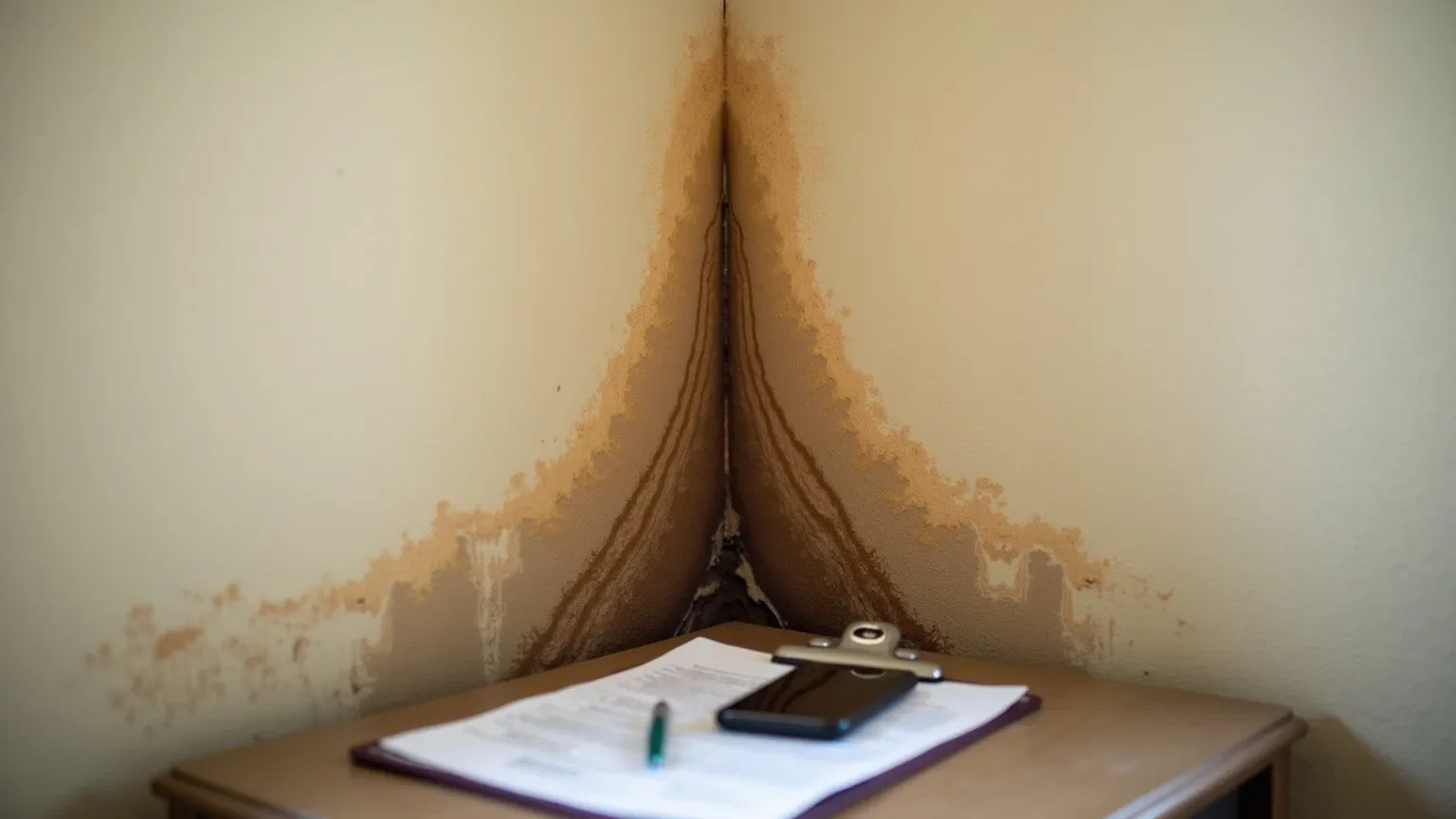
Sometimes. A standard Arizona homeowners policy covers mold only when it stems from a sudden, accidental, covered water event — like a burst pipe — and usually only up to a low mold sublimit. Gradual leaks, humidity, neglect, and flooding are typically excluded. What caused the water decides almost everything.
This is general information, not insurance or legal advice. It explains how a standard homeowners policy generally treats mold, with citations to the Insurance Information Institute and the Arizona Department of Insurance and Financial Institutions. Every policy is different, and coverage depends on your specific facts and your policy’s exact language. Read your own policy, and talk to your carrier, your agent, or a licensed public adjuster about your situation before you assume anything is or isn’t covered.
The general rule: covered peril, sudden and accidental
Start with the one principle that controls almost every mold claim. A standard homeowners policy in Arizona — the HO-3 form most owners carry — is built to cover damage that is sudden and accidental. It is not built to cover the slow, predictable cost of maintaining a home.
That single distinction is where mold coverage lives or dies. The Insurance Information Institute (the insurance industry’s own consumer-education body) puts it plainly: “Mold, like rot and insect infestation, is a home maintenance issue and these are generally not covered by standard homeowners insurance policies.” A standard policy is built for the sudden and accidental, not for the slow, predictable cost of maintaining a home.
But there’s a crucial exception, and it’s the reason this guide exists. The III’s mold guidance adds it directly: “in the event that mold growth is the direct result of a covered peril such as a burst pipe, the cost of eliminating the mold may be covered” — typically up to your policy’s specific mold sublimit.
So mold itself is not a “covered peril.” Mold is a consequence. Whether it’s covered depends entirely on what caused the water that grew it:
- A burst pipe, a failed water heater, an overflowing washing machine or dishwasher, a sudden appliance leak — these are sudden, accidental events. Mold that results from one of them is the kind that can be covered.
- A slow leak that dripped for months, chronic condensation, long-term humidity, or a roof you let go too long — these are gradual. Mold from them is treated as maintenance and is typically excluded.
The diagram below maps that fork, and the outcomes that follow from it. The rest of this guide walks each branch.
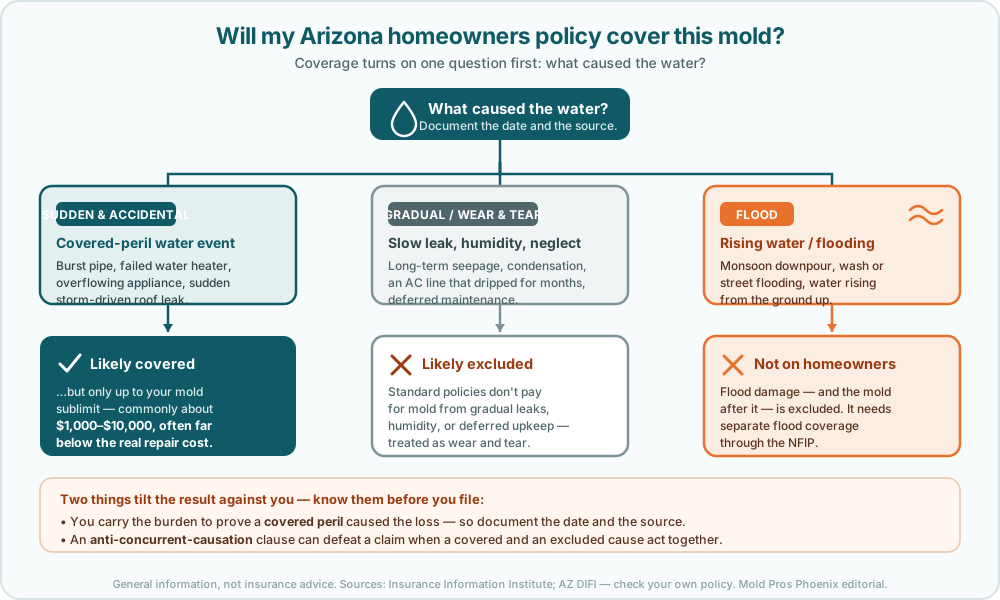
The mold sublimit: the trap inside a “covered” claim
Here is the part that surprises homeowners even when the news is good. Say your mold did come from a burst pipe — a covered peril. You’re covered. But you are very likely not covered for the full cost.
Most homeowners policies don’t pay for mold the way they pay for, say, fire damage to the structure. They impose a mold sublimit — a separate, much lower cap that applies specifically to mold (often written as coverage for “fungi, wet or dry rot, or bacteria”). Industry guidance and standard policy forms commonly put that sublimit somewhere in the range of $1,000 to $10,000, depending on the carrier and whether you’ve bought extra coverage.
The problem is the gap. Serious mold remediation — the kind that follows water sitting in walls and under flooring — can run well past $10,000. When the sublimit is a few thousand dollars and the remediation is twenty, the homeowner eats the difference. That gap, not the headline “is mold covered,” is the real consumer trap.
A few things shape where your specific cap lands:
- Some policies exclude mold entirely unless you’ve added a mold endorsement. That endorsement (often an industry “fungi, wet or dry rot, or bacteria” form) typically works by first excluding mold broadly, then adding back a defined, limited amount of coverage with a stated sublimit.
- The amount varies by carrier and form. The only number that counts is the one on your own declarations page — and whether paying extra for that add-on is worth it is its own decision, worked through in is a mold endorsement worth it. Either way, mold in the Valley is real.
- The sublimit is on your declarations page. It’s worth finding the exact number before you ever have a claim, not after.

This is general information, not insurance advice — your policy’s exact sublimit and endorsement language govern, so confirm them with your carrier or agent.
What’s not covered: gradual, flood, and neglect
The flip side of “sudden and accidental” is a list of things a standard policy generally won’t pay for. For mold, three categories matter most.
Gradual leaks and long-term moisture. This is the biggest one. Mold that grew from a slow, ongoing leak, repeated seepage, or chronic condensation is typically excluded, because it reads as wear and tear or deferred maintenance rather than a sudden event. The III is blunt that an insurance policy will not cover damage “due to lack of maintenance, mold or infestation”. A fitting that wept under a sink for a year, a shower pan that leaked slowly, a roof that’s been letting a little water in — the mold from these is usually on you.
Flooding. Flood damage is excluded from standard homeowners insurance, full stop — and the mold that follows a flood is excluded along with it. Flooding (water rising from the ground up) is covered, if at all, by a separate flood policy, usually through the National Flood Insurance Program (NFIP). And here’s the catch that traps people after a flood: a standard NFIP policy generally does not cover mold either, on the theory that mold is a preventable consequence of how quickly you dry out after the water recedes. So flood-caused mold often falls through the gap between two policies.
Neglect and deferred maintenance. Even where the triggering event was sudden, an insurer can push back if the mold got as bad as it did because you didn’t act. Letting a known leak sit, ignoring a musty smell for months, failing to dry out a wet area — all of it gives a carrier room to argue the loss was your maintenance failure, not the covered event.
There’s also a structural clause worth knowing: the anti-concurrent-causation (ACC) clause. It lets an insurer deny a claim when damage results from a covered peril and an excluded peril acting together — even if the covered one was the main cause. In a mold claim that mixes, say, some sudden water and some long-standing seepage, an ACC clause can be the difference between a paid claim and a denied one. It’s one more reason the cause and timeline of the water are everything.
Phoenix scenarios: where “sudden vs. gradual” gets real
The abstract rule gets concrete fast when you map it onto how Valley homes actually take on water. Phoenix has its own moisture drivers, and most of them sit right on the sudden-versus-gradual line — which is exactly why a mold claim here so often comes down to which side of that line your water was on.
A burst AC condensate or supply line (potentially covered). Your air handler’s drain line or a supply line lets go suddenly and dumps water into a closet, an attic, or a wall, and mold follows. Because the failure was abrupt and accidental, this looks like the covered category — much like a burst pipe. Document the date you found it and what failed.
Gradual AC condensate seepage (likely excluded). The same air handler, but instead of bursting, the condensate line slowly clogged and overflowed a little at a time for months, quietly soaking the platform and the drywall below. This reads as gradual seepage and deferred maintenance — and it’s the kind of slow loss carriers typically exclude. Same equipment, opposite outcome, decided entirely by sudden versus gradual. AC condensate problems are among the most common mold sources in the Valley, which is why this distinction comes up so often — see our 2026 Phoenix Mold Risk Report for why the equipment runs hard enough to cause both.
Monsoon flooding (excluded) vs. a storm-damaged roof (may be covered). This is the Phoenix distinction that catches people. If a monsoon flood or an overflowing wash sends water rising into your home from the ground, that’s flood — excluded from homeowners insurance and the domain of NFIP. But if that same storm tears or lifts your roof and then rain drives in from above, the wind-driven rain through storm-damaged roofing can be a covered peril. The III’s own framing is that water from the top down (rain) is generally a homeowners matter, while water from the bottom up (a flooded wash) is a flood matter. After a monsoon, where the water came from and which direction it moved decides the claim.
A slab leak. A pressurized line under the slab can fail suddenly (more claim-friendly) or weep slowly for a long time (more likely excluded). Slab leaks are notorious for hiding — the water tracks under flooring and into walls before anyone sees it — which makes documenting the failure and the moisture source especially important here. A musty smell with no visible mold is often the first sign of one.
Notice the pattern: in Phoenix, the question is almost never “is mold covered” in the abstract. It’s “was this water sudden or gradual, and did it come from above or below” — and that’s a question your documentation answers.
Condos and renters: different policy, same logic
If you don’t own a single-family home, the policy form changes — but the sudden-versus-gradual logic doesn’t.
Condo owners (HO-6). An Arizona condo usually involves two policies: the HOA’s master policy (covering the building structure and common elements) and your individual HO-6 policy (covering your unit’s interior finishes and your belongings). Mold coverage is frequently capped or excluded on both, and which policy is even in play depends on where the water started — a common-element failure versus something inside your unit. That responsibility question is its own subject; we cover the condo and HOA split in detail in who’s responsible for mold in an Arizona condo or HOA.
Renters (HO-4). Renters insurance follows the same covered-peril logic for your personal property — mold that ruins your belongings because of a sudden, covered water event may be covered up to limits, while gradual or flood-caused mold generally isn’t. But renters insurance does not cover the building itself or make your landlord fix anything — that’s landlord-tenant law, a separate track entirely. If you’re a renter dealing with mold the landlord won’t address, start with mold in your Arizona apartment and your rights, which walks the notice-and-remedy steps under Arizona’s Residential Landlord and Tenant Act.
The throughline across owners, condo owners, and renters is the same: a standard policy covers sudden, accidental water events up to a limit, and excludes gradual loss and flooding. The form changes; the logic doesn’t.
How to file a mold claim in Arizona
If you think you have a covered mold loss, the way you handle the first few days shapes the whole claim. Arizona’s insurance market is regulated by the Arizona Department of Insurance and Financial Institutions (DIFI), which licenses carriers and investigates consumer complaints — but no Arizona law forces a carrier to include mold coverage in a homeowners policy, which is exactly why the sublimit and endorsement language vary so much. Work the claim deliberately:
- Document before you touch anything. Take clear, dated photos and video of all the damage — the mold, the water source, the affected walls, ceilings, flooring, and any ruined belongings — before cleanup or remediation begins. Keep samples of damaged materials if you safely can. Remember the burden: you have to prove a covered peril caused this, and the photos are your proof. For the full evidence file and the Arizona deadlines the carrier has to meet, see what an adjuster looks for on a Phoenix mold claim.
- Pin down the cause and the date. Write down what failed and when you discovered it. “Supply line under the kitchen sink burst the morning of the 12th” is a covered-peril story; “we noticed it had been damp for a while” invites a gradual-loss denial. Be honest and be specific.
- Report it promptly, in writing. Notify your carrier or agent right away, and follow any phone call with an email so there’s a dated record. Prompt notice matters, and so does a paper trail.
- Know your sublimit going in. Find the mold cap on your declarations page so you’re not blindsided by a payout that stops well short of the remediation bill.
- Get an independent inspection and scope. A third-party mold inspection and a written remediation scope document what the mold is, where it is, and the moisture source feeding it — the evidence that ties the loss to a sudden covered event and gives the adjuster something concrete to evaluate.
- If you disagree on the amount, use the appraisal clause — or a public adjuster. Most policies include an appraisal process: a way to resolve disputes over the amount of the loss (note: appraisal usually settles the dollar amount, not whether something is covered). For a complex or contested claim, a licensed public adjuster works for you, not the insurer, and can prepare an estimate and negotiate on your behalf. For coverage disputes or a denial you believe is wrong, an attorney or a complaint to DIFI may be the next step.
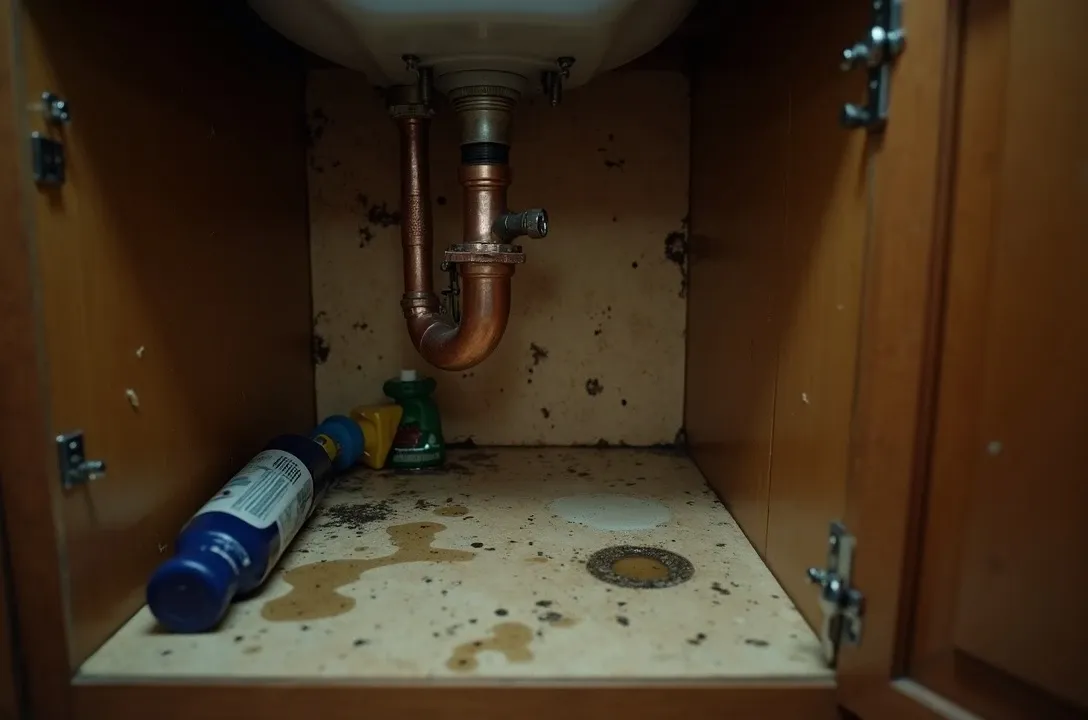
Why a documented inspection strengthens your claim
Across every part of a mold claim runs the same asymmetry: the burden of proof is on you, the policyholder, to show that a covered peril caused the loss — and the single most contested fact is almost always the moisture source. Was this sudden water from a burst line, or slow seepage that had been there for months? On that one question the whole claim can turn.
That’s where an independent inspection earns its place. A third-party mold inspection and a water-damage assessment can document what the mold is, where it is, and the moisture source feeding it — a moisture-meter reading that traces back to a discrete failure is concrete evidence the loss was a sudden covered event, not gradual maintenance. A written remediation scope does the same job on the cost side: it gives the adjuster (and, if it comes to it, an appraisal panel) an itemized, defensible number to work from instead of a guess.
We’re clear about the limit here: an inspection documents the mold and its source — it is not a coverage determination, and we don’t adjust claims or give insurance advice. But for a homeowner carrying the burden of proof, an independent set of findings is often the difference between a denied claim and a paid one.
What to do next
If you’re a Phoenix-area homeowner facing mold and wondering whether insurance will help, the sequence is: identify what caused the water (sudden and accidental, or gradual?), document the damage and the source with dated photos, find your mold sublimit on your declarations page, report the claim in writing, and use an independent inspection and scope to prove the cause and the cost — leaning on the appraisal clause or a public adjuster if you and the carrier disagree on the amount. Throughout, read your own policy and talk to your carrier or agent; this is general information, not insurance advice.
To understand why mold happens in Valley homes in the first place — and which moisture failures most often cause it — see our Phoenix mold guides and the 2026 Phoenix Mold Risk Report. If your situation is a condo or HOA, the responsibility split is its own subject in who’s responsible for mold in an Arizona condo or HOA; if you rent, see mold in your Arizona apartment and your rights. And if you need the mold and its moisture source documented for a claim, that’s exactly what a mold inspection and a water-damage assessment are built to do.
Get a free quote
If you’re dealing with mold in a Phoenix-area home and need it documented for an insurance claim — what it is, where it is, and the moisture source feeding it — a free, no-obligation inspection quote is a straightforward place to start. We handle mold across the Valley, and an independent set of findings and a clear remediation scope can be exactly the record a homeowner needs when the burden of proof is on them. Fill out the form below and we’ll get back to you with a clear next step. (For questions about what your policy covers, talk to your carrier, your agent, or a licensed public adjuster — we document mold; we don’t adjust claims or give insurance advice.)