Phoenix Building Codes & Mold: The Provisions That Keep Water Out
Building codes are, at heart, moisture codes. They require humid air to vent outdoors and roofs and walls to shed water and dry out. In a Phoenix home, a handful of provisions do almost all the mold-relevant work: bath-fan termination (IRC M1507.2), attic ventilation (R806), and the weather-resistant wall envelope (R703). Get those wrong and the desert will not save you.
This is general information, not a code ruling. It explains, in plain language, how the International Residential Code generally treats moisture and why a few provisions matter for Phoenix mold, with citations to the sections and editions. Codes and local amendments change, and how any rule applies to a specific house is a judgment call. For your home, confirm the adopted edition and the right fix with your local building department — the authority having jurisdiction, or AHJ — and a licensed contractor.
Why building codes are really moisture codes
There is a stubborn myth that you cannot get mold in the desert. The building code quietly disagrees. Open the International Residential Code — the model code Phoenix and its suburbs adopt for houses — and a large share of it exists to do one thing: keep water and water vapor from collecting where it can rot wood and grow mold. The code makes roofs shed rain, makes walls drain, makes humid indoor air leave the building, and makes assemblies able to dry when they do get wet.
That framing matters because it flips how you read a Phoenix mold problem. Mold here is almost never about outdoor humidity. It is about a specific moisture path inside the house — and several of those paths are governed by code provisions that, when built or maintained wrong, become direct mold causes. Our mold in the desert guide busts the myth at the climate level; this guide busts it at the code level. The same drivers show up again and again, and the code already names most of them.
The City of Phoenix currently builds houses to the 2024 Phoenix Building Construction Code, which incorporates the 2024 International Residential Code. The Phoenix City Council adopted it on June 18, 2025 under Ordinance G-7397, with an effective date of August 1, 2025. You can confirm that on the City of Phoenix Building Construction Codes page and in the city’s adoption announcement. The specific section numbers below come from the IRC exhaust-systems and roof chapters published by ICC. Suburbs adopt on their own schedules, which we cover near the end.
The bath fan that vents into the attic — the #1 code-related hidden mold cause
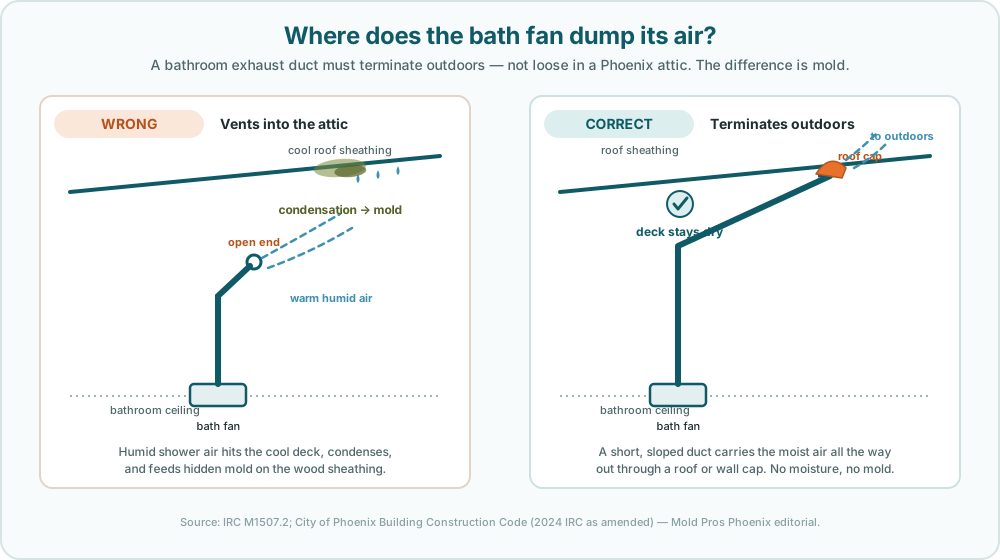
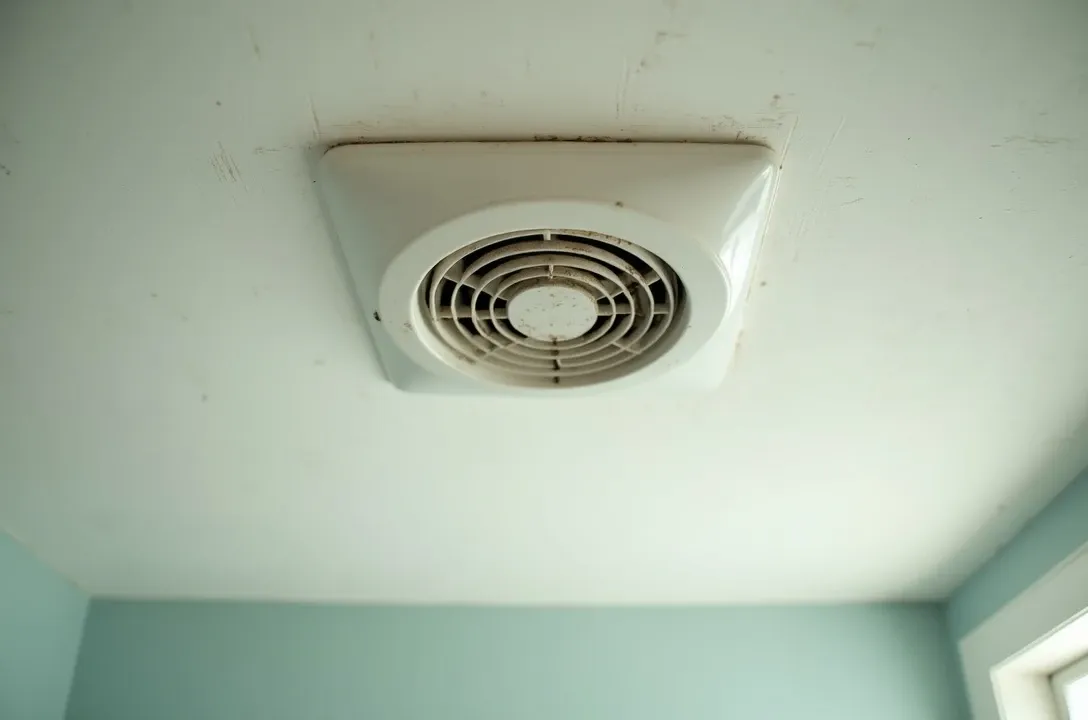
If there is one code provision every Phoenix homeowner should know, it is IRC M1507.2. The rule is short and absolute: mechanical exhaust from a bathroom must be carried directly to the outdoors and must not discharge into an attic, crawl space, or other space inside the building. The ICC text of the exhaust-systems chapter spells it out, and the City of Phoenix carries it forward in its adopted 2024 IRC.
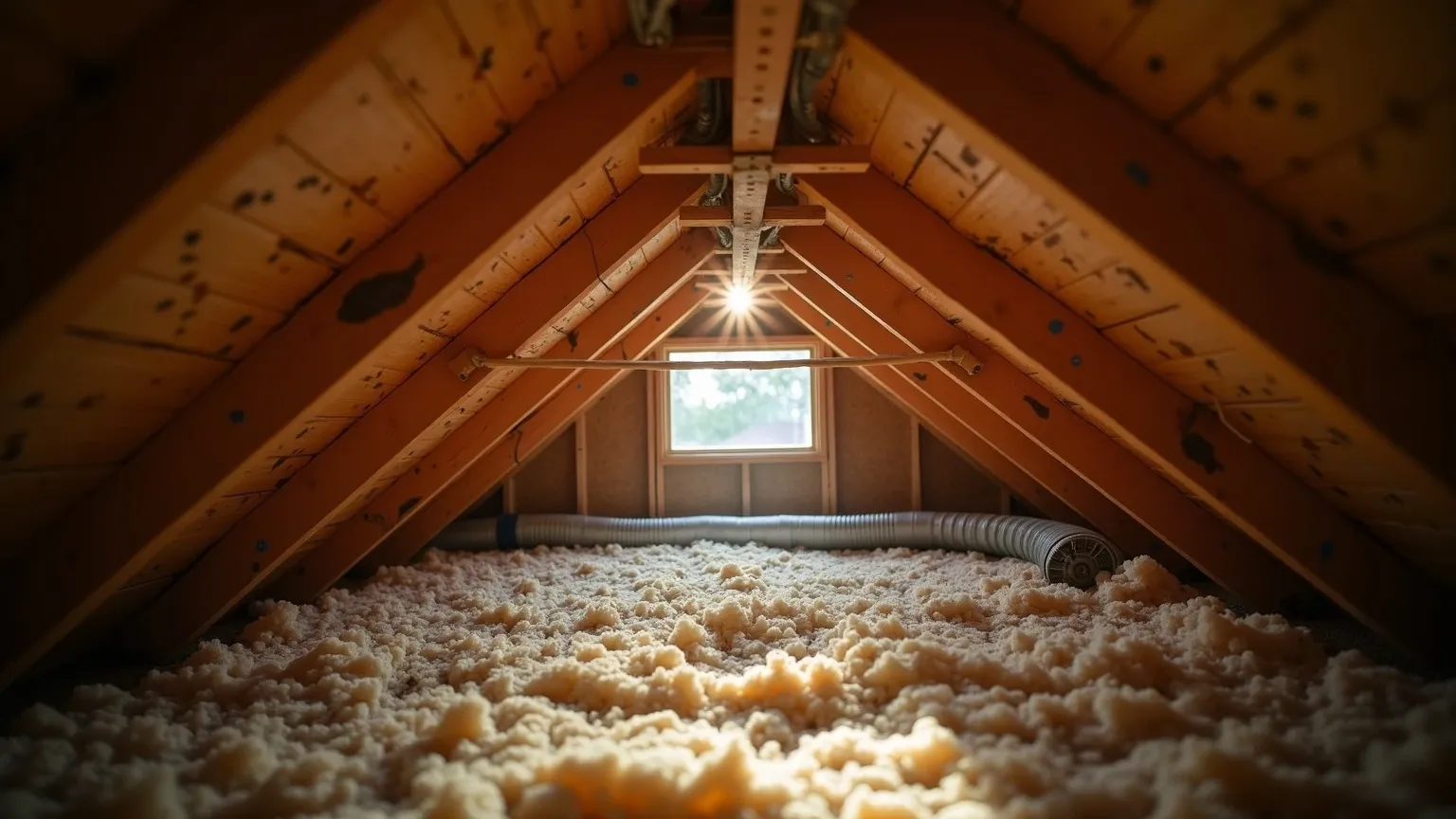
Here is why that one line prevents so much mold. Every hot shower pushes a slug of warm, moisture-laden air up through the fan. If the duct carries it all the way outside through a roof or wall cap, the moisture leaves the building and nothing happens. If the duct instead ends loose in the attic — disconnected, never connected, or terminating just past the ceiling — that humid air hits the underside of the roof sheathing, which in the cool early-morning hours sits well below the dew point. The vapor condenses into liquid water on the wood. Do that twice a day for months and you get exactly what we describe in the attic mold guide: dark growth spreading across the roof deck, completely hidden until someone climbs into the attic or smells it through the vents.
This is not a rare defect. It happens when a duct is knocked loose during other attic work, when a remodel adds a fan but stops short of the roof, or when the original builder cut a corner that drywall then hid forever. The same logic extends to the clothes dryer: IRC M1502.3 requires the dryer exhaust duct to terminate on the outside of the building, for the same moisture reason (plus lint and fire safety). A dryer venting into a garage or attic is the laundry-room version of the same mistake.
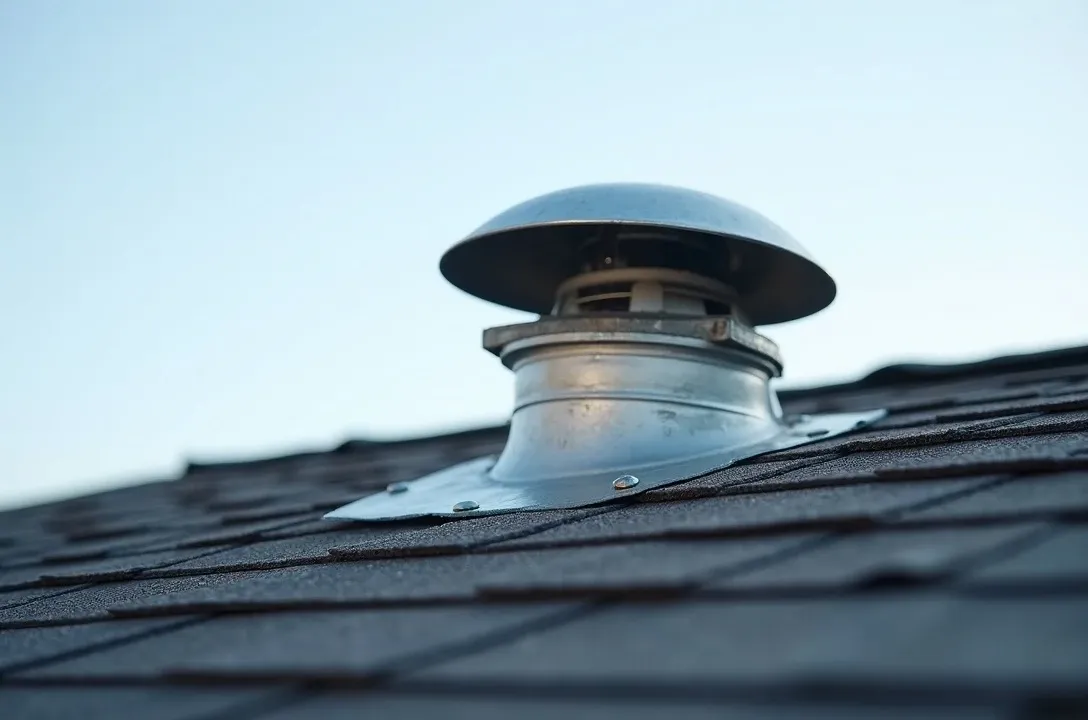
The fix the code wants is the boring, correct one: a short, smooth, sloped duct that runs all the way to a roof cap or wall cap with a backdraft damper, terminating in open air. That termination — the unglamorous metal hood on the roof — is the entire point of M1507.2.
Vented vs. unvented attics in Phoenix new builds — the spray-foam tradeoff
Attics are where Phoenix moisture goes to cause trouble, so the code is specific about how they breathe. The traditional rule is in IRC R806: a vented attic needs net free ventilating area of at least 1/150 of the attic floor area, which can drop to 1/300 when the vents are balanced between high and low and the other conditions in the code are met (the ICC roof-ceiling chapter has the exact language). The idea is to let outside air wash through the attic and carry moisture away before it condenses.
But a growing share of Phoenix new builds and re-roofs skip ventilation entirely and seal the attic instead. IRC R806.5 allows an unvented, conditioned attic assembly, typically built by spraying air-impermeable foam insulation against the underside of the roof deck. This is increasingly popular here for a real reason: it pulls the ductwork and the attic itself inside the cooled envelope and eliminates the brutal 140 °F vented-attic air that drives so much summer condensation. On the moisture side, that is often a win.
The tradeoff is drying capacity, and it is exactly the desert-myth-buster at code level. A vented attic that gets wet has a constant supply of moving air to dry it out. A sealed, unvented attic does not. So when a roof leak finds its way into an unvented assembly — a cracked tile, a failed flashing detail, a pinhole at a penetration — the water has nowhere to go. It sits against the sheathing, soaks into the foam-to-wood interface, and can feed mold that stays hidden far longer than it would in a vented attic, because there is no airflow and often no visible drip below. Neither approach is automatically safer. Vented attics fight heat and humid intrusion; unvented attics fight slow, trapped leaks. The right answer depends on the build, which is a conversation for your contractor and the AHJ, not a slogan.
Keeping monsoon water out of the walls (flashing, WRB, R703)
The other place Phoenix water gets in is sideways, during monsoon storms that drive rain horizontally against stucco. The code’s answer is the weather-resistant exterior wall envelope in IRC R703. The governing idea, in R703.1, is that exterior walls must be built to prevent water from accumulating inside the wall assembly — both by stopping bulk water and by giving any water that gets past the cladding a path to drain back out.
Two pieces do the work. First, a water-resistive barrier behind the cladding (R703.2) — the drainage plane that backs up the stucco. Second, corrosion-resistant flashing installed shingle-fashion (R703.4) at windows, doors, deck ledgers, and other penetrations, lapped so that water always sheds over the layer below rather than behind it. Get the laps right and wind-driven rain runs harmlessly down the barrier and out; get a single lap backward, or skip a window head flashing, and that same storm feeds water directly into the framing, where it can sit behind drywall and grow mold you will not see until it reaches the interior surface — the slow path behind a musty smell with no visible mold.
This is why monsoon wall mold in Phoenix is almost always a detail failure, not a missing requirement. The code already demands the barrier and the flashing. The mold shows up where the installation left a gap the storm could exploit.
Valley code adoption — verify with your city’s AHJ
There is no single “Phoenix-area building code.” Each city and town adopts its own edition of the IRC, with local amendments, on its own timeline — so the rules governing your house depend on where it sits. Below are editions we were able to confirm from official city or ICC sources as of mid-2026. Treat it as a starting point, not gospel: editions roll over, and your building department is the authoritative source for the current edition and any amendments.
| Jurisdiction | Adopted residential code (IRC) | Source |
|---|---|---|
| City of Phoenix | 2024 IRC (effective Aug 1, 2025) | City of Phoenix |
| City of Scottsdale | 2021 IRC (amendments effective Jan 7, 2023) | City of Scottsdale |
| City of Chandler | 2021 IRC (updating to 2024) | City of Chandler |
| City of Tempe | 2018 IRC (as amended) | City of Tempe |
| Town of Gilbert | 2018 IRC (effective Jan 1, 2020) | Town of Gilbert |
We have left some Valley cities off this table on purpose. Where we could not confirm the adopted residential edition from an official source, we did not guess — an out-of-date code edition in a guide like this would be worse than no entry at all. If your city is not listed, or you want to be certain, call or check the website of the building or development-services department for the jurisdiction your address falls in. The differences between editions are usually modest for the moisture provisions above, but the AHJ has the final word.
What this means if you’re buying, remodeling, or building in Phoenix
The point of all this is not to turn you into a code official. It is to give you a short list of the moisture details that actually decide whether a Phoenix home grows mold — so you know what to look at and what to ask.
- If you’re buying: get into the attic, or have your inspector do it, and trace every exhaust fan and the dryer to a termination you can see outdoors. A duct that disappears into the insulation and never reappears at a roof or wall cap is the single highest-value thing to catch (M1507.2 / M1502.3). Ask whether the attic is vented or unvented spray-foam, and if it’s unvented, ask when the roof was last checked for leaks (R806.5).
- If you’re remodeling: when you add or move a bathroom fan, insist the duct runs all the way to an exterior cap, not just “into the attic.” It is cheap during the work and nearly invisible to fix later. The same goes for any window you replace — the flashing and barrier laps (R703) are what keep the next monsoon out of the new opening.
- If you’re building: the moisture provisions are minimums, and minimums installed imperfectly still leak. Have someone confirm the bath and dryer terminations, the attic strategy, and the window flashing before the drywall closes everything up. Once it’s covered, a missed detail is hidden until it’s mold.
In every case, the through-line is the same: the code is on your side, but it only works if the moisture details were actually built and maintained the way it requires. When they weren’t, the failure is usually small, specific, and hidden — which is precisely the kind of thing a mold inspection is built to find.
What to do next
If you suspect a code-related moisture problem, such as a bath fan you think vents into the attic, a dryer duct that disappears, or a window that weeps after every storm, the move is to find the moisture source before the mold spreads. That is what an inspection does: it locates the source feeding the growth and ties it back to the assembly that needs fixing. For the bigger picture on why the Valley’s climate makes these failures bite, read mold in the desert and the full library of Phoenix mold guides. To document what’s happening in a specific attic, wall, or laundry room, that’s what a mold inspection is for.
Get a free quote
If you think a code detail is feeding mold in your Phoenix home, whether it’s a bath fan dumping into the attic, a disconnected dryer duct, or monsoon water getting past a wall, a free, no-obligation inspection quote is a clean place to start. We handle mold across the Valley, and finding the moisture source is the first step to fixing it for good. Fill out the form below and we’ll get back to you with a clear next step. (For a formal code determination and the correction itself, your local building department and a licensed contractor are the right call — we find and document the moisture and the mold.)