Pre-Listing Mold Inspection: Worth It?
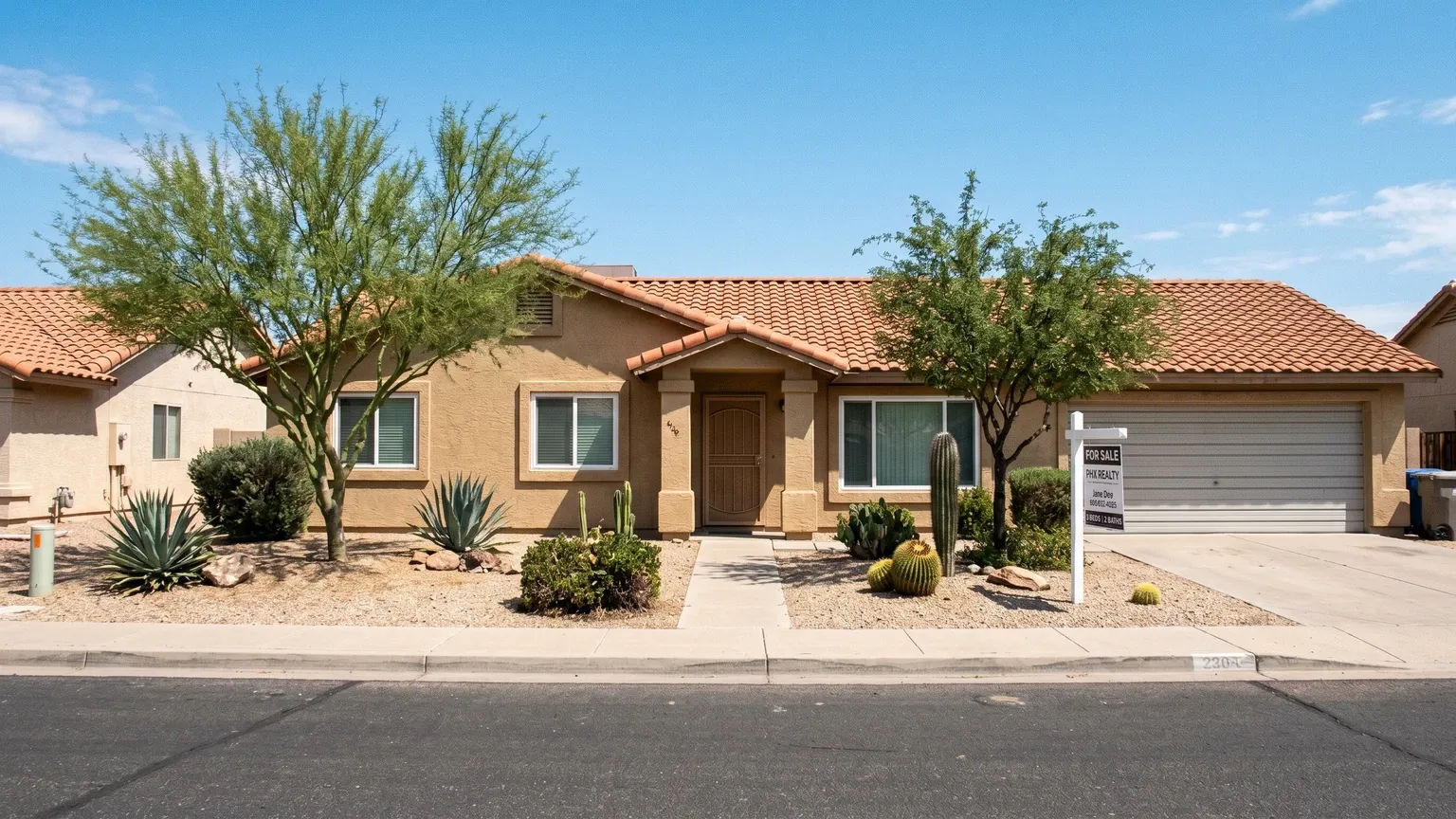
A pre-listing mold inspection in Phoenix typically costs $200–$850. A mid-escrow mold finding, caught by the buyer’s inspector, can trigger a BINSR repair demand, a price renegotiation, or a deal that falls apart entirely. For any Phoenix home with risk factors (a past leak, a musty smell, an older slab) the inspection math usually favors finding out before you list.
This is general information, not legal or real-estate advice. Seller disclosure obligations depend on your specific transaction and the facts you know. For advice on your sale, talk to a licensed Arizona real-estate attorney or your agent.
Why this question matters in Phoenix specifically
Phoenix mold doesn’t announce itself the way it does in humid climates. There’s no year-round dampness, no visible condensation on walls. Instead, the drivers are specific: an AC condensate line overflow into ceiling drywall, a slab leak that wicked moisture under flooring for months before anyone noticed, a monsoon-season roof intrusion at an aging piece of flashing. These sources are common in the Valley’s housing stock, they’re often hidden behind finished surfaces, and they’re exactly the kind of latent defect a general home inspector can miss on a first walk-through while a mold inspector will find.
The other Phoenix-specific factor is the age of the housing stock. A large share of Valley homes were built in the 1970s, 1980s, and 1990s with construction standards and materials that are now past their expected service life for plumbing, roofing, and AC systems. These homes are not inherently problematic, but they carry more moisture-damage history than a 2020 build in Gilbert, and that history shows up on inspection.
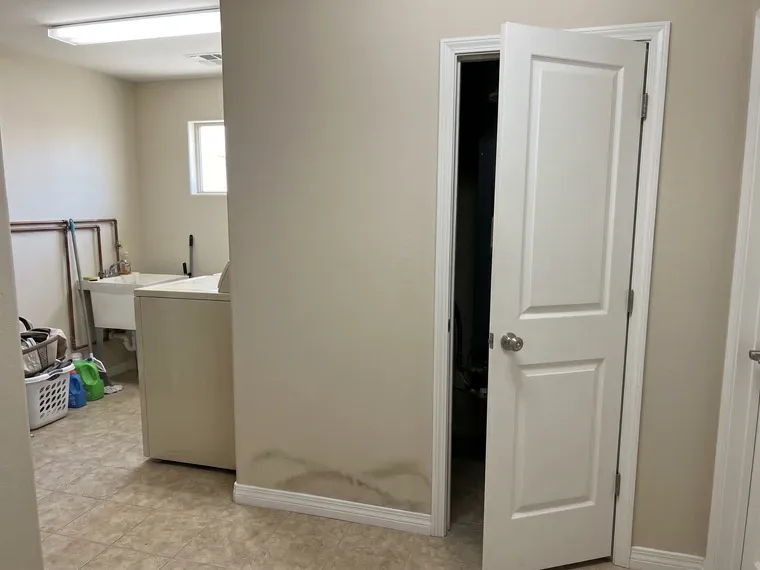
The decision flow: when a pre-listing inspection earns its cost
The short version is this: if your home has any of the common risk factors below, a pre-listing inspection converts an unknown risk into a known, manageable one. If none of these apply, the inspection is still a useful clean-bill document, but it’s optional rather than strongly recommended.
Risk factors that tip the scales toward getting inspected before listing:
- A past slab leak, roof leak, plumbing failure, or water intrusion, even if you had it repaired
- A musty smell anywhere in the home, especially when the AC runs or after rain
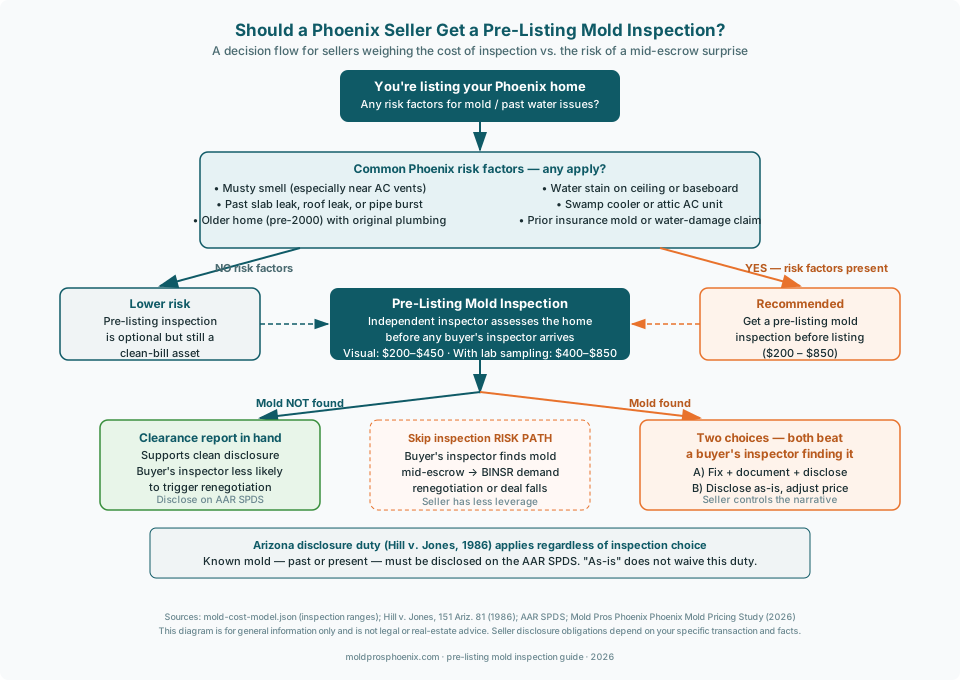
- Visible water staining on ceilings, walls, or baseboards (current or old)
- An attic-mounted AC air handler (Phoenix’s most common setup) with any history of drain-line issues
- A swamp cooler, which inherently introduces more moisture than a standard AC system
- An older home with original or near-original plumbing and roofing
- A prior homeowner’s insurance claim related to water damage or mold
None of these mean there is mold. They mean there was moisture, and where there was moisture, there may be mold growth you haven’t seen.
The cost-vs-risk math
A basic visual mold inspection in Phoenix runs $200–$450. If the inspector wants air or surface samples sent to a lab, the total rises to $400–$850. A post-remediation clearance test is a separate cost, roughly $250–$500, and only applies if mold is found and remediated.
These figures come from our 30-company Phoenix pricing study and are consistent with national cost guides. The inspection cost does not include remediation if mold is found. Remediation is a separate scope, ranging from a few hundred dollars for a small contained surface to several thousand for a more extensive job.
Set against that: a mid-escrow BINSR repair demand based on a mold finding can run the full range of remediation costs, often under a compressed timeline, with a buyer who is now nervous about the deal. A renegotiation over price means the seller is adjusting from a position of weakness. A deal that falls through entirely means starting over, re-disclosing the finding to future buyers, and absorbing carrying costs during the reset.
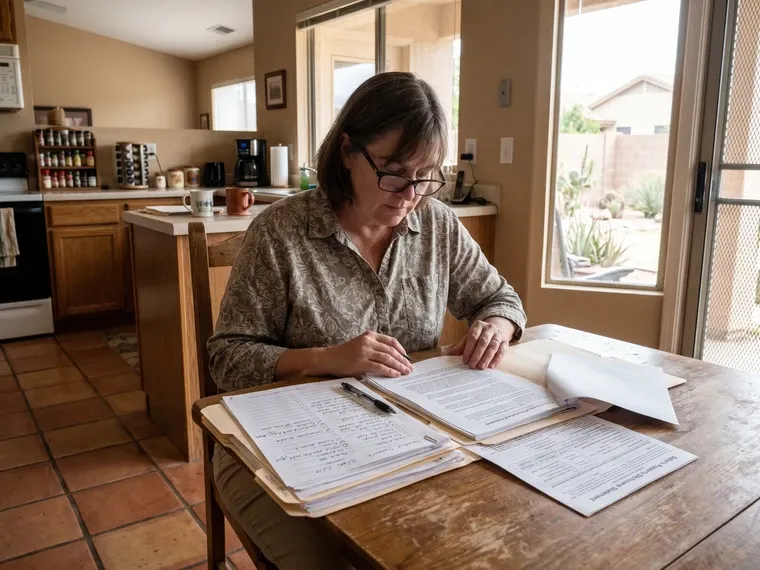
The inspection is not insurance against mold. It’s information. What sellers are buying is the chance to act on a finding before the buyer is in contract and the clock is running.
What happens during a pre-listing mold inspection
A mold inspector does more than look at surfaces. The inspection typically covers:
- A visual walk-through of the whole home: walls, ceilings, baseboards, under sinks, closets, the AC system, and any crawl spaces or attic access.
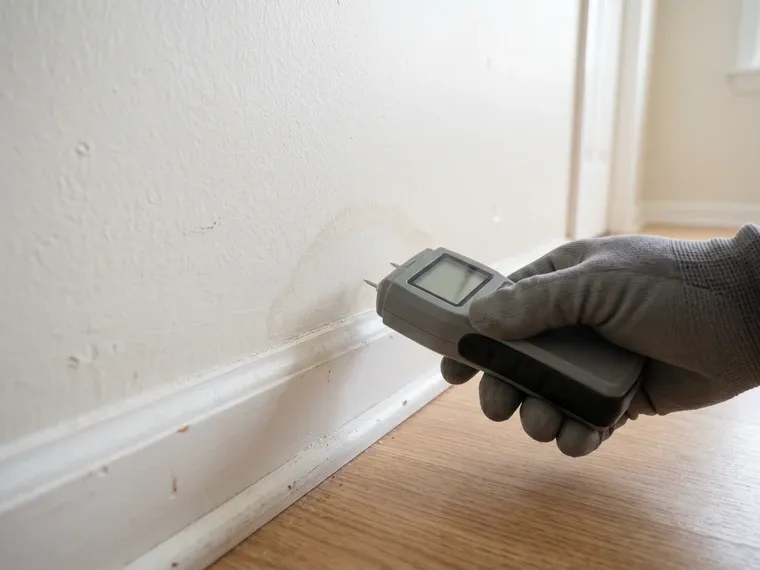
- Moisture readings with a meter on drywall, subflooring, and other porous surfaces near any area of concern. Elevated moisture in the absence of visible mold is a finding worth knowing about.
- Air or surface sampling (optional, adds lab cost) to identify whether elevated mold spore counts are present and what species are involved.
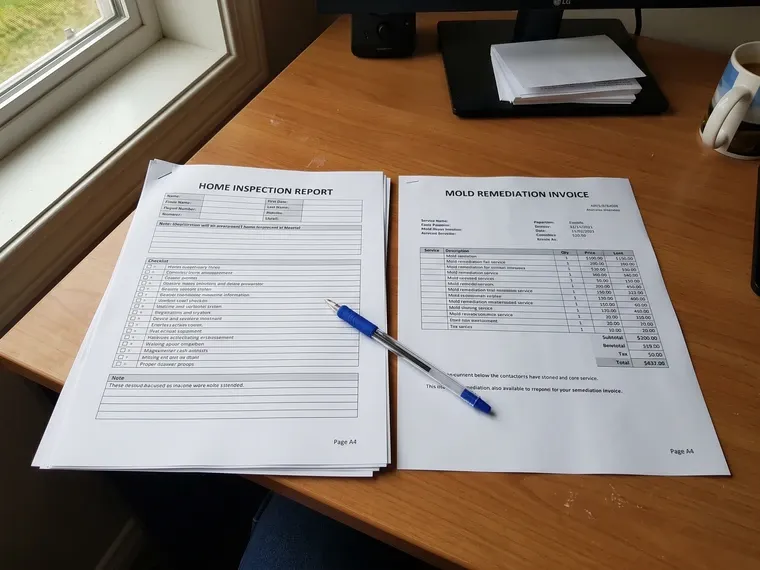
- A written report identifying findings, the likely moisture source, and recommended next steps.
For a mold inspection in this context, the most useful output is not just “mold present or absent” but a clear identification of the moisture source. A mold finding without knowing the source doesn’t give you enough information to price or scope the fix.
What to do if the inspection finds mold
Two paths, both better than the alternative of a buyer discovering it first.
Option A: Remediate before listing. Fix the moisture source first (remediation without fixing the source fails). Hire a professional, get a post-remediation clearance test, and keep every invoice and the clearance report. Then disclose the history honestly on the SPDS: past and present mold, the source, what was done. A remediated problem with documentation is a far more defensible position than an undisclosed one.
Option B: Disclose and adjust. If remediation before listing isn’t practical on your timeline or budget, disclose the finding fully on the SPDS and price accordingly. Buyers factor in known remediation costs; what they can’t price is an unknown. An honest disclosure with a known scope is something a buyer can work with.
What you do not want is a buyer’s inspector finding mold that you knew about and didn’t disclose. That opens the door to post-closing claims under Arizona’s common-law disclosure duty.
Arizona’s disclosure duty: what you actually owe a buyer
This guide is specifically about the seller’s pre-listing decision. The full mechanics of Arizona’s seller disclosure obligation live in our guide on mold disclosure in an Arizona home sale, but the essentials are worth stating here.
Arizona’s disclosure duty comes from common law, not a mold statute. The governing case is Hill v. Jones (Arizona Court of Appeals, 1986, 151 Ariz. 81), which held that a seller must disclose known facts that materially affect a property’s value when those facts are not readily observable and are not known to the buyer. Known mold and water-damage history fit that definition. The practical vehicle is the AAR Seller Property Disclosure Statement (SPDS), which asks directly about past and present mold, water damage, roof leaks, and plumbing leaks.
Two points worth being precise about. First, the duty is to disclose what you know, Arizona does not require a seller to test for mold they have no reason to suspect. Second, A.R.S. § 33-422 (sometimes cited in disclosure discussions) is the affidavit required for sales of unsubdivided land in unincorporated areas, not the disclosure mechanism for a standard Phoenix metro home sale. The seller’s disclosure obligation for a typical Phoenix resale flows from Hill v. Jones and the SPDS, not from § 33-422.
If the inspection finds nothing, a clearance report strengthens the disclosure. If it finds something, you now know what you’re disclosing and can document the resolution. Either way, you’re in a better position than hoping the buyer’s inspector misses it.
The buyer’s side: what your disclosure affects
When a buyer hires their own inspector and mold is found during the inspection period, the standard AAR purchase contract gives them a mechanism to respond: the Buyer’s Inspection Notice and Seller’s Response (BINSR). They can request correction, cancel and take their earnest money back, or negotiate a price or credit adjustment. All of this plays out in a compressed 10-day window, and the seller is responding under deadline pressure.
A pre-listing inspection doesn’t eliminate the buyer’s ability to do their own inspection. What it does is reduce the odds of a surprise finding, give you documentation if a finding is disputed, and let you control the remediation timeline rather than the buyer’s contract deadlines. For the full buyer-side picture, our guide on what to do when mold is found during an Arizona home inspection covers the BINSR mechanics in detail.
When a pre-listing inspection is less useful
A few situations where the calculation shifts:
- Brand-new construction or recent total renovation with no moisture-damage history. The risk profile is genuinely low and inspection is lower priority.
- A home already in full remediation with an active contractor on site. The inspector’s report is being superseded in real time.
- Extremely tight listing timeline where any delay for inspection would cost more than the likely finding. Rare, but possible in a fast market.
Even in these cases, the disclosure obligation doesn’t change. If you know about a mold or moisture problem, you disclose it, with or without a formal pre-listing inspection. For a broader look at Phoenix mold by topic, the Phoenix mold guides library covers everything from common moisture sources to specific room types and seasons.
Get a free quote
If you’re preparing to list a Phoenix-area home and want a pre-listing mold inspection, or if a previous inspection found something you need remediated and documented before closing, we handle mold assessments and remediation across the Valley. A free, no-obligation quote takes a few minutes and gives you a scope and cost range before you commit to anything. Fill out the form below and we’ll follow up with a clear next step. For advice on your disclosure obligations, talk to your real-estate agent or a licensed Arizona real-estate attorney.
Sources
- Hill v. Jones, 151 Ariz. 81, 725 P.2d 1115 (Arizona Court of Appeals, 1986), the foundational Arizona common-law case establishing the seller’s duty to disclose known material latent defects to buyers.
- Arizona Association of REALTORS® Residential Seller Property Disclosure Statement (SPDS), the industry-standard disclosure form used in Arizona REALTOR®-represented transactions. Available through the Arizona Association of REALTORS®.
- Mold Pros Phoenix, Phoenix Mold Pricing Study (30-company audit, 2026), /guides/phoenix-mold-pricing-study/, the source for Phoenix inspection cost ranges.
- Mold Pros Phoenix, mold-cost-model.json (reconciled 2026-06-25), internal cost model reconciling Phoenix audit data with national cost guides; inspection ranges: visual $200–$450, with lab $400–$850, clearance $250–$500.