Do You Have to Disclose Mold When Selling a House in Arizona?
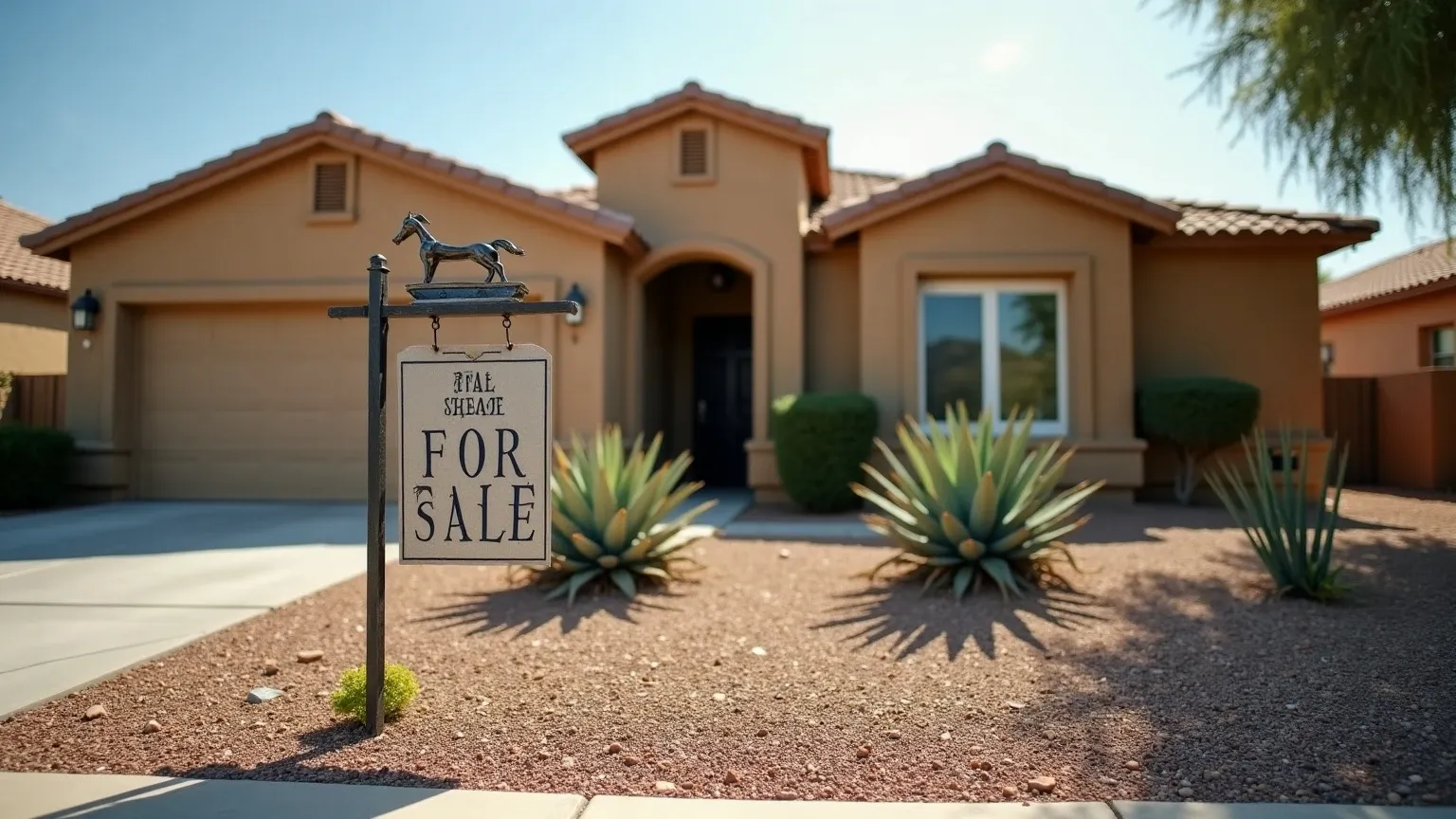
Yes. Arizona sellers must disclose known mold and water-damage history. Under Arizona’s common-law disclosure duty and the standard SPDS form, known mold is a material defect that has to be disclosed to the buyer — and selling a home “as-is” does not waive that duty.
This is general information, not legal or real-estate advice. It explains how Arizona law generally treats mold disclosure in a home sale, with citations. Every transaction is different, and how the rules apply depends on your specific facts, your contract, and your disclosures. For advice on your sale or purchase, talk to a licensed Arizona real-estate attorney or your agent — a few next-step options are at the end of this guide.
This is the real-estate-transaction side of mold, and it’s the lane almost nobody in the Phoenix mold space writes about honestly. If you’re selling a home that has had a mold or water problem — or buying one and worried about what wasn’t said — here’s how Arizona’s disclosure rules actually work, where they come from, and the one myth that gets sellers sued.
Arizona is a disclosure state — and the rule is older than the form
Start with the principle, because the principle is what the SPDS form is built on top of. Arizona is a “disclosure state,” meaning a home seller has an affirmative legal duty to tell the buyer about certain problems with the property. That duty does not come from a mold statute — Arizona has no dedicated mold law. It comes from common law, established by Arizona’s courts.
The seminal case is Hill v. Jones, decided by the Arizona Court of Appeals in 1986 (151 Ariz. 81, 725 P.2d 1115). The Hills bought a house and later discovered it had a history of termite infestation and damage the sellers knew about but never disclosed. The court held that “where the seller of a home knows of facts materially affecting the value of the property which are not readily observable and are not known to the buyer, the seller is under a duty to disclose them to the buyer.” Termite damage, the court said, was material enough to require disclosure.
Swap “termite damage” for “mold and water-damage history” and the rule applies cleanly. Known mold — especially mold tied to a leak, a roof failure, or a slab leak — is a latent defect: it materially affects the home’s value, it’s often hidden behind drywall or under flooring where a buyer can’t readily see it, and the seller knows about it while the buyer doesn’t. That’s the exact fact pattern Hill v. Jones covers. So even without the word “mold” anywhere in Arizona’s statutes, a Phoenix seller who knows about a mold or water problem and stays quiet is very likely breaching the disclosure duty the courts have enforced for decades.
Two limits worth being precise about. First, the duty is about what you know — Arizona does not require a residential seller to go test for mold they have no reason to suspect. Second, the defect has to be material and not readily observable; you don’t have to itemize every cosmetic nick a buyer can see for themselves. But a real mold history sits right in the heart of “material and not readily observable,” which is why it has to come out.
The SPDS: where mold disclosure actually happens
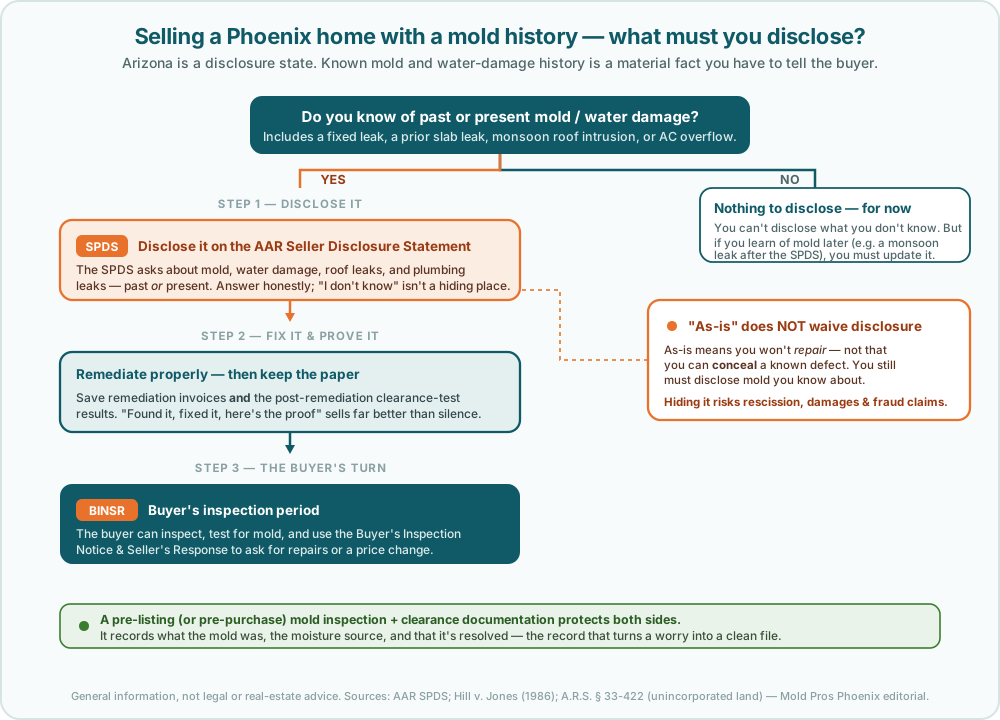
In a typical Arizona REALTOR®-represented sale, the disclosure duty gets carried out through one document: the Residential Seller Property Disclosure Statement, almost always the version published by the Arizona Association of REALTORS® (AAR) and known by everyone as the SPDS (pronounced “spuds”). The seller fills it out, and it becomes the written record of what the seller says they know about the home.
The SPDS is long and granular on purpose, and it directly asks the seller about the things mold rides on. Its sections cover, among many other items:
- Mold — whether the seller is aware of any past or present mold growth.
- Water damage — any past or present water damage, including from leaks, flooding, or drainage.
- Roof — the roof’s condition and any past or present roof leaks or repairs.
- Plumbing — plumbing problems and plumbing leaks, including slab leaks.
Notice the pattern: the form asks about past as well as present conditions. A leak you already fixed, a slab leak you had repaired, a monsoon-season roof intrusion you patched two summers ago — those are squarely within what the SPDS asks you to disclose, even though the problem is no longer active. Known history is the point.
A few things the SPDS is not, because sellers get tripped up here. It is not a warranty and not an inspection — it’s the seller’s honest statement of what they personally know. The standard form also makes clear the disclosures come from the seller, not the listing broker; your agent can’t answer for you. And if something surfaces after you submit the SPDS — say a roof leak shows up in the first big monsoon storm before closing — you’re expected to update it rather than let the outdated form stand.
One nuance on the limits of the SPDS as a legal mandate: the SPDS is the industry-standard contractual form used in REALTOR® transactions, not a blanket statute that independently commands every for-sale-by-owner seller in the state to fill out that exact document. The thing that legally obligates an Arizona seller to disclose known material defects is the common-law duty from Hill v. Jones — the SPDS is the practical vehicle that duty travels in. Whether you sell with an agent or on your own, the underlying duty to disclose known mold doesn’t disappear; the SPDS is simply the cleanest, most defensible way to satisfy it.
A quick word on A.R.S. § 33-422 (and what it does not cover)
You may run across mention of A.R.S. § 33-422 in disclosure discussions, and it’s worth being accurate about its narrow scope so you don’t over-rely on it. Section 33-422 requires an Affidavit of Disclosure for the sale of five or fewer parcels of land, other than subdivided land, in an unincorporated area of a county. It applies to certain raw or rural land transactions, requires the affidavit to be furnished at least seven days before transfer, and gives the buyer a five-day rescission window. It does not mention mold, and it does not govern the ordinary sale of a house inside a Phoenix-metro city.
So for a typical Phoenix, Mesa, Scottsdale, Tempe, Chandler, or Gilbert home sale, § 33-422 is not your disclosure hook — the common-law duty (Hill v. Jones) plus the SPDS practice is. We’re flagging § 33-422 only because it surfaces in searches; treat it as the rural-land affidavit it is, not a mold-disclosure law for city homes.
The “as-is” myth — the one that gets sellers sued
Here is the single most expensive misunderstanding in Arizona home sales: “I’m selling as-is, so I don’t have to disclose anything.” That is wrong, and believing it is how an otherwise routine sale turns into a lawsuit.
“As-is” addresses repairs, not disclosure. Selling a home as-is means you’re telling the buyer you won’t make repairs or give repair credits — the buyer takes the property in its current condition. It does not mean you may conceal a known defect. The disclosure duty from Hill v. Jones runs independently of an as-is clause, so a seller who knows about mold or a water-damage history must still disclose it on the SPDS even in an as-is deal.
Put plainly: as-is controls who fixes it (nobody — the buyer accepts the condition); the disclosure duty controls what the buyer gets told (everything material the seller knows). Using “as-is” as a reason to stay silent about known mold is precisely the kind of active concealment that fuels a post-closing claim — and if anything, an as-is seller has more reason to disclose carefully, because the deal rests on the buyer’s informed acceptance.
The buyer’s side: the inspection period and the BINSR
If you’re the buyer, the law doesn’t leave you depending solely on the seller’s honesty — Arizona’s standard contract builds in your own chance to look.
After your offer is accepted, you generally get an inspection period — commonly 10 days, though it’s negotiable — during which you can inspect the property, bring in specialists, and test for mold and moisture. This is your window to verify what the SPDS says and to look for what it doesn’t.
When your inspection turns something up, the mechanism for acting on it is the Buyer’s Inspection Notice and Seller’s Response, universally called the BINSR (another AAR form). On the BINSR, the buyer lists the items they want the seller to correct; the seller then has a defined window (commonly five days) to respond — agreeing to fix some, all, or none. It’s the structured negotiation that follows inspection. And note the flip side: if a buyer does nothing with the BINSR within the timeframe, they’re generally deemed to accept the property in its current condition, so the inspection period is not something to sleep through.
For a mold concern specifically, the strongest move a buyer can make in that window is to pair the SPDS with an independent mold inspection — one that doesn’t just spot visible growth but traces the moisture source behind it. That’s what converts “the seller checked ‘no’ but the closet smells musty” into a documented finding you can take to the BINSR.
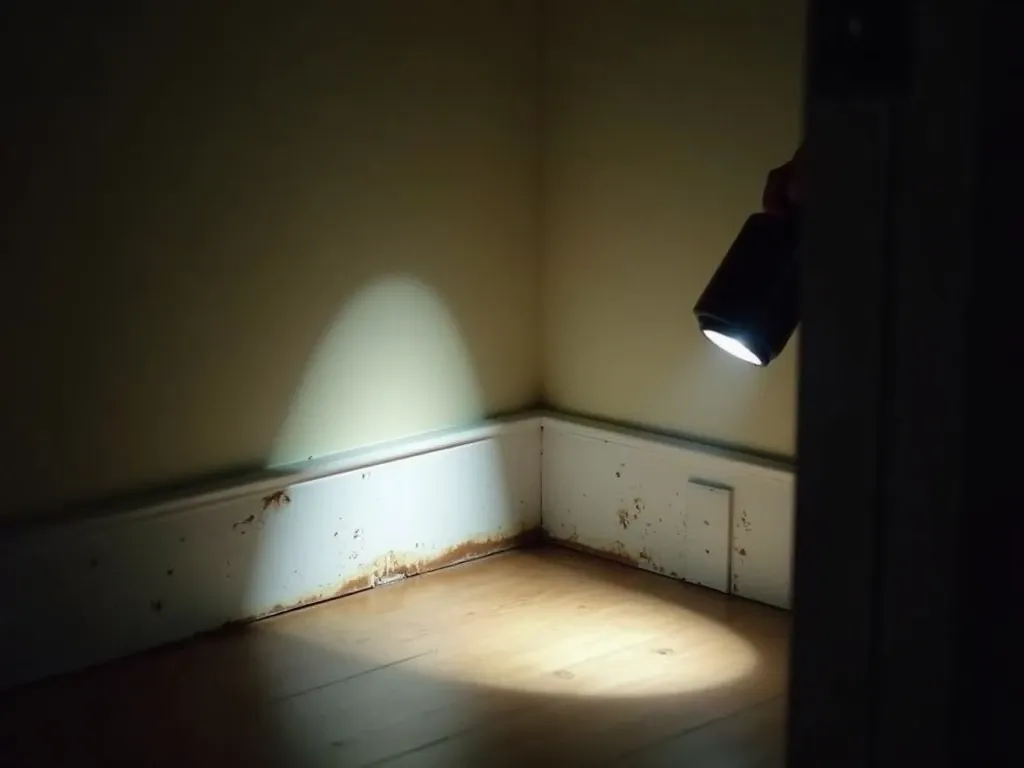
To understand what an inspector is actually looking for, our guide to black mold covers how to tell a genuine moisture-driven mold problem from a harmless surface stain — useful context whether you’re the one disclosing or the one inspecting.
What happens if a seller hides mold
Suppose a seller knows about a mold or water problem, says nothing, and the buyer discovers it after closing. What’s actually at stake? In Arizona, a buyer in that situation may have several remedies, and they’re serious enough that concealment is rarely worth it:
- Rescission. A court can undo the sale — returning the buyer’s money and putting the property back with the seller — restoring both sides to their pre-sale positions. For a seller, that means the deal you thought was finished can be unwound.
- Monetary damages. If the buyer keeps the home, they may instead recover damages: the diminished value, the cost to properly remediate the mold and repair the underlying source, and related losses.
- Fraud / consumer-fraud claims. Where a seller actively concealed or misrepresented a known material fact, the conduct can support a fraud claim, and potentially a claim under Arizona’s Consumer Fraud Act, which allows recovery of a buyer’s actual damages — with the possibility of additional penalties for willful conduct.
The common thread in all of these is knowledge: a buyer generally has to show the seller actually knew about the defect and failed to disclose it. That single fact — what the seller knew and when — is what these cases turn on, which is exactly why documentation cuts both ways. For a seller, a clean paper trail of a problem found, disclosed, and remediated is protection. For a buyer, inspection records and the SPDS are the evidence. (And to be clear about our role: we document mold and its moisture source — we are not attorneys and we don’t litigate disclosure disputes. For a contested claim, that’s a job for a real-estate attorney.)
Best practice — for sellers and for buyers
The disclosure rules reward the same behavior on both sides: find out, write it down, and deal with it in the open. Mold is not a dealbreaker in Phoenix — an undisclosed, undocumented mold surprise is.
If you’re selling:
- Remediate properly, not cosmetically. Painting over a stain doesn’t fix the moisture source, and a buyer’s inspector will likely find it anyway. Fix the source (the leak, the condensate line, the roof) and remediate the growth properly.
- Keep the paper. Save remediation invoices and, critically, the post-remediation clearance-test results. Documentation that a problem was found and resolved is an asset, not a liability.
- Disclose it on the SPDS — past and present — honestly and specifically. “I don’t know” is not a place to hide a problem you actually know about.
If you’re buying:
- Read the SPDS closely, especially the mold, water-damage, roof, and plumbing items, and follow up on anything vague.
- Use the inspection period. Get a mold inspection and air/moisture test, and ask directly about water-damage and leak history.
- Act through the BINSR on anything you find — and don’t let the inspection window lapse.
This is also where a pre-listing (seller) or pre-purchase (buyer) mold inspection earns its keep. A mold inspection that documents what the mold is, where it is, the moisture source feeding it, and — after remediation — a clean clearance test, is a record that protects both sides of the transaction. For a seller it backs up an honest SPDS and defuses a buyer’s worry before it becomes a renegotiation. For a buyer it replaces guesswork with documented fact during the inspection period.
For Phoenix sellers and buyers, the same logic that governs a single-family sale also shows up in condo and HOA transactions, where the line between owner and association complicates who’s even responsible for the mold — our guide on mold responsibility in an Arizona condo or HOA covers that wrinkle in detail.
Where to get help
You shouldn’t make a disclosure decision — or a buying decision — based on a single web page, including this one. A few next steps:
- A licensed Arizona real-estate agent. For how the SPDS, the as-is clause, the inspection period, and the BINSR fit together in your specific deal, your agent is the front-line resource.
- A licensed Arizona real-estate attorney. For anything involving a contested disclosure, a possible nondisclosure claim, or whether a past problem rises to “material,” an attorney who handles real-estate matters can advise on your facts before you take an irreversible step. Many offer a low-cost initial consultation.
- The full Phoenix mold library. To understand why Phoenix homes get mold in the first place — the AC condensate lines, monsoon roof intrusion, and slab leaks that drive most of it — start with our Phoenix mold guides.
The throughline: Arizona’s disclosure rule is straightforward in principle — tell the buyer the material things you know — but the consequences of getting it wrong are real. Whether you’re listing or buying, the move that protects you is the same: document the home’s mold and water history honestly, and let the record do the talking.
Get a free quote
If you’re selling or buying a Phoenix-area home and want the mold question settled with documentation — what’s there, where the moisture is coming from, and (after any remediation) a clean clearance test — a free, no-obligation inspection quote is a sensible first step. We handle mold across the Valley, and an independent set of findings is exactly the record a disclosure or a purchase decision should rest on. Fill out the form below and we’ll get back to you with a clear next step. (For advice on your legal or contractual obligations, talk to a real-estate attorney or your agent — we document mold; we don’t give legal or real-estate advice.)