Who's Responsible for Mold in an Arizona Condo or HOA?
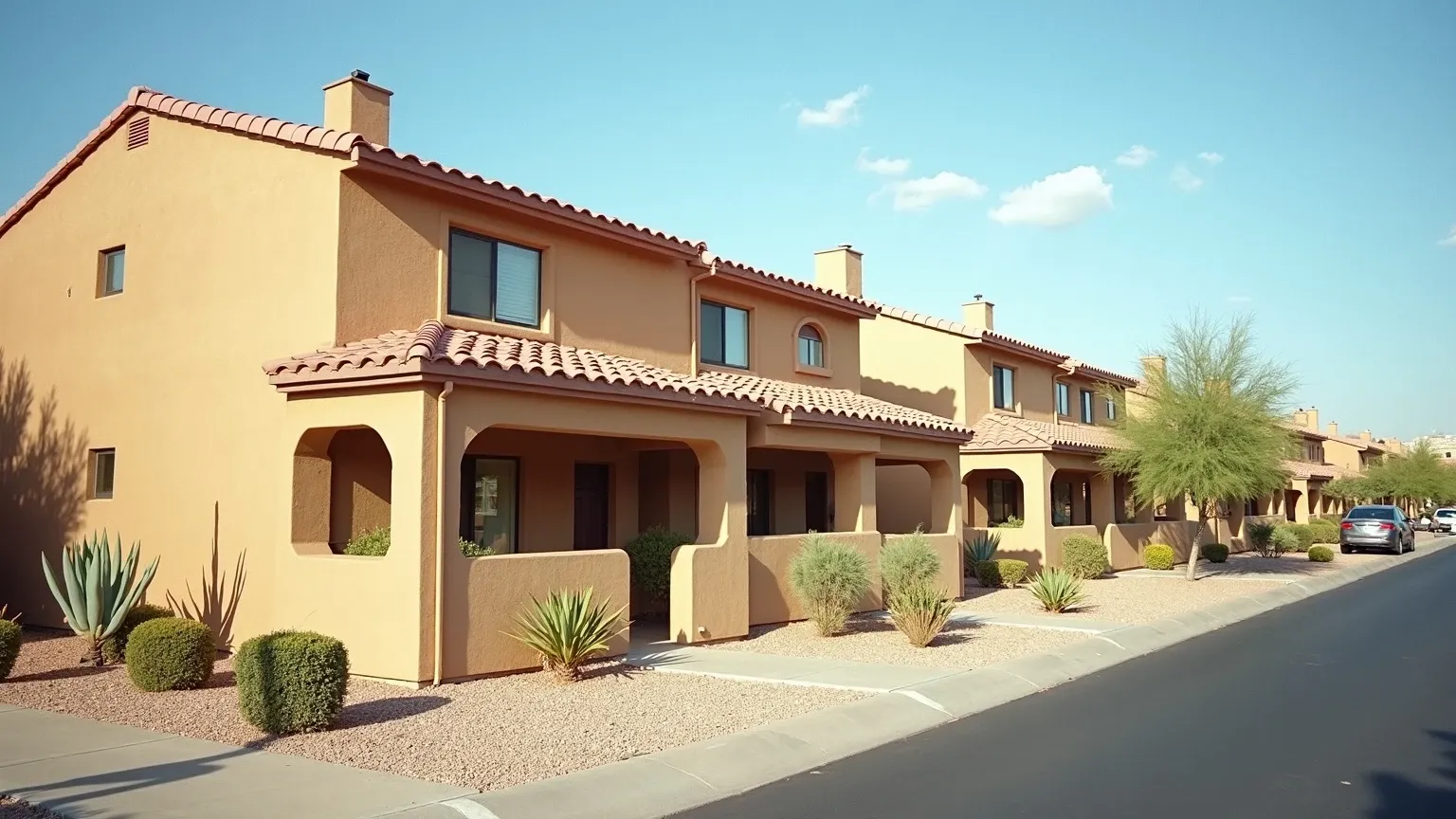
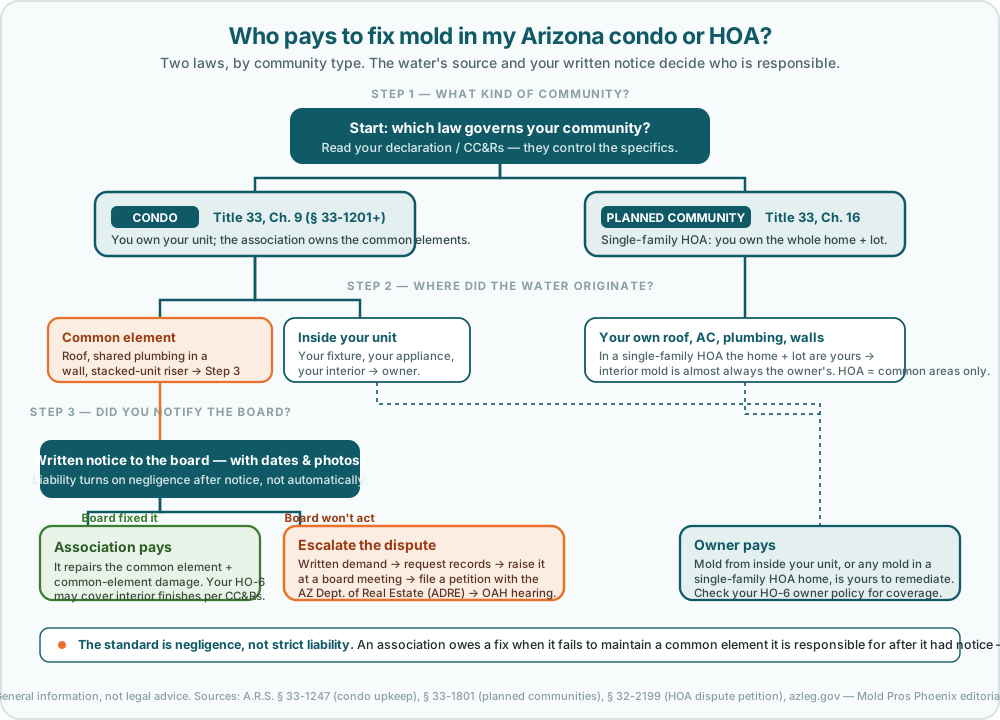
Who pays to fix mold in an Arizona condo or HOA depends on three things: your community type, where the water started, and whether you gave written notice. In a condo (A.R.S. § 33-1247), the association maintains the common elements and you maintain your unit. In a single-family HOA (§ 33-1801), interior mold is almost always the owner’s.
This is general information, not legal advice. It explains how Arizona law generally allocates responsibility for mold in condos and planned communities, with citations to the statutes. Your declaration (CC&Rs) and the specific facts control your situation, and the line between “common element” and “unit” is often a judgment call. For advice on your case, talk to a licensed Arizona attorney — several next-step options are listed at the end of this guide.
Why your community type changes everything
Before you argue with anyone about who pays, answer one question: do you live in a condominium or a single-family HOA? Arizona governs those two communities under two different laws, and that single fact reshuffles who owns the roof, the walls, and the pipes — which is to say, who owns the mold.
- A condominium is governed by the Arizona Condominium Act, A.R.S. Title 33, Chapter 9 (§ 33-1201 and following). In a condo you own your unit — generally the interior airspace and finishes — while the association owns and maintains the common elements: the roof, exterior walls, structure, and shared systems.
- A single-family HOA is a “planned community,” governed by the Planned Communities Act, A.R.S. Title 33, Chapter 16 (§ 33-1801 and following). The statute is blunt about its reach — A.R.S. § 33-1801 states that “this chapter applies to all planned communities.” In this setup you own and maintain the entire home and the lot; the HOA maintains only the common areas, like streets, shared landscaping, and an amenity building.
That distinction is the whole game. In a condo, a leaking roof is the association’s problem to repair, so mold underneath it is largely the association’s responsibility. In a single-family HOA, that exact same roof is yours — so interior mold from it is almost always your responsibility, not the HOA’s. Same mold, opposite answer, decided entirely by which law your community lives under.
One thing applies to both kinds of community: read your declaration. The CC&Rs can shift maintenance duties away from the statutory default — that’s exactly why § 33-1247 says the association maintains the common elements “except to the extent provided by the declaration.” The statutes set the baseline; your recorded community documents fill in the specifics.
What the association must maintain vs. what you must
Once you know your community type, the next question is the responsibility line — what’s the association’s to maintain and what’s yours. Here is how it generally breaks down in Arizona, with the caveat that your CC&Rs can move these lines.
In a condominium (A.R.S. § 33-1247):
| Usually the association’s responsibility | Usually the owner’s responsibility |
|---|---|
| The roof and exterior walls | The interior of your unit and its finishes |
| Structural and load-bearing elements | Fixtures, appliances, and cabinetry inside the unit |
| Shared plumbing risers and lines serving multiple units | Plumbing and lines serving only your unit |
| Common-area HVAC and shared mechanical systems | The AC or water heater that serves only your unit |
| Common hallways, stairwells, and shared spaces | Your personal property (covered by your HO-6 policy) |
The statute’s core rule is short: “the association is responsible for maintenance, repair and replacement of the common elements and each unit owner is responsible for maintenance, repair and replacement of the unit.” Mold follows that same line. Mold fed by a failed common element is the association’s to address; mold fed by something inside your unit is yours.
In a single-family HOA (planned community, § 33-1801):
The matrix is simpler and tilts hard toward the owner. You own and maintain the entire house and lot, so your roof, your AC and its condensate line, your plumbing, and your walls are all yours — and so is mold from any of them. The HOA maintains the common areas only. Unless your CC&Rs say something unusual, a single-family HOA almost never owes you a repair for mold inside your own home.
The negligence standard — and why written notice is everything
Here is the point that trips up the most owners, and it’s worth stating plainly: an association being responsible for the roof does not mean it’s automatically liable the instant mold shows up under it.
Arizona associations are generally held to a negligence standard, not strict liability. In practice that means an association is on the hook when it failed to maintain a common element it’s responsible for after it had notice of the problem — not simply because mold appeared. If the board never knew about the roof leak, it never had the chance to fix it, and “you didn’t tell us” becomes a real defense.
That is why written notice is the load-bearing step in any condo or HOA mold dispute. A complaint the board can’t prove it received is a complaint that, for legal purposes, may as well not have happened. So:
- Put it in writing. A phone call to the property manager is easy to forget and impossible to prove. A dated letter or email to the board is not.
- Describe it specifically. Don’t write “there’s mold.” Write where it is, how big it is, when you first saw it, the musty smell, and the leak or stain you believe is feeding it.
- Attach dated photos, and keep your own copies.
- Keep proof of delivery — a certified-mail receipt or a saved, time-stamped email — so the date the board received notice is beyond argument.
That record does double duty. It satisfies the notice the negligence standard requires, and it becomes the evidence you’ll lean on if the board drags its feet and you have to escalate.
Common Phoenix scenarios — who’s usually on the hook
The abstract rule gets real fast when you map it onto the way Valley buildings actually fail. Phoenix mold is rarely random; it rides on a handful of specific moisture drivers, and most of them land on a particular side of the responsibility line.
Monsoon roof intrusion into a top-floor condo. A summer storm drives water through a worn roof membrane and into the ceiling of an upstairs unit, and within days there’s mold along the ceiling line. The roof is a common element, so the association typically repairs the roof and the common-element damage. Your damaged interior finishes and personal property may fall to you or your HO-6 policy, depending on the CC&Rs. Monsoon-season roof and wall intrusion is one of the Valley’s biggest mold drivers — our 2026 Phoenix Mold Risk Report walks through why those storms soak the materials behind a wall long before mold shows on the surface.
Stacked-unit AC condensate. In a vertically stacked condo building, an air handler or a clogged condensate line on an upper unit overflows and the water tracks down into the unit below, producing a stain and then mold on the lower unit’s ceiling. Here the answer hinges on whose component leaked. If it’s a shared mechanical element, it’s the association’s; if it’s the AC serving only the upstairs unit, it’s usually that owner’s. AC condensate overflow is the single most common mold source in Phoenix multifamily buildings, precisely because the equipment runs hard for months.
Shared plumbing inside a wall. A pinhole leak or a slab leak in a shared plumbing riser behind a common wall feeds mold across the boundary between two units. Shared lines are generally the association’s; a line serving only your unit is generally yours. This is the classic “common element vs. unit” judgment call, and it’s where your declaration earns its keep.
Monsoon intrusion through a shared exterior wall. Wind-driven rain finds a failed stucco joint or flashing on an exterior wall — a common element in a condo — and wicks moisture into adjoining units. Because the exterior envelope is the association’s, the repair and the common-element remediation usually are too.
Anything inside a single-family HOA home. Your roof leaks, your slab develops a leak that breeds hidden mold, your AC condensate overflows in the attic — in a single-family HOA, every one of these is yours, because you own the whole home. The HOA’s common-area duty doesn’t reach inside your house.
Notice the pattern: in a condo, the Valley’s worst mold drivers — monsoon roof and wall intrusion, shared-plumbing slab leaks, common-system failures — tend to sit on the association’s side of the line, while a leak from your own fixture sits on yours. In a single-family HOA, nearly everything interior is the owner’s. Either way, the deciding facts are the source of the water and what the CC&Rs say.
If the HOA won’t act: the step-by-step
When the board is responsible but won’t move, Arizona gives owners a defined path. Work it in order — each step builds the record the next one needs, and skipping ahead weakens your position.
- Send a written demand to the board. Beyond your initial notice, send a clear written demand that the association repair the common element and remediate the resulting mold, referencing the specific obligation in your CC&Rs and § 33-1247. Date it and keep proof of delivery.
- Request the association’s records. Arizona owners generally have the right to inspect association records. Ask in writing for the maintenance records, board-meeting minutes, and any inspection or vendor reports tied to the leak. What the association knew and when often lives in those documents.
- Raise it at a board meeting. Get the issue onto the agenda or speak during the owner-comment period, and make sure your concern is reflected in the minutes. A documented request on the record is harder to ignore than a private email.
- File a petition with the Arizona Department of Real Estate (ADRE). If the board still won’t act, Arizona’s HOA dispute process lets an owner file a petition against the association with ADRE. Under A.R.S. § 32-2199.01, an owner “may petition the department for a hearing concerning violations of condominium documents or planned community documents,” and the petitioner pays a filing fee set by the commissioner. In practice ADRE charges a $500 filing fee per issue (the statute leaves the exact amount to the commissioner, so confirm the current fee with ADRE before you file). The fee is generally nonrefundable once a hearing is scheduled.
- The case goes to the Office of Administrative Hearings (OAH). Under § 32-2199.01, if the petition is justified, the commissioner “shall… refer the petition to the office of administrative hearings,” where an administrative law judge hears the dispute. This is the formal venue for forcing the issue when internal steps fail.
For anything past a written demand — and certainly before you file an ADRE petition or consider a lawsuit — talk to an attorney who handles Arizona community-association law. The petition process is procedural, and an attorney can confirm your facts fit before you spend the filing fee. Again: this is general information, not legal advice.
Insurance: master policy vs. your HO-6
Even when fault is clear, the money question often runs through two insurance policies, so it’s worth understanding the split.
An Arizona condo usually carries a master policy held by the association and an HO-6 owner policy held by each unit owner:
- The master policy generally covers the building structure and common elements, to the extent the CC&Rs require. When a common-element failure causes damage, this is the policy that’s typically in play for the structure.
- Your HO-6 policy generally covers your unit’s interior finishes, improvements and betterments, and your personal property — the things the master policy doesn’t.
The catch with mold specifically: mold coverage is frequently limited or excluded on both policies. Many carriers cap mold remediation at a low sublimit or carve it out unless it stems from a covered sudden event, and they treat long-term, “you should have caught the leak” moisture differently from a burst pipe. So the practical move is to read the mold language in both policies — yours and (via the board or manager) the association’s master policy — rather than assume either one covers it.
A single-family HOA homeowner doesn’t have this two-policy structure for their house; you carry a standard homeowner’s policy, and the same caution about mold sublimits and exclusions applies. This is general information, not insurance advice — ask your own agent how mold is treated under your specific policy.
Why an independent inspection helps your notice and your petition
Across every path above runs the same thread: you win or lose on documentation, and the single most contested fact is usually the source of the water. Was it a common element the association must maintain, or something inside your unit? That’s the question a written complaint alone can’t always answer — and it’s exactly what an independent inspection can.
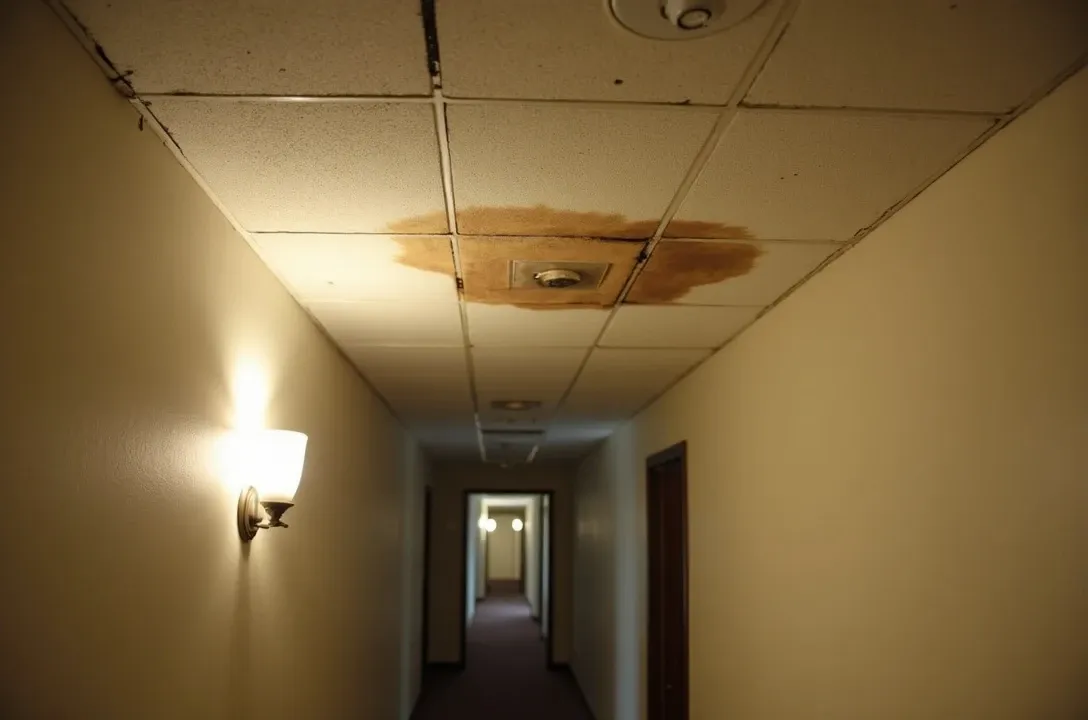
A third-party mold inspection can document what the mold is, where it is, and the moisture source feeding it — a moisture-meter reading inside a wall that traces back to a roof leak or a shared plumbing riser is concrete evidence that the problem sits on the association’s side of the § 33-1247 line, not yours. For an owner building the record their notice and a possible ADRE petition depend on, that independent set of findings is often what moves a board from “we’ll look into it” to action. We’re clear about the limit: an inspection documents the mold and its source — it isn’t legal action, and we don’t pursue your association for you. But the documentation is frequently the difference between being waved off and being taken seriously.

What to do next
If you’re a Phoenix-area condo or HOA owner facing mold, the sequence is: identify your community type (condo under § 33-1247 or single-family HOA under § 33-1801), trace the water to its source to see which side of the responsibility line it falls on, give the board written notice with dates and photos, and then — if the board won’t act on something it owns — work the escalation path from a written demand up through an ADRE petition, with an attorney’s help for the heavier steps. Read your CC&Rs throughout; they control the specifics.
For the bigger picture on why mold is so common in Valley buildings, see our 2026 Phoenix Mold Risk Report and the full library of Phoenix mold guides. If you’re a renter rather than an owner, the rules are different — that situation runs on landlord-tenant law, which we cover in mold in your Arizona apartment and your rights. And if you need to document the mold and its moisture source for your record, that’s exactly what a mold inspection is built to do.
Get a free quote
If you’re dealing with mold in a Phoenix-area condo or HOA and need it documented — what it is, where it is, and the moisture source feeding it — a free, no-obligation inspection quote is a straightforward place to start. We handle mold across the Valley, and an independent set of findings can be exactly the record an owner needs for a notice to the board or an ADRE petition. Fill out the form below and we’ll get back to you with a clear next step. (For advice on your rights against the association, talk to an attorney — we document mold; we don’t give legal advice or pursue your HOA.)