Is Mold Remediation Licensed in Arizona? (ROC Guide)
No. Arizona does not license mold remediation as its own trade. The state’s Registrar of Contractors has zero license classes for “mold,” “remediation,” or “abatement,” so there is no mold credential to look for. Vet differently: get the contractor’s ROC number, look it up, and confirm the license class covers the actual work.
This is general information, not legal or contractor-licensing advice. License classifications and ROC rules can change; confirm the current classification requirements for any contractor with the Arizona Registrar of Contractors before you commit to a scope of work.
How we sourced this
The core finding, that Arizona has no mold remediation license classification, comes from a verbatim term search of the official Arizona ROC License Classification Requirements document (archived at contractorsexam.com, cross-checked against the live classification catalog at roc.az.gov/license-classifications and a 2026 classification roundup at arizonacontractoracademy.com). All three sources were accessed 2026-06-28. Term counts in the official list: mold 0, remediation 0, restoration 0, environmental 0, abatement 0, demolition 0.
The complaint and Recovery Fund statistics cited in this guide are statewide, all-contractor-trades figures from the 2023 Arizona State Senate Committee of Reference Sunset Review of the Registrar of Contractors (56th Legislature, 2nd Regular Session). Source URL: azleg.gov/iminute/senate/56leg/2r/2023CorReportAZRegistrarContractors.pdf, accessed 2026-06-28. No breakdown by trade type or by mold/remediation work appears in that report, and none is available in any published ROC dataset. We do not present these figures as mold-specific counts.
The core finding: “mold contractor” is a market category, not a regulatory one
When you search for a Phoenix mold remediation company, you’re searching in a market category. The Arizona ROC doesn’t have a corresponding regulatory category. The agency licenses contractors under a taxonomy of A-, B-, C-, R-, and KB- classes: general contractors and specialty trades. That list covers things like air conditioning (C-39), drywall (C-10), plumbing (C-37), and carpentry/remodeling (C-61). It does not contain a class for mold work, water damage restoration, or anything adjacent.
This isn’t an oversight or a loophole. It reflects how mold remediation actually works: most of the physical steps (removing wet drywall, treating the structure, replacing insulation, reassembling) are carpentry, drywall, and general contracting tasks. The moisture source repair is plumbing or HVAC. The ROC licenses the underlying trades; it doesn’t create a separate mold class on top of them.
The practical consequence: a company can call itself a “mold remediation contractor” without holding any license that says “mold” on it, because no such license exists. What they should hold is a license whose class covers the actual work they’re proposing.
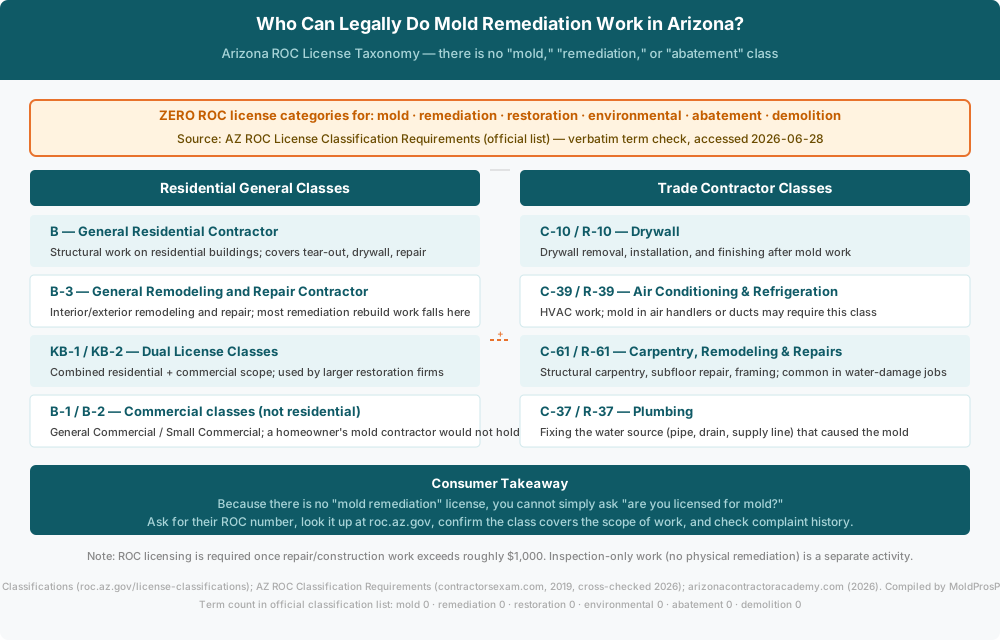
This is verified by more than the classification list itself. The independent confirmation is consistent across sources: Mold Compass’s Arizona page (moldcompass.com/states/arizona) states directly that “Arizona has no state licensing requirement for mold inspectors or remediators.” IRI (iriedu.com) and restoration industry sources repeat the same point. These are corroborating Tier-2 sources; the primary confirmation is the ROC classification document itself.
One clarification worth making explicit: C-39 / R-39 is not a mold license. That class covers air conditioning and refrigeration. It is relevant to mold work when the scope involves HVAC equipment, but it is not a mold-remediation credential, and there is no such thing as a “CR-39 Mold Remediation” class in the actual ROC taxonomy.
What license class should your contractor hold?
The right answer depends on what the job actually involves. Most residential mold remediation projects require at least:
- B (General Residential Contractor) or B-3 (General Remodeling and Repair Contractor) if the work involves removing and replacing drywall, insulation, or other structural elements.
- C-10 / R-10 (Drywall) if the scope is limited to drywall tear-out and replacement.
- C-39 / R-39 (Air Conditioning and Refrigeration) if the mold is in or connected to the HVAC system and the work involves the equipment, common in Phoenix where AC condensate problems are a major mold driver.
- C-37 / R-37 (Plumbing) if the job includes repairing the pipe, supply line, or drain that caused the water intrusion.
A contractor working on a job that involves multiple of these scopes should either hold multiple license classes or subcontract the specialized portions to licensed subcontractors. Asking which license class covers the specific work proposed (and looking it up in the ROC system) is a concrete verification step that asking “are you licensed for mold?” will never give you.
The statewide contractor complaint backdrop
Arizona’s ROC is an active enforcement body. The 2023 Arizona Senate Sunset Review, the most recent authoritative public source, reported the following statewide, all-contractor-trades figures for 2023:
- 6,287 complaints filed against licensed contractors in 2023
- 1,249 complaints filed against unlicensed entities in 2023 (roughly 7,536 total across both categories, our sum)
- ~51,500 contractor licenses currently regulated
- 38 investigators statewide; complaints closed in an average of 33 days in 2023 (compared to 120 to 140 days in 2015)
- Residential Contractors’ Recovery Fund, 2023: 393 claimants received payments totaling $4,953,329 (individual cap: $30,000; maximum per-license liability: $200,000)
These numbers cover every residential contractor trade in Arizona: plumbing, electrical, roofing, general construction, HVAC, and everything else. They are not mold-specific complaint counts. No published dataset breaks down ROC complaints by trade type or by “mold/water-damage” work. That data does not exist in any accessible form, because the ROC’s license classification system simply has no mold category to count against.
What these figures do show is that the ROC processes a high volume of complaints, closes them significantly faster than it did a decade ago, and has a recovery mechanism that paid out nearly five million dollars to homeowners in a single year. The complaint system works. But it only helps you if the contractor you hired is licensed to begin with, which is why verifying the license before the job starts matters more than filing a complaint after something goes wrong.
The older figure you may see quoted, “the agency receives over eleven thousand complaints per year,” comes from an Arizona Auditor General report that discusses early-2000s performance data. It is historical and was superseded by the 2023 Senate Sunset Review figures above.
How to actually vet a Phoenix mold contractor
Because there is no mold-specific license to check for, the verification process requires a few deliberate steps rather than a single credential lookup.
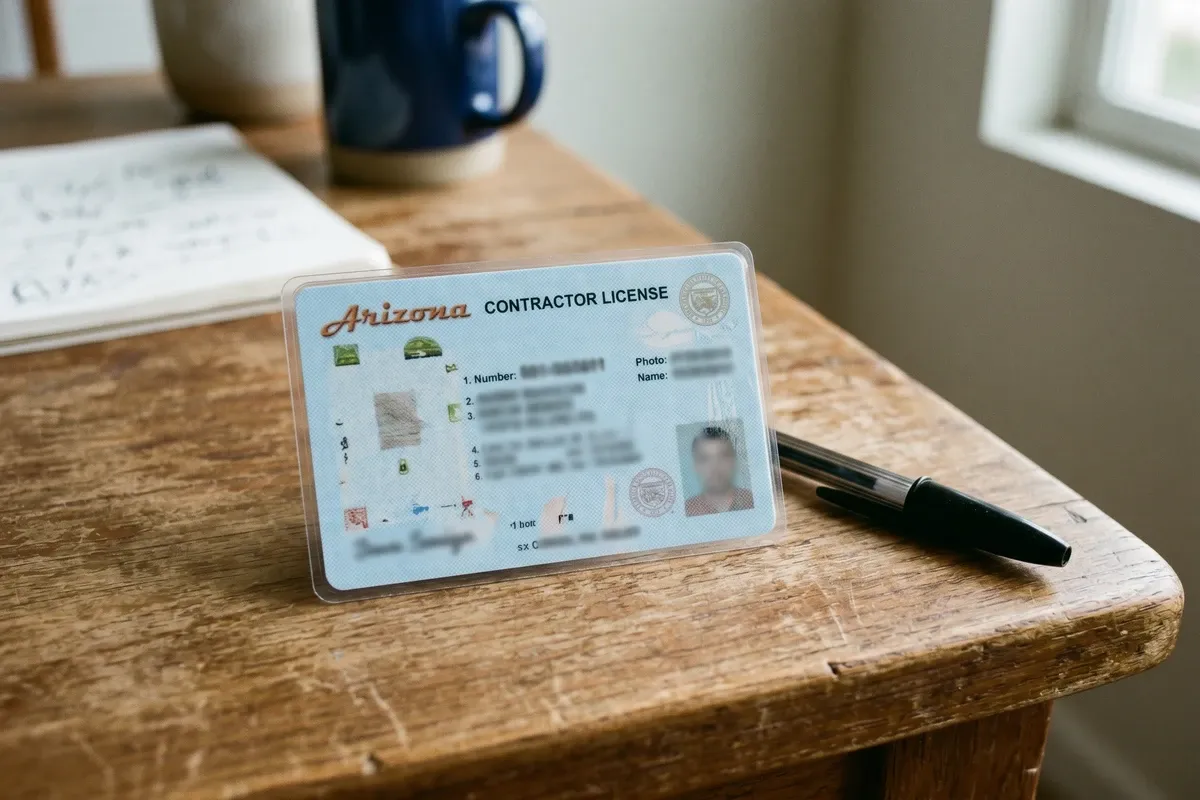
Step 1: Get the ROC license number before anyone touches your home. A legitimate contractor will give it to you without hesitation.
Step 2: Look it up. The ROC Contractor Search is at azroc.my.site.com. Search by license number or company name. Confirm:
- The license status is Active (not expired, suspended, or revoked)
- The classification shown covers the work being proposed
- The bond is current
- There is no open complaint or disciplinary history displayed
Step 3: Understand what the complaint record shows and doesn’t show. Complaints appear on the ROC record for roughly two years after a case closes. Dismissed, cancelled, and settled complaints are typically not shown. A clean record on the site doesn’t mean there has never been a complaint. It means no complaint has survived the process and remained visible. For a fuller picture, you can file a public-records request under A.R.S. § 39-121 for a contractor’s complete history.
Step 4: Ask about the scope vs. the license class. If a contractor proposes to remove drywall, treat framing, and replace insulation, ask which ROC class authorizes that work, and confirm it against the record.
Step 5: Ask about voluntary certifications. The IICRC (Institute of Inspection, Cleaning and Restoration Certification) offers the Applied Microbial Remediation Technician (AMRT) credential for water damage and mold work. Arizona doesn’t require it, but it is one of the few external indicators of technical training in this field. It doesn’t substitute for a ROC license, but it’s a reasonable supplementary question.

What this means alongside Arizona’s other consumer-protection gaps
This guide covers the licensing dimension. Other consumer-protection angles are covered elsewhere on this site:
- Arizona Building Codes and Mold: the IRC provisions that govern bath-fan termination, attic venting, and wall flashing, and what it means when a contractor’s repair has to meet code.
- Does Insurance Cover Mold in Arizona?: when a homeowners policy covers remediation costs and when it doesn’t, relevant to who pays the contractor.
- Do You Have to Disclose Mold When Selling?: the Arizona disclosure duty and what a seller’s contractor hire means for the transaction record.
The absence of a mold-specific license class doesn’t mean mold work is unregulated. It means the regulation runs through the underlying trades, and the ROC complaint and recovery systems apply the same way they do for any other residential contractor work. The consumer’s job is knowing how to check.
What to do next
If you’re dealing with a mold or water-damage problem and trying to find a legitimate contractor, the first practical step is documentation: know what you have, where it is, and what caused the moisture, before anyone proposes a scope of work. A mold inspection does exactly that: it finds the source, scopes the affected area, and gives you the documented basis to evaluate what a contractor is proposing. From there, you can ask the right questions, check the ROC license, and make a decision with the facts in front of you. Fill out the form below for a free, no-obligation quote.
For additional Phoenix mold guides and original research, see the full Phoenix mold guide library.