Phoenix Mold Claim: What Adjusters Look For
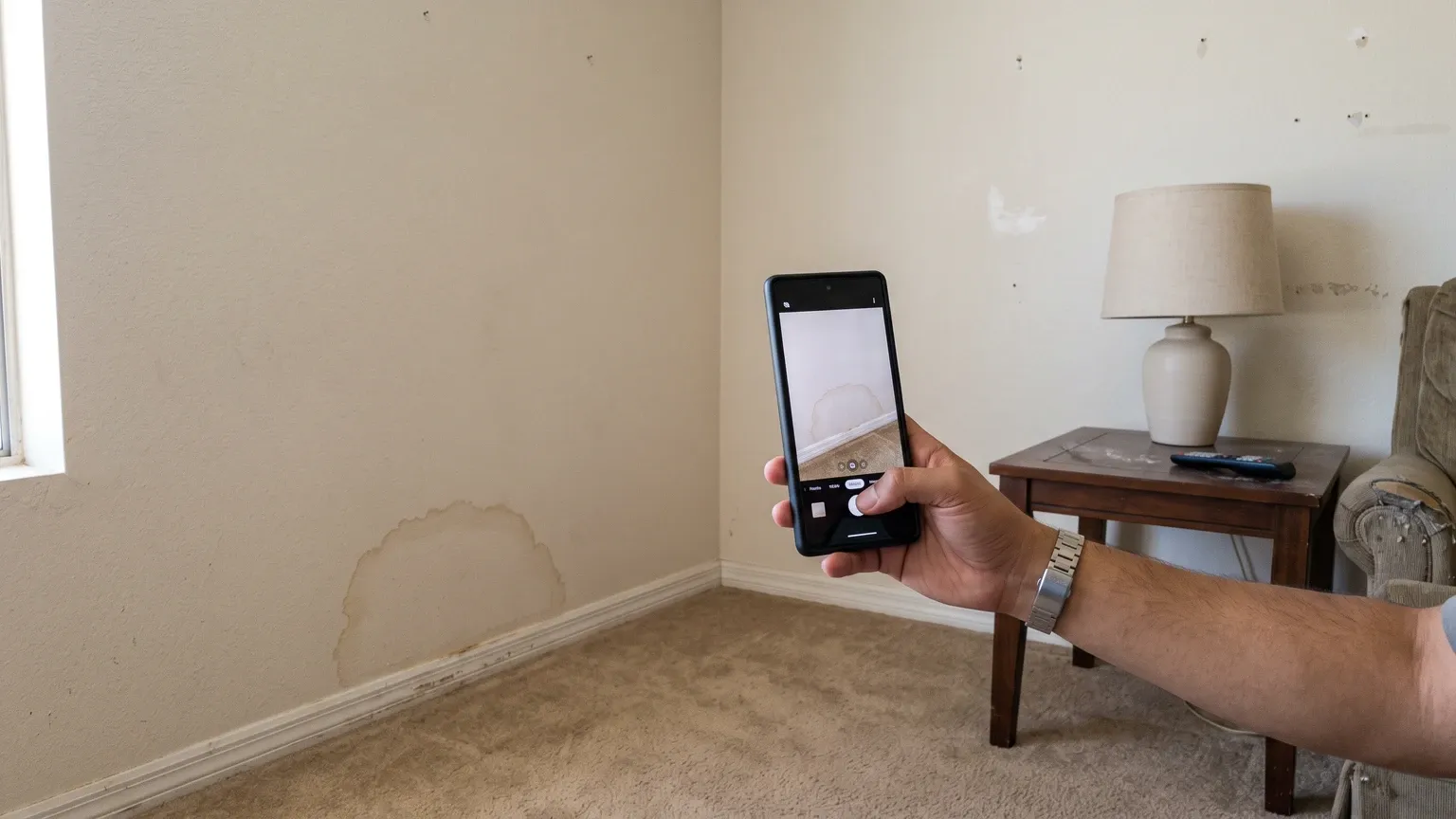
An insurance adjuster on a mold claim tests three things under the standard ISO HO-3 form: whether the mold was hidden inside a wall, ceiling or floor; whether the water came from an accidental discharge or overflow from a listed system like plumbing or AC; and whether the way the loss was handled prejudiced the carrier. Your own policy controls.
This guide is general information, not legal advice. It walks through a standard industry policy form and a published Arizona rule. It cannot tell you what your policy covers or what to do in a dispute. Policy wording varies by carrier and endorsement, and your own declarations page and policy language control.
What is the adjuster actually testing?
Adjusters work from the contract, not from a feeling about the room. The ISO HO 00 03 10 00 sample homeowners form is a standard industry template, so it is a useful map of how these claims get read. It is not your policy. Compare everything below with your own.
On the standard ISO HO-3 form, three questions do most of the work:
- Was the mold hidden? The form’s limitation on a covered peril reads “Caused by mold, fungus or wet rot unless hidden within the walls or ceilings or beneath the floors or above the ceilings of a structure.” Visible mold on an open surface is read differently from mold found when a wall is opened.
- Did the water come from a listed source? The form’s exclusion for mold, fungus or wet rot has an exception: the insurer covers loss from mold “hidden within the walls or ceilings or beneath the floors or above the ceilings of a structure if such loss results from the accidental discharge or overflow of water or steam from within” a plumbing, heating, air conditioning or automatic fire protective sprinkler system, or a household appliance on the residence premises. The form lists a second alternative as well, for a storm drain or a water, steam or sewer pipe off the residence premises.
- Was the carrier harmed by how it was handled? The form’s duties-after-loss section says the insurer has “no duty to provide coverage under this policy if the failure to comply with the following duties is prejudicial to us.”
That third question is the hinge of everything else in this guide. Prejudice is the standard the form uses. A date on a calendar is not. Prejudice tends to show up when the evidence is gone and nobody can say what happened, which is why documentation matters more than speed alone.
Which water source is the adjuster trying to identify?
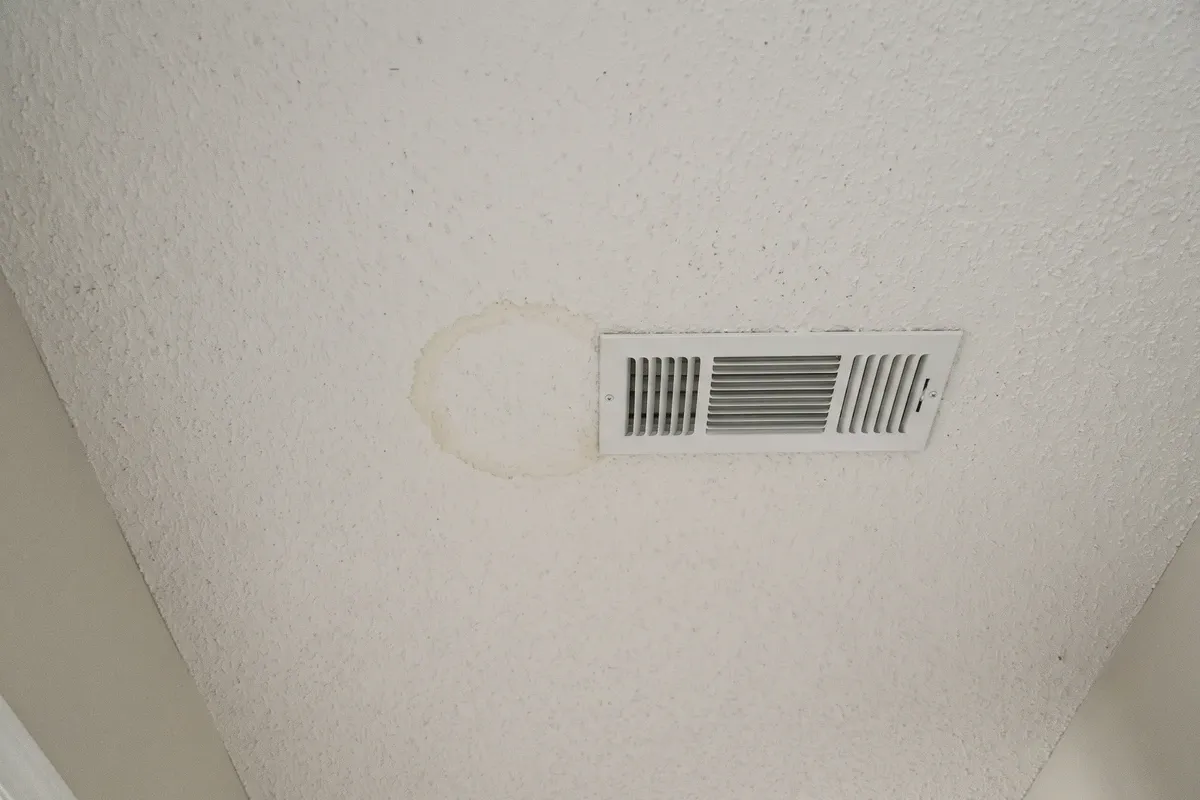
Because the form’s mold exception only applies where the loss results from an accidental discharge or overflow from a listed system, where the water came from decides which side of the wording you land on. A slow drip from a supply line, a backed-up AC condensate line and a roof that let monsoon rain in are three different fact patterns, and they can land on different sides of the same policy wording.
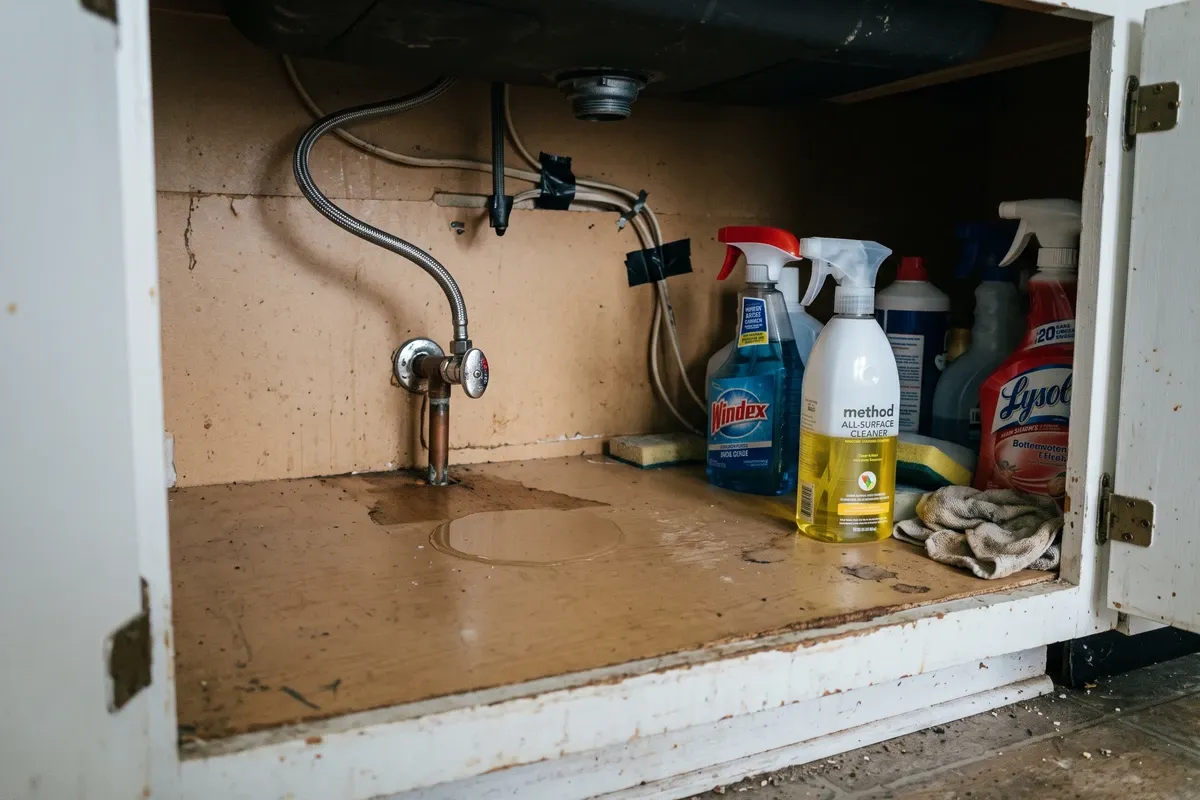
In Phoenix, the common ones are a clogged AC drain line overflowing into a ceiling or closet, a burst or leaking supply line, and water that came in during a storm. The coverage analysis itself lives in two other guides:
- Does homeowners insurance cover mold in Arizona? covers whether mold is covered at all and how the mold sublimit works.
- Mold insurance claim: covered vs excluded in Arizona walks through which scenarios usually land where.
- If the water came from a storm, flood versus wind-driven rain explains why the label matters.
What this guide adds is what the form and the Arizona rule require on each side, and the paper trail that answers them. Your job is to tell the truth about what happened and make it easy to verify. It is not to pick the version of events that pays best, and an adjuster who finds a mismatch between the story and the evidence will notice.
The Phoenix trap: drying the evidence before anyone sees it
Two duties pull in opposite directions here. The standard ISO HO-3 form lists a duty to “Protect the property from further damage,” including to “Make reasonable and necessary repairs to protect the property” and “Keep an accurate record of repair expenses.” Meanwhile EPA says “It is important to dry water-damaged areas and items within 24-48 hours to prevent mold growth.”
So you do the right thing. You run fans, pull the wet baseboard, and mop. Phoenix’s dry air helps, and within a day the surface looks fine. By the time the adjuster arrives, the wall is dry and there is no visible problem — while the cavity behind the drywall stayed wet longer than the paint did.
The two duties only collide if you do them in the wrong order. Document at the same moment you mitigate, not after:
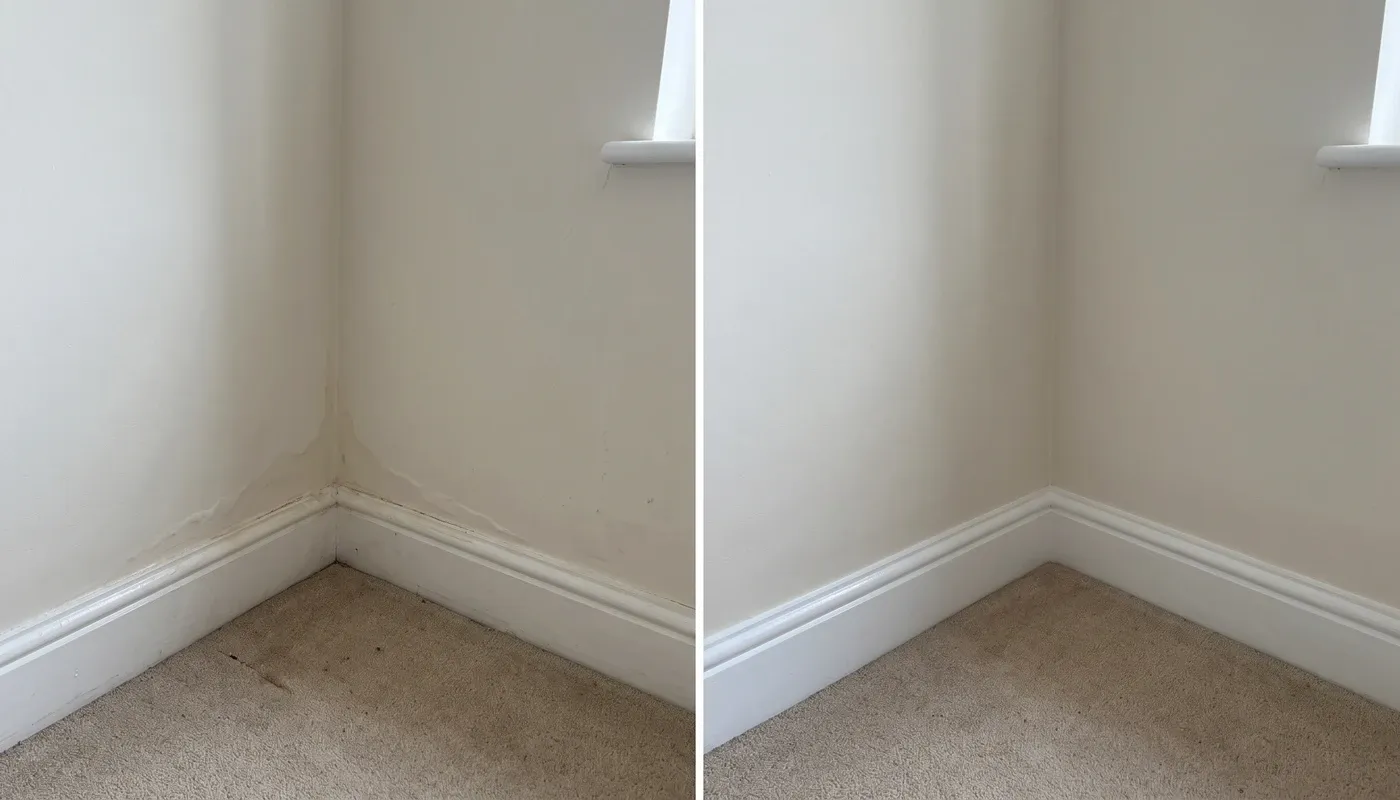
- Photograph and video the damage wide, then close, before anything is moved or dried. The Insurance Information Institute advises doing this before you take steps to protect the property from further damage.
- Make the basic temporary repairs so the home is not exposed to more damage. Note the time you started.
- Keep the failed part, whether that is a corroded fitting, a cracked supply line or a slimy drain-line section, in a bag.
- Hold off on throwing out damaged items until the adjuster has visited, per III guidance.
If you already cleaned up before photographing anything, do not panic. Receipts, the failed part, contractor records and the still-open cavity are all evidence. EPA’s line applies here: “If you already have a mold problem - act quickly.” Write down what you did and when, accurately, and give it to the adjuster.
What belongs in your claim file?
Think of the claim file as an answer sheet for the three questions above. Keep everything in one folder, paper or digital:
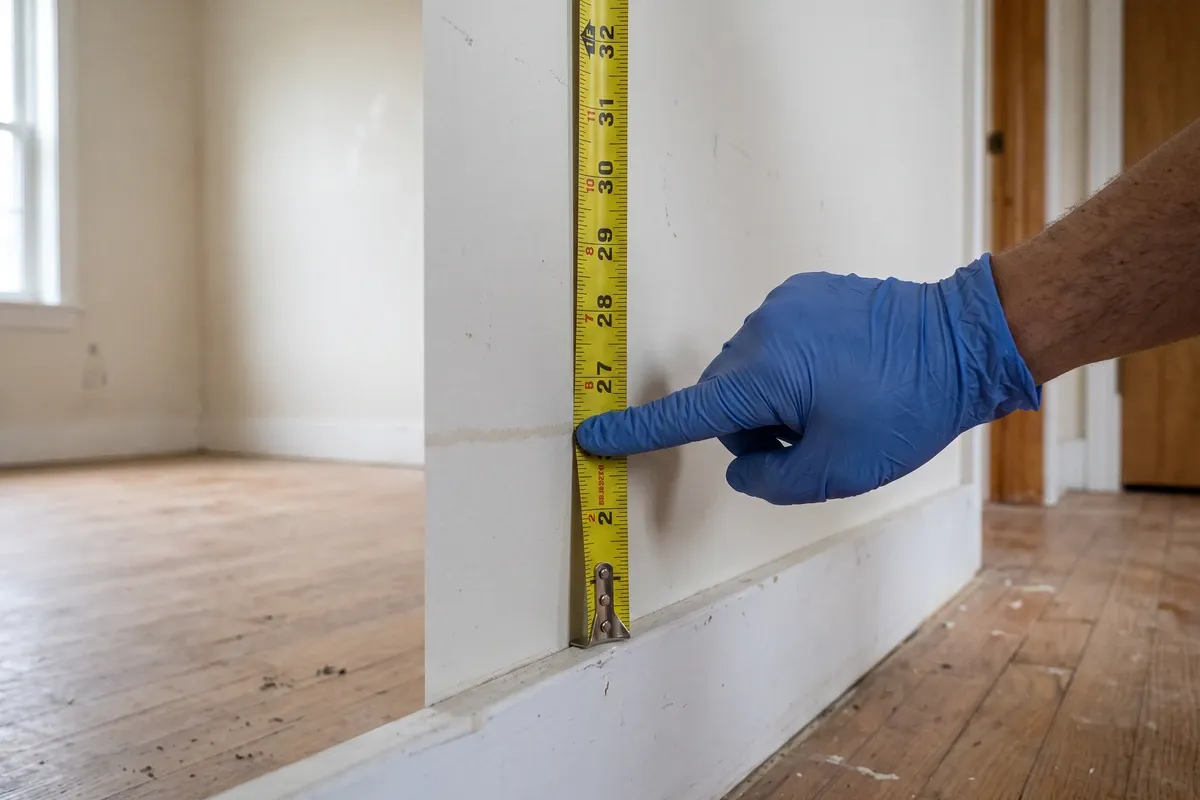
- Dated photos and video from before cleanup, wide and close, with something in frame for scale.
- The failed component itself, plus photos of where it sat.
- A written timeline: when you noticed, when you shut off water, when you called the carrier, when drying began.
- Measurements of the affected area. A plain tape measure against the water line does the job.
- Any moisture readings or inspection notes from a professional, with the date and who took them.
- Receipts for fans, plastic sheeting, plumber visits and other temporary repairs. The form requires an accurate record of repair expenses.
- A personal property inventory showing quantity, description, actual cash value and amount of loss, with bills and receipts attached. That wording comes straight from the standard form.
- The written remediation scope and estimate, if a contractor has produced one.
If a lab report or inspection is in the file, learn to read it before the adjuster does. How to read a mold test report explains what the numbers can and cannot say.
How long does the insurance company have to respond in Arizona?
Under Arizona Administrative Code R20-6-801, the carrier must acknowledge your claim within 10 working days, complete its investigation within 30 calendar days unless that is not reasonably possible, and accept or deny within 15 working days after receiving properly executed proofs of loss. Most claims advice only lists what you must do; Arizona’s rule puts dated duties on the carrier as well. The rule, “Unfair Claims Settlement Practices,” was amended effective January 7, 2024.
Arizona carrier deadlines under A.A.C. R20-6-801 — enforced by complaint to Arizona’s DIFI; A.R.S. § 20-461(D) creates no private right of action.
| Carrier duty | Deadline | Cite |
|---|---|---|
| Acknowledge notice of a claim | 10 working days | R20-6-801(E)(1) |
| Reply to other pertinent communications | 10 working days | R20-6-801(E)(3) |
| Provide claim forms and instructions | Promptly; doing so within 10 working days also satisfies (E)(1) | R20-6-801(E)(4) |
| Complete the investigation | 30 days after notification, unless it cannot reasonably be completed | R20-6-801(F) |
| Accept or deny the claim | 15 working days after receiving properly executed proofs of loss | R20-6-801(G)(1)(a) |
| If more time is needed, say so and why | 15 working days after receiving proofs of loss | R20-6-801(G)(1)(b) |
| Follow-up reasons letter | 45 days from initial notification, then every 45 days | R20-6-801(G)(1)(b) |
Working days are not calendar days: the 10- and 15-day items above are working days; the 30-day investigation period and the 45-day letters are calendar days.
A denial must be in writing, and the rule says an insurer cannot deny on a specific policy provision, condition or exclusion unless the denial references it.
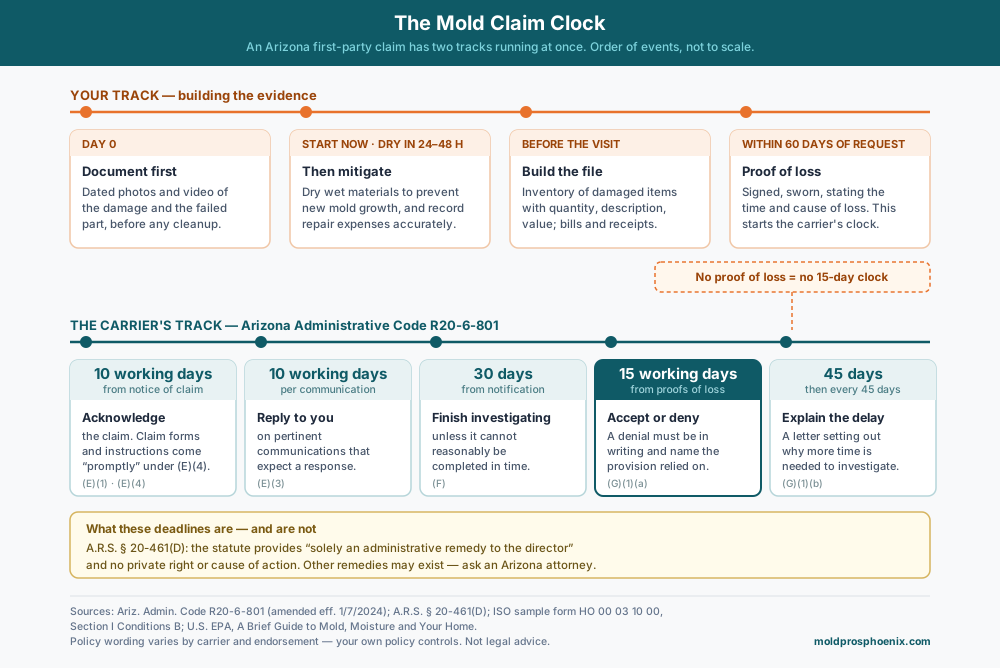
The honest limit, in the same breath. These deadlines are real and checkable, but on their own they are a record, not a cause of action. A.R.S. § 20-461(D) says “Nothing contained in this section is intended to provide any private right or cause of action to or on behalf of any insured,” and that it is “the specific intent of this section to provide solely an administrative remedy to the director for any violation of this section or rule related to this section.” An Arizona appellate decision has put it narrowly: the Act’s provisions are “expressly not a standard of conduct against which and insurers’ conduct [sic] in handling individual claims to be measured for creating a claim for relief” (Melancon, 174 Ariz. 344 (App. 1992), as quoted in commentary by the firm Jaburg Wilk; emphasis added). Read that qualifier carefully. It means the rule does not by itself hand you a claim for relief. It does not mean an insurer’s conduct is beyond legal challenge — the same commentary argues the Act and its regulation supply “some specific standards for both conduct and promptness in good faith claims handling”, and Arizona separately recognizes a common-law insurance bad-faith action that does not depend on this rule. The administrative remedy for a missed deadline is a complaint to the Arizona Department of Insurance and Financial Institutions (DIFI); whether you have any other remedy is a question for a licensed Arizona attorney.
What the table is good for is turning “they’re stalling” into a dated record. Write down when you gave notice, when they acknowledged it and each letter you receive. That record helps you escalate inside the carrier, and it is what you would attach to a complaint. For anything beyond that, talk to a licensed Arizona attorney.
What is a proof of loss, and why does the claim stall without one?
A proof of loss is a signed, sworn statement of what was lost and how. It matters because the two documents interlock: the carrier’s accept-or-deny clock cannot start until yours goes in. The standard ISO HO-3 form asks you to “Send to us, within 60 days after our request, your signed, sworn proof of loss which sets forth, to the best of your knowledge and belief: a. The time and cause of loss.” It also lists specifications of damaged buildings, detailed repair estimates and the personal property inventory.
Meanwhile the carrier’s 15-working-day accept-or-deny clock under R20-6-801(G)(1)(a) starts on receipt of “properly executed proofs of loss.” It does not start on the phone call. If a proof of loss never goes in, that particular clock never starts.
That is not a trick to play. It is a reason to treat the proof of loss as a real deadline of your own. Ask the carrier in writing what it needs, note the date it asks, and get the sworn form back complete and accurate. Your claim file makes that form far easier to fill out.
Two related rule provisions are worth knowing. R20-6-801(D)(3) says an insurer cannot deny a claim for failure to exhibit the damaged property unless it asked you to and you refused without a sound basis. The form itself also requires you to show the damaged property as often as the insurer reasonably requires, so keep the affected area accessible where you safely can.
What happens when the adjuster and your contractor disagree?
It is often a scope disagreement: how much drywall, how much drying, whether a cavity really stayed wet. Some options, described generally:
- Ask for the reasoning in writing. If a claim is denied on a specific provision, the rule requires the denial to reference it.
- Check your policy for an appraisal clause. Many policies have one for disputes over the amount of a loss. Whether yours does, and what it covers, is a question for your own policy.
- A public adjuster is a person hired to represent the policyholder rather than the carrier. Licensing and fees are outside this guide. Ask DIFI before you hire anyone.
- A DIFI complaint is the administrative remedy the statute describes, and your dated record is what makes it usable.
What should you do in the first 72 hours?
- Stop the water at the shut-off, and record the time.
- Photograph and video everything before you move or dry it.
- Give the carrier prompt notice. The form lists it as the first duty. Get the claim number and note who you spoke to and when.
- Protect the property. Fans, temporary repairs, tarps. Save every receipt. For a storm-flooded home, the mold cleanup after flooding checklist covers the drying order.
- Keep the failed part and the damaged items until the adjuster has looked.
- Write the timeline while it is fresh.
- Consider a written record of hidden moisture. A mold inspection can produce dated documentation of what is behind the wall, which is the hardest thing to show after drywall goes back up. The adjuster reaches their own conclusions, so treat it as evidence, not a verdict.
None of this involves describing the loss as anything other than what it was. Accurate and complete is the whole job.
Sources
- Arizona Administrative Code R20-6-801, “Unfair Claims Settlement Practices” (effective January 7, 2024): law.cornell.edu
- A.R.S. § 20-461: azleg.gov
- ISO HO 00 03 10 00 sample homeowners policy, hosted by the Insurance Information Institute: iii.org
- U.S. EPA, “A Brief Guide to Mold, Moisture and Your Home”: epa.gov
- Insurance Information Institute, “How to file a homeowners claim”: iii.org
- Jaburg Wilk, “Dusting Off Arizona’s Unfair Claims Settlement Practices Act & Regulation” — legal commentary, including the Melancon decision at 174 Ariz. 344 (App. 1992), which the commentary captions Melancon v. USAA Property & Casualty (secondary source): jaburgwilk.com