Is Black Mold Dangerous? What Science Shows
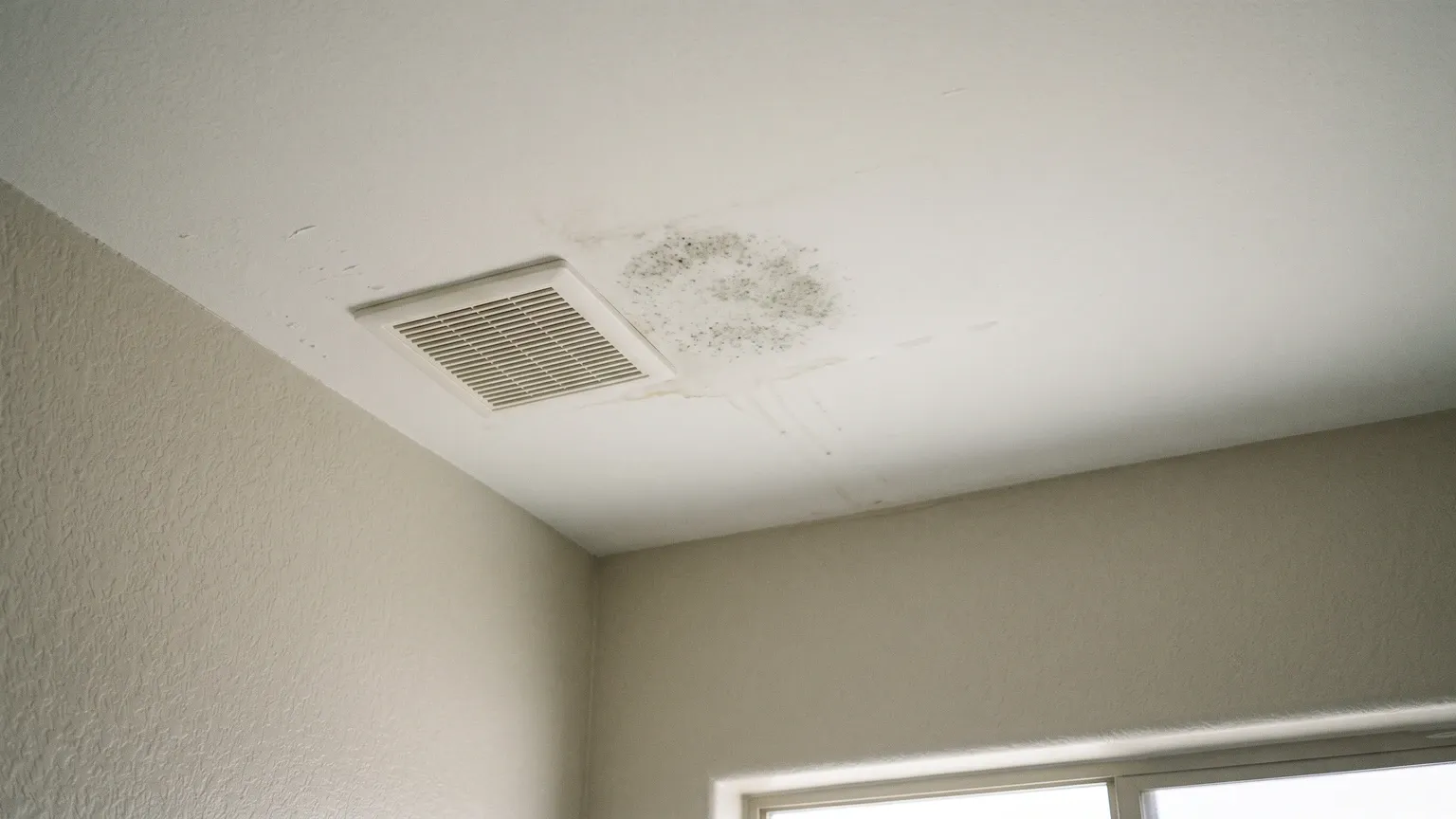
Black mold is not uniquely dangerous. Health agencies including the CDC say a mold’s color doesn’t determine how harmful it is, and the Institute of Medicine and WHO found insufficient evidence linking indoor mold toxins to serious systemic illness. Mold can still trigger allergy and asthma symptoms, so any visible mold should be removed and the moisture fixed — but you rarely need a paid test to do it.
What is “black mold,” really?
The phrase “black mold” almost always means one species: Stachybotrys chartarum. It is a real mold, it does produce mycotoxins, and it does grow in homes with chronic water damage. That part of the story is accurate.
The part that got inflated is the claim that it is uniquely deadly.
The problem starts with color. Many mold species appear dark, near-black, or greenish-black — including Cladosporium, the most common indoor mold in most climates, and several Aspergillus species. None of these species can be identified by looking at them. The CDC and NIOSH state this directly: the color of mold does not necessarily indicate that it is more or less dangerous.
The second issue is that “black mold” and “toxic black mold” became interchangeable in media coverage after a highly publicized cluster of infant deaths in Cleveland in the 1990s. That story turned out to be more complicated than the headlines suggested — the original studies were retracted or found methodologically flawed. More on that below.
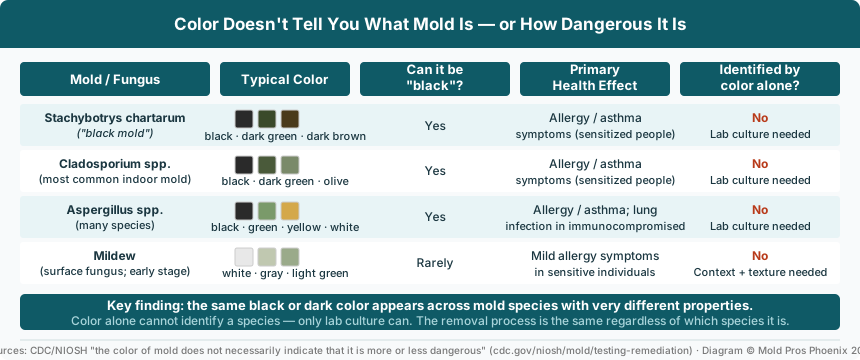
Mildew is also commonly confused with mold. Mildew is a surface fungal growth that typically appears white or gray and stays on the surface — it does not penetrate porous materials the way mold does. If you can wipe it off a tile surface with a damp cloth and it does not return, that was probably mildew. If dark growth is returning on drywall or grout after cleaning, that is mold, and the moisture source has not been fixed.
Is black mold more toxic than other mold?
This is the core of the myth, and the answer from mainstream medicine is: not meaningfully.
Cleveland Clinic puts it plainly: “black mold isn’t any more dangerous than any other types of mold.” Their guidance continues: “There isn’t any evidence that black mold exposure causes other serious health issues such as memory loss, nosebleeds, body aches or mood disorders.”
Stachybotrys chartarum does produce trichothecene mycotoxins under the right conditions. But the practical question is not whether mycotoxins exist in laboratory conditions — it’s whether the concentrations you encounter in a home are enough to produce the severe systemic effects that circulate online. The research consistently says the evidence for that link is insufficient.
The NIOSH guidance adds a useful practical point: thorough visual inspections or detecting problems by musty odors are more reliable than air sampling. In other words, what you can see and smell tells you more than an air test.
Can black mold actually make you seriously ill?
Here is where the honest answer gets important, because both extremes are wrong.
What the research does NOT support:
The American Academy of Allergy, Asthma and Immunology reviewed the available evidence and concluded that both the Institute of Medicine and the World Health Organization published reports concluding that the available evidence was insufficient to support a relationship between mycotoxin inhalation and the range of nonspecific symptoms reported as toxic mold syndrome or CIRS. “CIRS” stands for Chronic Inflammatory Response Syndrome — a diagnosis marketed heavily by certain clinics, often with the claim that black mold is the cause.
The IOM 2004 report (a landmark systematic review of the evidence) found inadequate or insufficient information to determine whether damp indoor environments or the agents associated with them are related to a variety of health outcomes that advocates have linked to mold — including neurological symptoms, fatigue, and the systemic illness picture promoted online.
The infant hemorrhage story that launched the “toxic black mold” panic is relevant here. The CDC initially reported that infants who died of pulmonary hemorrhage were more likely to live in homes where Stachybotrys was found. A follow-up in 2000 found that because of multiple issues with data collection and analysis, there was inadequate or insufficient information to determine whether an association exists between acute idiopathic pulmonary hemorrhage in infants and the presence of Stachybotrys chartarum. The original finding was a false alarm rooted in methodological problems. The “deadly black mold” narrative it generated has not caught up.
What the research DOES show:
Mold exposure in damp indoor environments is reliably linked to real health effects, just more modest ones. The IOM found sufficient evidence of an association between exposure to damp indoor environments and upper respiratory tract (nasal and throat) symptoms, cough, wheeze, and asthma symptoms in sensitized asthmatic persons.
The EPA is similarly specific about which effects are real: molds can trigger asthma episodes in sensitive individuals with asthma, and inhaling or touching mold or mold spores may cause allergic reactions in sensitive individuals. Respiratory irritation, sneezing, runny nose, skin rash, and eye irritation are the documented effects. These are real. They are just not “toxic mold syndrome.”
Who actually needs to worry about mold?
The honest answer is that most healthy adults will experience minor or no symptoms from typical household mold exposure. A patch on a bathroom ceiling or a damp basement corner is not a medical emergency.
The groups where the risk is meaningfully higher are specific, and the CDC names them plainly:
- People with asthma or who are allergic to mold may have severe reactions.
- Immune-compromised people and people with chronic lung disease may get infections in their lungs from mold.
That second group — immunocompromised individuals, people on chemotherapy, people with HIV, transplant recipients — can get genuine pulmonary fungal infections from inhaling mold spores. Aspergillus species are the more common culprit in those cases, not Stachybotrys. The risk is real for this population, which is why mold in a home where an immunocompromised person lives deserves prompt removal.
For everyone else, the right framing is: mold is a maintenance problem that causes real but manageable symptoms in sensitive people. Fix it because it needs fixing, not because it will kill you.
Do you need a mold test?
Almost certainly not.
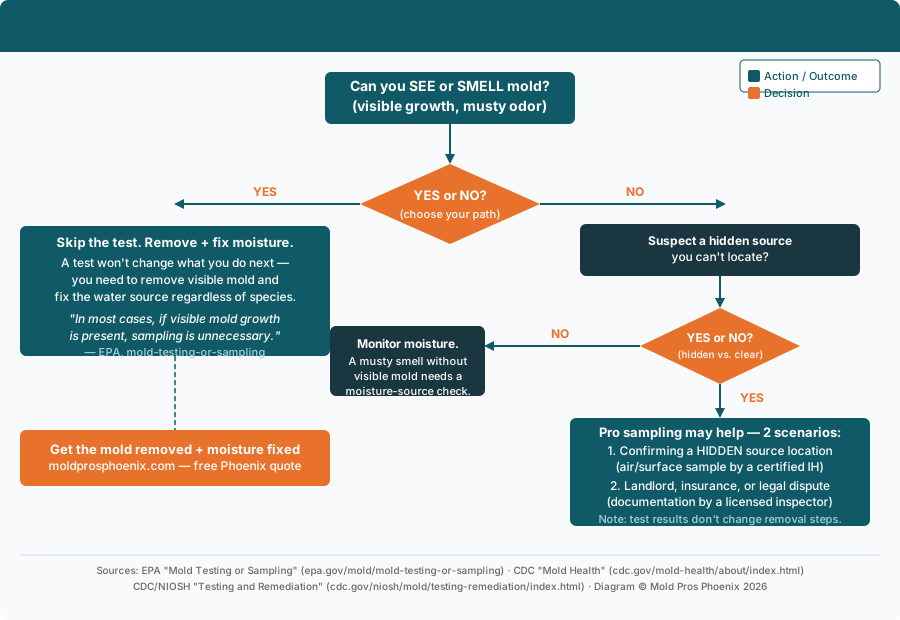
The CDC is direct: “CDC does not recommend mold testing.” The reasoning follows logically: “You do not need to know the type of mold. If mold is growing in your home, you need to clean up the mold and fix the moisture problem.”
The EPA adds: “In most cases, if visible mold growth is present, sampling is unnecessary.” This is because sampling results do not change your next step. You still have to remove the visible mold. You still have to fix the moisture.
What a test cannot do: “Since no EPA or other federal limits have been set for mold or mold spores, sampling cannot be used to check a building’s compliance with federal mold standards.” There are no thresholds. A test cannot tell you what level is “safe” because no agency has defined one. The CDC echoes this: “There are no set standards for what is and what is not an acceptable quantity of different kinds of mold in a home.”
The decision tree below captures where testing does and doesn’t make sense.
What a mold test costs vs. what it buys you
Understanding the costs helps put the decision in perspective.
| Test type | Typical cost range | Does it change what you do next? |
|---|---|---|
| DIY surface/air kit (retail store) | $10–40 + lab fee | No — can confirm spores are present (true almost everywhere) but cannot identify species reliably or give you an actionable threshold |
| Professional air sampling + surface samples | $300–700+ depending on sample count | Rarely — useful for confirming a hidden source or for documentation; does not change removal protocol |
| Lab mycotoxin urine test (direct-to-consumer) | $300–600+ | No — AAAAI notes these tests are non-FDA approved, lack standardization, and can produce false positives or negatives with no established thresholds |
Cost ranges above are estimates based on commonly cited industry figures as of 2026; actual quotes will vary by market and scope. The EPA specifies that if you do need professional sampling, it should be conducted by professionals who have specific experience in designing mold sampling protocols, sampling methods and interpreting results — not by a general contractor or a kit you mail off yourself.
The narrow cases where professional sampling genuinely helps:
- You can smell mold but cannot find it visually. A moisture meter and targeted air samples can narrow down a hidden source behind walls or under flooring.
- Landlord, insurance, or legal dispute. A documented professional report creates a record that a problem exists and was communicated.
Neither of these scenarios is about identifying the species. They are about locating a problem or creating documentation.
What actually matters — moisture and removal
This is the practical bottom line, and it applies regardless of species, color, or test result.
“The key to mold control is moisture control.” — EPA
The sequence is always: find the water source, stop it, then remove the mold. Not test, then consider acting. Act.
In Phoenix specifically, the moisture drivers are not outdoor humidity — they are specific to how Valley homes are built. The most common ones:
- AC condensate line overflow. An attic-mounted air handler with a clogged drain line produces enough water to feed mold on roof decking within days of backup. This is the most common cause of mold in Phoenix attics.
- Monsoon season roof intrusion. Flat and low-slope roofs are common in Phoenix, and they leak at flashing seams under the hydrostatic pressure of a monsoon downpour.
- Slab leaks. A slow leak under the slab soaks the subfloor from below. Flooring discoloration and a musty odor in the center of a room with no wall near it often signals a slab leak.
- Swamp cooler water distribution. Evaporative coolers that drip from the pad or overflow at the pan distribute water across stucco and roof decking. The mold this produces looks dark because it is.
- Pool and irrigation over-spray against stucco. Stucco holds moisture. Over-spray from sprinkler heads running against a stucco wall builds up enough moisture in the wall cavity to support mold growth on the paper-faced drywall inside.
For a deeper look at why Phoenix homes are more mold-prone than the “desert = dry” assumption suggests, the mold in the desert guide covers the full picture.
The EPA’s size rule for DIY vs. professional work
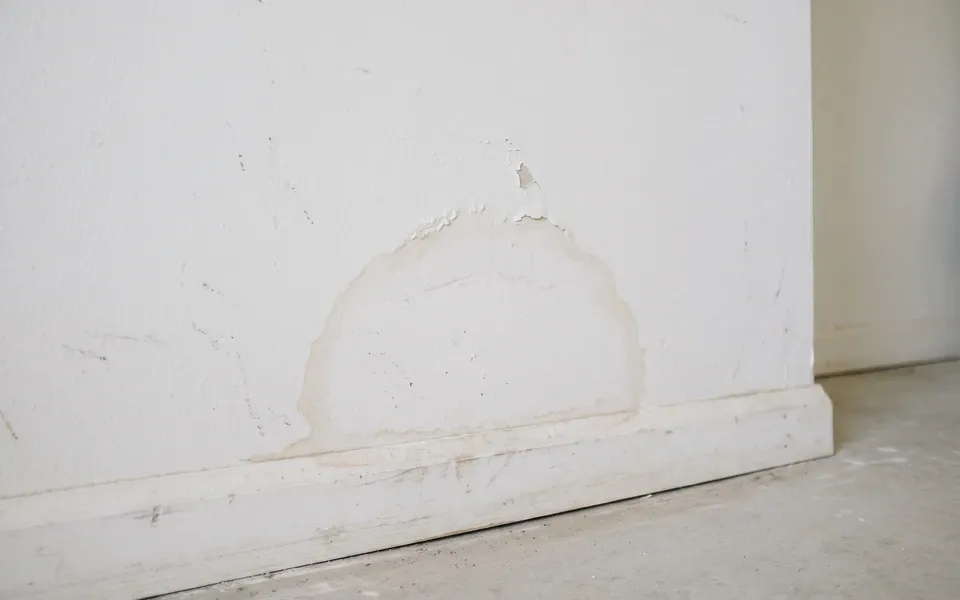
The EPA guidance on mold cleanup provides a practical line: “If the moldy area is less than about 10 square feet (less than roughly a 3 ft. by 3 ft. patch), in most cases, you can handle the job yourself.” Hard, non-porous surfaces like tile or sealed concrete — scrub with detergent, dry thoroughly, fix the moisture.
Once mold is in drywall or insulation, the materials need to come out. Drywall is porous — surface cleaning does not reach mold in the paper backing or the drywall core. For anything larger than the 10-square-foot threshold, or anything that has spread to materials you cannot fully clean, professional mold remediation removes the affected material, contains the area during work, and confirms the moisture source is fixed before the space is closed back up.
For a complete look at identification — what Stachybotrys actually looks like vs. other dark molds, and how texture and location help narrow species — the black mold identification guide covers that topic in detail. That guide handles the “is this actually Stachybotrys?” question; this one handles what to do about it.
For the wider question — the debate over “mold illness” as a systemic condition and what mainstream medicine and the CIRS practitioner community actually agree and disagree on — our is mold illness real feature walks through the full evidence picture, and the documented mold illness cases reference collects the sourced legal and medical cases that keep coming up in the conversation.
For Phoenix cost ranges on mold removal — what drives the price up or down depending on scope, materials affected, and whether the moisture source repair is included — the mold removal cost guide breaks that down specifically for the Valley.
Sources
- CDC/NIOSH — Mold: Testing and Remediation: cdc.gov/niosh/mold/testing-remediation/index.html
- CDC — Mold: About: cdc.gov/mold-health/about/index.html
- EPA — Mold Testing or Sampling: epa.gov/mold/mold-testing-or-sampling
- EPA — A Brief Guide to Mold, Moisture, and Your Home: epa.gov/mold/brief-guide-mold-moisture-and-your-home
- EPA — Mold Cleanup in Your Home: epa.gov/mold/mold-cleanup-your-home
- EPA — Mold and Health: epa.gov/mold/mold-and-health
- AAAAI — Toxic Mold: aaaai.org/tools-for-the-public/conditions-library/allergies/toxic-mold
- IOM 2004 — Damp Indoor Spaces and Health (Executive Summary): ncbi.nlm.nih.gov/books/NBK215646/
- Cleveland Clinic — Black Mold: my.clevelandclinic.org/health/diseases/24862-black-mold