Is mold illness real? What the evidence actually shows
Yes — mold causes real, severe illness. Mainstream medicine has recognized more than 11 distinct mold-related conditions for decades, several with mortality rates above 30%. A wider cluster — "toxic mold syndrome," chronic inflammatory response syndrome, or CIRS — sits in genuinely contested territory, with credentialed clinicians and real patient experience on both sides of the debate. Here is the honest picture, with every claim traced to its primary source. For the same evidence organized by date instead of by argument, see our companion mold illness scientific timeline.
The severe conditions doctors already recognize
Before any discussion of contested clusters, start here: mainstream medicine has documented a large body of serious mold-related illness for which CDC, NIH, NHLBI, the American Thoracic Society, IDSA, and WHO all publish clinical guidance. These are not fringe claims.
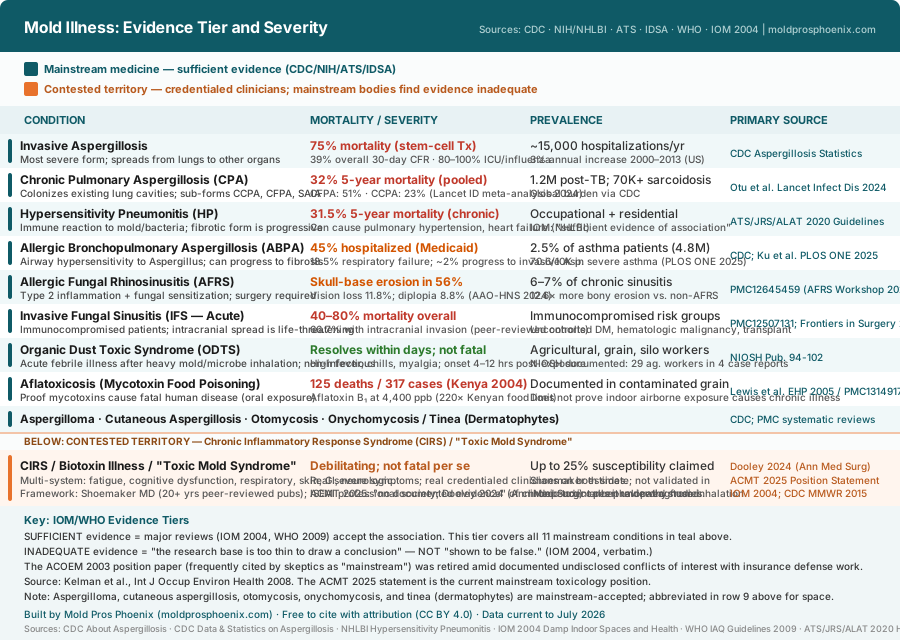
The severity data is significant enough that a single summary table is worth more than paragraphs. Below is the peer-reviewed and federal-agency picture for the 11 major recognized conditions.
The numbers behind the table
Invasive aspergillosis is the most severe form of Aspergillus infection — the fungus leaves the lungs and spreads to other organs. According to the CDC, stem-cell transplant recipients who develop invasive aspergillosis have a 75% one-year mortality rate. ICU patients and those with influenza-associated aspergillosis face rates approaching 80–100% in some cohorts. The CDC tracked nearly 15,000 aspergillosis-related hospitalizations in the United States in 2014 alone, at an estimated cost of $1.2 billion, with a 3% annual increase from 2000 to 2013.
Chronic pulmonary aspergillosis (CPA) is a slower-moving disease: Aspergillus colonizing existing lung cavities left by tuberculosis, sarcoidosis, COPD, or prior lung surgery. A 2024 meta-analysis in Lancet Infectious Diseases pooled 70 studies and found a 5-year mortality of 32% overall — rising to 51% in the fibrosing subtype. The CDC estimates 1.2 million people worldwide have CPA following tuberculosis alone.
Hypersensitivity pneumonitis (HP) is an immune-mediated lung disease triggered by inhaling mold spores and bacteria — the NHLBI specifically names mold as a cause. Without treatment, it can lead to pulmonary fibrosis, pulmonary hypertension, and heart failure. Peer-reviewed cohort studies have reported 5-year mortality of 31.5% for chronic HP, with a fibrotic-phenotype cohort in Frontiers in Medicine (2023) reporting 32.7%. The IOM 2004 review assigned HP a "sufficient evidence" rating — its highest tier — for association with damp indoor environments.
Allergic bronchopulmonary aspergillosis (ABPA) affects roughly 2.5% of all asthma patients worldwide — approximately 4.8 million people, per the CDC. A 2025 analysis of U.S. insurance claims (PLOS ONE) found that 45.1% of Medicaid ABPA patients were hospitalized, 18.5% developed respiratory failure, and approximately 2% progressed to invasive aspergillosis. In severe asthma, ABPA prevalence climbs to 70.6 per 10,000 patients. It can advance to pulmonary fibrosis and respiratory failure.
Allergic fungal rhinosinusitis (AFRS) is often treated as a mild condition, which the evidence does not support. A 2024 multidisciplinary workshop paper (PMC12645459) found that AFRS patients are 12.6 times more likely to have bony erosion than other sinusitis patients. Up to 56% present with radiographic evidence of skull-base erosion or intraorbital extension; 11.8% have vision loss and 8.8% have double vision. Medical therapy alone is insufficient — surgery is required.
Invasive fungal sinusitis in immunocompromised patients carries mortality of 40–54% for the acute form, rising to 66.7% when there is intracranial invasion. The overall reported invasive fungal sinusitis mortality in some cohort series is as high as 80%.
Organic dust toxic syndrome (ODTS) — also called pulmonary mycotoxicosis — is an acute febrile illness that occurs after heavy inhalation of organic dust contaminated with mold and microbial byproducts. NIOSH documented 29 agricultural workers across four case reports: grain handlers, silo cleaners, wood-chip unloaders. Onset is 4–12 hours post-exposure; high fever, chills, myalgia, and dry cough resolve within a few days. It is not infectious and not fatal, but it is the clearest occupational evidence that acute, non-allergic systemic illness from mold exposure is real.
Aflatoxicosis is the clearest peer-reviewed proof that fungal mycotoxins can kill. In April 2004, one of the largest aflatoxicosis outbreaks on record struck rural Kenya: 317 cases and 125 deaths from contaminated homegrown maize, with aflatoxin B₁ measured at up to 4,400 parts per billion — 220 times the Kenyan food safety limit. The source: Aspergillus flavus and A. parasiticus contaminating grain. This does not prove that airborne mycotoxin inhalation in homes causes chronic illness at population scale — that is a separate and still-contested question. But it forecloses the argument that mycotoxins do not affect humans. They demonstrably do, at sufficient dose.
The remaining conditions — aspergilloma (a fungal ball colonizing a lung cavity), cutaneous aspergillosis (a skin infection in immunocompromised patients), otomycosis (fungal ear infection, accounting for 5–20% of external ear infections worldwide), onychomycosis (fungal nail disease, affecting an estimated 14% of the general population per CDC), and dermatophyte infections including athlete's foot and ringworm (up to 25% lifetime prevalence globally, per CDC) — round out the established picture. None of these is disputed by mainstream medicine. Together, they represent a large category of real, sometimes serious, sometimes fatal mold-related disease that was recognized long before the toxic mold debate of the early 2000s.
A toddler's death that changed UK housing law
On December 21, 2020, two-year-old Awaab Ishak died at Royal Oldham Hospital in Rochdale, England. His family had been reporting mold in their social-housing flat since 2017. The housing association, Rochdale Boroughwide Housing, repeatedly failed to act.
Senior Coroner Joanne Kearsley concluded the inquest on November 15, 2022. Her recorded cause of death:
"Acute airway oedema with severe granulomatous tracheobronchitis due to environmental mould exposure."
— Senior Coroner Joanne Kearsley, HM Coroner for Greater Manchester North, November 15, 2022
Post-mortem examination by Dr. Philip Lumb found Awaab's throat, windpipe, and airways swollen and congested, with evidence of fungus in his blood and lungs. A council building surveyor who inspected the flat two days after Awaab's death stated it was not fit for human habitation without repairs. Rochdale Boroughwide Housing's CEO was dismissed.
The UK Parliament responded. The Social Housing (Regulation) Act 2023 — known as Awaab's Law — requires social-housing providers to remedy reported damp and mold within specified timeframes. Phase 1 rollout began October 27, 2025. It is now statute.
This is the strongest single global citation for the proposition that residential mold exposure can be fatal. It rests on a coroner's legal finding, a post-mortem pathology report, and a parliamentary response — not a contested expert opinion. For those who ask whether mold illness is real, Awaab Ishak's case is the answer that requires no hedge.
The HVAC case that maps directly to Phoenix
Kristina Baehr was a DOJ attorney in Austin, Texas. For approximately two years she experienced dizziness, blurred vision, brain fog, and profound exhaustion — "drunken-like wooziness in the middle of the day," as she later described it to CNBC. Six family members were affected. One son had sinus complications and another had developmental delays. A daughter slept for months in a room with black mold growing behind the wall, and exhibited erratic mood swings and anxiety.
The source: Woods Comfort Systems had installed an oversized HVAC unit in the Baehr home. An oversized unit short-cycles — it cools the house quickly, shuts off, then runs again — instead of running longer cycles that allow the system to dehumidify properly. Short-cycling HVAC creates chronic condensation and elevated indoor humidity. A faulty roof repair also introduced moisture. Mold colonized the walls and the HVAC system itself.
In August 2023, an Austin jury awarded the Baehr family approximately $3.1 million. Woods Comfort Systems was found 40% liable; the verdict included roughly $700,000 in exemplary damages and $390,000 in attorney fees. Multiple outlets — CNBC, Newsweek, the Texas Lawbook — covered it. Kristina Baehr subsequently left DOJ and founded Just Well Law to represent mold-injured families.
This case is particularly relevant to Phoenix homeowners because the mechanism — an oversized, short-cycling AC unit creating chronic condensation — is the same mechanism that operates in virtually every Phoenix home on every summer day. Phoenix HVAC systems run near-continuously from May through September; condensate drains that clog, overflow pans that back up, and ductwork with broken vapor barriers are standard sources of hidden moisture intrusion in Valley homes. The Baehr verdict is not an exotic edge case. It maps directly to the AC-condensate mold vector we see repeatedly in the Phoenix market. See our guide to mold in your AC and air vents for more on HVAC as a mold driver.
What "sufficient" and "inadequate" actually mean
Two major international reviews — the Institute of Medicine's Damp Indoor Spaces and Health (2004) and the WHO's Indoor Air Quality: Dampness and Mould guidelines (2009) — are the most authoritative systematic reviews on this topic. They use a tiered evidence framework, and their tier language is routinely misread in the mold debate, in both directions.
The IOM 2004 "sufficient evidence of an association" tier — its strongest — covers:
- Upper respiratory tract symptoms
- Cough, wheeze
- Asthma symptoms in people already sensitized to mold
- Hypersensitivity pneumonitis in susceptible persons
The WHO 2009 update extended the sufficient-evidence tier to include, under epidemiological evidence: asthma development (new-onset, not just exacerbation), respiratory infections, dyspnoea. Under clinical evidence, the WHO includes mold infections in susceptible individuals, humidifier fever, and inhalation fevers. The WHO's conclusion is blunt: "the most important effects are increased prevalences of respiratory symptoms, allergies and asthma as well as perturbation of the immunological system." The phrase perturbation of the immunological system is not a throwaway line — it is the WHO acknowledging non-respiratory immune effects without yet endorsing specific downstream syndromes.
The critical interpretive point: "inadequate or insufficient evidence" — which is what both frameworks apply to the CIRS-type multi-system cluster — means the research base was too thin to draw a conclusion at the time of review. It does not mean the conditions were shown to be false. The IOM committee made this explicit in its methodology: "inadequate or insufficient evidence to determine whether an association exists" is categorically distinct from "sufficient evidence of no association." These are not the same finding. This single distinction is where the most consequential misreadings of both frameworks occur.
Neither framework rules out neurocognitive, dermatologic, or systemic effects. Neither sets a safe indoor exposure level. The research gaps the IOM identified — including long-term cohort studies of neurocognitive outcomes in occupants of water-damaged buildings, and dose-response data for airborne mycotoxin inhalation — remain substantially unfilled as of 2026.
Contested territory — the CIRS debate, both sides
This is where the debate gets live and where honest reporting requires representing both positions in their own words.
The proponent case
Chronic Inflammatory Response Syndrome (CIRS) was named and formalized by Ritchie C. Shoemaker, MD, a family physician who began working with biotoxin-exposed patients in 1997 after a cluster of illness in patients exposed to Pfiesteria on Chesapeake Bay. Shoemaker has published peer-reviewed work across more than two decades in journals including Neurotoxicology and Teratology, International Archives of Allergy and Immunology, and Advances in Therapy. The proposed framework: biotoxins and inflammagens from water-damaged buildings — mycotoxins, beta-glucans, endotoxins, actinobacteria fragments — enter a genetically susceptible host. In people with certain HLA-DR/DQ haplotypes (roughly 24% of the population by Shoemaker's estimate, though this figure has not been independently validated), the innate immune system fails to clear the antigens and mounts a persistent, dysregulated inflammatory response. Chronic complement activation, cytokine dysregulation, and suppression of regulatory neuropeptides (MSH, VIP) produce a multi-system phenotype: fatigue, cognitive dysfunction, musculoskeletal pain, GI symptoms, neurologic symptoms.
The proponent network is not fringe in credentials. Neil Nathan, MD, board-certified in Family Medicine and Pain Management, taught at the University of Minnesota medical school from 1979 to 1990 and authored Toxic (2018). Andrew Heyman, MD, triple-board-certified, is Medical Director of Integrative Medicine at The George Washington University. Mary Ackerley, MD, trained at Harvard (summa cum laude BA) and completed her psychiatry residency at Johns Hopkins; she is a co-founder of ISEAI (the International Society for Environmentally Acquired Illness). Lawrence Afrin, MD, a hematologist-oncologist (formerly at the Medical University of South Carolina and the University of Minnesota, now at AIM Center for Personalized Medicine in Westchester County, NY), wrote the defining clinical book on mast cell activation syndrome (Never Bet Against Occam, 2016) — a related condition. Anne Maitland, MD, PhD, of the Icahn School of Medicine at Mount Sinai, is a member of the AAAAI Mast Cell Activation Disorders task force — a mainstream allergy and immunology professional position.
The strongest recent peer-reviewed evidence on the proponent side is a 2024 review in Annals of Medicine and Surgery by Dooley, Vukelic, and Jim. Its conclusion: "The only treatment in the published literature documenting clinical efficacy for the treatment of Chronic Inflammatory Response Syndrome is the Shoemaker Protocol." The review analyzed 14 studies including 2 randomized controlled trials. The important caveat: most of the underlying trial evidence comes from Shoemaker's own research group, not independent replication.
The skeptical case
The mainstream toxicology position is stated most clearly in the American College of Medical Toxicology's 2025 position statement:
"There is no documented evidence that inhalation exposure to fungi or mycotoxins in indoor environments causes a chronic toxic encephalopathy."
— ACMT Position Statement, 2025
The ACMT also states that urine mycotoxin tests are "not recommended for the assessment of human exposure to mycotoxins," and that using them to diagnose systemic illness is "medically inappropriate and costly." The CDC MMWR reached a similar conclusion in 2015: no FDA-approved urine mycotoxin test exists; levels that predict disease have not been established; these tests "might not be valid or clinically useful."
The IOM 2004 review — the foundational text — found "inadequate or insufficient evidence" for the systemic, multi-system CIRS-type phenotype. UCLA Health has stated explicitly that CIRS is "not considered an established medical diagnosis." The AAAAI 2006 position paper recognizes localized allergic and hypersensitivity effects but does not recognize systemic mycotoxin-mediated illness from residential inhalation.
A crack in the skeptical position that honest reporting requires noting
The mainstream skeptical case has frequently leaned on the American College of Occupational and Environmental Medicine's 2003 position paper, which concluded: "Current scientific evidence does not support the proposition that human health has been adversely affected by inhaled mycotoxins in the home, school, or office environment."
That paper was retired by ACOEM. Peer-reviewed critique published in the International Journal of Occupational and Environmental Health in 2008 (Kelman et al.) documented undisclosed conflicts of interest between several of the paper's authors and insurance defense work. ACOEM subsequently pulled the paper from its active statement list. The ACMT 2025 statement is now the current mainstream toxicology position; the 2003 ACOEM paper cannot honestly be cited as representing the mainstream view.
Where both sides agree
Both the CIRS proponent community and mainstream medical bodies agree on this: removing patients from water-damaged buildings improves respiratory outcomes. A Cochrane systematic review covering eight studies and 6,538 participants found moderate-quality evidence that repairing mold-damaged buildings decreases wheezing and rhinitis. A randomized trial by Kercsmar et al. found that remediation reduced urgent healthcare visits for asthmatic children from 62% to 21%. Whatever the mechanism debate, the intervention is the same: fix the building.
For more on the conditions that make mold exposure most dangerous — including immunocompromise and pre-existing lung disease — see our guide on whether black mold is dangerous.
What courts have and haven't proven
The legal record on mold illness is extensive but frequently misread. A verdict for property damage or insurance bad faith is not the same as a judicial finding that mold caused a specific illness. The distinction matters.
Ballard v. Fire Insurance Exchange (Texas, 2001)
The landmark U.S. case. The Ballard family's 22-room Dripping Springs, Texas home was contaminated with Stachybotrys chartarum after a 1998 bathroom plumbing leak that Farmers-affiliated Fire Insurance Exchange failed to properly remediate. Three-year-old Reese Allison developed seizures and began coughing blood. Ron Allison experienced memory loss and cognitive decline. Melinda Ballard coughed up blood on a Southwest flight in April 1999.
On June 1, 2001, a Travis County jury returned a verdict of $32,147,525, including $12 million in punitives and $5 million for mental anguish. On appeal, the Texas Court of Appeals reduced the verdict to approximately $4 million net.
The critical honest detail: Trial Judge John Dietz excluded the personal-injury and health-effects claims because the plaintiffs' medical expert testimony did not meet the Texas Supreme Court's Robinson reliability standard for scientific evidence. The verdict was for property damage and insurance bad-faith claims handling, not for judicially established mold-caused illness. Epidemiologist Robert Haley of UT Southwestern described the neurodegeneration attributions as "purely conjectural." Melinda Ballard later testified before the U.S. House Financial Services Subcommittee in 2002; she founded Policyholders of America and became a prominent insurance reform advocate. Ron Allison and Reese Allison both died in 2021; Melinda died in 2013.
Ed McMahon settlement (2003)
The Tonight Show sidekick sued over toxic mold in his Beverly Hills home following a burst pipe. His family became ill; his dog, Muffin, died from what the McMahons attributed to mold. On March 21, 2003, McMahon settled for $7.2 million from multiple defendants. Because it was a settlement, no medical-causation findings were entered on the record.
Erin Brockovich (2003)
Brockovich's Agoura Hills home became Stachybotrys-contaminated after water damage. Her husband and 10-year-old daughter suffered respiratory problems; remediation cost north of $500,000. She settled for $430,000 from two parties plus an undisclosed amount from a third. Again, a settlement — not a judicial finding on medical causation.
Baehr v. Woods Comfort Systems (Texas, 2023)
As detailed above, the Austin jury awarded $3.1 million in August 2023. This verdict rests on the property and mechanism finding — an oversized HVAC unit caused chronic moisture intrusion and mold growth — against the HVAC installer. The mechanism is solid and documented. This is the most recent major U.S. verdict and the most directly applicable to HVAC-condensate-driven mold scenarios.
The pattern that emerges
Large verdicts and settlements for property damage and insurance bad faith — yes. Contested expert testimony on health effects that consistently meets adversarial evidentiary standards — not yet. This does not mean the illness did not happen. It means the gap between clinical observation and courtroom-admissible scientific proof has not been closed in U.S. litigation. Awaab Ishak's coroner's finding in the UK, by contrast, rests on pathology — a different evidentiary standard that did not require contested expert testimony on mechanism.
The Candace Owens account
Candace Owens, the conservative commentator, has spoken publicly about a mold illness episode she attributes to an HVAC leak in her Stamford, Connecticut apartment building circa 2015. Her most detailed account is from the Shawn Ryan Show, Episode 318. Her words, as transcribed:
"I had head-to-toe overnight eczema. I had never had eczema. Athlete's foot. My eyes were red and just kept pussing… The worst part was my brain… you can't think… if you ever had brain fog, imagine the most intense brain fog."
— Candace Owens, Shawn Ryan Show Ep. 318
She also described two asthma attacks requiring hospital-level care, and a recovery period of approximately one year involving a strict low-sugar diet.
The legal outcome: Owens sued her Stamford landlord in 2017. She had stopped paying $3,550 per month in rent in 2016, citing health issues including the eczema. Court records confirm she lost the case — not because her symptoms were disproved, but because she could not produce a qualifying medical expert witness. She was ordered to pay approximately $17,719.90 in back rent plus fees.
Owens is politically polarizing; her case is cited here purely as a documented public-figure account. The symptom cluster she describes — rapid-onset eczema, eye discharge, athlete's foot (a dermatophyte infection that thrives in immunocompromised or moisture-stressed skin), intense cognitive impairment, and severe asthma — maps closely to what both the mainstream literature (atopic dermatitis exacerbated by mold, fungal skin infections) and the CIRS practitioner literature describe for mold-exposed patients. The legal loss tells us about the state of expert-witness availability in this space, not about whether the symptoms occurred.
For a broader look at the symptom picture, see our guide on what mold sickness actually feels like, and our overview of whether black mold is dangerous.
The practical answer if you have these symptoms
The mainstream-vs.-CIRS debate does not change what a person should do if they suspect mold is making them ill. The first-line action is the same in every framework:
- Rule out your home first. If you have had a water event — a leak, flooding, a backed-up condensate pan — and your symptoms appeared or worsened afterward, a professional mold inspection is the starting point. You cannot treat an environmental illness without addressing the environment. Both the CIRS proponent community and mainstream medicine agree on this.
- Ask your doctor specifically about the mainstream-recognized conditions. If you have asthma and have lived in a water-damaged building, ask about ABPA. If you have respiratory symptoms and have worked around grain, hay, or had hot-tub exposure, ask about hypersensitivity pneumonitis. These are named, diagnosable, treatable conditions with established clinical criteria — you should not leave a doctor's appointment having discussed "mold illness" generically when you could be evaluated for ABPA or HP specifically.
- Understand where the debate sits before choosing a testing path. Urine mycotoxin panels are not FDA-approved; the CDC, ACMT, and mainstream toxicology reviews state they are not valid for diagnosing systemic illness. If a practitioner leads with a urine mycotoxin panel before ruling out the mainstream-recognized conditions, that is a flag worth noting.
- Remediation is not optional. If you find mold, remove it — regardless of whether your symptoms are from the CIRS cluster or a well-established condition. Ongoing exposure makes any treatment less effective. Professional mold remediation that addresses the moisture source, not just the visible colony, is the standard.
Mold Pros Phoenix's role is environmental: finding and removing the mold. Medical diagnosis and treatment is for a licensed physician who knows your full history. For help finding a contractor whose process and documentation meet current standards, our mold contractor vetting guide walks through what to ask and what to verify before signing anything.
Sources and citation
This piece is compiled from primary sources only — no citation chains through secondary articles. Every load-bearing claim is footnoted to the primary document below. It is free to cite with attribution.
Mold Pros Phoenix. "Is Mold Illness Real? What the Evidence Actually Shows." moldprosphoenix.com. Published July 3, 2026. https://moldprosphoenix.com/is-mold-illness-real/
This page is part of our citable research library. For the case-by-case evidence underlying this analysis, see Documented Mold Illness Cases; for the same record organized chronologically, see our mold illness scientific timeline. See all citable assets at our press and data page, and our full source hierarchy at our methodology page.
Primary sources cited
Federal and agency sources
- CDC, About Aspergillosis. cdc.gov/aspergillosis/about — accessed 2026-07-03
- CDC, Data and Statistics on Aspergillosis. cdc.gov/aspergillosis/statistics — accessed 2026-07-03
- CDC, Clinical Overview of Ringworm. cdc.gov/ringworm — accessed 2026-07-03
- CDC/NIOSH, Health Problems from Mold. cdc.gov/niosh/mold/health-problems — accessed 2026-07-03
- CDC/NIOSH, Request for Assistance in Preventing Organic Dust Toxic Syndrome, DHHS/NIOSH 94-102. cdc.gov/niosh/docs/94-102 — accessed 2026-07-03
- CDC MMWR 2015, Use of Unvalidated Urine Mycotoxin Tests. cdc.gov/mmwr mm6406a7 — accessed 2026-07-03
- NHLBI, Hypersensitivity Pneumonitis. nhlbi.nih.gov/health/hypersensitivity-pneumonitis — accessed 2026-07-03
Consensus and guidelines
- Institute of Medicine (2004). Damp Indoor Spaces and Health. NCBI Bookshelf NBK215639. ncbi.nlm.nih.gov/books/NBK215639
- WHO Regional Office for Europe (2009). WHO Guidelines for Indoor Air Quality: Dampness and Mould. NCBI Bookshelf NBK143940. ncbi.nlm.nih.gov/books/NBK143940
- Raghu G et al. ATS/JRS/ALAT (2020). Diagnosis of Hypersensitivity Pneumonitis in Adults. Am J Respir Crit Care Med. PubMed 32706311
- ACMT (2025). Position Statement: Medical Toxicology Considerations in the Diagnosis and Treatment of Patients with Concerns About Mold-Related Inhalation Exposures. acmt.net
Peer-reviewed studies
- Otu A et al. (2024). Mortality in chronic pulmonary aspergillosis: a systematic review and individual patient data meta-analysis. Lancet Infect Dis. Lancet ID 2024
- Ku JB et al. (2025). Prevalence and features of allergic bronchopulmonary aspergillosis, United States, 2016–2022. PLOS ONE. PMC11734977
- Multidisciplinary AFRS Workshop (2024). PMC12645459
- Acute Invasive Fungal Rhinosinusitis cohort. PMC12507131
- Lewis L et al. (2005). Aflatoxin Contamination of Commercial Maize Products during an Outbreak of Acute Aflatoxicosis in Eastern and Central Kenya. Environ Health Perspect. PMC1314917
- Dooley, Vukelic, Jim (2024). Chronic inflammatory response syndrome: a review of the evidence of clinical efficacy of treatment. Ann Med Surg. PMC11623837
- Kelman et al. (2008). ACOEM conflict-of-interest critique. Int J Occup Environ Health. tandfonline.com
- Fibrotic HP mortality cohort (Frontiers in Medicine 2023). PMC10070979
Legal and public record
- Awaab Ishak inquest, HM Coroner Joanne Kearsley, November 15, 2022. Wikipedia: Death of Awaab Ishak
- Social Housing (Regulation) Act 2023 — Awaab's Law. UK statute.
- Baehr v. Woods Comfort Systems, Travis County TX, August 2023. Texas Lawbook; CNBC
- Ballard/Allison v. Fire Insurance Exchange, Travis County TX, June 2001. FindLaw (TX Court of Appeals); Insurance Journal 2001
- Candace Owens, Shawn Ryan Show Ep. 318. Transcript
Your home is where the answer starts
The evidence — mainstream and contested — agrees on one thing: remove the exposure first. If you have a moisture problem or suspect mold in a Phoenix home, get a professional inspection and find out what you are actually dealing with.