How much does crawl space mold removal cost?
Crawl space mold removal runs $500–$4,000 nationally — tight access and porous wood joists are the main cost drivers. One important caveat: most Phoenix homes are slab-on-grade with no crawl space. If yours has one, this range is your starting point. If it does not, you likely need a different page.
Get my free mold removal quote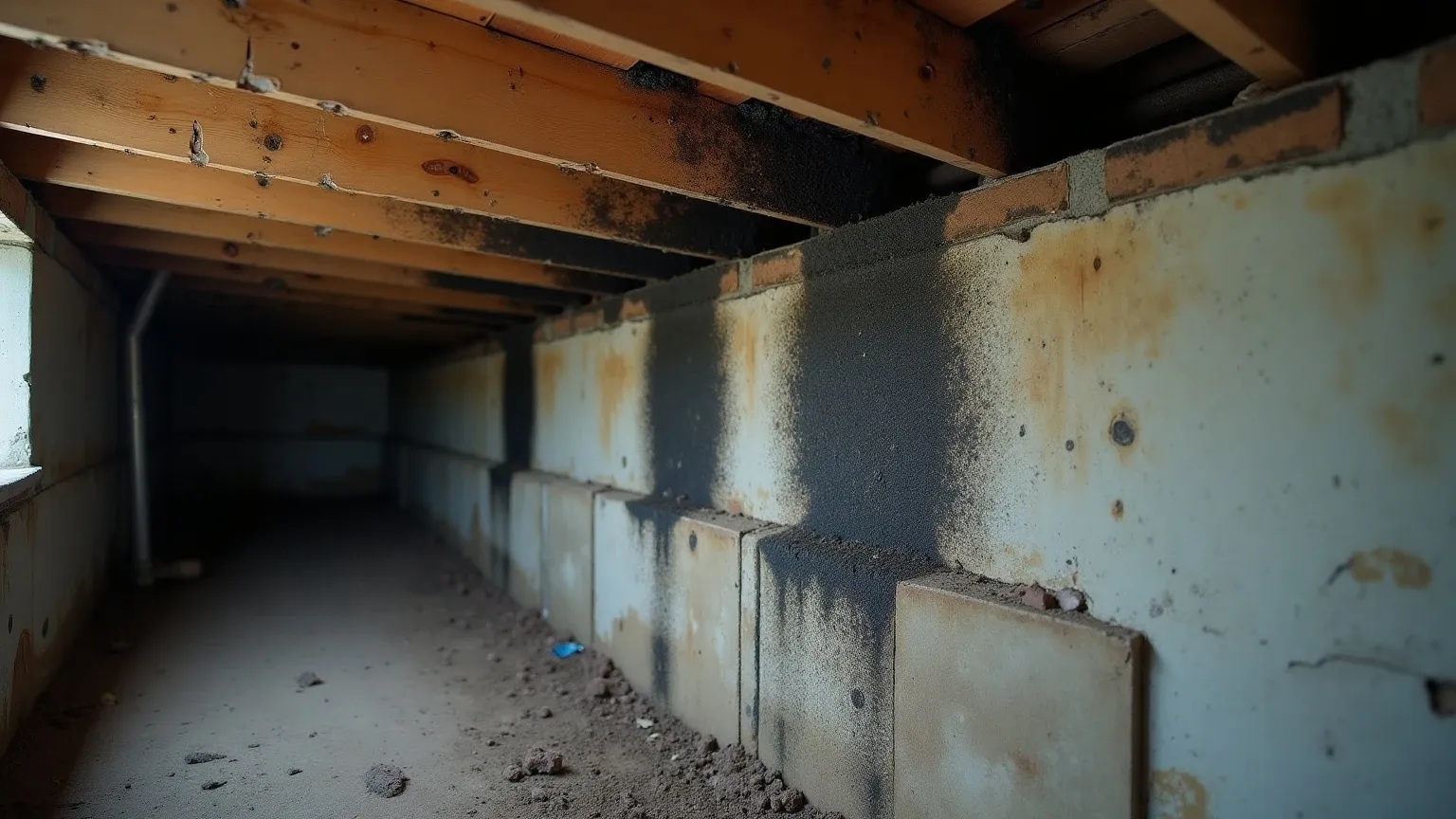
Does your Phoenix home even have a crawl space?
This is the question to settle first. The majority of homes built in the Phoenix metro after about 1960 are slab-on-grade — a continuous poured concrete pad with no air space underneath. If that describes your home, crawl space mold is not your problem, and a different page will be more useful (try our full Phoenix mold removal cost breakdown for the scenarios that do apply).
Crawl spaces do exist in specific pockets of the Valley:
- Older pre-1960 bungalows in Central and South Phoenix — many were built on pier-and-beam or stem-wall foundations before slab construction became the default.
- Hillside and raised-foundation homes in Ahwatukee, Fountain Hills, and parts of Scottsdale and Cave Creek, where the grade required a raised first floor.
- Pier-and-beam additions attached to an otherwise slab-built main structure.
If you're not sure, look at the exterior foundation. A visible stem wall with screened vent openings suggests a crawl space; a concrete edge that sits flush at grade usually means slab. Our guide on crawl space mold causes and signs has a more detailed checklist to confirm which you have.
What crawl space mold removal costs — and why the range is wide
The national range for crawl space mold remediation is $500–$4,000. That span reflects real variation in job scope, not padding:
| Factor | Effect on cost |
|---|---|
| Square footage of affected joists and subfloor | More surface area = more labor and treatment product |
| Access difficulty | Tighter crawl spaces take longer — workers cannot stand or move freely |
| Insulation removal and replacement | Contaminated insulation is bagged and removed, then replaced — a separate material cost |
| Structural wood damage | Severely degraded joists need sistering or replacement, not just treatment |
| Vapor barrier installation | Adding or replacing a ground-moisture barrier is often bundled into the job |
| Containment and drying time | Medium and large jobs run multi-day drying cycles that scale with the affected area |
A rough per-square-foot rate of $10–$25 per square foot applies to mold removal generally; crawl space work tends to land toward the higher end of that band because of the confined-space labor penalty. These figures are national cost-guide boilerplate. There is no Phoenix-specific crawl space audit in our dataset — most Valley homes do not have one, so locally-published crawl space pricing is scarce. Treat this as a national baseline, not a Phoenix-calibrated quote.
The costs that come on top of the mold removal
The mold crew price covers containment, treatment, and removal of contaminated material. It does not cover everything involved in a complete crawl space repair. Budget for these separately:
- Fixing the water source — this is the most common homeowner surprise, and often the biggest line of the whole job. The plumbing leak, drainage problem, or HVAC condensate drip that fed the mold is repaired by a plumber or HVAC tech under a separate contract. Mold will return if the source is not fixed first. Repair costs vary too widely to put a band on — get the trade quote on its own.
- Water mitigation — if the crawl space had standing water from a pipe failure or ground intrusion, water-damage restoration (extraction and structural drying) is a separate upstream service running $1,200–$6,000, billed before remediation begins.
- Clearance testing — an optional post-remediation air test (typically $250–$500) confirms the job passed before any rebuilt materials go in.
- Structural repairs — replacing damaged joists or subfloor boards is a carpentry or framing contract, not part of the mold crew's scope.
Do not add all of these to get a total — most jobs involve only some of them. Pick the primary scope, then add the lines that genuinely apply to your situation. The mold cost calculator can help you build a realistic estimate for your specific job.
What causes crawl space mold in Phoenix homes?
The desert climate creates a false sense of security. Crawl spaces trap moisture efficiently even in a dry region because the moisture is coming from below and within, not from the air:
- Bare dirt floors release moisture vapor upward continuously. Without a vapor barrier, that moisture hits cooler joist surfaces and condenses, keeping wood at the humidity levels mold needs.
- Plumbing leaks under an older home — copper or galvanized piping that has pitted or corroded — drip into the soil and keep it permanently damp.
- Monsoon-season drainage — heavy summer rain can pour against a foundation if the grading slopes toward the house rather than away, or if downspouts discharge too close to the stem wall.
- Over-irrigation and pool splash-out saturating the soil around a stem-wall foundation, especially on the shady north side of a house.
- HVAC condensate lines running through the crawl space can drip or develop cracks, adding a steady drip in an already enclosed space.
Any of these can grow mold on wood within 24 to 48 hours under the right conditions. A thorough mold inspection (typically $200–$450 for a visual assessment) finds the moisture source before removal begins — skipping that step means the mold comes back. For the full picture, see our crawl space mold guide on causes and how to fix them.
Can you remove crawl space mold yourself?
The EPA's rule of thumb is that areas under about 10 square feet on hard, non-porous surfaces can be DIY cleaned after the moisture is fixed. Crawl space mold rarely fits that window. By the time someone notices it, mold has typically spread across many square feet of porous floor joists — materials that absorb mold rather than allow it to be wiped off. There are also physical risks: a crawl space is a confined space with poor air circulation, and disturbing mold without containment can push spores into living areas through the subfloor. Summer heat in a Phoenix crawl space makes extended work genuinely dangerous. If the affected area is more than a small, isolated patch, professional removal is the practical call.
How to get a real number for your job
The $500–$4,000 range is a starting point to sanity-check quotes — not a substitute for a real estimate. Crawl space jobs vary enough in scope and access difficulty that the spread between the low and high ends is meaningful. The fastest way to narrow it is a free, no-obligation inspection that sizes the affected area, traces the moisture source, and assesses whether any framing needs repair. Our mold remediation page explains what a full scoped job includes and what to expect from the process.
Get a real price for your crawl space
Ranges are useful, but your job is specific. Tell us what you're seeing and we'll give you a free, no-obligation quote — scoped to the actual affected area, not a national average.
Crawl space mold removal cost questions
How much does crawl space mold removal cost?
Crawl space mold removal typically runs $500–$4,000 nationally. The wide band reflects how much access difficulty and the extent of joist or insulation damage move the number. Tight entry points add labor hours; replacing contaminated insulation and damaged structural framing pushes jobs toward the high end. These are national figures — not a Phoenix-audited rate, because most Phoenix homes are slab-on-grade and do not have a crawl space. For homes that do have one, request a free inspection to get a real scope before committing to any number.
Do Phoenix homes have crawl spaces?
Most Phoenix homes do not. The majority of Valley homes built after about 1960 are slab-on-grade — a poured concrete foundation with no space underneath. True crawl spaces tend to appear in older pre-1960 bungalows in Central and South Phoenix, some hillside and raised-foundation homes in Ahwatukee, Fountain Hills, and parts of Scottsdale and Cave Creek, and pier-and-beam additions attached to slabs. If you are unsure, look at the exterior foundation: a visible stem wall with vent screens suggests a crawl space; a flush concrete edge at grade usually means slab.
Why is crawl space mold removal more expensive than other mold jobs?
Two things drive the cost up. First, access: workers must crawl through a confined, often hot, low-clearance space rather than standing in a room. That adds labor time to every task. Second, materials: crawl space mold almost always grows on porous wood joists and subfloor boards that have to be treated or replaced rather than wiped down, and any vapor barrier or insulation that is contaminated must be removed and replaced. National cost guides peg rough per-square-foot rates at $10–$25 for mold removal generally; crawl space work tends toward the higher end of that band because of the confined-space labor penalty.
What causes mold in a crawl space?
Moisture with no way to escape. In Phoenix-area homes with crawl spaces, the main culprits are plumbing leaks that wick into soil under the space, monsoon rain and irrigation water pooling against the foundation, HVAC condensate drain lines running through the crawl space that drip or crack, and bare dirt floors releasing moisture vapor upward around the clock. Any of these can grow mold on wood joists within 24 to 48 hours if there is no vapor barrier and ventilation is poor.
Is the water-source repair included in the crawl space mold removal cost?
No, and this is the most common budget surprise. The mold crew handles containment, treatment, and removal of contaminated material. Fixing the water source — a plumbing leak, a drainage problem, an HVAC condensate line — is a separate trade repair done by a plumber or HVAC technician. That repair is billed independently and is frequently the bigger line of the two. Mold will return if the source is not fixed first, so it is not optional.
Will insurance cover crawl space mold removal?
It depends on what caused the moisture. Mold that followed a sudden, covered event (a burst pipe, for example) may be included under a homeowners policy, while mold from a slow or long-running leak is often excluded as a maintenance issue. Monsoon groundwater intrusion is typically not covered under standard policies. This is general information, not insurance advice — read your policy carefully and contact your insurer about your specific situation.