Crawl Space Mold: Causes, Signs & How to Fix It
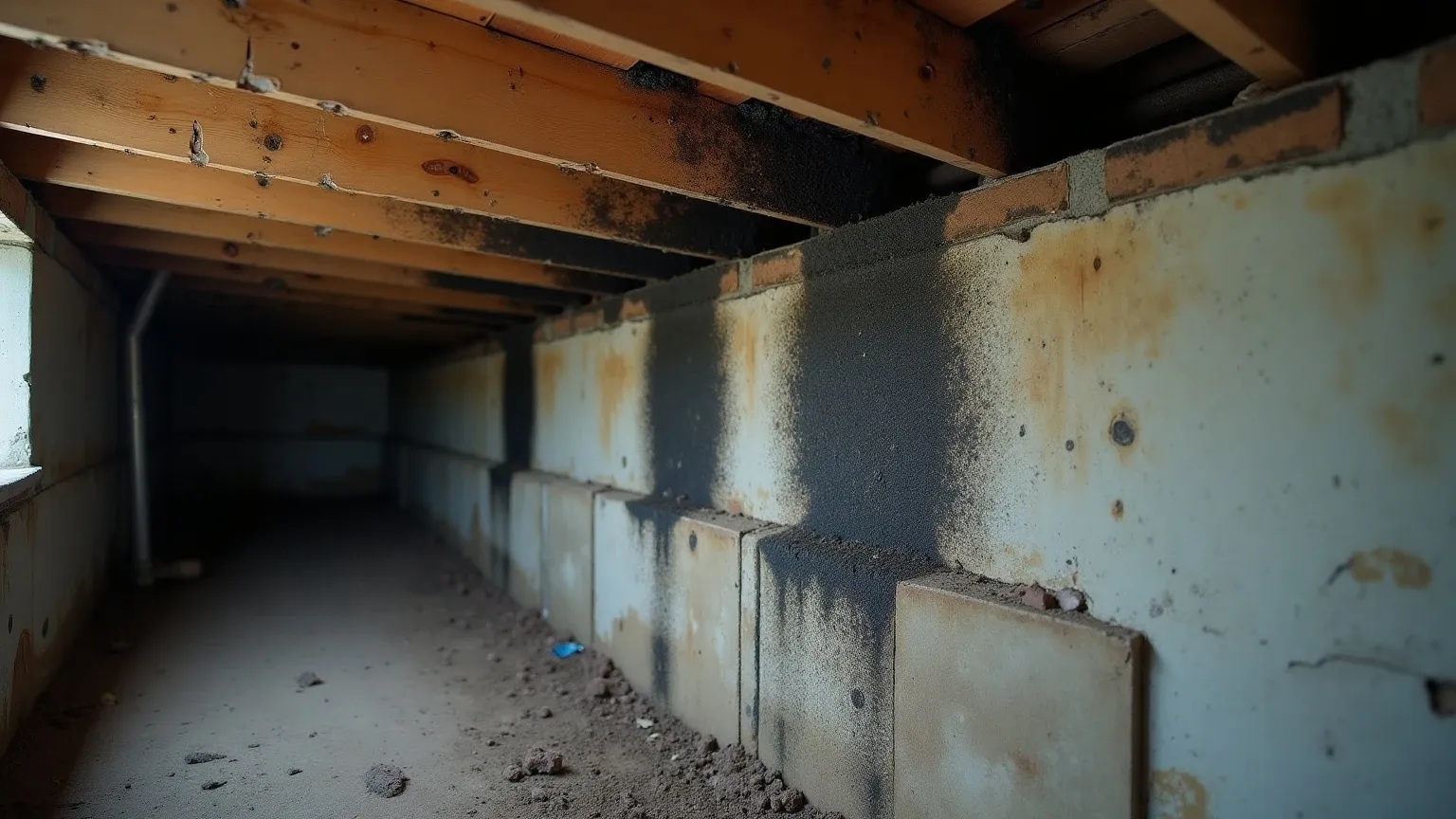
Crawl space mold in the Phoenix metro is less common than in humid states, but where it occurs it is often severe. The confined space, bare dirt floor, and poor air circulation create ideal conditions once a moisture source takes hold — a plumbing leak, poor drainage, or a dripping HVAC line under the house.
First: do you actually have a crawl space?
This matters because most Phoenix homes do not.
The majority of Valley homes built after 1960 are slab-on-grade: the living floor rests directly on a poured concrete foundation, with no accessible space underneath. There is no crawl space to inspect.
Crawl spaces exist in two scenarios locally:
Older pre-1960 construction. Central and South Phoenix bungalows from the 1920s through 1950s — neighborhoods like Willo, Coronado, Garfield, Grant Park, and South Mountain — were often built on raised pier-and-beam or concrete-block stem-wall foundations with an accessible crawl space. Many of these homes still have that original foundation.
Hillside and raised-grade lots. Where the natural grade drops away from the foundation — Ahwatukee Foothills backing to South Mountain, hillside lots in Fountain Hills, elevated parcels in Cave Creek and Carefree, and sections of north Scottsdale — a contractor will often raise the house on a stem wall rather than fill and grade the entire lot. The result is an accessible crawl space of variable height.
If you are unsure, check the exterior. A visible concrete or block stem wall with screened vent openings near grade suggests a crawl space. A foundation that meets the ground flush, with no visible void, is typically slab.
Why crawl spaces get mold in Phoenix
The “it’s the desert, mold can’t grow here” assumption is what costs homeowners money. The outdoor air is dry. The inside of a crawl space is not.
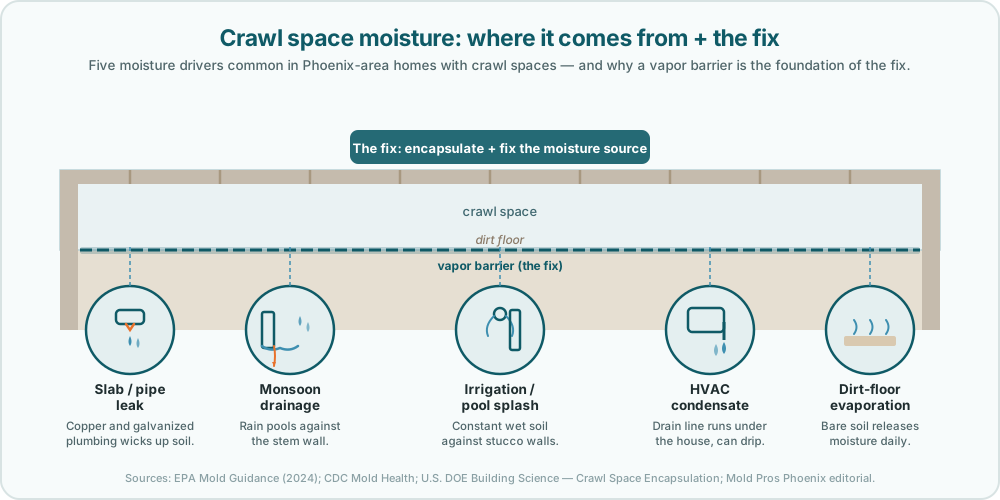
A crawl space under a Phoenix home sits in a partially enclosed environment with soil contact, wood above, and limited ventilation. The moisture does not come from outdoor humidity — it comes from specific sources that are common to Phoenix-area homes with raised foundations. And in summer heat, once moisture reaches the wood joists, mold can establish within 24 to 48 hours per EPA guidance on water-damaged materials.
Slab and plumbing leaks under older homes
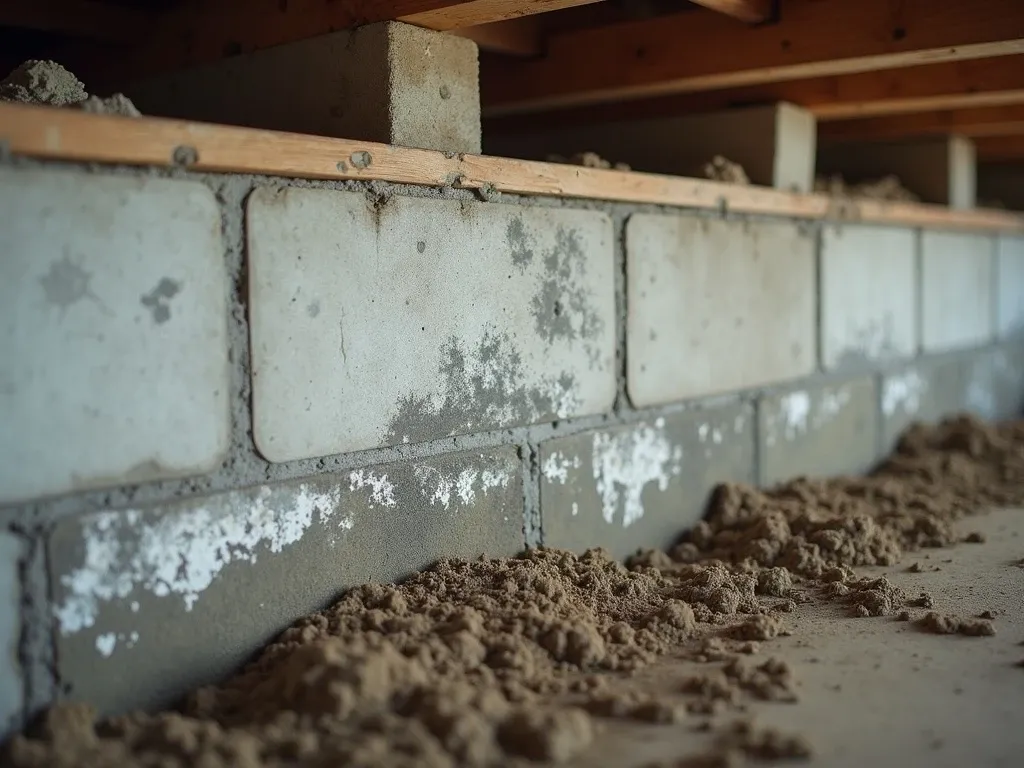
Pre-1960 Phoenix bungalows typically have copper or galvanized steel plumbing that is now 65 to 80 years old. A pinhole leak in a water line under the foundation does not drain away on concrete — it wicks into the soil below the crawl space. That soil stays persistently damp, and the moisture migrates up into the wooden joists above.
This is one of the most common hidden mold sources in older Central Phoenix homes with aging copper or galvanized supply lines. The leak is invisible from above, the musty smell builds slowly, and by the time a homeowner checks the crawl space, mold has spread across a significant section of the floor framing. A mold inspection with a moisture meter can trace the source through the floor without destructive opening.
Monsoon rain pooling against the foundation
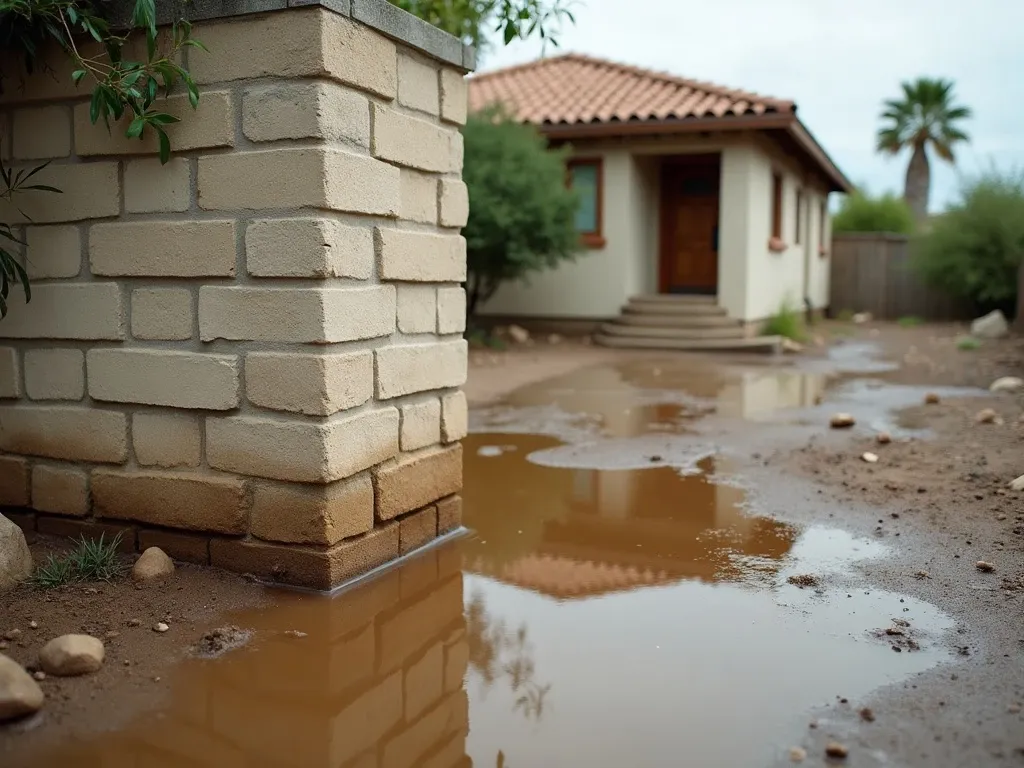
Phoenix gets most of its annual rainfall in six weeks, from mid-June through September. A well-graded lot sheds this water away from the foundation. A flat lot, or one where soil has settled against the stem wall over decades, can pool water against the block or concrete for hours after a storm.
That water works against the foundation in two ways: direct intrusion through cracks or gaps in the block mortar, and slow absorption into the surrounding soil, which raises the ground-moisture level inside the crawl space for days after the rain. Repeated monsoon seasons compound this. Crawl space mold is significantly more common in older South and Central Phoenix homes where the lot grade has not been corrected in decades.
Over-irrigation and pool splash-out
Phoenix landscaping practices that would be unremarkable in a wetter climate create real foundation moisture problems here. Sprinkler heads angled toward a stucco stem wall, drip irrigation lines running too close to the foundation, and pool decks with constant splash-out against the exterior block all saturate the soil against the foundation.
In a slab home, this causes efflorescence and exterior damage. In a crawl-space home, it is a persistent moisture source that keeps the soil under the house damp year-round, providing a continuous supply of ground vapor to the joists above.
HVAC condensate lines run through the crawl space
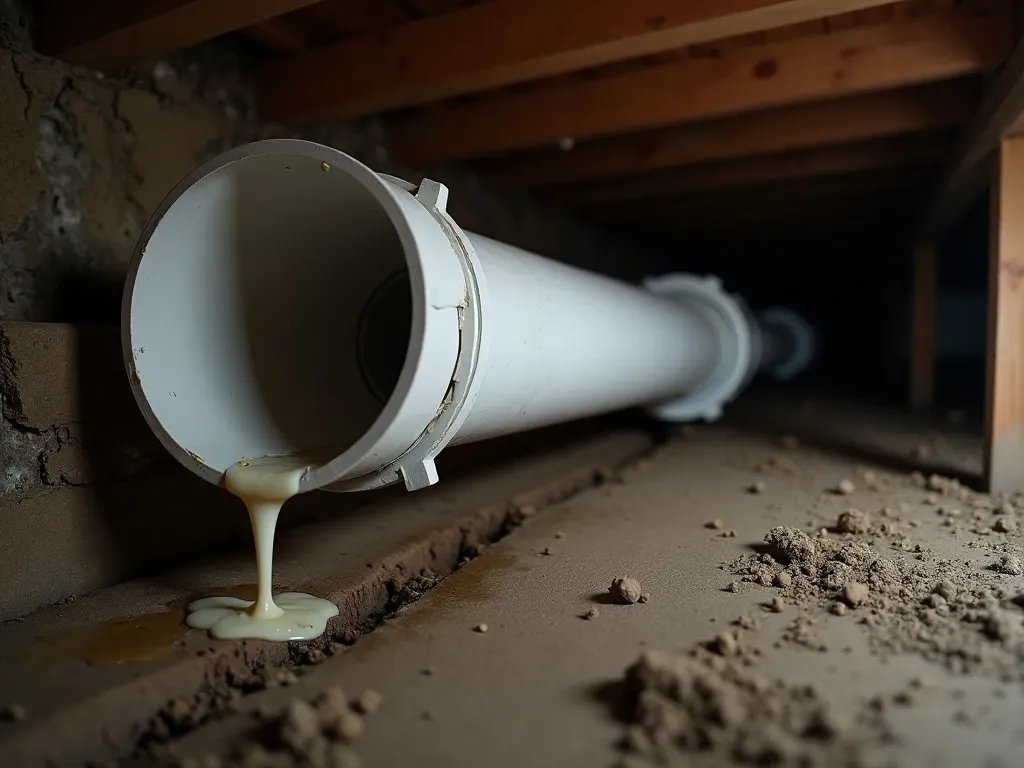
In some older Phoenix homes, the condensate drain line from the AC system routes through or near the crawl space before exiting outside. A cracked fitting, a loose joint, or a clogged line that backs up can drip condensate water onto the crawl space floor or directly onto the joists. Because the line runs out of sight in a hot enclosed space, these failures often go undetected until the mold is already established.
Bare dirt floor evaporation
Even with no active leak or drainage problem, a crawl space with an exposed dirt floor is constantly releasing moisture vapor. Soil in the Phoenix metro typically holds some moisture year-round even in summer, and that moisture evaporates upward into the enclosed crawl space. In a crawl space with limited ventilation, the relative humidity inside can run significantly higher than the outdoor desert air. Wood joists above a persistently humid dirt floor eventually grow mold — no single leak required.
This is the driver that a vapor barrier directly addresses.
Signs of mold in a crawl space
Most homeowners discover crawl space mold through smell, not sight. A musty or earthy odor that is stronger in the morning, intensifies on humid days, or gets worse when the AC first turns on is the most common early indicator. Spores from a moldy crawl space can enter living areas through gaps in the subfloor, through floor register boots, and through any penetration in the floor.
Other signs worth noting:
- Soft or springy spots in the floor. If wood joists or the subfloor have been damp long enough, they begin to soften. A floor that deflects noticeably under normal foot traffic above a crawl space is a structural warning worth taking seriously.
- Elevated indoor humidity. A crawl space releasing moisture vapor into a home can raise indoor humidity levels even in dry desert air. Readings consistently above 55% relative humidity indoors, without a clear indoor source, are worth investigating below.
- Pest or rodent activity. Insects and rodents are drawn to moist soil and soft wood. If you find signs of activity in a crawl space, check for moisture damage on the joists nearby.
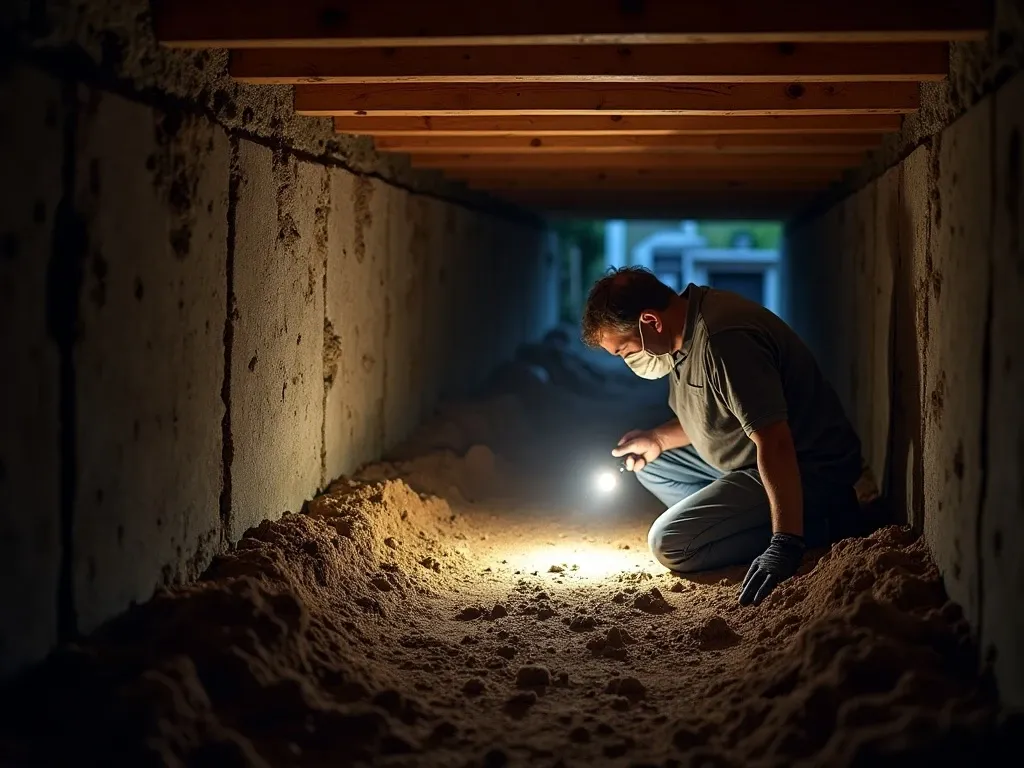
- Visible growth on joists or subfloor. This requires going in. Dark black or green patches with a fuzzy or powdery texture, white cottony growth on wood, or heavy discoloration on the underside of the subfloor are all indicators. Gray weathering or natural darkening of old wood is different — it is flat and uniform, not textured or spreading at the edges.
DIY vs. professional remediation
The same EPA guidance that sets a 10-square-foot threshold for DIY applies here. Crawl space mold usually does not stay small: a bare-soil moisture problem feeds mold continuously, so by the time it is found, the spread is often across multiple joist bays. A few reasons to call a professional rather than self-treat:
- Containment matters. Disturbing mold in a crawl space with no containment can push spores through every gap in the subfloor into the living area. A professional sets up containment and uses a negative-pressure HEPA machine to pull air out of the crawl space during work, keeping spores from migrating up.
- The source has to be confirmed first. Treating the mold without fixing the moisture source is how mold returns. A professional locates and confirms the source — whether that is a plumbing leak, grading issue, or HVAC line — before starting remediation.
- Physical limitations. Crawl spaces are confined. Working safely in a low, hot, enclosed space with mold and organic debris requires more than a weekend’s worth of equipment and caution.
- Porous materials cannot be cleaned. Heavily affected joists or subfloor panels cannot be wiped down. They need to be treated with an EPA-registered antimicrobial, and if structurally compromised, replaced. That typically requires a professional.
A careful DIYer with a small, clearly bounded patch of surface mold on hard joists, who has already confirmed and fixed the moisture source, and who can work safely in the crawl space with an N95 and full protective gear, is within the EPA’s guidance for self-treatment. Everything else belongs with a professional.
What crawl space remediation involves
A professional job follows a defined sequence:
- Moisture source identified and repaired first. The contractor does not start mold treatment until the plumbing leak, drainage issue, or HVAC drip is confirmed fixed. Otherwise the mold returns.
- Access and containment. The crawl space access is treated as a containment zone. A negative-air HEPA machine vents outward during work to keep spores from rising into the home.
- HEPA vacuuming of affected surfaces. Dry mold growth is HEPA-vacuumed off joists and the subfloor before any liquid treatment, so loosened spores do not become airborne at scale.
- Treatment with EPA-registered antimicrobial. Borate-based solutions penetrate wood, control surface mold, and inhibit regrowth. Treatment is applied to all affected surfaces and allowed to dry.
- Debris removal. Any fallen insulation, debris, or materials contaminated with mold are bagged and removed.
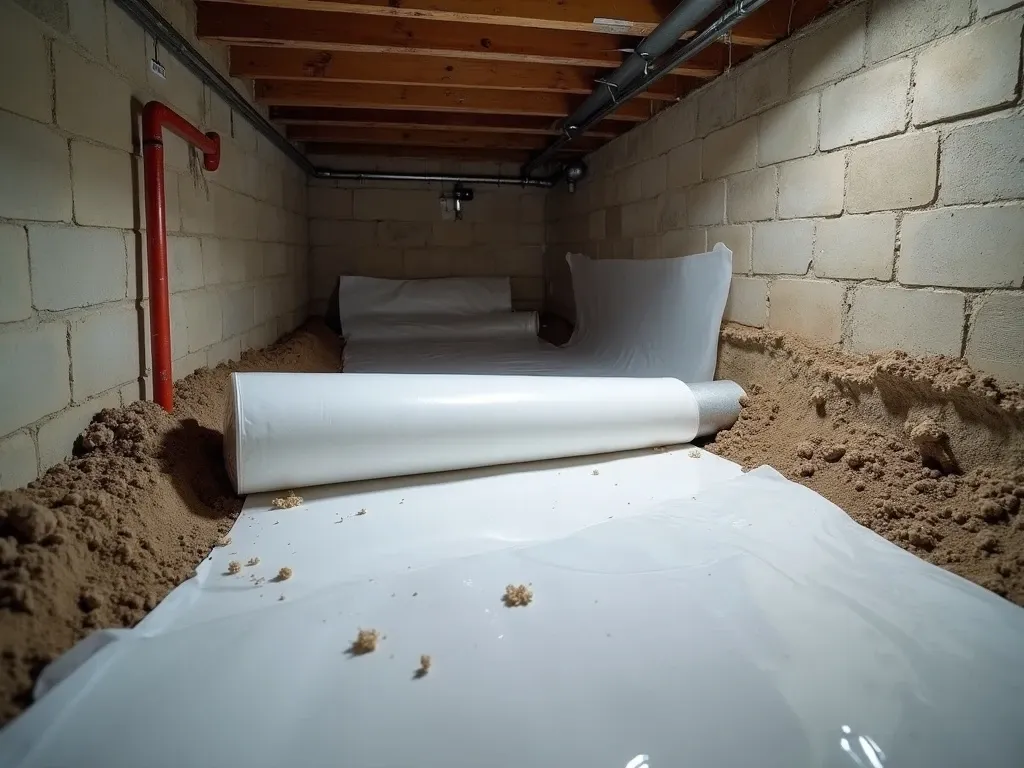
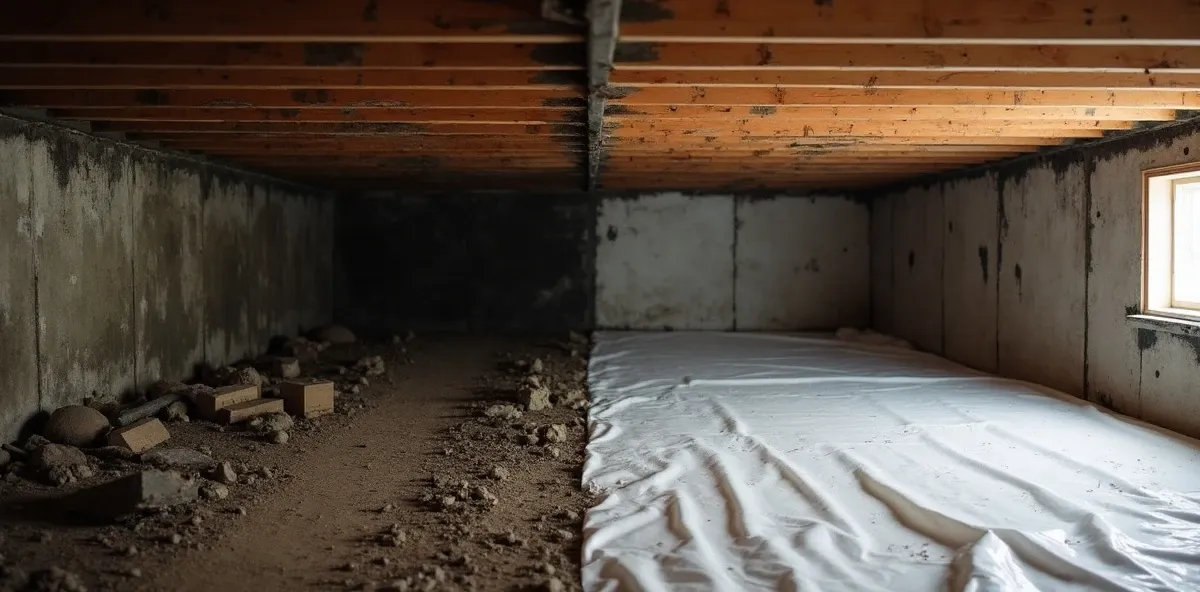
- Vapor barrier installation. A 12-to-20-mil polyethylene barrier is laid across the entire crawl space floor, lapping up the stem walls and sealed at seams. This is the primary prevention measure against ground-moisture re-contamination.
- Post-remediation clearance. After the area dries, a clearance check confirms the job is complete before the access is closed.
Encapsulation vs. vapor barrier: what the difference is
These terms get used interchangeably but they describe different scope:
Vapor barrier — a polyethylene sheet on the crawl space floor, typically 6-mil minimum (code) to 12-to-20-mil (practical). Stops ground-vapor evaporation. Simple, effective, and the right fix for the most common moisture driver.
Encapsulation — sealing the entire crawl space: floor, walls, sometimes the rim joists, and closing the foundation vents. The space is then conditioned — either mechanically with a dehumidifier or by tying it into the home’s HVAC. This is more involved and more expensive, but appropriate when the crawl space has major moisture issues or when the home’s HVAC system is partly located in the crawl space.
Per the U.S. Department of Energy Building Science guidance, a well-sealed and conditioned crawl space performs better than a ventilated one in most U.S. climates — including the Phoenix metro’s monsoon-season humidity spikes. For a Phoenix-area home with persistent moisture problems, encapsulation is the more durable long-term solution.
What it costs
Crawl space mold remediation in the Phoenix metro typically runs:
- Small area (under 200 sq ft of joists affected, no structural damage): $1,500 to $3,000
- Moderate job (up to 500 sq ft, vapor barrier included): $3,000 to $5,000
- Larger jobs with structural damage, subfloor replacement, or full encapsulation: $5,000 to $8,000 or more
These ranges do not include any plumbing repair, regrading, or HVAC work needed to fix the moisture source. For a full breakdown of what drives mold remediation cost up or down in the Valley, see the mold removal cost guide. If your crawl space mold traces to a plumbing leak or water intrusion, the water damage restoration page covers that side of the work.
How to keep crawl space mold from returning
Prevention tracks directly to the five moisture drivers:
- Install or upgrade the vapor barrier. A 12-mil or thicker polyethylene barrier across the entire floor, lapped 6 to 12 inches up the walls and sealed at seams, is the single most effective long-term control for dirt-floor moisture. Existing 6-mil barriers should be inspected for tears and gaps annually.
- Grade away from the foundation. Soil within 6 feet of the foundation should slope away at a minimum 6-inch drop over 10 feet. If monsoon water pools against your stem wall, regrading or adding a French drain is the permanent fix.
- Check HVAC condensate routing. If any part of the drain line runs through or near the crawl space, inspect it annually before cooling season. Confirm fittings are tight and the line drains freely.
- Inspect after significant monsoon events. A quick look at the crawl space floor and joists after the first heavy summer storms tells you early if any water entered. Catching it in 24 to 48 hours keeps a small intrusion from becoming a mold job.
- Have plumbing checked in older homes. Pre-1960 Phoenix homes with original copper or galvanized supply lines are good candidates for a plumbing inspection every few years. A pinhole leak costs far less to fix than the mold remediation it causes if it runs undetected.
For more on how Phoenix’s specific moisture drivers — slab leaks, monsoon flooding, condensate issues — affect homes across the Valley, the Phoenix mold removal guide covers the full picture.
Get a free crawl space quote
If you have found mold in a crawl space, or if you have a musty smell in the floor and haven’t been under the house to look, a free, no-obligation quote is the fastest way to understand the scope. We handle crawl space mold removal across the Phoenix metro, including older Central Phoenix bungalows and hillside homes in Ahwatukee and Fountain Hills. Fill out the form below and we’ll get back to you with a straight answer — no pressure, no scare tactics.