Arizona Mold Insurance: Covered or Not?
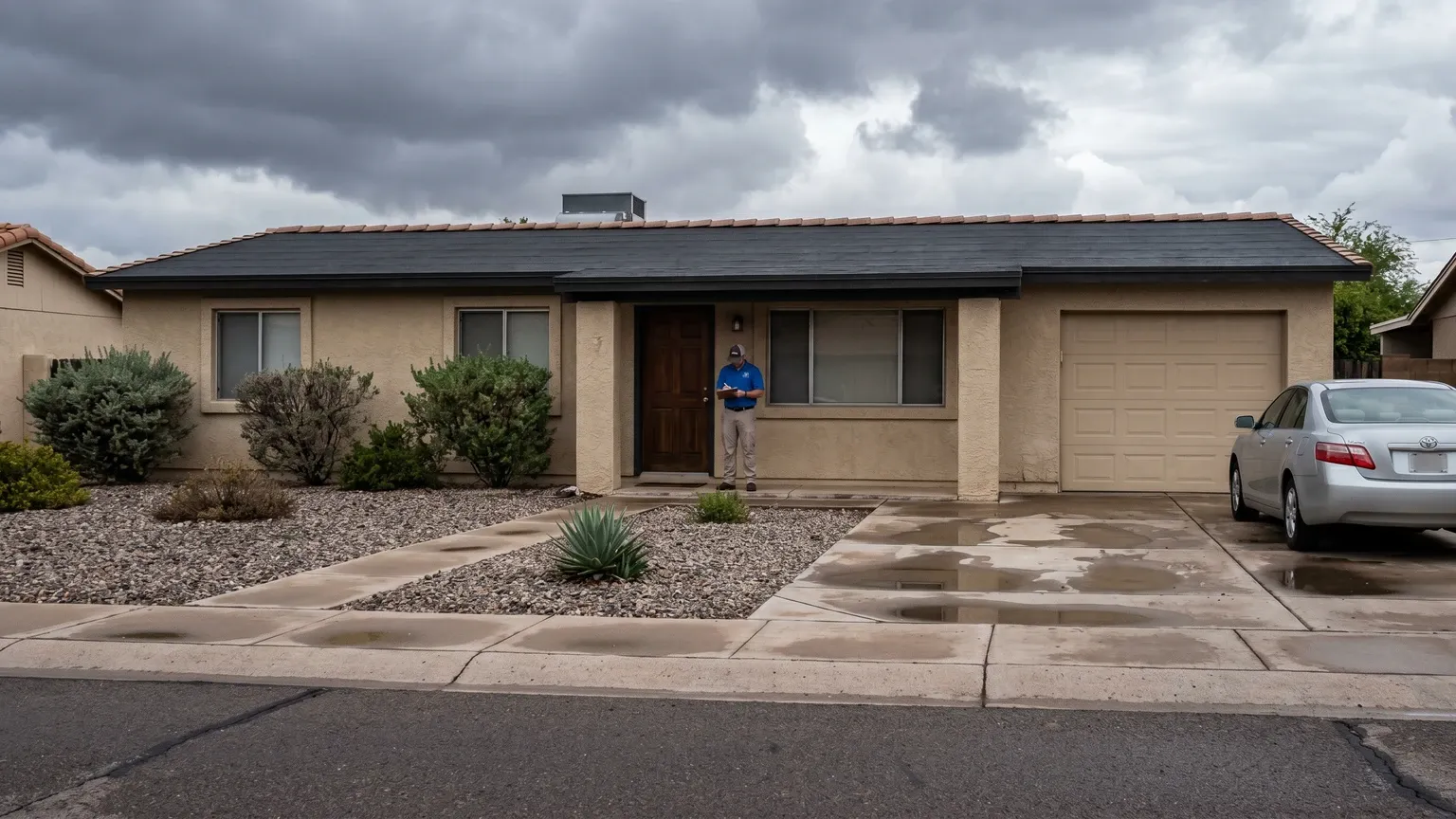
Sometimes — but it turns on one question: was the water event sudden and accidental, or gradual? A standard Arizona homeowners policy generally covers mold that results from a sudden covered peril like a burst pipe, up to a mold sublimit. Gradual seepage, AC condensate that backed up slowly, and rising floodwater are typically excluded.
This is general information, not a coverage determination. Your specific policy language and your insurer decide what is covered. Read your policy and confirm with your agent or the Arizona Department of Insurance and Financial Institutions (DIFI). For a deeper explanation of how Arizona HO-3 policies handle mold — including the anti-concurrent-causation clause, the HO-6 condo split, and how to file a claim — see our full Arizona mold insurance guide.
The one principle that controls every scenario
Before the matrix, one rule: coverage almost always turns on whether the water event was sudden and accidental or gradual. The Insurance Information Institute (III) frames it plainly: standard homeowners policies are built to cover sudden, accidental disasters, not the gradual wear and tear, lack of maintenance, or mold that builds up over time. Mold from a covered sudden event may be covered up to a sublimit. Mold from gradual seepage is typically on the homeowner. And flood — rising surface water from any source — is a separate policy entirely.
That mental model is what the scenario matrix below encodes. Each row is a Phoenix-relevant water source. The outcome column is hedged because outcomes depend on your policy language, the facts of your specific loss, and your carrier’s evaluation — not on a generic guide.
The scenario matrix
Disclaimer: This matrix reflects how standard HO-3 policy forms generally treat these scenarios, based on Insurance Information Institute guidance and standard ISO policy structure. It is not a coverage determination. Your policy and your insurer decide. Confirm every scenario with your carrier, your agent, or the Arizona DIFI.
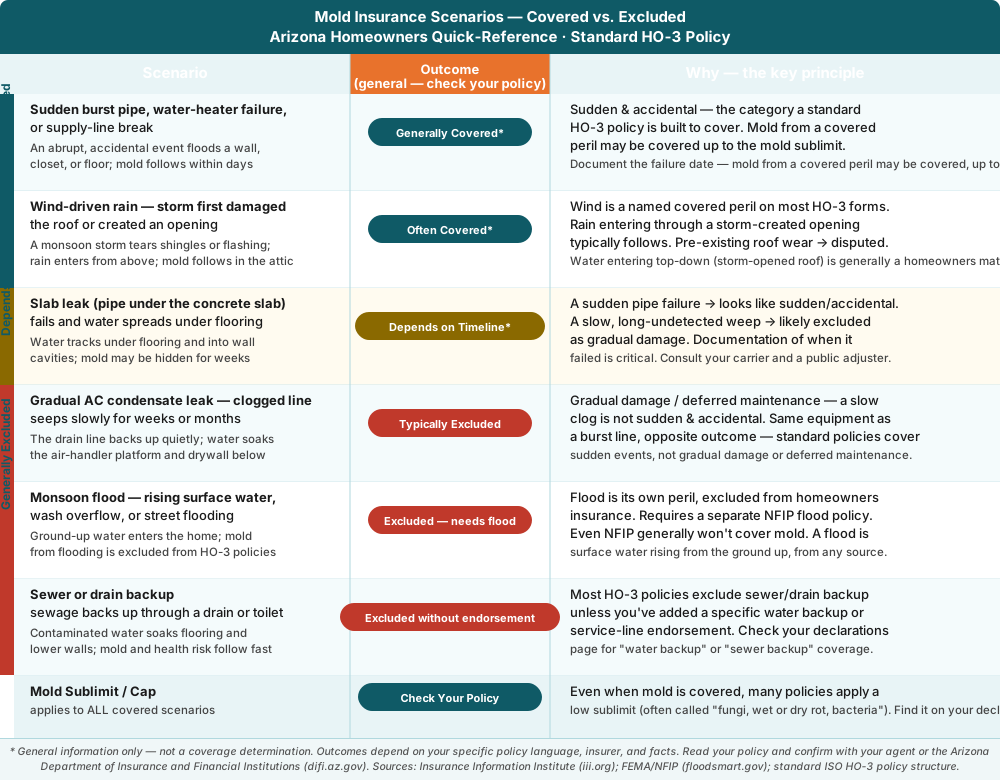
Scenario 1 — Burst pipe, failed water heater, or supply-line break
Typical outcome: generally covered, up to your mold sublimit.
A pipe bursts unexpectedly under a sink or in a wall. A water heater fails and floods the utility closet. A supply line to the refrigerator lets go. These are sudden, accidental events — the category a standard HO-3 is built to cover.
This is the textbook covered scenario: when mold results directly from a sudden covered peril such as a burst pipe, a standard policy may pay to eliminate it, but typically only up to the policy’s mold sublimit, not the full dwelling limit. “May” is the operative word; the outcome still depends on your policy language and your carrier’s evaluation.
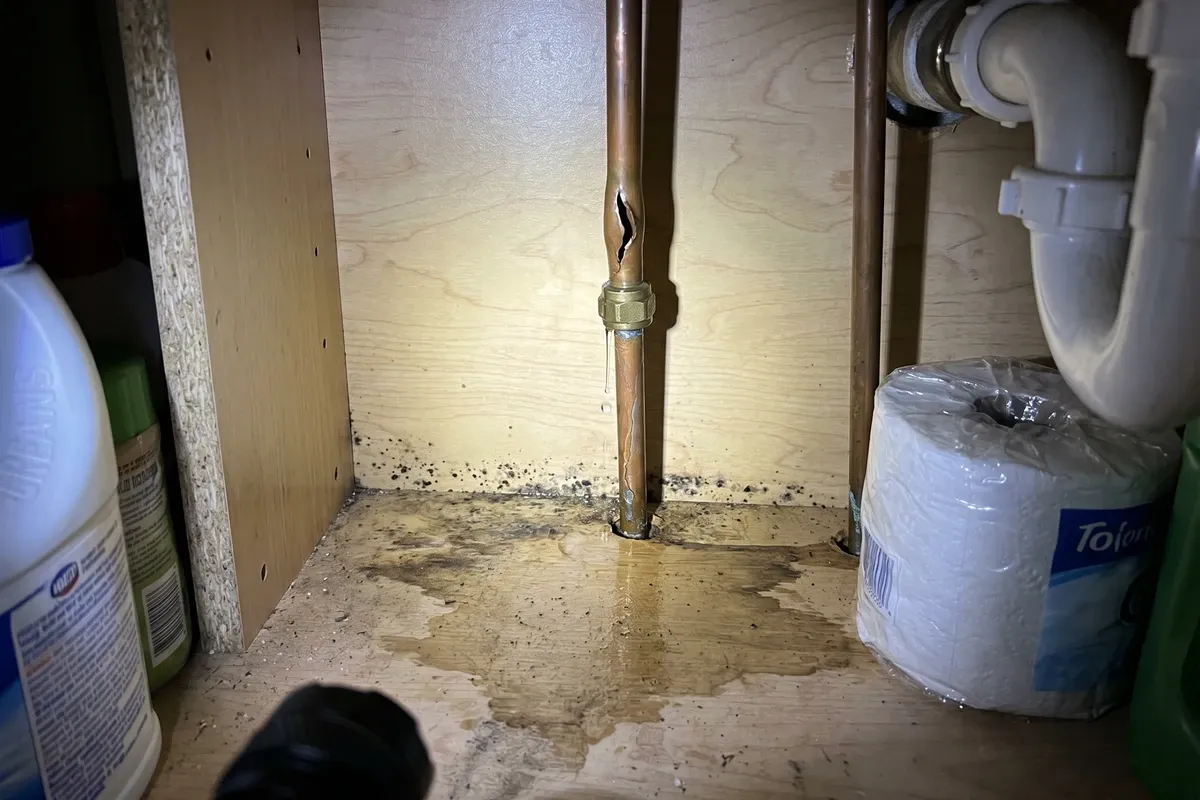
What matters here: document the failure date precisely. “The supply line under the kitchen sink burst the morning of June 12” is a covered-peril story. “We noticed it had been damp for a while” opens the door to a gradual-damage denial.
Scenario 2 — Wind-driven rain through a storm-damaged roof
Typical outcome: often covered when a covered peril (wind) first opened the roof.
After a monsoon storm, wind lifts shingles or tears flashing, and rain then enters from above. Because wind is a named covered peril on most HO-3 policies, water entering through a storm-created opening is generally treated as covered water damage — and mold that results can follow.
The distinction the III draws: water coming in from the top down (rain through a storm-opened roof) is generally a homeowners-insurance matter. Water rising from the ground up (a flooded wash) is a flood matter — covered only by a separate flood policy.
Two caveats: pre-existing roof wear complicates the claim, because the insurer may argue the opening wasn’t solely storm-created. And an anti-concurrent-causation (ACC) clause — common in HO-3 forms — can defeat a claim when a covered peril and an excluded peril (like ongoing roof neglect) act together. For the full mechanics of monsoon water damage and how to classify it, see our monsoon flood vs. wind-driven rain guide.
Scenario 3 — Slab leak
Typical outcome: depends on whether the pipe failure was sudden or gradual.
A slab leak — a pressurized pipe failing beneath the concrete foundation — can present two very different claim profiles. A pipe that fails suddenly and abruptly looks like a sudden, accidental event; mold from it may be treated like any covered-peril water damage. A pipe that weeps slowly for months undetected reads as a long-term gradual loss — and gradual losses are typically excluded.
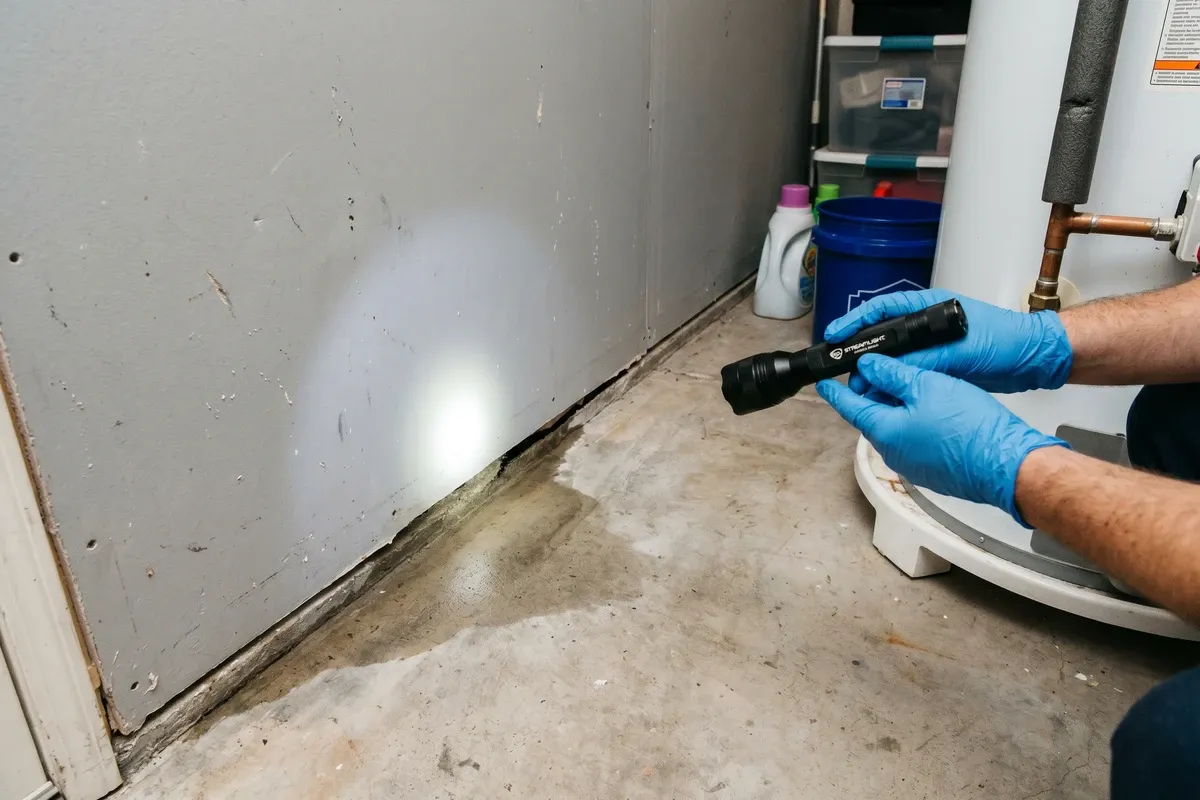
What makes slab leaks particularly tricky: water can travel under flooring and into wall cavities for a long time before any visible sign appears. The documented date when the leak started — not when you found it — is what matters to the insurer. If the two are far apart, expect scrutiny.
Scenario 4 — Gradual AC condensate leak
Typical outcome: typically excluded.
An AC condensate line clogs gradually and begins overflowing a little at a time over weeks. The drain pan fills and soaks the platform below the air handler. Mold develops in the attic or closet around the unit.
This is one of the most common Phoenix mold scenarios — Valley air handlers run hard from April through October — and it is also one of the most commonly excluded. Gradual seepage and deferred maintenance are exactly the category a standard policy is not designed to cover; the III notes that standard policies exclude damage from gradual wear and tear, mold, and lack of maintenance.
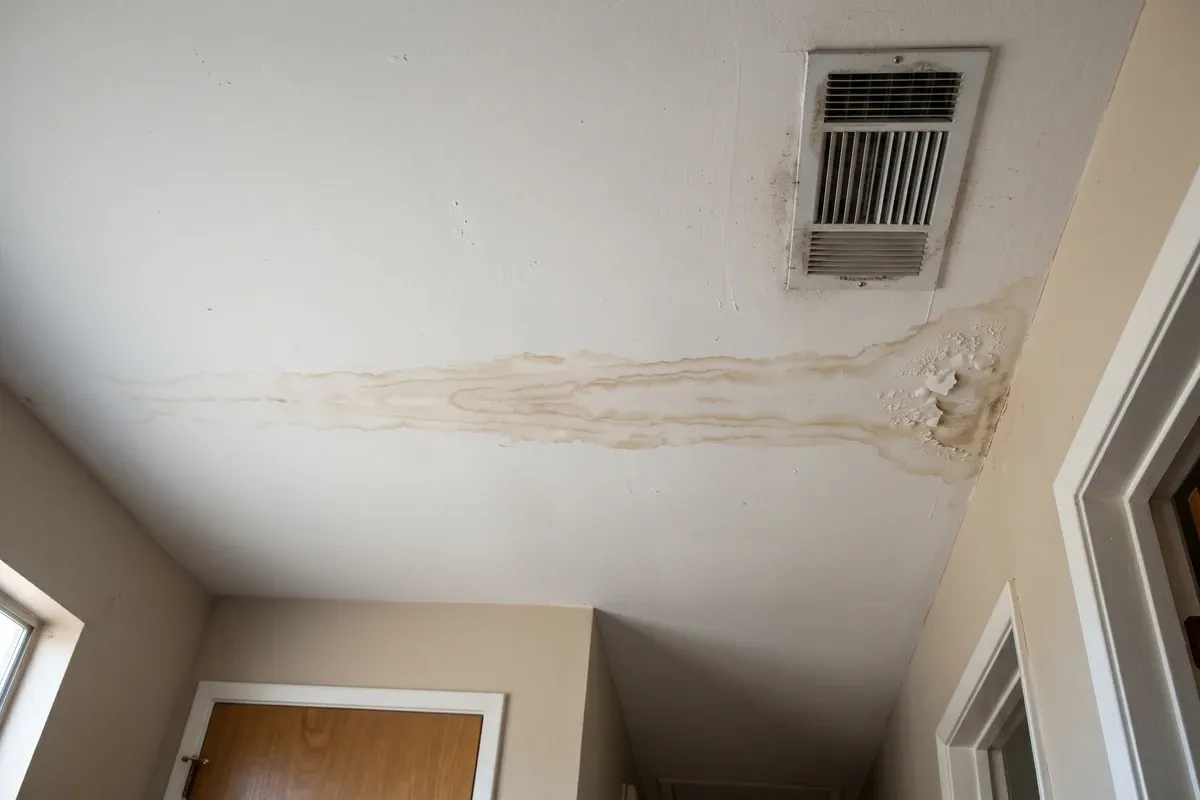
Compare with Scenario 1: if an AC supply line burst suddenly and dumped water all at once, that is more likely covered. If the condensate drain clogged and seeped slowly, it is more likely excluded. Same equipment in the same attic — opposite outcomes, decided by the timeline alone.
Scenario 5 — Monsoon flood (rising surface water)
Typical outcome: excluded from homeowners insurance — needs separate flood coverage.
When monsoon rains swell a wash or cause street flooding and that water rises into your home from the ground up, you have a flood loss. Standard HO-3 homeowners policies exclude flood damage, and mold that follows a flood is excluded along with it.
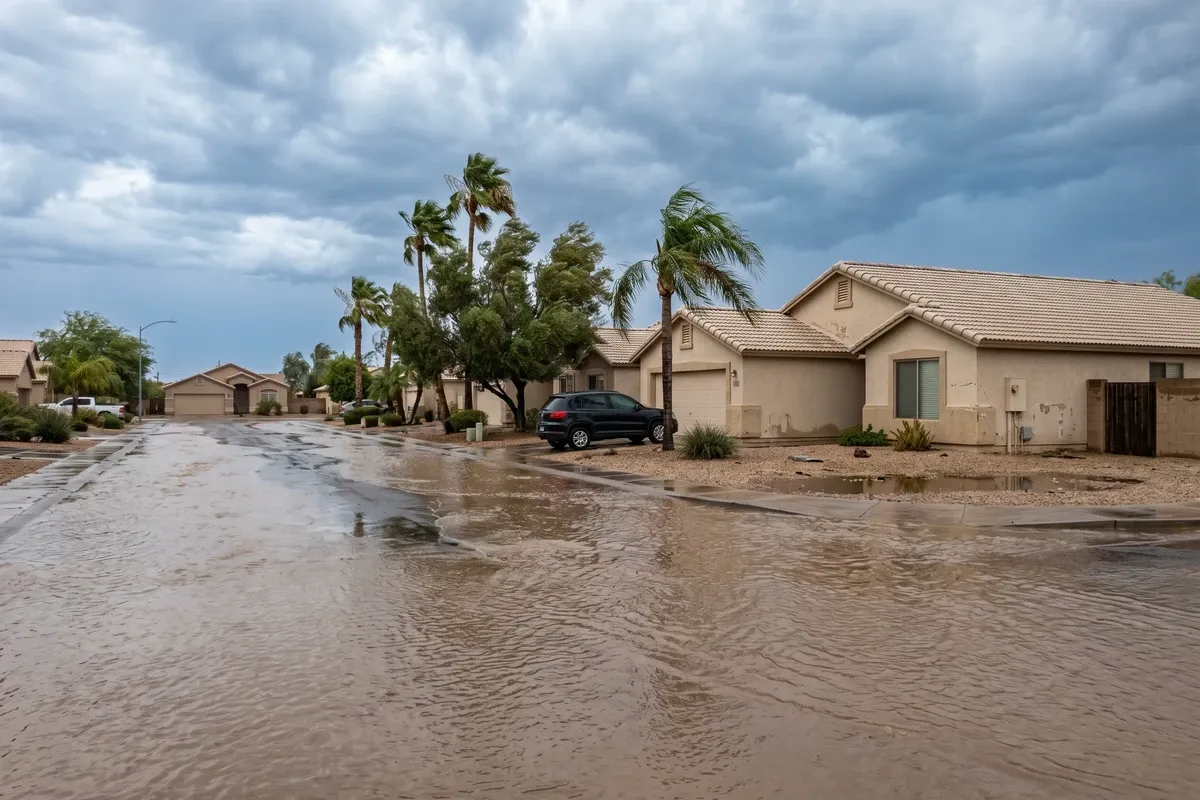
Flood coverage requires a separate policy, typically through the National Flood Insurance Program (NFIP), administered by FEMA. FEMA defines a flood as the unusual and rapid accumulation or runoff of surface waters from any source. And here is the gap that catches people: a standard NFIP policy generally does not cover mold either, on the theory that mold is a preventable consequence of how quickly you dry out after water recedes.
Flood-caused mold often falls through the gap between two policies. If you are in an NFIP-mapped flood zone in the Phoenix metro — particularly near the Salt River or low-lying desert washes — confirm the mold coverage terms on any flood policy before you assume you are protected.
Scenario 6 — Sewer or drain backup
Typical outcome: excluded unless you have a specific water backup endorsement.
Most HO-3 policies exclude sewer and drain backup by default. A separate water backup or sewer backup endorsement is typically required to add this coverage, and even then the endorsement usually carries its own sublimit.
Check your declarations page for a “water backup” or “service line” rider. If you do not see one, assume sewer backup is not covered.
The mold sublimit — the trap inside a “covered” claim
Even when a scenario falls on the “covered” side, most policies impose a mold sublimit — a separate, much lower cap that applies specifically to mold (often listed under “fungi, wet or dry rot, or bacteria” on the declarations page). This sublimit is not the same as your full dwelling coverage.
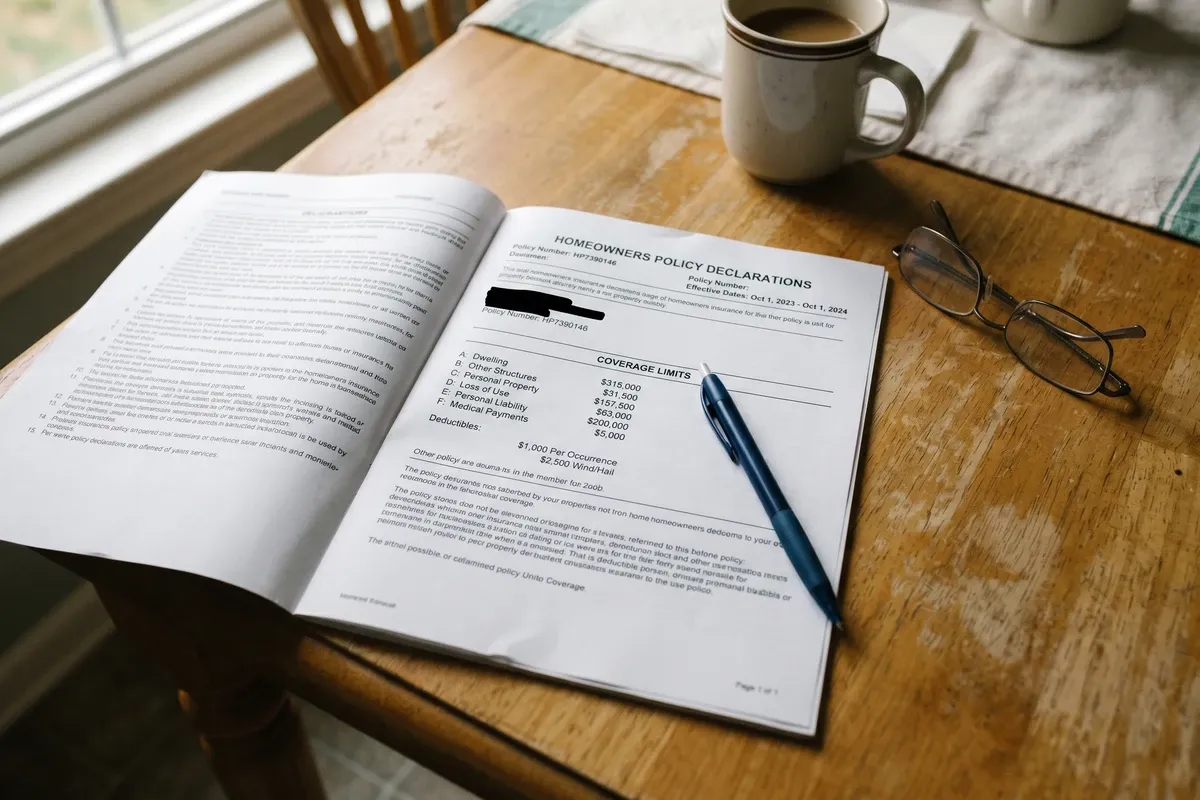
The sublimit amount varies by carrier and endorsement. Some policies exclude mold entirely without an add-on endorsement that creates a defined (still limited) amount of coverage. The practical consequence: even a covered mold claim may pay far less than a serious remediation actually costs. Know your number before the claim, not after.
This is general information — confirm the exact terms of your coverage with your carrier or agent.
How this guide differs from the deeper Arizona mold insurance explainer
This page is a scenario quick-reference — a matrix you can scan in two minutes to know which bucket your situation falls into. It does not cover:
- The anti-concurrent-causation (ACC) clause and how it can defeat a mixed-peril claim
- The HO-6 condo split and HOA responsibility for mold coverage
- HO-4 renters insurance and what it does and does not cover
- The step-by-step process for filing a mold claim in Arizona
- How to use the appraisal clause or a public adjuster when you disagree on the amount
- What the adjuster actually tests, and the Arizona deadlines the carrier has to meet
For the coverage detail, read the full Arizona mold insurance guide — it is the deeper explainer this page is designed to accompany, not replace. For the claim itself — the evidence file, the proof of loss, and the carrier’s response deadlines under Arizona rule R20-6-801 — see what an adjuster looks for on a Phoenix mold claim.
What to do if you find mold and think it may be covered
The sequence that gives a claim the best chance:
- Document before touching anything. Dated photos and video of the damage, the water source, the affected area, and any visible pipe failure or storm damage. This is your proof that a covered peril caused it.
- Pin down the cause and the exact date. Specificity on the failure date is what puts your claim on the right side of the sudden-vs-gradual line.
- Find your mold sublimit. Look on the declarations page for “fungi, wet or dry rot, or bacteria” before you report anything — knowing your cap avoids surprises.
- Report promptly, in writing. Follow any phone call with an email so there is a dated paper trail.
- Get an independent inspection. A documented mold inspection that traces the moisture source to a specific, datable event is often what separates a paid claim from a denied one. Water damage restoration and mold assessment are built for exactly this — documenting what failed, when, and what moisture source is feeding the growth.
For all questions about what your policy covers, talk to your carrier, your agent, or the Arizona Department of Insurance and Financial Institutions. This guide is general information only, not a coverage determination.