Upstairs AC Leaked Into My Condo
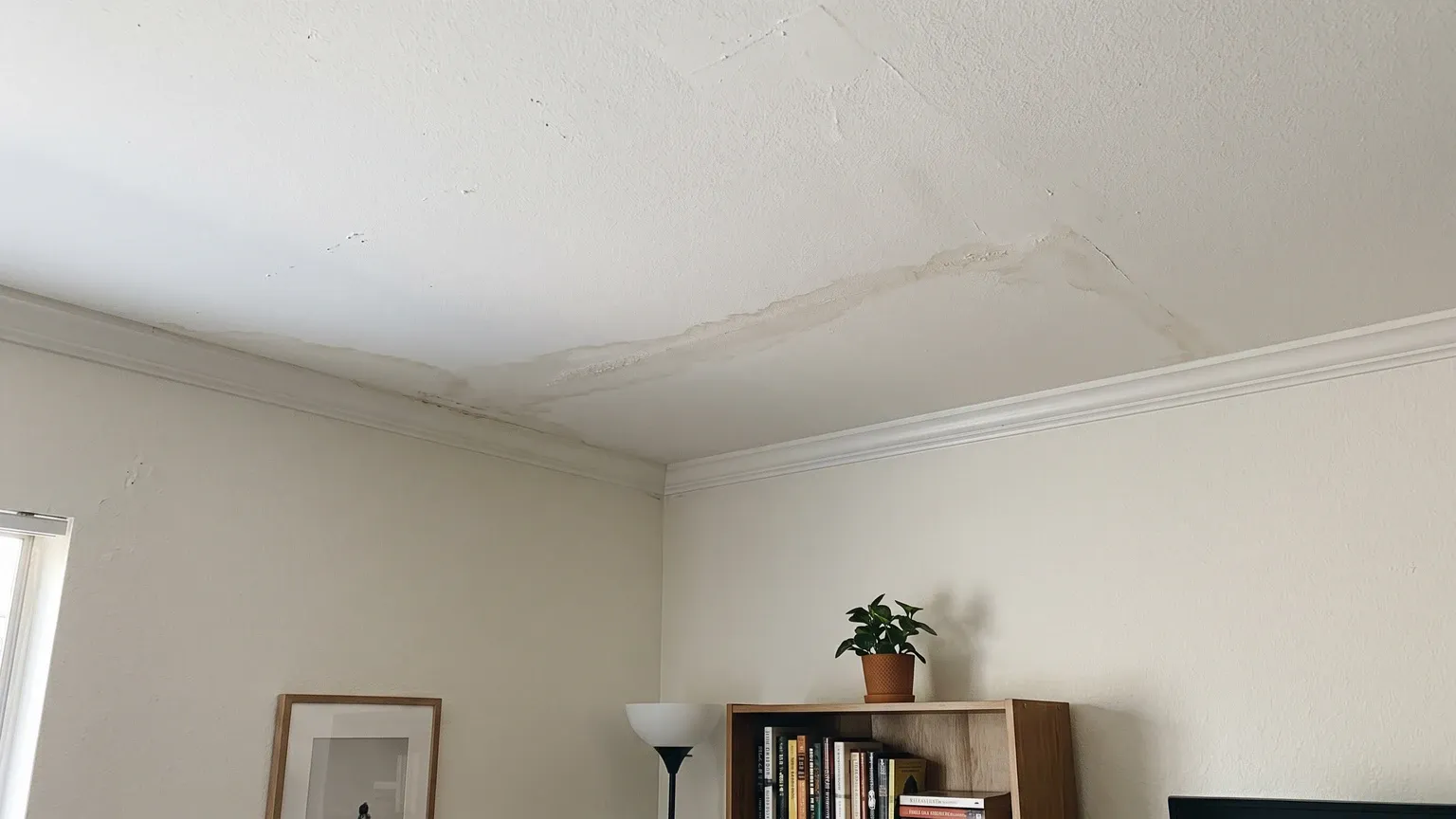
When an upstairs unit’s AC condensate overflows, the water runs down through the floor into the ceiling of the unit below, and the mold follows. Who pays for the cleanup (the upstairs owner, the HOA, your HO-6 insurer, or some mix) depends on your CC&Rs, the policies involved, and exactly how the water got there.
This is general information, not legal or insurance advice. Arizona’s Condominium Act (A.R.S. § 33-1247) sets the baseline for who maintains what in a stacked-unit building, but your declaration controls the specifics. For advice on your situation, consult your HOA management, your insurer, and if needed, an Arizona attorney who handles condominium disputes.
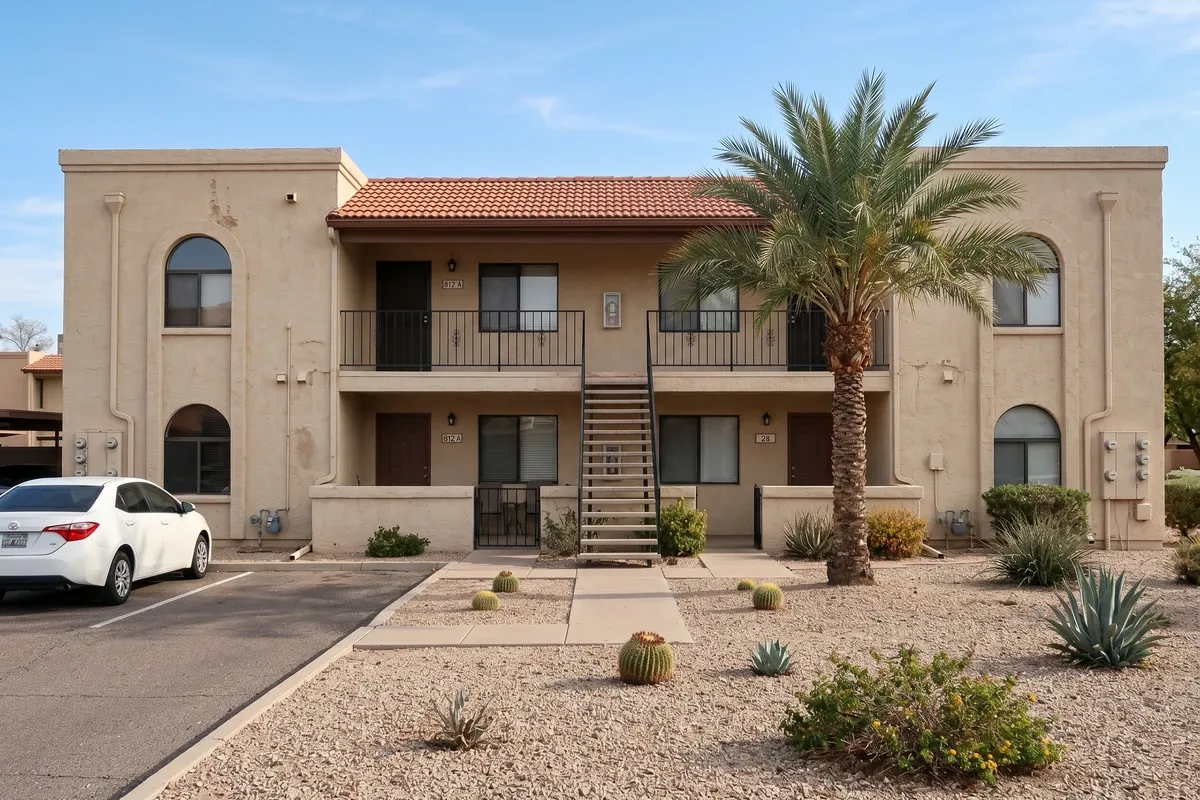
Why Phoenix condos have this problem more than most
Phoenix is not a humid climate, but stacked condominiums here face a specific risk that plays out every monsoon season: AC condensate overflow.
A typical Phoenix central AC system produces almost no condensate from October through June, desert air is too dry to reach the coil’s dew point most of the year. Then monsoon season hits. Suddenly the same system is pulling multiple gallons of moisture per day out of the air, and every clogged or partially blocked drain line becomes a potential overflow event. When the drain line serving an upstairs unit backs up, the condensate pan overflows, and gravity does the rest: water seeps through the floor, into the ceiling assembly below, and onto the drywall of the downstairs unit.
Our guide to clogged AC drain lines covers the mechanics of how and why this happens. This guide focuses on the harder question that follows: once the water is already in your ceiling, who is responsible?
The baseline rule: whose equipment, whose responsibility
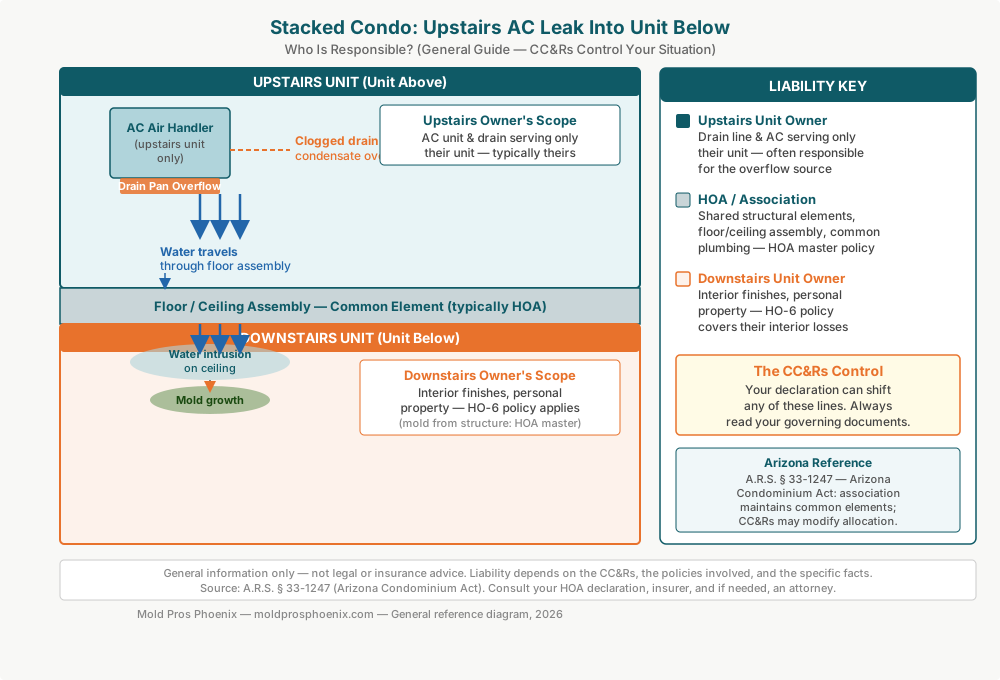
In a Phoenix condominium, the starting point for any inter-unit water dispute is the Arizona Condominium Act, A.R.S. Title 33, Chapter 9. Under A.R.S. § 33-1247, the association is responsible for maintaining, repairing, and replacing the common elements, and each unit owner is responsible for their own unit, unless the declaration provides otherwise.
That last clause is where most stacked-unit disputes get decided. The line between “common element” and “unit” is set by your declaration and CC&Rs, not by a universal rule. But the general framework works like this:
If the AC and drain line serve only the upstairs unit: The equipment is part of that owner’s unit, not a common element. When it fails and water enters the unit below, the upstairs owner is generally responsible for the source of the damage. That does not automatically mean they pay everything, they are responsible for the negligent or failed maintenance of their own equipment.
If the water passed through a structural floor/ceiling assembly: That assembly is typically a common element the association maintains. Damage to the structural assembly itself, as opposed to your interior finishes, may be the association’s responsibility under the master policy.
If the leak came from a shared mechanical system, a common condensate line or plumbing riser serving multiple units, the analysis shifts toward the association.
For a full breakdown of the broader HOA responsibility framework in Arizona condominiums and planned communities, see our guide to HOA and condo mold responsibility in Arizona. This page focuses narrowly on the upstairs-AC scenario.
The negligence standard and what it means for you
Arizona associations and unit owners are generally held to a negligence standard, not strict liability. The upstairs owner does not automatically owe you money the moment water appears on your ceiling. What matters is whether they failed to maintain their equipment reasonably.
In practice, a clogged drain line that overflowed because the owner skipped annual HVAC maintenance for years is a different situation from a drain line that clogged unexpectedly despite reasonable care. Both may result in water in your ceiling, but the legal weight is different.
For you as the downstairs owner, that means documentation is everything. You need a clear record of:
- When the stain or water first appeared, with dated photos
- When you notified the upstairs owner and HOA management (in writing, with proof)
- What each party said and when
- What any inspection found about the moisture source and extent
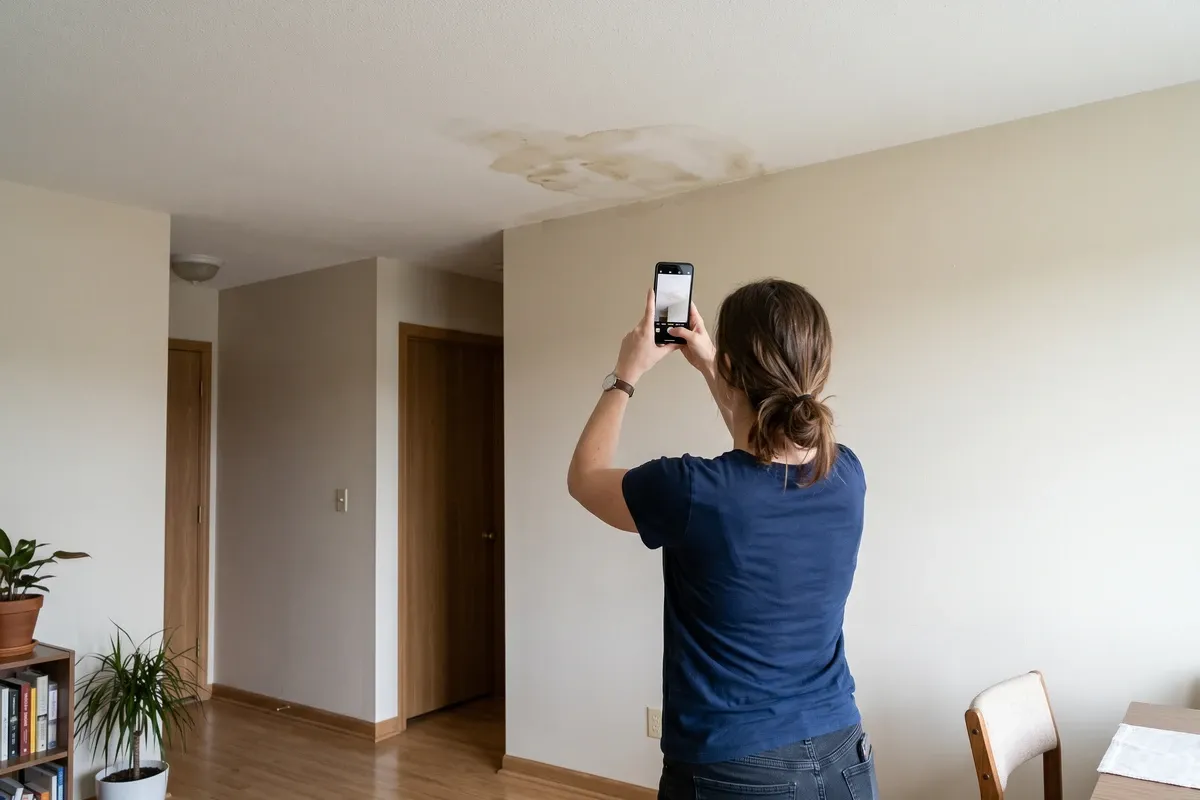
Written notice to both the upstairs owner and the HOA the same day you discover the problem is not just good practice, it starts the clock on any negligence argument and documents that the responsible parties knew about it.
Mold: the 24–48 hour window
The EPA advises drying wet materials within 24 to 48 hours to prevent mold growth. Phoenix summer temperatures accelerate that timeline. If your ceiling drywall was wet for more than a couple of days before anyone addressed the source, there is a meaningful chance mold has started in the cavity above or behind the visible surface.
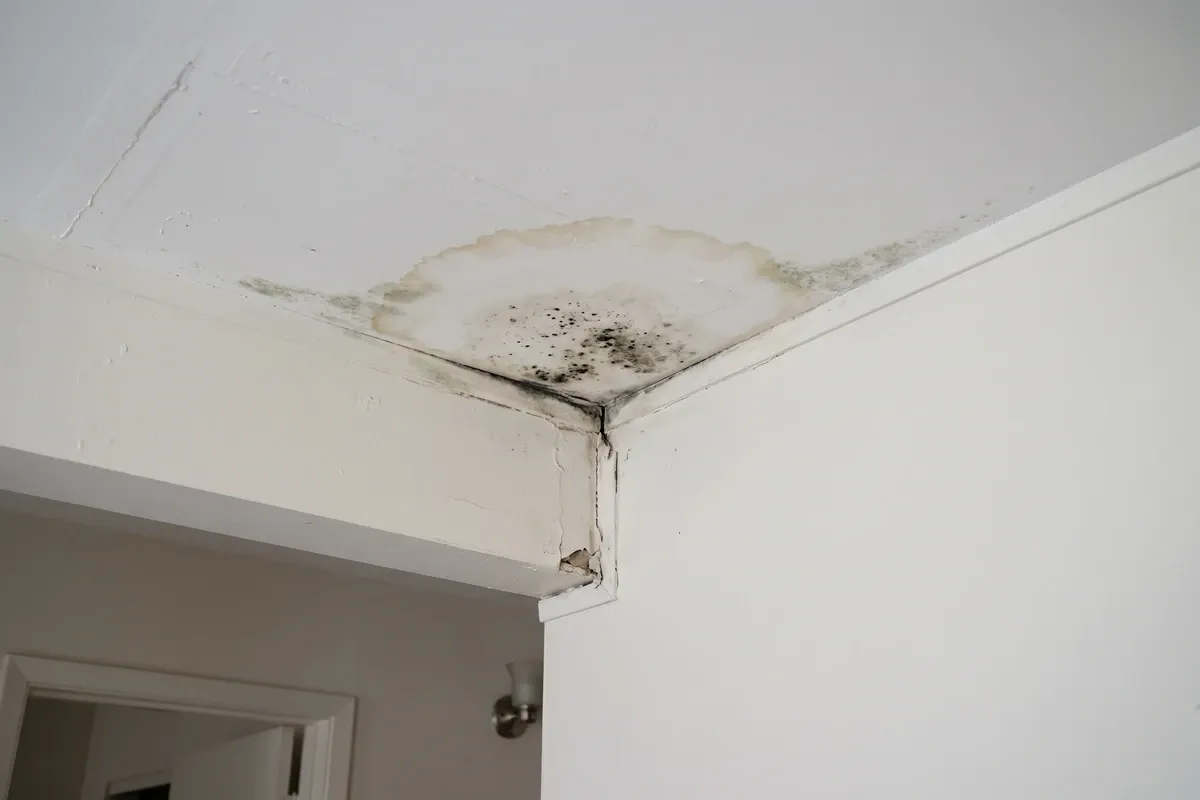
A dried water stain does not mean the mold risk is gone. Drywall and insulation hold moisture long after the visible surface dries, and mold growth in the cavity behind the surface is common even when nothing is visible on the front. A professional mold remediation assessment can determine whether the affected area needs material removal or whether drying alone is enough, and that distinction matters for both your health and any insurance claim.
How insurance applies: master policy vs. your HO-6
In an Arizona condominium, most owners carry two policies at once, neither of which necessarily covers everything.
The HOA master policy covers the building structure and common elements, to the extent the CC&Rs and the policy require. When a common-element failure causes structural damage, this is typically the policy in play for the structural repair.
Your HO-6 policy covers your unit’s interior finishes, improvements and betterments, and your personal property, the things inside your unit that the master policy does not touch.
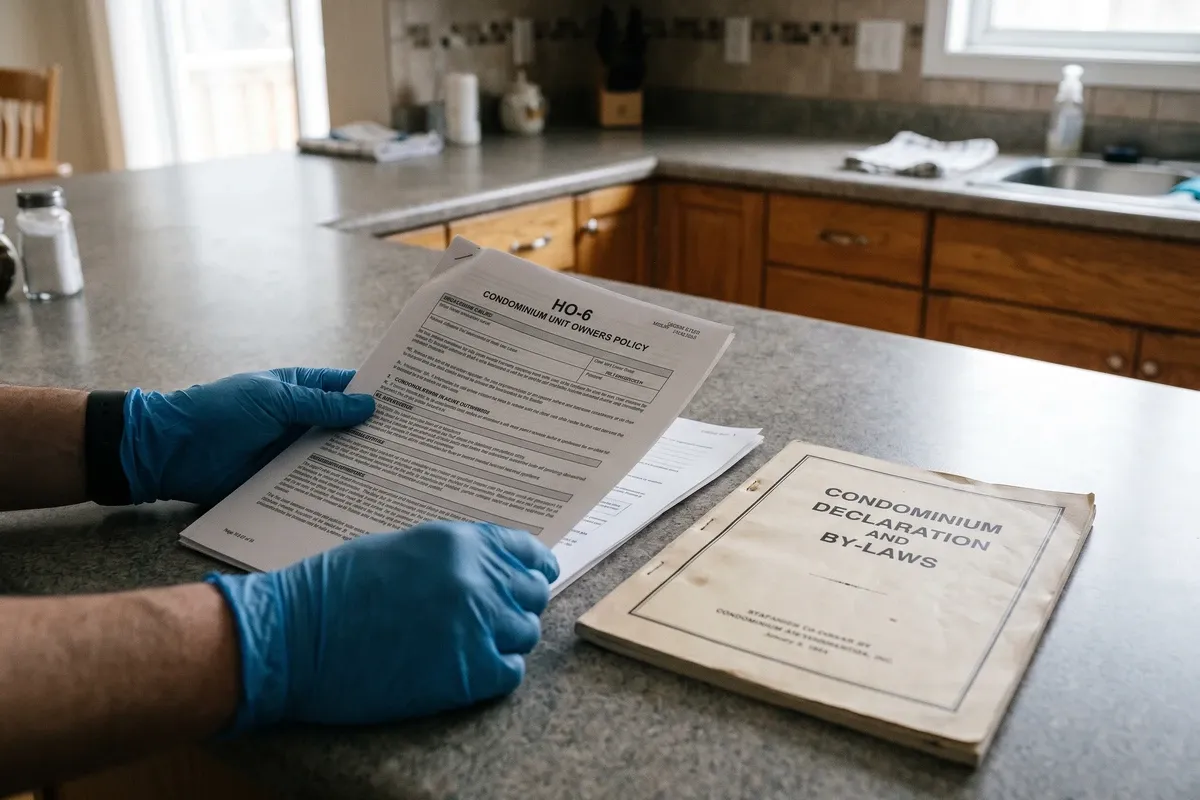
The practical reality for an upstairs AC leak scenario:
- Structural ceiling and floor assembly: HOA master policy may apply if it’s a common element
- Your drywall, flooring, paint, and permanent fixtures: your HO-6
- Your furniture and personal property: your HO-6
- The source (the upstairs AC equipment): the upstairs owner’s policy, or potentially a claim against them
Mold coverage is frequently limited or excluded on both types of policy. Many carriers cap mold remediation at a sublimit, or carve it out unless it results from a sudden, covered event rather than gradual moisture build-up. Read the mold language in both policies before you assume anything is covered. This is general information, not insurance advice, your own agent and the HOA’s insurer are the right sources for how mold is handled under your specific policies.
One practical move: file with your own HO-6 insurer first and let them investigate. If your insurer pays your claim, they can pursue subrogation against the upstairs owner or their insurer on your behalf. You do not have to fight that battle alone.
What to do, step by step
If you are a Phoenix condo owner dealing with an upstairs AC leak into your unit:
-
Stop the source if you can. Contact the upstairs owner immediately. If you cannot reach them and water is actively coming in, contact HOA management.
-
Document before anything is dried or moved. Dated photos of the stain, the wet area, and any mold you can see are essential. Note the date and time you first noticed it.
-
Notify in writing, same day. Send written notice to the upstairs unit owner and to the HOA management company describing what happened, when you noticed it, and what the damage looks like. Keep proof of delivery.
-
Contact your own HO-6 insurer. Report the damage promptly, most policies have notice requirements. Ask specifically how mold is covered under your policy and what the timeline is for filing a claim.
-
Get an independent moisture and mold assessment. A professional inspection documents the moisture source, the extent of water intrusion, and whether mold is present in the ceiling cavity before any repair work begins. That documentation is what any insurance claim or legal demand will stand on.
-
Request the upstairs owner’s insurance information and an incident report from the HOA. You will need this for any subrogation or direct claim against the upstairs owner.
-
Read your CC&Rs. The declaration is the controlling document for how inter-unit damage is allocated in your building. Your HOA management should provide a copy if you do not have one.
For anything beyond a straightforward insurance claim, if the upstairs owner refuses to acknowledge responsibility, the HOA disputes what the master policy covers, or mold has spread significantly, talk to an Arizona attorney who handles condominium disputes before you take any irreversible step.
What to do next
If you are dealing with an upstairs AC leak and mold in a Phoenix condo, the immediate steps are: document, notify in writing, contact your HO-6 insurer, and get an independent moisture inspection before any repair work begins. The inspection gives you the record any claim or demand needs.
For the broader question of who maintains what in Arizona condominiums and what to do when the HOA won’t act, see our full guide on HOA and condo mold responsibility in Arizona. For the mechanics of how and why AC drain lines clog and overflow in Phoenix, see clogged AC drain lines. If you are a renter rather than an owner, the rules differ, see mold in your Arizona apartment. And for the full library of Phoenix mold guides, start at the guides hub.
An HVAC-caused mold case can also be a legal case against the installer, not only against the upstairs unit. In August 2023, a Texas jury awarded $3.1 million in Baehr v. Woods Comfort Systems, finding the installer 40% liable for an oversized, short-cycling air handler that caused persistent condensation and mold. The documented mold illness cases reference has the specifics; the point for a condo owner is that identifying the cause precisely — a design-installation defect, a maintenance failure, or an unrelated upstairs leak — matters both for insurance and for who ends up responsible.
Get a free quote
If you are a Phoenix-area condo owner dealing with water intrusion or mold from an upstairs unit, a free, no-obligation inspection quote is a practical starting point. We handle mold across the Valley, and an independent assessment documents what is in your ceiling and walls, the record any insurance claim or liability demand will need. Fill out the form below and we will get back to you with a clear next step. (For advice on your rights against the upstairs owner or HOA, talk to an attorney, we document mold; we do not give legal or insurance advice.)