Mold in Your AC and Air Vents: A Phoenix Homeowner's Guide
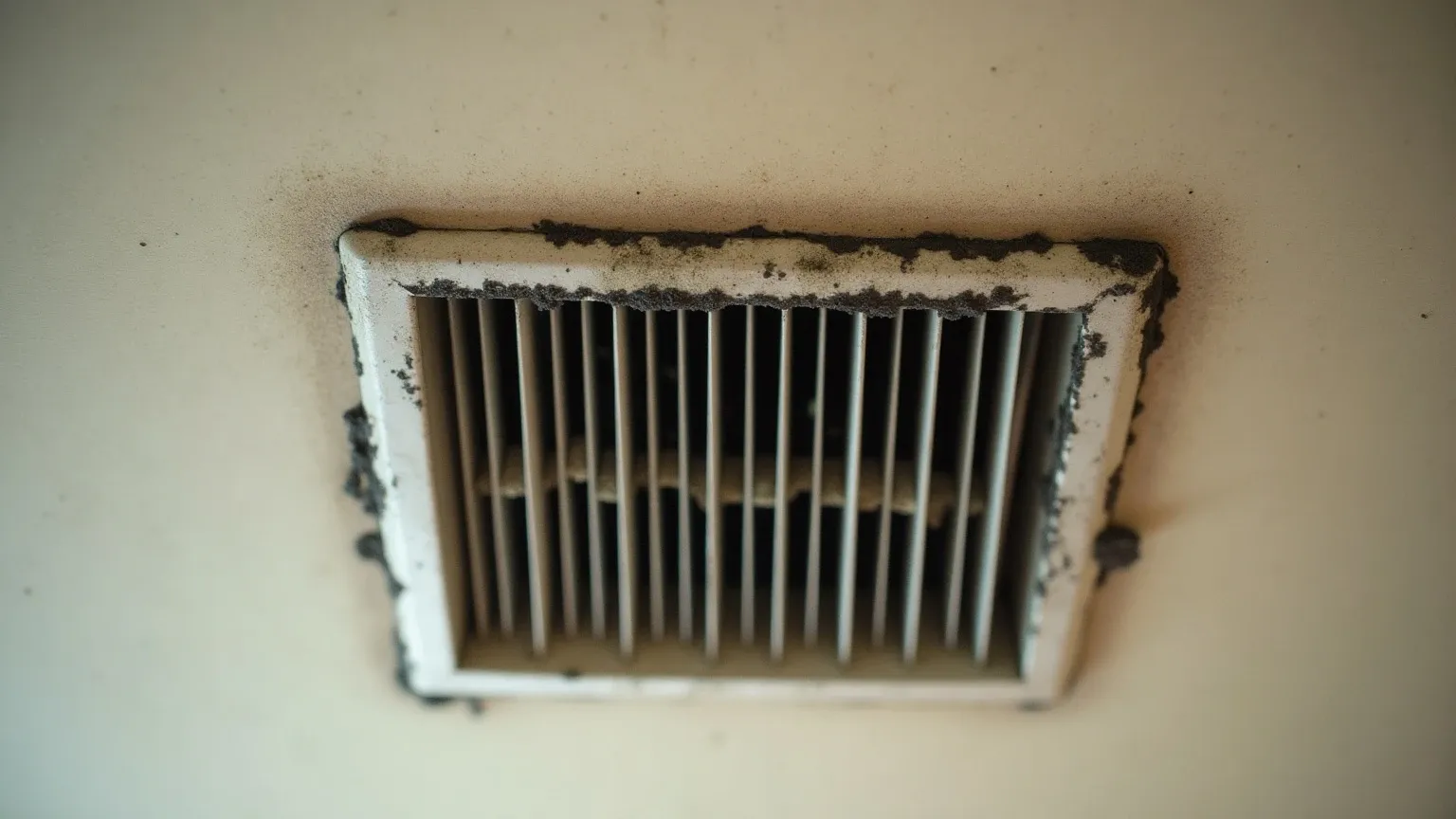
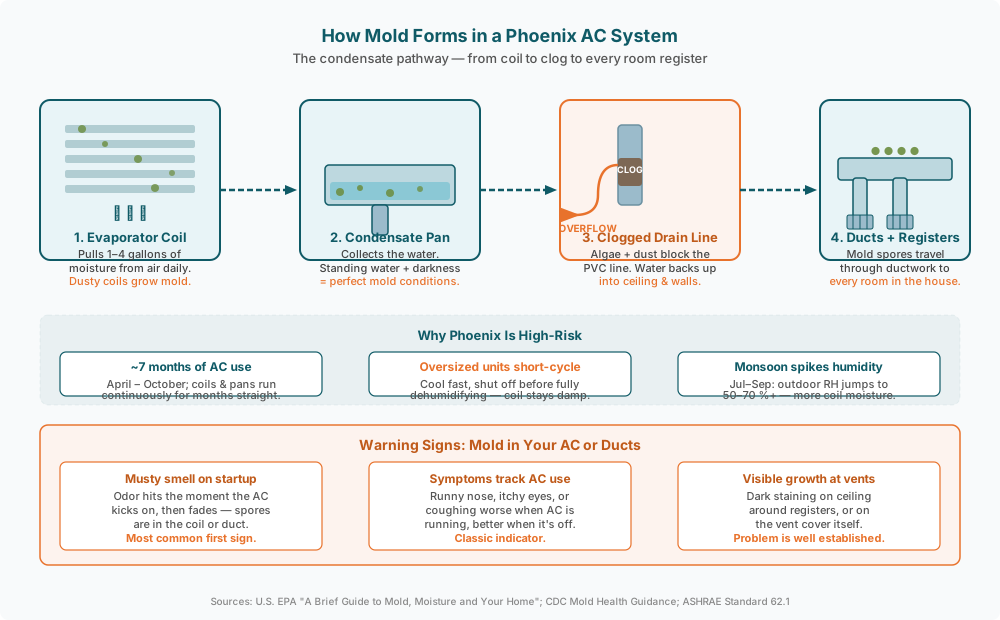
Mold in an air conditioner or air duct system is the most common hidden mold problem in Phoenix homes. A Valley AC runs roughly seven months a year and pulls one to four gallons of moisture from the air every day, draining it through a condensate line. When that line clogs — which it does regularly in dusty desert conditions — that water backs up into dark, warm spaces and grows mold on the coil, in the pan, and through the ductwork. The musty smell that hits when the system kicks on is spores being distributed to every room.
Why Phoenix AC systems are the top mold driver in Valley homes
Most people assume mold is a humidity problem — and it is, but not in the way they imagine. Phoenix’s outdoor air is dry, but a residential AC system creates its own contained moisture environment inside your home’s walls and ceilings.
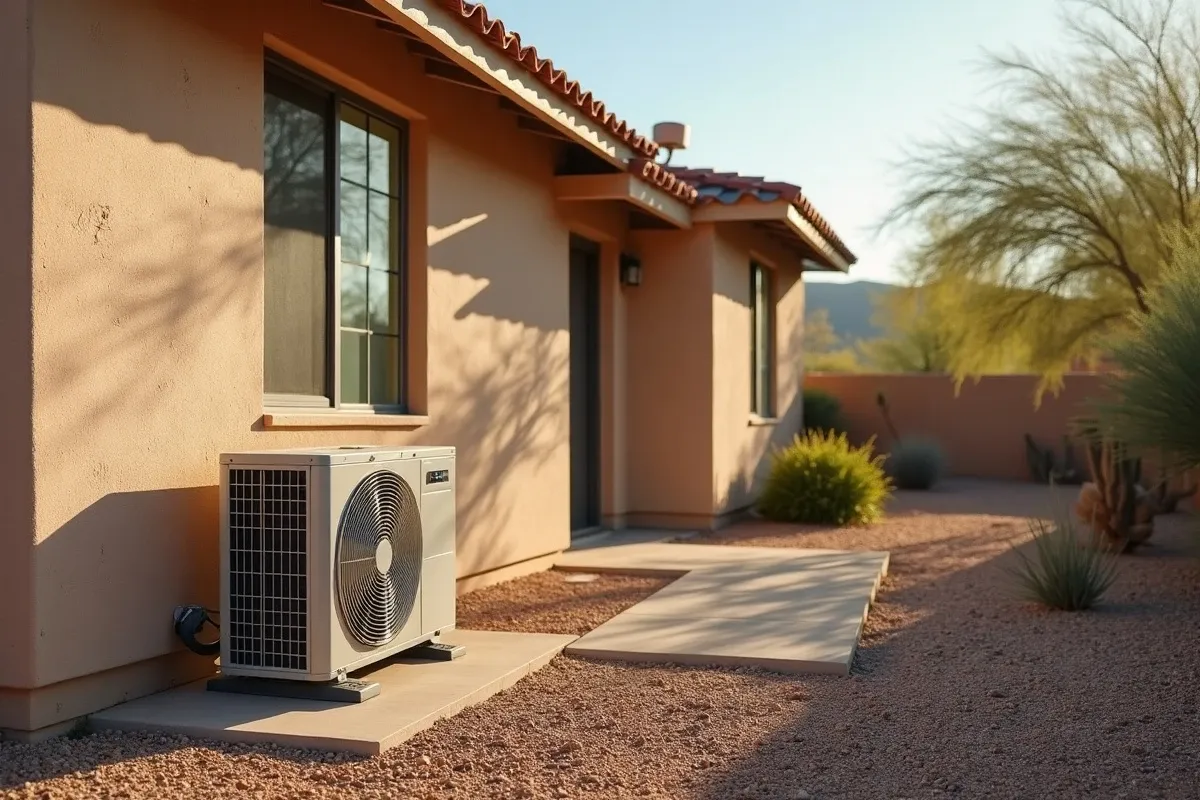
Here is the actual mechanism. The evaporator coil inside your air handler sits at around 40 to 50 degrees Fahrenheit while the system runs. Warm indoor air passes over it, and the moisture in that air condenses on the cold coil — the same way a cold drink sweats in summer heat. That condensed water drips into a drain pan and flows out through a PVC condensate drain line.
In a Phoenix home running from April through October, this process removes hundreds of gallons of moisture per season. The U.S. EPA’s Brief Guide to Mold, Moisture and Your Home identifies persistent moisture as the single driver of indoor mold — and the condensate system creates exactly that, in the dark, inside your walls and ceiling spaces.
Four specific failure points concentrate the risk in Phoenix systems:
Clogged condensate drain lines. The PVC drain line picks up algae, biofilm, and fine desert dust over a season. A partial clog slows drainage; a full clog causes water to back up into the pan and eventually overflow into the ceiling or wall cavity below the air handler. This is the most common hidden water source behind mold in Phoenix homes.
Dirty evaporator coils. A coil coated in dust and organic debris becomes a mold surface. The CDC’s mold guidance confirms that mold grows wherever moisture and organic material meet — a dusty, damp coil fits that description precisely. A fouled coil also quietly drops the system’s efficiency, so it often shows up on the power bill before anyone notices a smell.
Oversized units that short-cycle. Many Phoenix homes were fitted with air conditioners sized for worst-case summer heat. On a moderate spring or fall day, an oversized unit cools the thermostat setpoint in minutes, shuts off, and then cycles on again shortly after. The coil never runs long enough to properly dehumidify — it cools fast but leaves the indoor humidity elevated, and the coil stays damp between cycles. Short-cycling undermines dehumidification, which is why building-science guidance emphasizes controlling indoor humidity.
Monsoon season humidity spikes. From mid-June through September, Phoenix relative humidity regularly climbs to 50 to 70 percent during storms. Higher outdoor humidity means the coil is pulling significantly more moisture — more condensate to drain, greater risk of the system being overwhelmed if the drain line is partially obstructed.
Warning signs: what mold in an AC system actually looks like
The challenge with AC mold is that the source is hidden. The evaporator coil and condensate pan are enclosed inside the air handler cabinet. The drain line runs inside walls and ceiling spaces. By the time mold is visible at a vent register, it has typically been growing upstream for weeks or months.
These are the signs that point specifically to HVAC mold rather than a surface problem elsewhere in the house:

A musty smell that appears when the AC turns on. This is the most common and reliable first sign. The smell arrives with the first blast of air from the vents and may fade after a few minutes as the spore concentration dilutes. That timing — smell on startup, fade after a few minutes — points directly to the source being inside the air handler or duct runs, not at the vent surface.
Respiratory or allergy symptoms that track with AC use. The CDC’s mold health guidance documents that mold exposure can cause nasal congestion, throat irritation, coughing, and eye irritation. If these symptoms worsen when the AC is running and improve when windows are open or the system is off, the indoor air quality is the variable — and the AC system is the delivery mechanism.
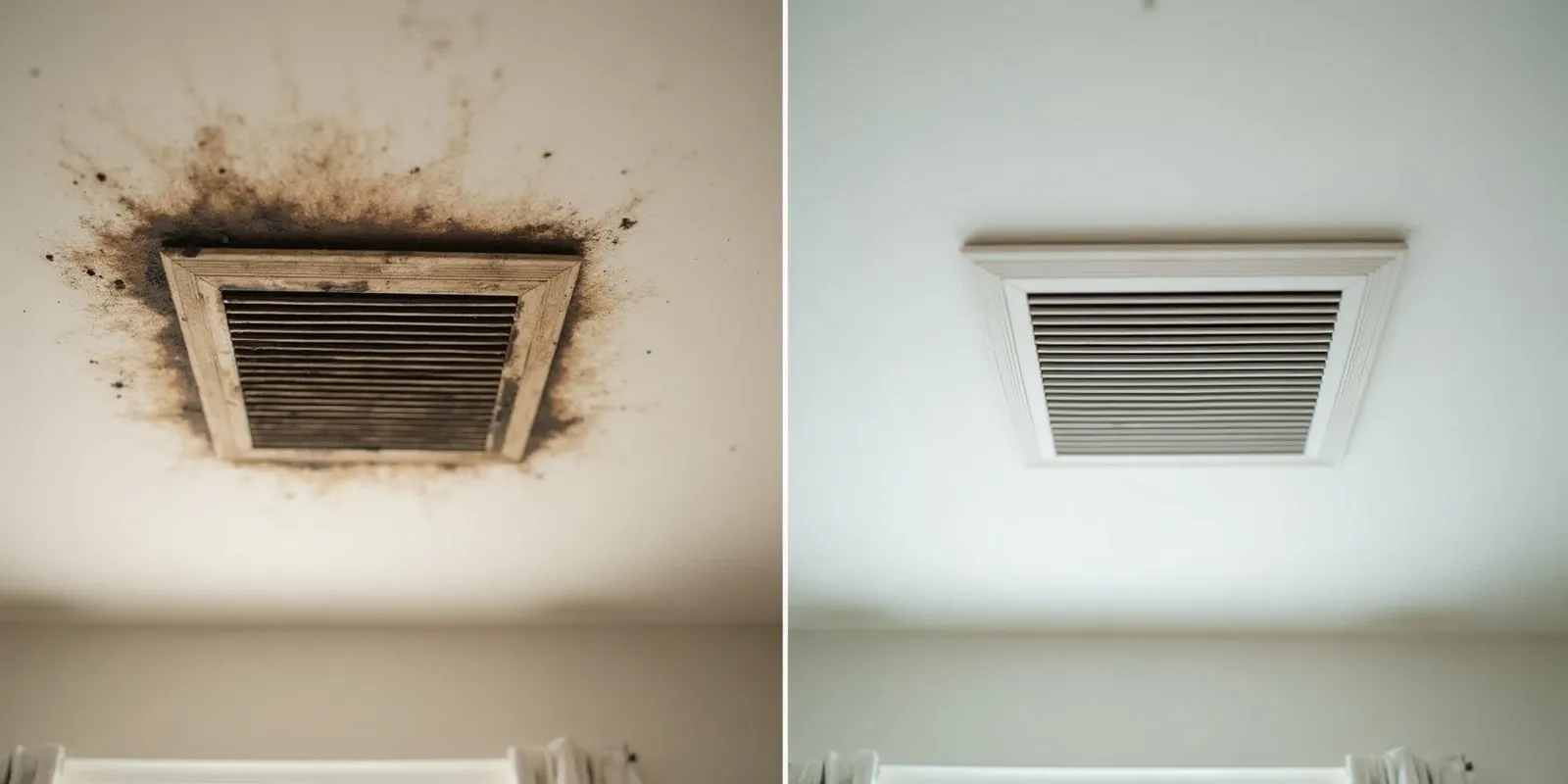
Visible staining on or around vent registers. Dark spots or discoloration on the ceiling around a supply vent, or on the vent cover itself, mean mold is close enough to the register surface to be visible. At this stage the problem is well established; what you see is the downstream edge of a larger colony upstream.
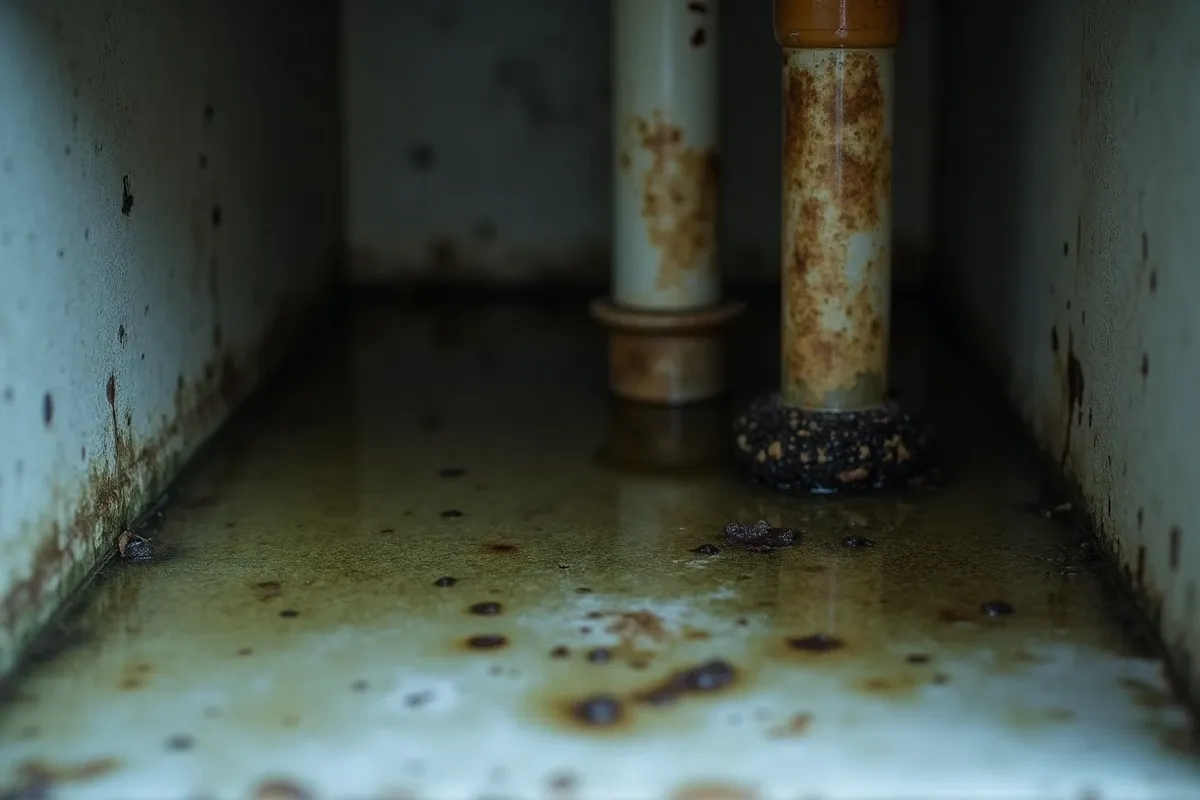
Water stains on ceiling near the air handler. A water stain on the ceiling or wall in the same area as the air handler closet or attic-mounted unit is a condensate overflow indicator. If the pan has overflowed, the wet building material is growing mold.
The evaporative cooler difference
Homes with evaporative “swamp” coolers instead of refrigerated AC face a related but different set of mold risks. A swamp cooler works by doing the opposite of a refrigerated system: instead of removing moisture from indoor air, it adds moisture by evaporating water off soaked pads. The mold risks are in the pads, the standing reservoir water, and the elevated indoor humidity the cooler produces — not a condensate system.
Our guide on swamp cooler mold in Phoenix covers that specific set of risk points in detail, including why running a swamp cooler during monsoon season raises the problem significantly.
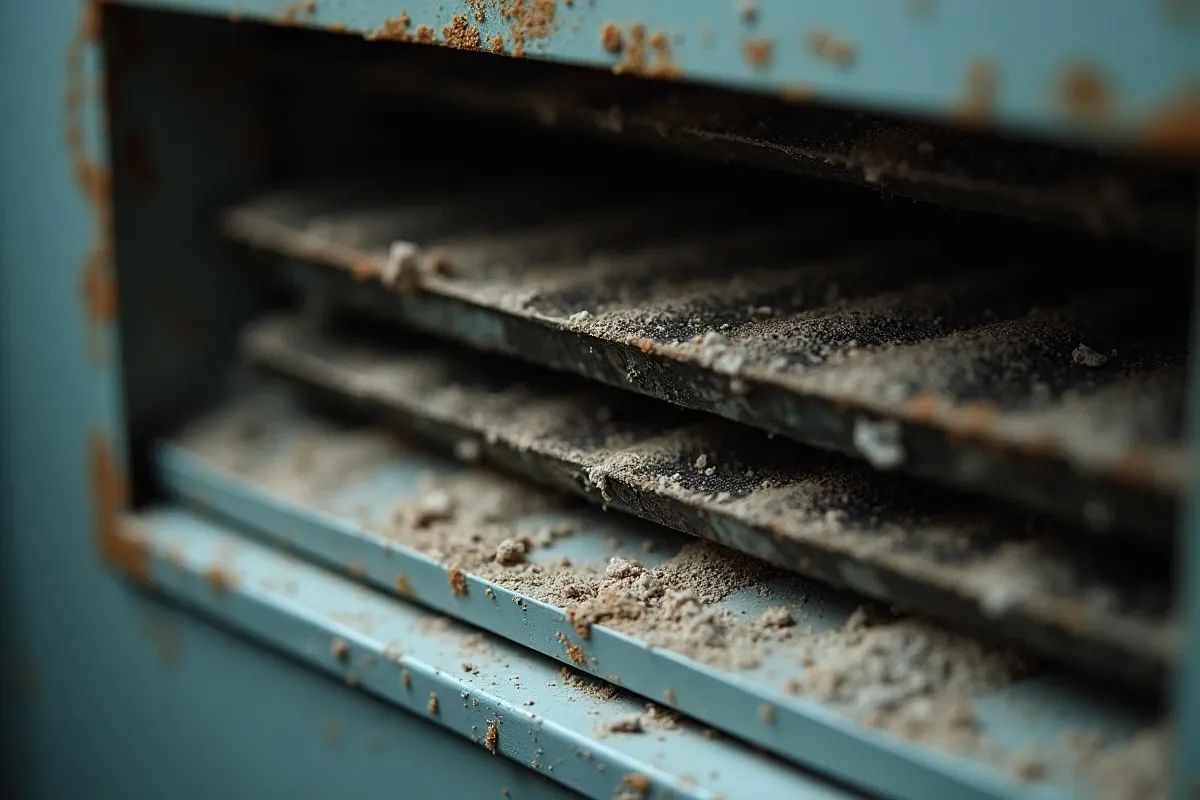
What mold in AC ducts looks like — and why spraying the vents does not fix it
The most common mistake homeowners make when they find mold around a vent is spraying bleach or a commercial mold killer at the register. It makes sense as an instinct — spray where you see it. But the mold at the vent is downstream of the source.
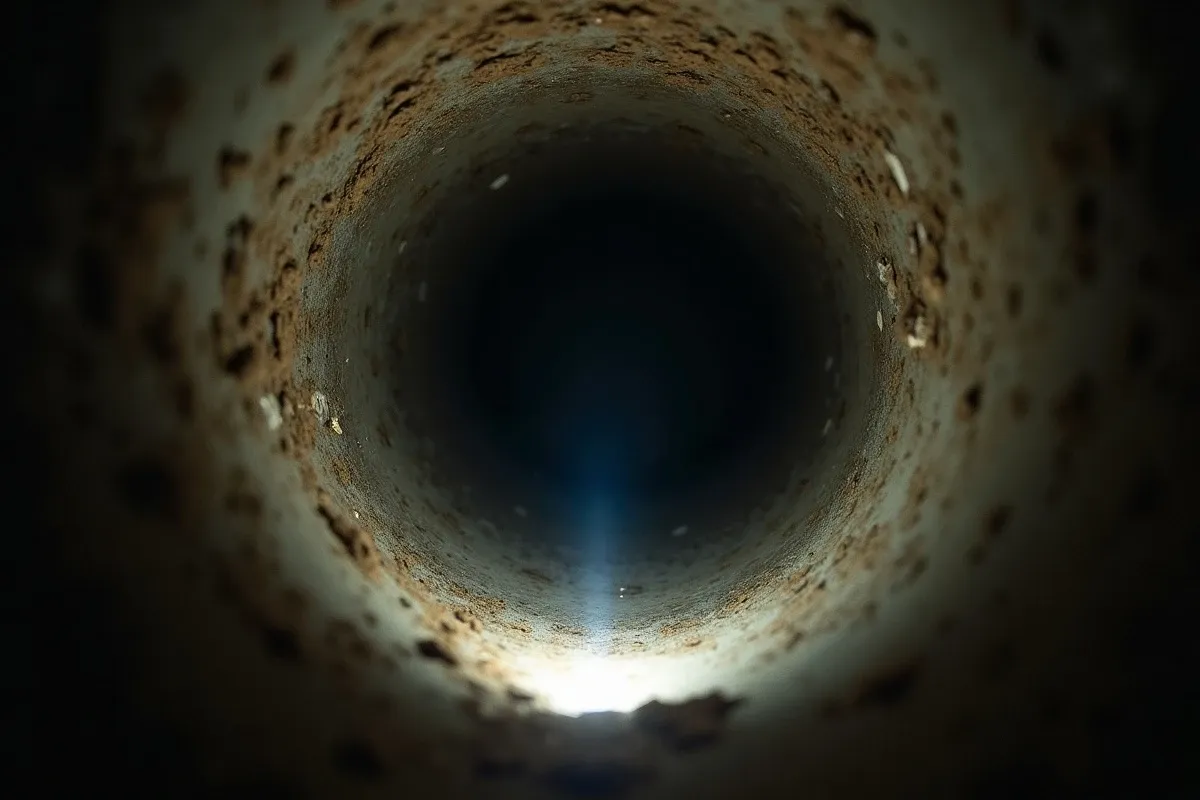
The EPA’s mold cleanup guidance is clear on this point: the moisture source must be identified and fixed before any mold cleaning is done. Cleaning or treating mold without fixing the source means the mold returns within weeks, because the conditions that grew it — moisture, darkness, organic material — are still present.
In a duct mold situation, treating the register surface:
- Does nothing about the mold on the evaporator coil
- Does nothing about algae in the condensate drain pan
- Does nothing about the clogged drain line still adding water to the system
- Often drives spores further into the duct run during application
A mold inspection is the right first step, specifically because it examines the entire system — air handler, coil access, drain pan, and accessible duct runs — before any remediation scope is set. Finding and confirming the moisture source first means the work that gets done actually solves the problem.
How AC and duct mold is actually handled
Once the moisture source is identified and confirmed, the remediation follows a defined sequence:
Step 1: Stop the moisture first. This always comes before any cleaning. For most Phoenix AC mold cases, this means clearing the condensate drain line. The line is flushed with water pressure or a wet-dry vacuum, and any clog material is removed. An algaecide tablet dropped in the condensate pan after clearing provides a slow-release treatment that inhibits algae regrowth through the season. If an oversized unit is the root cause, that’s a longer-term equipment issue — but even temporary fixes like slowing the fan speed can help during remediation.
Step 2: Clean the evaporator coil. Coil cleaning requires opening the air handler cabinet and using an approved no-rinse coil cleaner. The foam product loosens biological growth and debris from between the fins; it drains out through the condensate system. This is not a DIY step — working inside an air handler cabinet involves the refrigerant circuit and electrical components.
If a contractor also quotes a UV lamp for the coil, see does UV light kill mold? for what a coil lamp can and cannot do. It does not replace clearing the drain line or cleaning the coil.
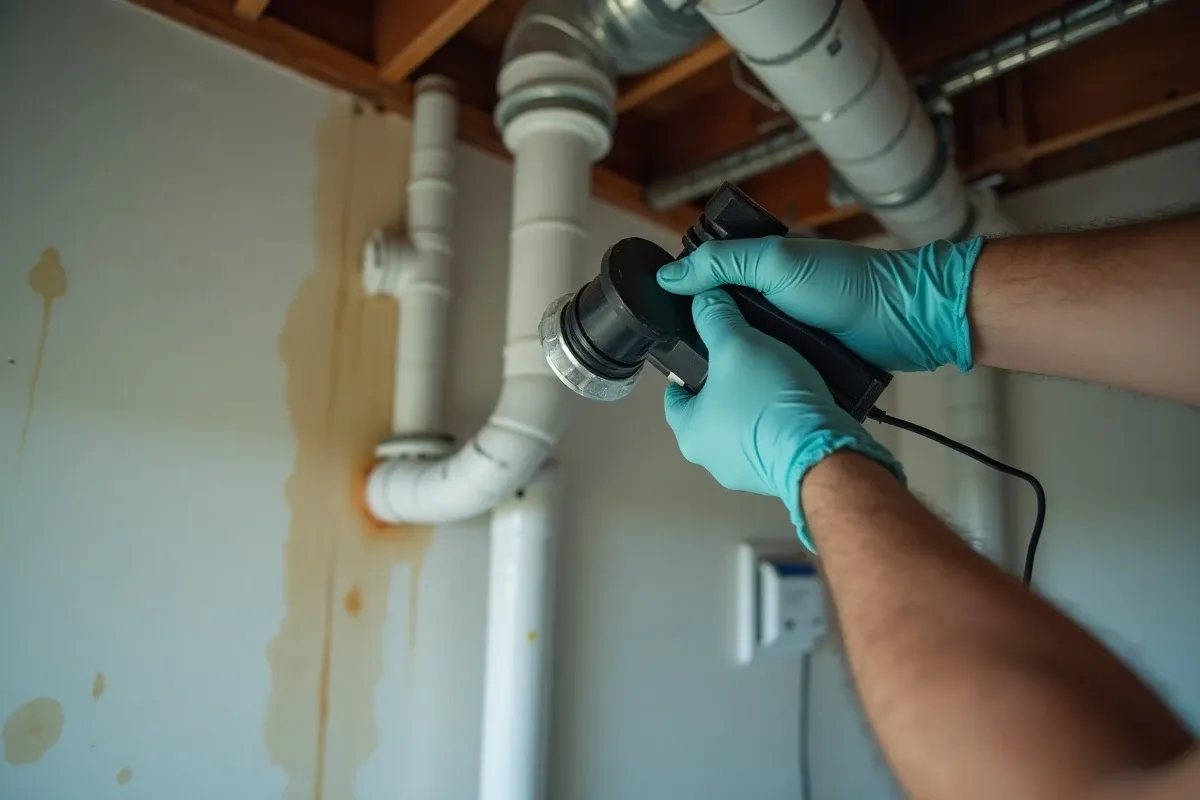
Step 3: Address duct contamination proportionate to the scope. Light mold on duct surfaces near the air handler can often be cleaned by a trained HVAC technician. Extensive mold or mold on flexible ductwork (flex duct) typically requires replacement — flex duct is porous and cannot be effectively cleaned once mold is established in the liner. The EPA recommends duct cleaning when mold growth inside hard-surface ducts is confirmed, or when significant debris is present; it does not recommend routine duct cleaning absent a specific reason.
Step 4: Remove any affected building material. If the condensate pan overflowed into a ceiling or wall cavity, the wet drywall or insulation needs to come out. Drywall that has been wet long enough to grow mold cannot be dried and left in place — the EPA states clearly that mold-contaminated building materials must be physically removed, not just dried or treated. Our mold removal service page covers what that process involves and what to expect for that portion of the work.
The Phoenix preventive maintenance move: clear the line before April
The single most effective thing a Phoenix homeowner can do to prevent AC mold is clear the condensate drain line before cooling season. The timing matters: March or early April, before the system goes into seven months of continuous use.
The process:
- Locate the condensate drain line — typically a white PVC pipe exiting the air handler and running to a drain or outside the home
- Find the cleanout port on the drain pan (a capped T-fitting on many installations)
- Pour a cup of diluted white vinegar through the port to break up any early algae formation, or use a condensate pan treatment tablet for a longer-lasting effect
- Confirm the line is flowing freely by running the AC briefly and watching for water to exit at the drain end
- If flow is restricted or absent, use a wet-dry vacuum at the drain outlet end to pull the clog free
The same pre-season check should include a visual inspection of the condensate pan (look for standing water or algae coating the pan floor), checking the air filter (replace if dirty — a clogged filter causes coil icing and additional moisture cycles), and verifying the air handler access panel is fully sealed.
Our broader guide on mold in the desert covers all Phoenix moisture sources — including slab leaks, monsoon roof intrusion, and irrigation overspray — in the same plain-language format. AC is the largest single driver, but it rarely acts alone.
When bad AC installation is the source: a $3.1 million case in point
In August 2023, a Texas jury awarded $3.1 million in Baehr v. Woods Comfort Systems, finding the HVAC installer 40% liable for an oversized, short-cycling air handler that produced persistent coil-cabinet condensation and mold growth in the family’s home. The installer was on the hook not for a leaky drain line but for the design choice — an oversized system that never runs long enough to dehumidify. Phoenix homes running the same physics see the same result. The documented mold illness cases reference has the full case file, including the specific mechanical failure the court cited.
Sources
- U.S. EPA — A Brief Guide to Mold, Moisture and Your Home: moisture control as the fundamental driver of indoor mold; mold cleanup sequence (fix moisture first, then remove mold).
- U.S. EPA — Mold Cleanup in Your Home: physical removal requirement; duct cleaning guidance; the 10 sq ft DIY vs. professional rule of thumb.
- CDC — Mold — Basic Facts: mold health effects, at-risk populations, and basic biology of mold growth conditions.
- ASHRAE Standard 62.1 — Ventilation for Acceptable Indoor Air Quality: humidity control as a factor in limiting indoor microbial growth.
- U.S. Department of Energy — Evaporative Coolers: how evaporative coolers add humidity and why they are suited only for dry climates.
- OSHA — Legionella in the Workplace: standing-water systems and microbial risk in evaporative equipment.
- National Weather Service Phoenix — Monsoon Season: monsoon defined June 15 – September 30; humidity and precipitation data for the Phoenix metro.