Swamp Cooler Mold in Phoenix: Why It Grows & How to Stop It
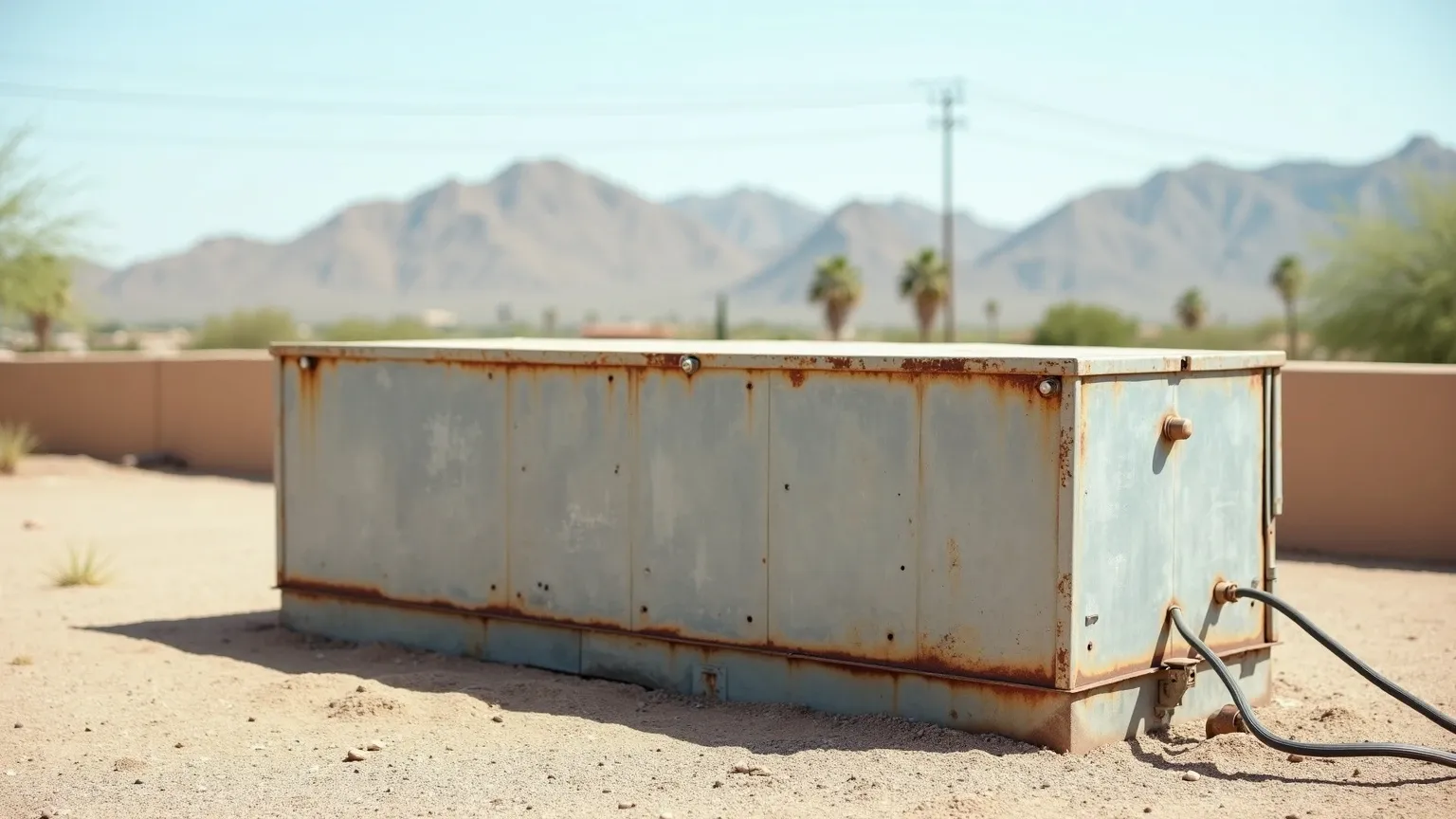
Yes, evaporative “swamp” coolers can grow mold. Their constantly-wet pads and standing reservoir water breed mold and bacteria, and running one in humid monsoon weather raises indoor humidity enough to grow mold around vents and walls. Seasonal cleaning and not running it when it’s humid prevent most of it.
How a swamp cooler works — and why Phoenix runs them
To understand the mold risk, you have to understand the machine, because a swamp cooler does the opposite of what a normal air conditioner does with moisture.
An evaporative cooler is a simple box. According to the U.S. Department of Energy, it holds a large blower fan and thick (8- to 12-inch) sponge-like pads made of treated cellulose, fiberglass, or shredded aspen fibers, kept constantly soaked by a small recirculating pump. The fan pulls hot, dry outside air through those wet pads. As the water evaporates, it pulls heat out of the air — the same chill you feel stepping out of a pool on a dry day — and the cooler can drop the incoming air by around 20 °F. The trade-off is built into the physics: evaporation cools the air by adding moisture to it. A swamp cooler humidifies your home on purpose. That is the entire mechanism.
This is exactly backwards from a refrigerated air conditioner, which cools by running air over a cold coil and removing humidity (the water it pulls out drains away as condensate). One machine adds water to your indoor air; the other takes it away. Hold onto that difference — it is the key to everything below.
Swamp coolers are a Phoenix and Southwest staple for a good reason: they only work in dry air, and the desert is dry for much of the year. The Department of Energy notes they are meant for dry climates and should not be used in humid ones, because adding humidity to already-humid air does not cool. They cost roughly half as much to install as central AC and use about a quarter of the energy, so plenty of older Valley homes, and some newer ones as a supplement, still run one. They shine in the dry early summer — May and June, when humidity sits in the teens. The problem is what happens to that same machine when the monsoon arrives, and what happens inside it over a long season of standing water.
Where mold and bacteria grow in (and around) a swamp cooler
A swamp cooler combines the three things mold needs — water, warmth, and organic material — in one box, and then blows air across all of it into your home. The diagram below maps the risk points; the list underneath explains each one.
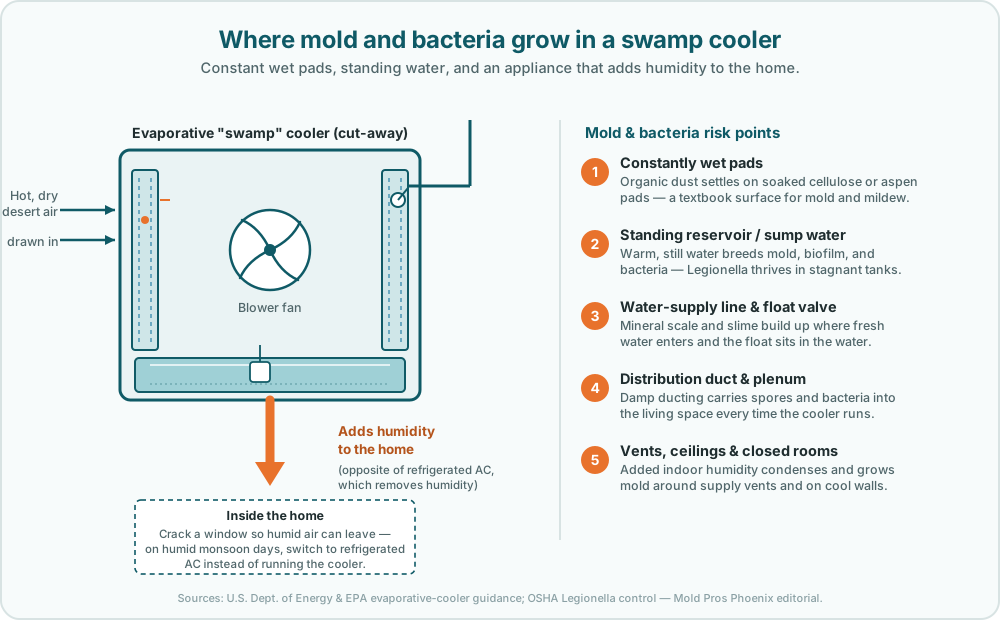
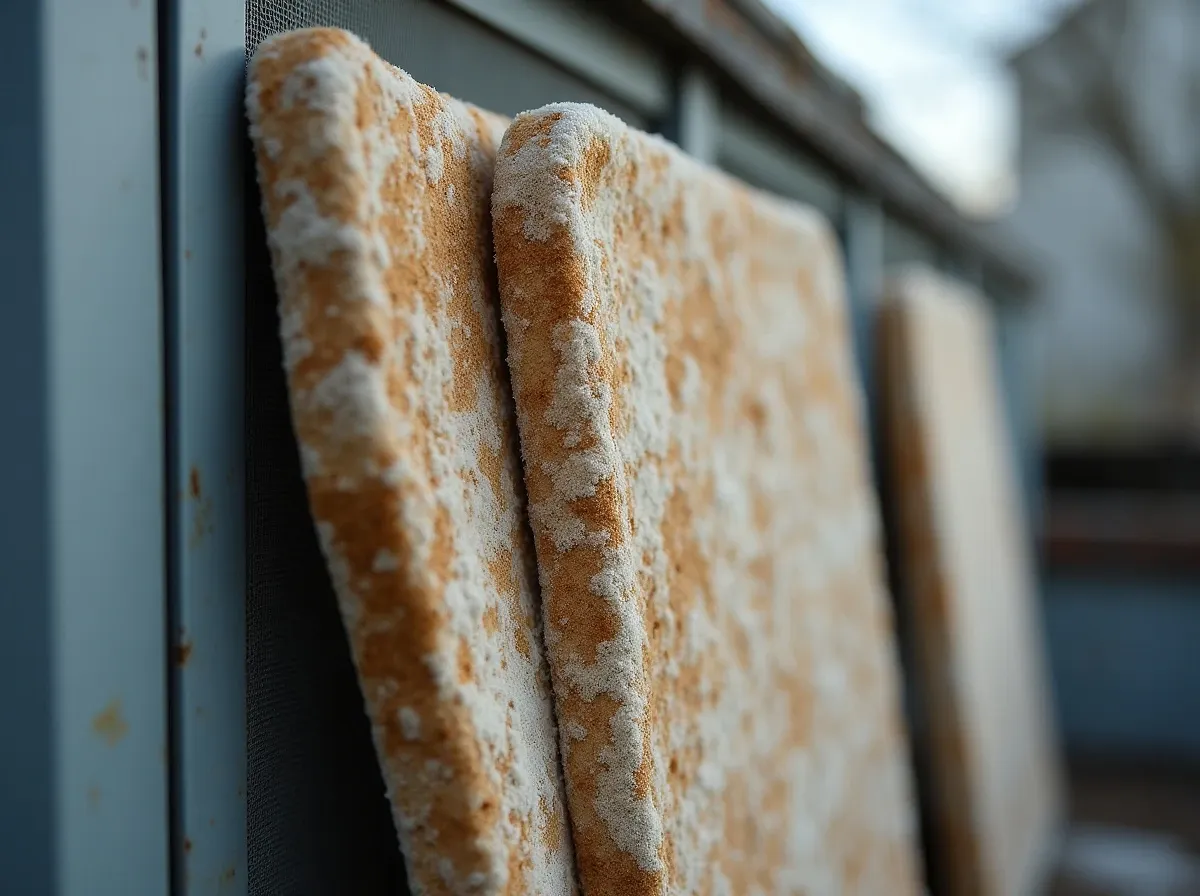
- The wet pads. The pads are soaked the entire time the cooler runs, and desert air carries fine organic dust that settles right onto them. Damp cellulose or aspen fiber coated in organic dust is a textbook mold and mildew surface — and the EPA warns that evaporative coolers used in the Southwest can encourage the growth of biological pollutants. Pads that aren’t changed regularly are the most direct version of that surface.
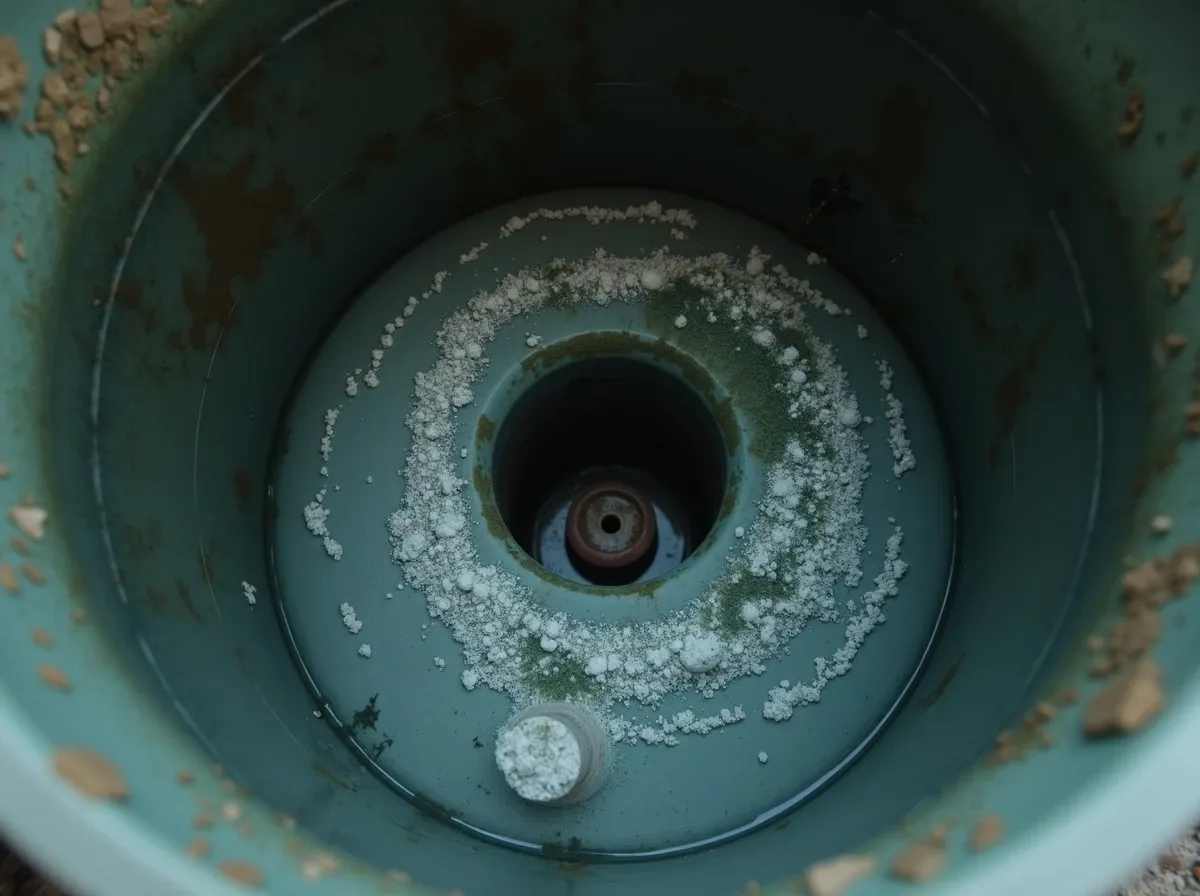
- The standing reservoir and sump. Water that the pump doesn’t circulate sits in the bottom tray. Still water grows biofilm, mold, and bacteria. Agencies single this out for coolers specifically: OSHA warns that direct evaporative air coolers used intermittently as humidifiers “can collect stagnant water in the sumps and promote Legionella growth,” and the Department of Energy says the drain pan should be emptied whenever a cooler will be idle more than a few days, because standing water there “can become a breeding ground for mosquitos and bacteria, including Legionella.” (OSHA’s stronger language about evaporation producing ideal conditions for growth and aerosolization is written about cooling towers, evaporative condensers and fluid coolers, not home coolers — our guide to Legionella and swamp coolers works through that distinction and the evidence behind it.)
- The water-supply line and float valve. Where fresh water enters and the float sits, mineral scale and slime accumulate. Phoenix’s hard water makes this fast, and scale buildup gives biofilm more surface to cling to.
- The distribution duct and plenum. On a ducted unit, the moist air travels through sheet-metal ducting before it reaches the rooms. Damp ducting carries any spores or bacteria from the pads and reservoir straight into the living space — every time the cooler runs.
- Vents, ceilings, and closed-off rooms — inside the home. This is the part homeowners miss. Because the cooler adds humidity, that moisture can condense and grow mold on the coolest indoor surfaces: around supply vents, on north-facing walls, and in shut bedrooms or closets that get little airflow. The cooler doesn’t have to be visibly dirty to cause this — the added humidity alone can do it.
The monsoon-humidity trap: when NOT to run your cooler
This is the most important point on the page, and the one most specific to Phoenix.
A swamp cooler only cools when the outdoor air is dry enough to absorb the moisture it adds. The Department of Energy is explicit that evaporative coolers add humidity and are unsuitable for humid conditions. So when the Arizona monsoon arrives — mid-June through September, with dew points climbing and afternoon humidity spiking — two bad things happen at once:
- The cooler stops cooling. With humid air coming in, there is little room for more evaporation, so the temperature drop shrinks. You get warm, damp air instead of cool air.
- The cooler starts a moisture problem. It keeps pumping humidity into a home that is already humid. The EPA recommends keeping indoor relative humidity below 60% (ideally 30–50%) to limit mold, and notes that evaporative coolers used in the Southwest can encourage the growth of biological pollutants. On a humid monsoon day, a running cooler can push indoor humidity past that 60% line — squarely into mold-growth territory.
So on a humid monsoon day, running the swamp cooler is the worst of both worlds: no cooling, plus a self-inflicted humidity load that can condense on cool surfaces and grow mold around vents and walls. This is the mechanism behind a lot of the musty smells that show up in Phoenix homes in late summer.
The rule is simple: when the air feels sticky and dew points rise, switch to refrigerated AC or shut the cooler off. Run the cooler in the dry stretches and rest it during humid spells. Homes that keep both systems — common in Arizona — just flip between them based on the weather, which is exactly the right instinct.
The seasonal cleaning and maintenance routine
Nearly every swamp-cooler mold problem traces back to skipped maintenance. The routine below follows Department of Energy guidance, which calls for checking the pads, filters, reservoir, and pump at least monthly in hot climates where the cooler runs often.
- Replace or deep-clean the pads each season. Pads break down, collect dust, and hold mold. Swap them at the start of the season, and again midway through a long Phoenix summer. Some paper and synthetic pads can be cleaned per the manufacturer’s instructions, but worn aspen pads are usually replaced outright.
- Drain and scrub the reservoir. Empty the bottom tray, remove sediment, and scrub away biofilm and scale. Doing this regularly through the season is what keeps the standing water from turning into a bacterial and mold reservoir.
- Keep the bleed-off or purge system working. A bleed-off valve continuously drains a little water to dilute minerals; a purge (or “dump”) pump empties and refreshes the tray every several hours of operation. Either one limits the mineral-scale and biofilm buildup that hard Phoenix water drives. Confirm yours is actually functioning.
- Run it with a window cracked. A swamp cooler is a single-inlet design — it pushes fresh air in, so stale, humid air has to go out somewhere. The DOE notes windows are opened partway during operation, so the added humidity has somewhere to go. Without an outlet, humidity climbs and the mold risk with it.
- Winterize at the end of the season. Drain the unit completely, dry it out, clear mineral deposits from the nozzles and tray, and cover it — in that order. A cooler left wet and shut up over winter can grow mold in the off-season and greet you with a musty smell in the spring; our full shutdown checklist walks the sequence step by step.
- Don’t run it when it’s humid. Maintenance can’t beat physics. On humid monsoon days, switch systems — see the trap above.
What swamp cooler mold can do to your health
The reason cooler maintenance is worth taking seriously is that a swamp cooler blows air directly off its wet pads and reservoir into the rooms you live in. If mold or bacteria are growing in there, they go into the air you breathe — there is no coil or filter in between the way there is on many systems.
Per the CDC, mold exposure can cause a stuffy nose, sore throat, coughing or wheezing, and burning eyes or skin irritation, and people with asthma, mold allergies, or weakened immune systems can have more severe reactions. The CDC and Institute of Medicine have also linked damp-indoor mold exposure to worsened asthma and, in susceptible people, hypersensitivity pneumonitis. Separately, the standing water in a poorly maintained cooler can harbor bacteria, including Legionella, per the OSHA and Department of Energy guidance above, which is one more reason draining and cleaning the unit isn’t optional. How far that risk actually goes for a home cooler is a narrower question than it is usually made to sound, and we cover the evidence in Legionella and swamp coolers.
None of this is cause for alarm about evaporative cooling itself. A clean cooler with fresh pads, regularly refreshed reservoir water, and a cracked window is a comfortable, efficient way to cool a dry-desert home. The health risk is specifically the neglected cooler: old pads, stagnant water, and humid air with nowhere to go.
Swamp cooler vs. refrigerated AC: two different moisture vectors
It is worth ending where we started, because this contrast is the single most useful thing to understand about Phoenix cooling and mold.
The two systems fail in opposite directions:
- Refrigerated AC removes water. It pulls humidity out of your air and drains it as condensate. Its mold vector is the condensate drain — when the drain line clogs or the pan rusts, the collected water overflows and grows mold on the cabinet, drywall, or, in an attic unit, the roof deck. That’s the story behind most attic mold in Phoenix homes with an attic-mounted air handler.
- Swamp coolers add water. They evaporate water into your air on purpose. Their mold vector is the added moisture — wet pads, standing reservoir water, and indoor humidity that can condense and grow mold on cool surfaces.
So the diagnostic question for any Phoenix home is simply: which system do you have running? If it’s refrigerated AC and you smell something musty, check the condensate line and pan. If it’s a swamp cooler, check the pads, the reservoir, and your indoor humidity — and ask whether you’ve been running it on humid days. Many Valley homes have both, which is why knowing which one is on at a given time matters.
For the full picture of why a dry climate doesn’t protect a home from mold — and how AC condensate, monsoon roof intrusion, slab leaks, and swamp coolers each feed it — see our flagship guide on mold in the desert. You can also browse the complete library of Phoenix mold guides for the specific source you’re dealing with.
What to do next
If your swamp cooler smells musty when it kicks on, or you’ve noticed mold creeping in around supply vents or on a cool wall during a humid stretch, the moisture has a source — and a swamp cooler is a common one in the Valley. The sequence is the same as for any mold: find the moisture source, stop it, then clean up what it grew. For a cooler, that often means new pads, a scrubbed reservoir, and switching to refrigerated AC on humid days. For mold that has already taken hold on indoor surfaces, a professional mold inspection can trace exactly where the moisture went and confirm the source, and our mold removal page walks through how remediation works once the source is fixed.
Get a free quote
If musty air is coming off your cooler, or mold has shown up around your vents or on a wall after a humid Phoenix stretch, a free, no-obligation quote is a straightforward place to start. We handle mold across the Valley, and an inspection can tell you whether the source is the cooler itself, the humidity it added, or something else entirely. Fill out the form below and we’ll get back to you with a clear next step — no pressure and no scare tactics.