What Mold Sickness Actually Feels Like — My Story
“Mold sickness” isn’t one defined illness — it’s a bucket that covers several very real medically-recognized conditions plus a contested cluster of multi-system symptoms. Damp buildings are firmly linked to worsened asthma and severe fungal diseases like hypersensitivity pneumonitis and ABPA that can hospitalize or kill. A wider cluster (fatigue, brain fog, joint pain, histamine reactions) is reported by a lot of patients and by a set of credentialed clinicians treating them, though the evidence for those effects is contested. This is my family’s experience — not medical advice — of what living in mold actually felt like. If you want the full evidence picture across both sides, our longer honest guide on mold illness walks through everything.
How it started
I was 32. I ran a homestead — hauling water, chasing goats back through the fence, milking, keeping a garden alive through a Tennessee summer. On paper I was about as healthy and active as a person gets. So when my body started failing in small ways, sick was the last word I’d have used. I figured I was just worn down.
It started as headaches that wouldn’t quit and a fog I couldn’t think through — I’d lose the thread of a sentence, walk into a room and forget why I came in. Then the inflammation: my joints ached for no reason, and some mornings my knee hurt so badly I could barely get down the porch steps, let alone run after an animal. I was short of breath doing chores that used to be nothing. My allergies, always a background nuisance, turned severe. My whole system felt stuck on a histamine high it couldn’t come down from.
The symptoms nobody connected
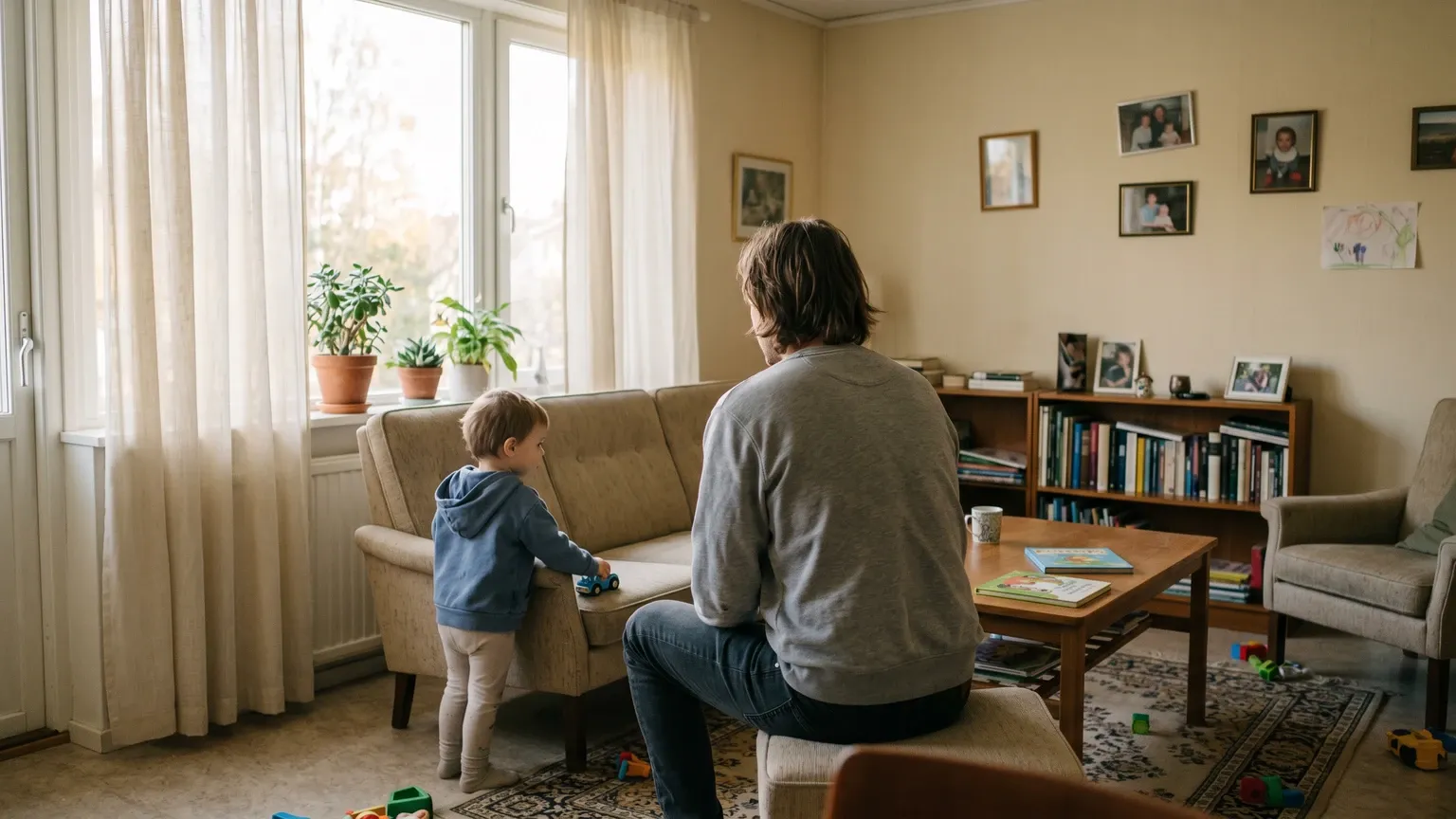
The part that still guts me is what it took from my kids. I’ve got three — a five-year-old son and two little girls, one and a half and four months. My son would want to keep playing and I’d be the dad who had to sit down. I ran out of gas fast, and there’s a specific shame in not keeping up with a five-year-old when you’re 32 and supposedly fit.
Then my son started getting some of the same things. That’s when “I’m just run down” stopped being a story I could tell myself.
For a long time I blamed everything but the house. Three kids under five. Homestead work. Not enough sleep. I treated it as a me problem and tried to fix it with more water, more exercise, better sleep. It never once occurred to me to look at the rooms we lived in.
The moment it clicked
There wasn’t a dramatic moment. I happened to hear someone on a podcast describe this exact pile of symptoms — the brain fog, the histamine, the aching joints, the breathlessness — and trace it back to mold in their home. It was the first time anyone connected the dots the way they actually fit for me. And once I knew what to look for, the past rearranged itself.
The house I grew up in almost certainly had it. A close relative’s home we still visit regularly — I can smell it the second I walk in now, and on the drive home I smell it on our clothes and in my kids’ hair. That’s the part I can’t unlearn: I’ve developed a sensitivity so sharp I feel it in my lungs the moment I step into a house with mold, before I’ve even registered the smell. My body knows before I do. If you’ve ever noticed a persistent musty smell in a house, that’s the same signal — it’s one of the most reliable signs of hidden mold.
What I wish someone had told me
Here’s what I wish someone had told me years sooner, and why this site exists:
Mold doesn’t always announce itself. It isn’t always a black patch on a wall. It can be behind drywall, inside an AC system, under a slab — in a house that looks and even smells “fine” to everyone used to it — quietly in the air you breathe every day. And the symptoms get blamed on everything else: you’re tired, you’re stressed, you’re getting older, it’s just allergies, you’ve got little kids. So people live in it for years, like my family did, treating the symptoms instead of the source.
I’ll be straight about the science. The link between damp buildings and severe conditions — worsened asthma, hypersensitivity pneumonitis, allergic bronchopulmonary aspergillosis (ABPA), fungal sinusitis, and in immune-compromised people, invasive aspergillosis — is well established. The CDC, EPA, IOM 2004 review, and WHO 2009 guidance all confirm the serious end of that list. The wider cluster — brain fog, joint pain, histamine reactions, hair loss — is reported by a lot of patients and by credentialed clinicians treating them, but sits in a contested evidence tier. If you want the full picture on where mainstream medicine and the CIRS-practitioner community actually agree and disagree, I wrote a longer honest guide on mold illness that walks through both sides. I’m not a doctor, and none of this is medical advice. I can only tell you what happened to my family, and that we’re nowhere near the only ones.
What I’m sure of: if you or your kids have symptoms nobody can explain, it’s worth ruling out your own home — not with panic, and not by spending a fortune on tests you probably don’t need. Just by looking honestly at where moisture could be hiding. If you want to understand why Phoenix homes specifically are more vulnerable than people assume, the desert mold paradox guide lays out the real data.
If this sounds like your family
I’m not a remediation company and I’m not selling fear. I’m a dad who lost a chunk of his thirties — and watched his son start down the same road — because of something invisible, and decided to research it and write it down so the next family figures it out faster than mine did.
If this story sounds familiar, start with the free mold risk self-check — it takes a few minutes and walks through the most common moisture sources by room. No test kit needed, no contractor required. It’s just the honest questions that help you figure out whether your home is worth looking at more closely.
If you find something that needs professional attention, our mold remediation page explains the full process and what to expect — from identifying the moisture source to getting the affected materials properly removed. That’s the actual fix: not air fresheners or supplements, but eliminating the source.
Sources: CDC — About Mold; EPA — A Brief Guide to Mold, Moisture, and Your Home; Institute of Medicine, Damp Indoor Spaces and Health (2004); WHO, Guidelines for Indoor Air Quality: Dampness and Mould (2009); ATS/JRS/ALAT, 2020 Clinical Practice Guideline on Hypersensitivity Pneumonitis. The full evidence breakdown across mainstream-recognized severe conditions and the contested CIRS debate lives in our honest guide to mold illness. The wider cluster of symptoms described in this article (brain fog, joint pain, histamine reactions) is personal experience situated in a contested evidence tier, not settled consensus.