Who Is Most at Risk From Mold?

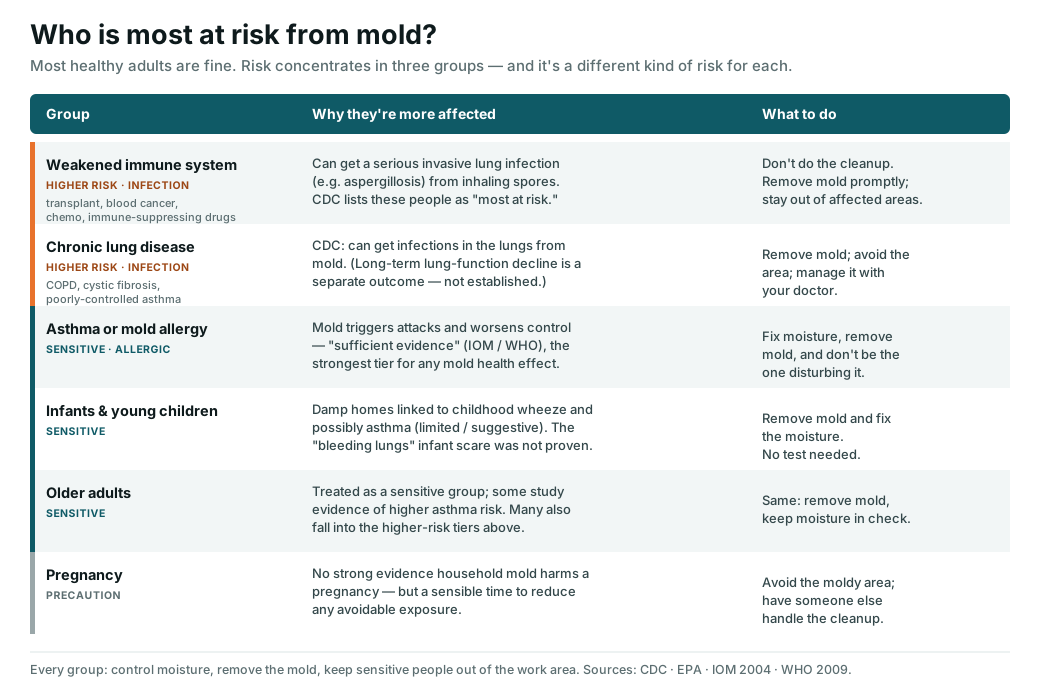
Most healthy adults will have only minor symptoms, or none, from typical household mold. The people who are genuinely more at risk are those with weakened immune systems and chronic lung disease — who can get actual lung infections from mold — followed by people with asthma or mold allergies, and the groups treated as sensitive: infants and young children, and older adults. Pregnancy is a reasonable-precaution case, not a documented-harm one. The action is the same for everyone: fix the moisture and remove the mold.
The important thing this page does is separate two very different kinds of risk that get blurred together. For most people mold is an allergen — it can make you sneeze, cough, or flare an existing condition. For a small group it can be an infection risk — mold can actually grow in the lungs. Those aren’t the same danger, and mixing them up either scares people who don’t need to worry or understates the risk for people who do.
Weakened immune systems — the highest risk
This is the one group for whom mold can cause a serious, invasive infection rather than an allergic reaction.
The CDC is explicit: immune-compromised people and people with chronic lung disease may get infections in their lungs from mold. The specific infection is usually aspergillosis, and the CDC states that people with weakened immune systems or lung diseases are most at risk of it, caused by breathing in spores of Aspergillus, a common mold. Most of these invasive infections, the CDC notes, are caused by breathing in (inhaling) mold spores in the air.
Who counts as immunocompromised here? The CDC’s list of conditions that raise the risk of an invasive mold infection includes organ, tissue, or stem-cell transplants; blood cancers such as leukemia and lymphoma; cancer treatment (chemotherapy); and immune-suppressing medications like corticosteroids and biologics. People with advanced HIV/AIDS are also in this higher-risk group.
For a household with someone in this category, mold isn’t a someday-maybe-fix-it problem. It should be removed promptly, and — critically — the immunocompromised person should not be the one doing the cleanup or be in the home while mold is being disturbed. If you’re not sure how much mold is present or where it’s coming from, a professional mold inspection can find and scope it without the at-risk person having to go near it.
Chronic lung disease
People with COPD, cystic fibrosis, or poorly-controlled asthma share the same infection risk flagged above — the CDC groups chronic lung disease alongside immune compromise as conditions where mold can cause lung infections. Damaged or scarred airways give mold a foothold it wouldn’t get in a healthy lung.
There are several distinct mainstream conditions worth naming here, because a doctor being dismissive about “mold illness” as a general concept may still take one of these very seriously if you ask for it by name. Allergic bronchopulmonary aspergillosis (ABPA) is an immune-hypersensitivity reaction to Aspergillus in the airways; it affects roughly 2.5% of asthma patients and is a leading cause of severe, difficult-to-control asthma. Hypersensitivity pneumonitis (HP) — sometimes called farmer’s lung, humidifier lung, or hot tub lung depending on the source — is an immune reaction in the lung tissue itself, and its chronic fibrotic form carries a real mortality risk. Chronic pulmonary aspergillosis and aspergilloma are slower-progressing infections that mainstream medicine has been treating and studying for decades. Our longer honest picture on mold illness walks through these and the mortality data behind each.
This is also the right place to correct one of the most common overstatements about mold and the lungs. Mold worsening asthma symptoms is well established. But a durable, long-term decline in lung function is a different outcome, and the evidence for it is weak. The IOM’s 2004 review found inadequate or insufficient evidence to determine whether an association exists between exposure to a damp indoor environment and airflow obstruction in otherwise healthy people. The WHO agreed, finding the evidence for effects on lung function, allergy or atopy and “asthma, ever” is inadequate or insufficient. And a large longitudinal European study (ECRHS) reported that no significant relationship was found between reported or observed mould exposure and lung function decline.
So the honest line for this group is: mold can trigger infections and worsen day-to-day breathing, which is reason enough to remove it. But it has not been shown to cause permanent lung-function loss, and no one should be frightened into believing it does.
People with asthma or mold allergies
For people with asthma, the mold link is real and sits at the top of the evidence scale. The IOM found sufficient evidence of an association between the presence of mold in a damp indoor environment and asthma symptoms in sensitized asthmatic people, and the EPA states that molds can also cause asthma attacks in people with asthma who are allergic to mold. Mold allergy without asthma still means stronger reactions — congestion, itchy eyes, sneezing — than the general population.
Because the “how and why” of mold and asthma is a topic on its own — the mechanism, which asthmatics are most affected, and why the musty smell isn’t the culprit — it’s covered in a dedicated companion guide on mold and asthma. The short version for this page: if you have asthma, mold can worsen it, so keep it out of your home and don’t be the one disturbing it during cleanup.
Infants and young children
Children are commonly assumed to be a high-risk group, and there is a real but modest signal here — plus one widely repeated claim that needs correcting.
The genuine evidence: the IOM found limited or suggestive evidence of an association between exposure to a damp indoor environment and lower respiratory illness in otherwise-healthy children, and the CDC notes that some studies have suggested a potential link of early mold exposure to development of asthma in some children, particularly among children who may be genetically susceptible. “Limited or suggestive” and “potential link” are honest hedges — this is a reason to remove mold from a home with kids, not a reason to panic.
The claim that needs correcting is the scary one: that “black mold” causes bleeding in infants’ lungs. This traces to a cluster of infant pulmonary-hemorrhage cases investigated in Cleveland in the 1990s. After review, the CDC concluded that a possible association between acute idiopathic pulmonary hemorrhage among infants and Stachybotrys chartarum has not been proven. The original studies had significant methodological problems, and the alarming headline outran the science. Damp housing is still worth fixing for a child’s respiratory health — but not because of a debunked bleeding-lungs claim. The full story of the black-mold panic is covered in the is black mold dangerous guide.
Older adults
Older adults are routinely included among “sensitive” groups, and that framing is reasonable — but the evidence is softer than for the groups above, so it’s worth being precise.
There isn’t a CDC or IOM statement singling out age itself as a mold risk factor. What exists is study-level evidence — for example, a 2019 study of older adults in social housing found that exposure to mouldy odour increased the risk of asthma in adults over the age of 50 years — plus the WHO’s general point that indoor air pollution affects population groups that are particularly vulnerable due to their health status or age. Just as important, many older adults also fall into the truly higher-risk buckets above — chronic lung disease, or immune-suppressing conditions and medications — which is often where the real risk comes from. If you’re helping an older parent, the practical move is the same as for anyone else: get the mold removed and keep the moisture in check. If they also have a lung or immune condition, treat it with the urgency of those sections.
Pregnancy
Here honesty means resisting the urge to overstate. There is no strong evidence that ordinary household mold harms a pregnancy, and no CDC or EPA statement links indoor mold exposure to birth outcomes. The frightening claims that circulate — about miscarriage or birth defects — draw on studies of ingested dietary mold toxins in food-insecure regions, which do not transfer to a damp bathroom in a Phoenix home.
That said, pregnancy is a sensible time to reduce any avoidable exposure. The reasonable, non-alarmist approach: avoid the moldy area, fix the moisture source, and have someone else handle the cleanup — the same advice that protects everyone, applied with a little extra caution.
What every at-risk group should do
The reassuring part is that the response is the same regardless of which group you’re in. The only difference is how urgently, and who does the work.
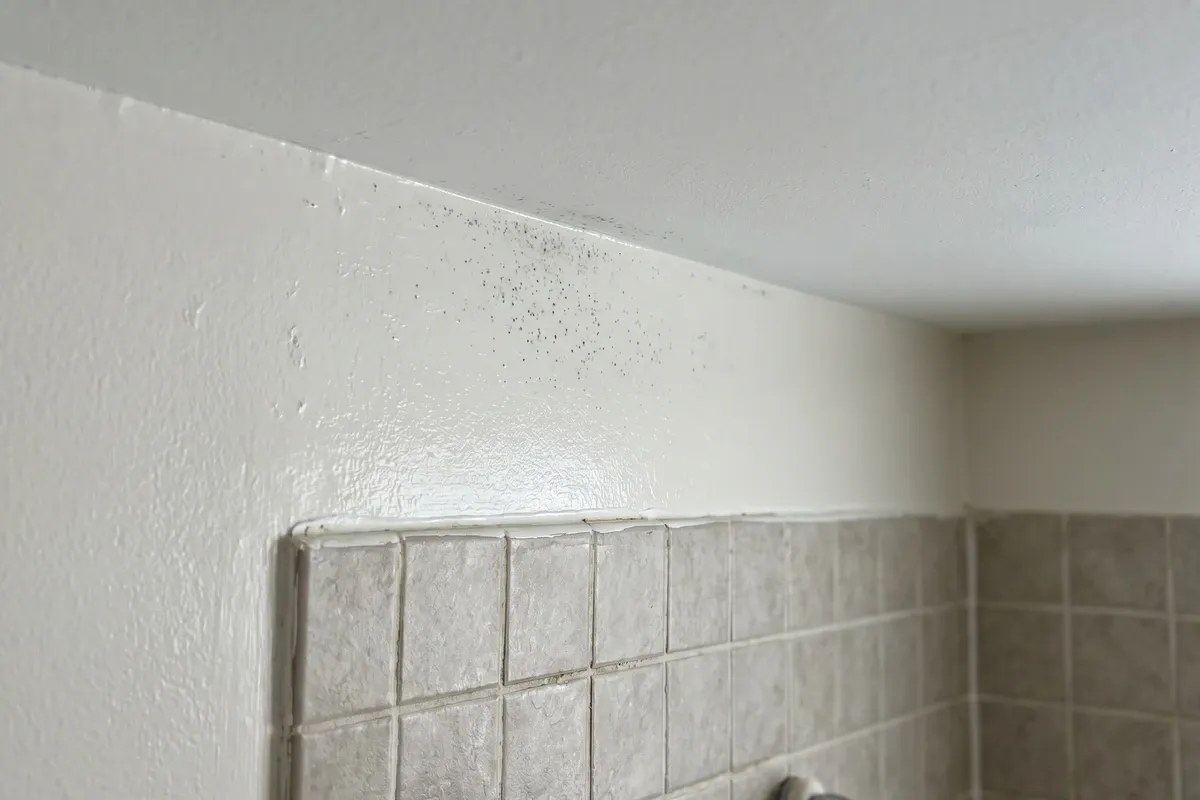
The EPA’s foundation is moisture: the key to mold control is moisture control. Find and fix the water source, then remove the mold — you don’t need to identify the species or run a test to do it. For sensitive and high-risk individuals, the one addition is simple: don’t do the cleanup yourself, and stay out of the area while mold is being disturbed, since that’s when spores go airborne. Mold irritates both mold-allergic and non-allergic people, so this is sound advice even outside the named groups.
If you or someone in your home has unexplained or worsening symptoms, that’s a conversation for a doctor — this guide is about the home, not a diagnosis. For a first-hand account of what living with a mold problem felt like, the what mold sickness feels like guide covers one family’s experience.
The Phoenix angle: where at-risk residents meet Valley mold
Phoenix metro skews toward two at-risk groups at once — a large retiree and snowbird population (older adults, often with lung or heart conditions) and young families. The local twist is the snowbird home: it sits closed-up and vacant through the hot months while an AC condensate line, a monsoon roof leak, or a slow slab leak quietly feeds mold, so an older owner often returns to a problem that grew for months while nobody was home. For a household with a genuinely at-risk member, the safe move on returning to a home that’s been shut up — or after any monsoon-season water event — is to get it checked and, if mold is found, removed before the sensitive person spends time there. A mold inspection or, for a confirmed problem, full mold removal in Phoenix handles that without the at-risk person going near it.
Sources
- Centers for Disease Control and Prevention. “About Mold”: cdc.gov/mold-health/about/index.html
- Centers for Disease Control and Prevention. “Aspergillosis Basics”: cdc.gov/aspergillosis/about/index.html
- Centers for Disease Control and Prevention. “About Invasive Mold Infections”: cdc.gov/fungal/about/about-invasive-mold-infections.html
- Centers for Disease Control and Prevention. “Facts About Stachybotrys chartarum”: cdc.gov/mold-health/data-research/facts-stats/index.html
- Institute of Medicine (US) Committee on Damp Indoor Spaces and Health. Damp Indoor Spaces and Health. National Academies Press, 2004: ncbi.nlm.nih.gov/books/NBK215639
- World Health Organization. WHO Guidelines for Indoor Air Quality: Dampness and Mould, 2009: ncbi.nlm.nih.gov/books/NBK143940 · executive summary
- Norbäck D, et al. “Lung function decline in relation to mould and dampness in the home: ECRHS II.” Thorax, 2011: pmc.ncbi.nlm.nih.gov/articles/PMC9489198
- Caillaud D, et al. “Exposure to Indoor Mouldy Odour Increases the Risk of Asthma in Older Adults Living in Social Housing.” Int. J. Environ. Res. Public Health, 2019: pmc.ncbi.nlm.nih.gov/articles/PMC6679100
- U.S. Environmental Protection Agency. “Mold and Health”: epa.gov/mold/mold-and-health