Mold and Eczema: What the Evidence Shows
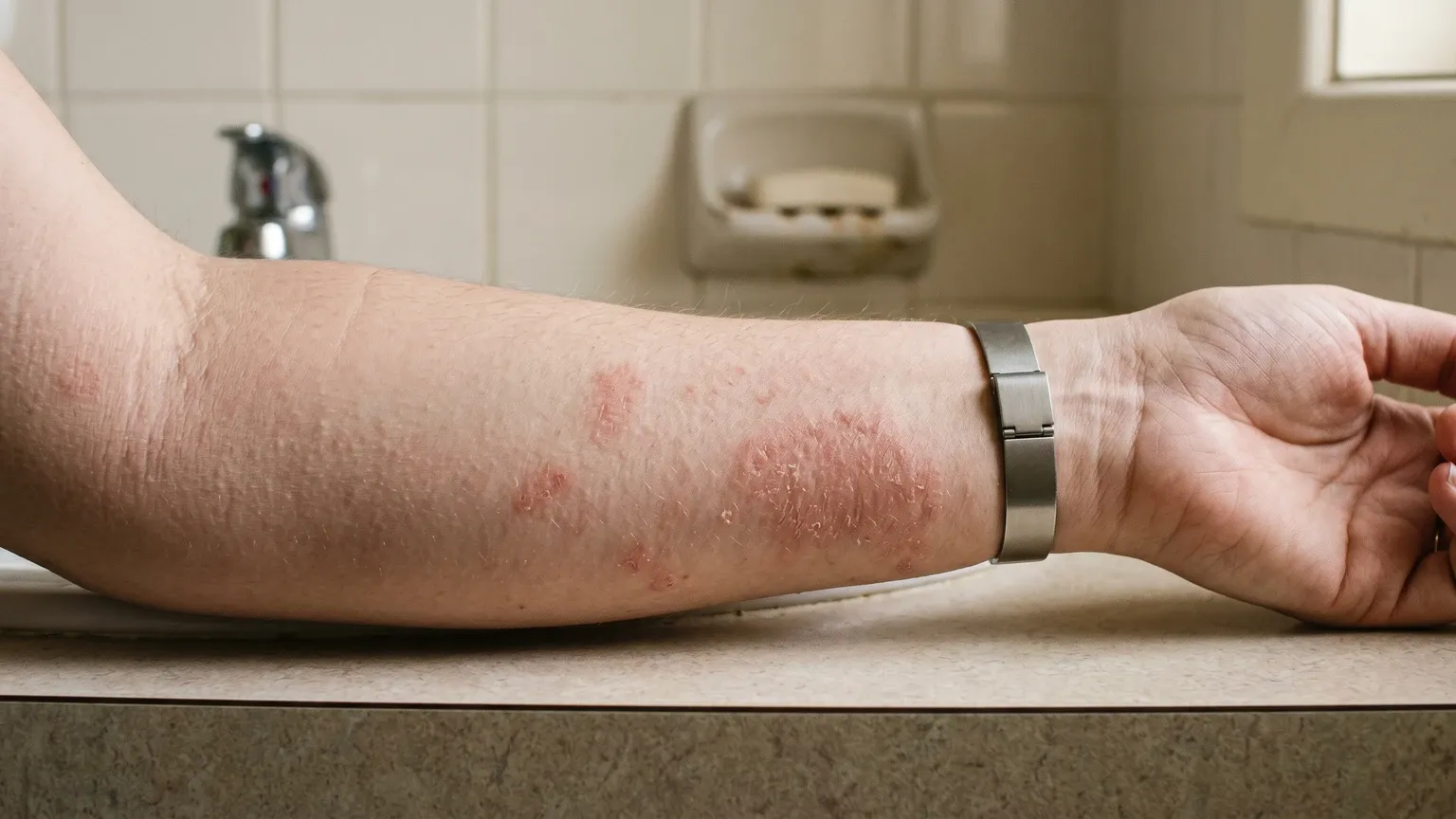
Mold exposure does not directly cause eczema in most people, but damp indoor environments are associated with atopic dermatitis flares in susceptible individuals, and direct contact with mold can produce contact dermatitis. Candace Owens reported “head-to-toe overnight eczema — I had never had eczema” after mold from an HVAC leak, fitting a pattern of acute skin reactions documented in mold-exposed patients.
Two different skin reactions, two different mechanisms
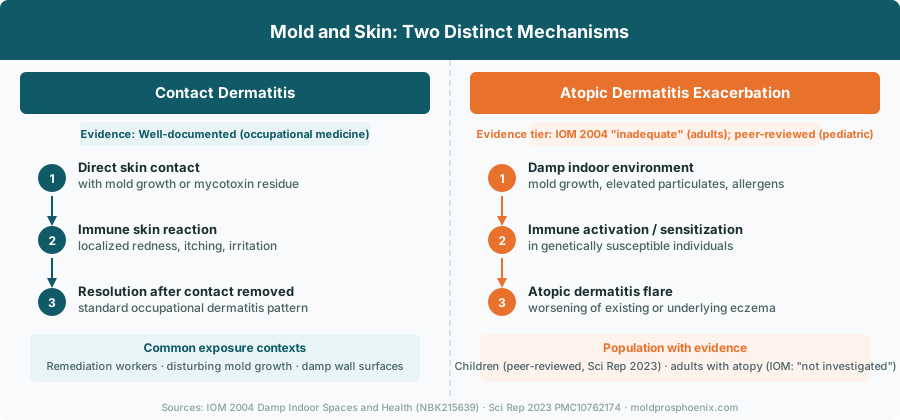
Before getting into the evidence, it helps to separate two distinct things: contact dermatitis from direct mold exposure, and atopic dermatitis exacerbation in damp environments. They involve different immune pathways, different evidence bases, and different practical implications.
Mechanism one: contact dermatitis from direct mold contact
When skin comes into direct contact with heavy mold growth — while cleaning, disturbing water-damaged materials, or handling moldy surfaces — the mold acts as an irritant or allergen. The result is contact dermatitis: localized redness, itching, and irritation at the contact site.
This is standard occupational medicine. Mold remediation workers are a recognized at-risk group for occupational contact dermatitis. Mainstream dermatology treats environmental molds as a class of allergens that can trigger skin reactions in sensitized individuals — the mechanism is the same as any other airborne or contact allergen.
The practical point: if you handle moldy drywall or water-damaged materials without gloves and develop a rash where contact occurred, that is contact dermatitis. It is localized, follows the contact pattern, and resolves when contact stops. Prevention is straightforward: gloves and an N95 mask any time mold is visible.
Mechanism two: atopic dermatitis exacerbation in damp indoor environments
This is where the evidence is more nuanced — and where honest YMYL framing matters.
The claim is not that mold directly causes eczema. The claim is that living in a home with chronic moisture and mold growth is associated with worse atopic dermatitis outcomes in people who are already susceptible.
What the peer-reviewed literature shows:
A 2023 study published in Scientific Reports (PMC10762174) followed children in Korea and found that exposure to visible mold or dampness in the home was significantly associated with increased risk of atopic dermatitis, and that moisture at home was positively associated with AD severity. This is peer-reviewed epidemiological evidence for the association — in a pediatric population.
The CDC/NIOSH specifically lists eczema among the health conditions reported by people living or working in damp buildings. From the CDC/NIOSH mold health-problems page, people in damp environments report “respiratory symptoms and infections, developing or worsening asthma, hypersensitivity pneumonitis, allergic rhinitis or hay fever, and eczema.” That is federal-agency acknowledgment at the level of documented reporting, not a controlled-trial proof of causation.
The honest IOM position on adults:
The Institute of Medicine’s 2004 report Damp Indoor Spaces and Health is the most rigorous U.S. review of indoor mold health effects. It did not specifically investigate atopic dermatitis in adult populations as a separate endpoint. The IOM uses “inadequate or insufficient evidence” to indicate that a research base is too thin to draw a population-level conclusion — not that the association has been studied and found absent.
The IOM’s own tier language on inadequate evidence is that it means “inadequate or insufficient evidence to determine whether an association exists” — not “sufficient evidence of no association.” For adult eczema specifically, the honest position is: research gap, not refutation.
What patients actually report
Aggregated accounts from people with documented mold exposures show a recurring skin pattern: new-onset or dramatically worsened eczema, rashes, hives, and itching that began in proximity to a water event, and that improved after leaving the environment.
The most publicly documented individual case is Candace Owens.
Candace Owens — the Stamford HVAC case
Owens has described in detail a severe illness she attributes to mold from an HVAC leak in her Stamford, Connecticut apartment. On the Shawn Ryan Show (Episode 318), she used these words:
“I had head-to-toe overnight eczema. I had never had eczema. Athlete’s foot. My eyes were red and just kept pussing.”
Her full reported symptom cluster included head-to-toe eczema with overnight onset, hair loss and facial patches, athlete’s foot (her first), red and discharging eyes, two asthma attacks requiring hospital visits, and severe brain fog she described as “the most intense brain fog.” She later filed a lawsuit against her Stamford landlord over the mold; the case did not succeed, with reporting on the outcome centered on the admissibility of medical-expert testimony.
Her account is worth taking seriously as a documented case study because the symptom cluster — skin, eyes, respiratory, hair, cognitive — tracks what a subset of practitioners treating mold-related illness describe in their most severely affected patients. Whether that cluster reflects a specific immune susceptibility, the severity of her particular exposure, or another factor is not settled. The mainstream IOM and WHO framework says the evidence for this kind of multi-system reaction to residential mold is inadequate for a population-level conclusion. That does not make her account fabricated; it means the science has not yet characterized how common this pattern is or what makes someone susceptible to it.
The broader pattern in clinical practice
Clinicians who treat what they call Chronic Inflammatory Response Syndrome (CIRS) from water-damaged buildings consistently document skin manifestations — eczema, rashes, urticaria, skin sensitivity — as part of a multi-system picture. Ritchie Shoemaker, MD, who formalized the CIRS framework, includes skin sensitivity among his documented 37-symptom diagnostic cluster. The Vice journalist Shayla Love, in a 2019 long-form on mold illness, documented a Finnish patient — a general practitioner named Mikko — who reported eczema as part of his symptom set after home mold exposure.
Important context: UCLA Health has explicitly stated that CIRS is “not considered an established medical diagnosis” by mainstream medicine. The practitioner community’s clinical observations and the mainstream evidentiary threshold are not currently aligned. These accounts should be read as clinical observations from a specific school of medicine, not as mainstream consensus.
What Phoenix homeowners specifically face
For Phoenix-area homeowners, the mold-skin connection has some local angles worth knowing.
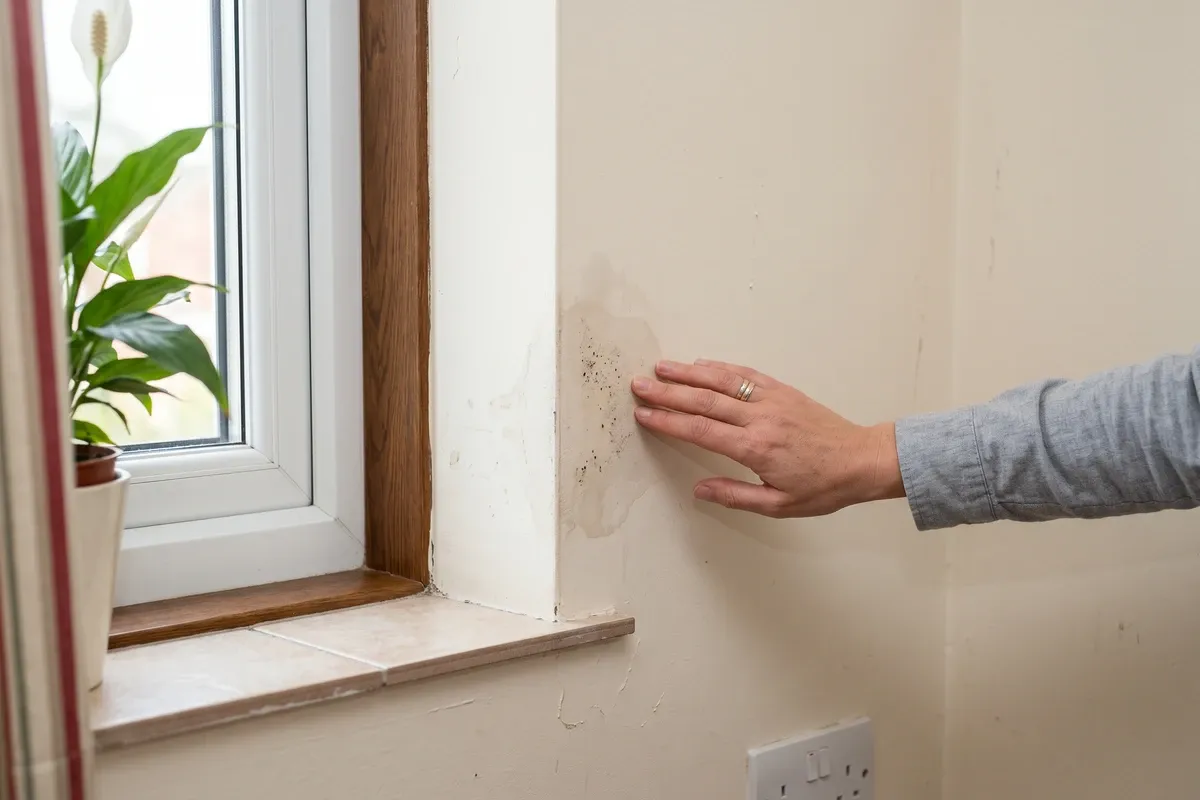
Slab-leak wall moisture and adult-onset skin symptoms. Phoenix has a high concentration of older homes with copper or galvanized plumbing under concrete slabs. A slow slab leak — undetected for weeks — wicks moisture into drywall and baseboards from below, creating chronic hidden mold growth behind finished surfaces. People who develop new or worsening eczema or skin rashes in an older Phoenix home without any obvious cause should consider whether a slab leak is feeding hidden mold behind their walls. Our mold removal guide covers what a professional assessment of that pattern involves.
Evaporative cooler humidity and immune activation. Swamp coolers, common in older Phoenix homes, add moisture to indoor air on purpose. During monsoon season — when outdoor humidity is already elevated — a swamp cooler running on a humid day can push indoor relative humidity high enough to support mold growth on surfaces it normally wouldn’t reach. People with atopy are generally more reactive to elevated indoor biological particulates; swamp cooler season and atopic dermatitis worsening can overlap in Phoenix for reasons beyond the typical. See our swamp cooler mold guide for specific maintenance points.
Post-monsoon mold and fall skin symptom timing. Phoenix monsoon season runs roughly June 15 through September 30. Roof leaks and AC condensate overflow during that window seed mold growth in attics and walls. If you notice skin symptoms worsening in October or November, a water event from earlier in the monsoon season is a plausible upstream cause to investigate. The mold takes weeks to establish and become a significant airborne presence — timing can be off by 4 to 8 weeks from the original water event.
Pool and irrigation overspray on stucco. Phoenix stucco homes are vulnerable to moisture intrusion where irrigation systems or pool splash repeatedly wet the stucco at the base of exterior walls. Stucco that stays chronically damp supports mold growth inside the wall cavity — a less commonly discussed driver that produces the same hidden-mold-plus-occupant-symptoms picture as a slab leak.
When to see a doctor and what to ask
If you suspect mold is contributing to a skin problem, two specialist types are most relevant.
Dermatologist. Can distinguish between atopic dermatitis, contact dermatitis, and urticaria — each has different causes and treatment approaches. Before the appointment: note when symptoms started, whether they correlate with time at home versus away, whether onset coincided with a water event or a move, and which body areas are affected.
Allergist or immunologist. Can do patch testing for contact allergens including mold. Can test for sensitization to specific fungal species. Can evaluate IgE-mediated mechanisms. Mention any environmental exposures and your home’s water history.
What to specifically ask both providers: Give them an explicit environmental exposure history. Tell them about any water damage, visible mold, or musty odor, and whether symptoms improve when you travel or stay elsewhere. Ask specifically: “Could an environmental mold exposure be contributing to this?” That question often doesn’t come up unless you raise it.
What actually helps
Based on the evidence, the sequence that makes sense is:
Find and fix the moisture source first. Any skin treatment is incomplete while the environmental trigger remains active. The EPA’s foundational principle — that mold remediation without fixing the moisture source means the mold returns — applies to the symptom-management question too. Escalating topical treatments while a damp, moldy home continues to trigger immune activation is managing a system with the root cause still running.
Professional mold remediation before escalating skin treatment. If a home inspection finds active mold growth, addressing that environmental source before escalating to stronger immunomodulating medications gives a cleaner baseline. This is not a substitute for medical care — it is removing a confounding variable before adding more variables.
Follow your dermatologist’s treatment plan. Once the environmental exposure question has been addressed, standard atopic dermatitis treatment (moisturizers, topical corticosteroids, biologics where indicated) should be directed by your physician. The goal is both, in the right order: fix the environment, then assess what skin treatment is actually needed.
Start with a free inspection. For Phoenix homeowners, the fastest way to know whether mold is present and where it is coming from is a professional moisture assessment. We handle mold inspection and remediation across the Valley — AC condensate, slab-leak, and monsoon-intrusion patterns. Fill out the form below for a no-obligation quote and start with what the evidence supports: finding and fixing the moisture source.
This guide is an informational resource only and is not medical advice. If you have skin symptoms, work with a licensed dermatologist or allergist for diagnosis and treatment. For related guides, see our mold and health effects overview and mold inspection guide.