How much does a mold inspection cost in Phoenix?
A visual mold inspection in Phoenix typically runs $200–$450. Add lab testing of air or surface samples and it rises to about $400–$850; a post-remediation clearance test runs $250–$500. But here's what most cost pages won't tell you: if you can see and smell the mold and know the water source, you often don't need to pay for a test at all — you can go straight to removal.
Get my free inspection quotePhoenix mold inspection costs at a glance
These are typical Phoenix-area ranges for 2026. They're estimates to set expectations — the exact figure depends on the size of the home, how many samples a lab needs, and whether the inspector has to chase a hidden moisture source. Our own 30-company Phoenix pricing audit found inspection-only firms publish $200–$850 by scope; the visual-versus-lab breakdown below follows the national cost guides.
| Service | Typical Phoenix range | What it includes |
|---|---|---|
| Visual mold inspection | $200–$450 | Walk-through, moisture-meter readings, sometimes thermal imaging; finds the mold and the water feeding it |
| Inspection + lab testing (air/surface samples) | $400–$850 | The visual exam plus lab analysis of air or surface samples to confirm and identify mold |
| Post-remediation clearance test | $250–$500 | Independent check that a finished remediation job passed before rebuild |
Inspection is a separate cost on top of any removal work, but some firms credit the fee toward remediation if you hire them. For the removal side of the bill, see our full Phoenix mold removal cost breakdown or run the numbers on your specific job in the mold cost calculator.
Do you actually need to pay for a test?
Most cost pages quietly assume you'll buy a test. Often you shouldn't. The CDC and EPA are clear on this: if mold is visible, you do not need to identify the species before cleaning it up, because the removal process is the same regardless of what type it is. The CDC does not recommend routine mold testing, and the EPA states that in most cases, if visible mold growth is present, sampling is unnecessary. Routine pre-cleanup air sampling isn't required either.
In plain terms: if you can see the mold, smell it, and know where the water is coming from, you can usually skip the paid test and go straight to fixing the leak and removing the mold. A test in that situation tells you something you already know, and it doesn't change a single thing you'd do next.
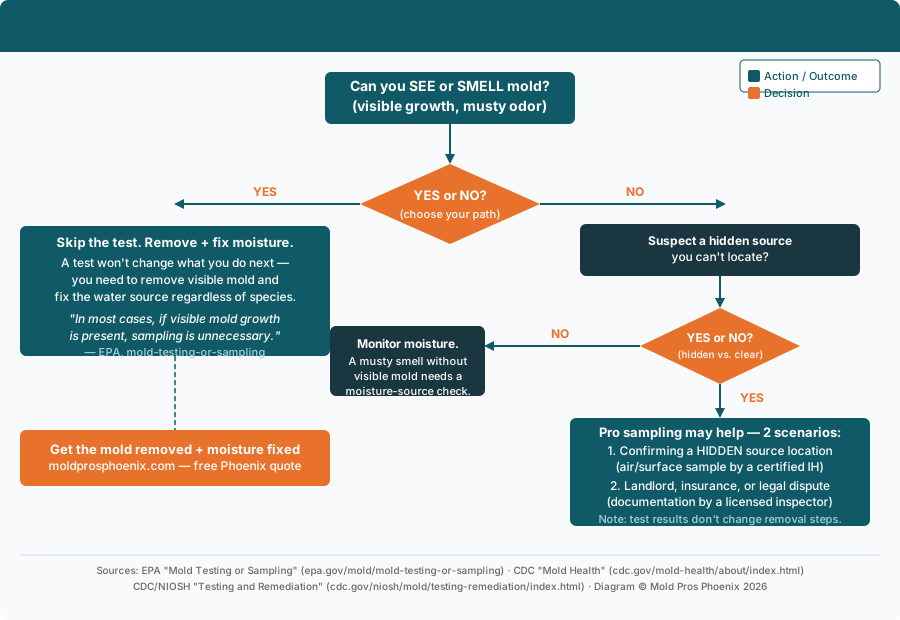
When a test is worth paying for
There are real cases where the lab fee buys you something the naked eye can't. Pay for testing when:
- You smell mold but can't find it. A musty smell with no visible source usually means it's behind a wall, under flooring, or in the HVAC. Air sampling plus moisture mapping can narrow down a hidden source so you're not opening walls at random.
- A home sale or lender requires it. Buyers, sellers, and some loan programs ask for documented testing as part of the transaction. Here a test isn't optional; it's a paperwork requirement.
- You need post-remediation clearance. A clearance test (about $250–$500) confirms a finished job passed before the drywall goes back up. Contracts and landlords often require it.
- You're in a landlord or health dispute. If you need documentation for a tenant complaint, an insurance claim, or a legal matter, a professional report from an independent firm carries weight that a phone photo doesn't.

Visual vs. lab testing vs. clearance — what each one is
- Visual inspection ($200–$450). The core service: an inspector walks the home, takes moisture-meter readings, sometimes uses thermal imaging, and traces the water source. No lab involved. This alone answers most homeowners' questions.
- Air or surface sample lab testing ($400–$850 with the inspection). Samples are collected and sent to a lab to confirm mold is present and identify the type. Cost climbs with the number of samples taken. Useful for a hidden source or for documentation — not for deciding whether to remove visible mold.
- Clearance testing ($250–$500). Done after remediation to verify the work passed. It's the bookend to a job, not the opening step.
Are DIY mold test kits worth it?
Honestly, not for most people. A retail kit can confirm spores are in the air, but spores are present in nearly every home, so a "positive" tells you almost nothing. A DIY kit can't reliably identify the species, can't tell you a quantity that matters, and can't give you an actionable threshold, because no federal agency has set a "safe" mold level to compare against. The EPA's own guidance is that sampling should be done by professionals experienced in designing protocols and interpreting results, not a kit you mail off yourself. If you can already see the mold, a kit adds cost without adding an answer. Our guide on whether black mold is dangerous walks through why a paid test rarely changes what you do next.
The Phoenix-specific catch: the inspection finds the water, not just the mold
The mold you can see is usually the easy part. In the Valley, the real value of an inspection is finding the hidden water source behind it — a clogged AC condensate line dripping into a ceiling, a slab leak under an older central-Phoenix home, or monsoon roof intrusion that soaked attic insulation. A good moisture-mapping inspection traces that source so the fix actually holds. Skip it, and the mold comes back no matter how well it was cleaned. When you're ready, a free Phoenix mold inspection is the no-obligation way to find out what's really going on.
Not sure if you need a test? Just ask.
Ranges are useful, but your home is specific. Tell us what you're seeing and we'll give you a free, no-obligation answer — including whether you even need to pay for testing.
Phoenix mold inspection cost questions
How much does a mold inspection cost in Phoenix?
A visual mold inspection in the Phoenix area typically runs $200–$450. Adding lab testing of air or surface samples raises it to roughly $400–$850, depending on how many samples are taken. A post-remediation clearance test runs $250–$500. Our 30-company Phoenix audit found inspection-only firms publish $200–$850 by scope. Some companies credit the inspection fee toward remediation if you hire them.
Do I actually need to pay for a mold test?
Often, no. If you can see and smell the mold and know the water source, the EPA says you do not need to identify the species before cleanup, and the CDC does not recommend routine pre-cleanup air sampling — you can usually go straight to removal. A paid test earns its cost when you smell mold but cannot find it, when a sale or lender requires it, for post-remediation clearance, or when you need documentation for a landlord or health dispute.
What is the difference between an inspection and a mold test?
An inspection is the visual-plus-moisture assessment — an inspector checks problem areas, uses a moisture meter and sometimes thermal imaging to find hidden damp, and looks for the water source. A test is laboratory analysis of air or surface samples that confirms whether mold is present and what type. You can have an inspection without testing; testing is the optional lab add-on.
Are at-home mold test kits worth it?
Their usefulness is limited. A DIY kit can confirm spores are present — which is true in almost any home — but it cannot reliably identify the species, tell you a meaningful quantity, or give you an actionable threshold, because no federal standard for "safe" mold levels exists. The EPA advises that sampling be done by professionals experienced in designing protocols and interpreting results, not a mail-off kit.
What is a clearance test and when do I need one?
A clearance (post-remediation) test verifies that a remediation job actually worked before the walls go back up. It runs $250–$500 in the Phoenix area. You need it when a contract, lender, or landlord requires sign-off, or when you want independent confirmation the work is done. For a small DIY cleanup you fixed yourself, it is usually optional.