Does Bleach Kill Mold? The Honest, Sourced Answer
Bleach kills surface mold on hard, non-porous materials — glazed tile faces, glass, sealed tubs. On porous materials like drywall, wood, grout, and insulation it largely fails: the water soaks in and can feed the mold roots below while the chlorine stays on top. The EPA does not recommend bleach as a routine mold-cleanup practice. Knowing which surface you have is the difference between a real fix and a cosmetic one.
Why surface type determines whether bleach works
The chemistry is straightforward once you understand how bleach is made.
Household bleach is a dilute solution of sodium hypochlorite in water — roughly 5–8% sodium hypochlorite, with the rest being water. When you spray it, the chlorine component does the disinfecting work. But chlorine and water behave differently on contact with a surface.
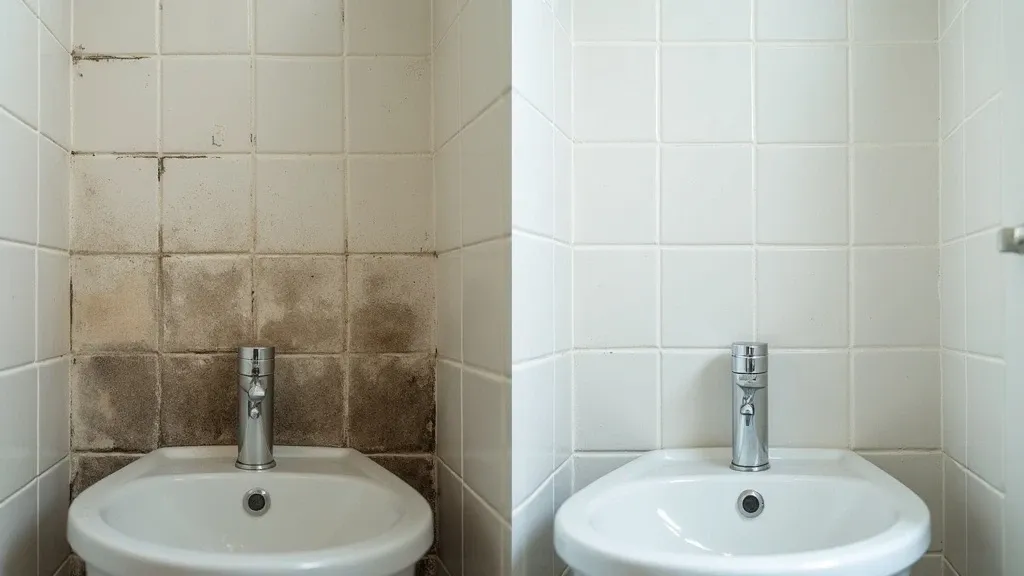
On a non-porous surface — glazed ceramic tile, glass, a sealed tub, chrome fixtures — neither the water nor the chlorine can penetrate. Both sit on the surface. The chlorine kills the surface mold it contacts. This is the case where bleach actually works.
On a porous surface — drywall, wood studs, drywall paper facing, grout, concrete block — the water is absorbed into the material. The chlorine, being larger and less mobile, stays mostly on the surface. So the chlorine contacts the visible surface mold, which may bleach white and look gone. But mold’s root structures — called hyphae — extend below the visible surface, into the material itself. Those hyphae are not reached by the chlorine that stayed on top. The water component that soaked in can actually feed regrowth.
The result: the mold looks gone. Within weeks, it comes back.
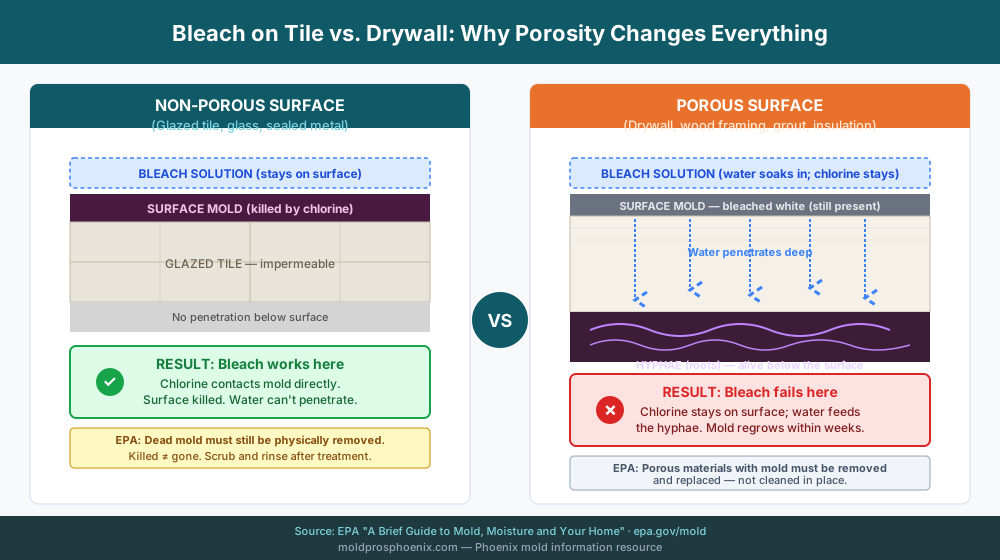
This is why the EPA’s A Brief Guide to Mold, Moisture and Your Home — the agency’s primary homeowner guidance document — states plainly that using a biocide like chlorine bleach is “not recommended as a routine practice during mold cleanup.” That guidance is not a blanket statement that bleach never works; it’s a recognition that porous building materials — the surfaces where most household mold actually grows — are exactly where bleach fails.
There is a related case where chemistry is not the limiting factor at all. The pink film in a shower is usually a bacterial biofilm rather than mold, and in the one survey we could find, the dominant organism shrugged off 5% benzalkonium chloride — a quaternary disinfectant, at a concentration far above anything sold for household use — so physically scrubbing the film off is what removes it. Bleach was not among the agents tested. See pink mold in the shower.
What the EPA and OSHA say about bleach and mold
The EPA’s position has been consistent. The relevant language in the Brief Guide to Mold, Moisture and Your Home reads:
“The use of a chemical or biocide that kills organisms such as mold (chlorine bleach, for example) is not recommended as a routine practice during mold cleanup. There may be instances, however, when professional judgment may indicate its use (for example, when immune-compromised individuals are present). In most cases, it is not possible or desirable to sterilize an area; a background level of mold spores will remain — these spores will not grow if the moisture problem has been resolved.”
This framing matters. The EPA is not telling you bleach is useless. It is telling you that fixing the moisture source — and physically removing contaminated materials — is the actual remediation, and that bleach does not substitute for either.
The EPA reinforces this on its dedicated page, Should I Use Bleach to Clean Up Mold?, which advises that bleach is generally not necessary and that the real fix is removing the mold and correcting the moisture problem. OSHA’s A Brief Guide to Mold in the Workplace reaches the same conclusion: a biocide such as chlorine bleach is “not recommended as a routine practice during mold remediation,” and the primary controls are eliminating moisture and physically removing contaminated materials.
The CDC’s position on mold (cdc.gov/mold) does not endorse bleach as a standard mold treatment. The CDC emphasizes the same principle: fix the water source, remove the mold.
Dead mold is not gone mold
Here is the piece that most “bleach kills mold” articles skip over, and it is the one the EPA emphasizes most clearly.
Even when bleach does kill surface mold — on tile, for example — killed mold is not gone mold. The EPA states directly that “dead mold may still cause allergic reactions in some people, so it is not enough to simply kill the mold, it must also be removed.” This applies to any cleanup method — biocide, heat, or UV. Killing it is not the same as removing it.
The practical implication: if bleach kills the mold on your shower tile, you still need to scrub the dead mold off and rinse the surface. The bleach alone is not a complete cleanup. You need the mechanical removal step regardless.
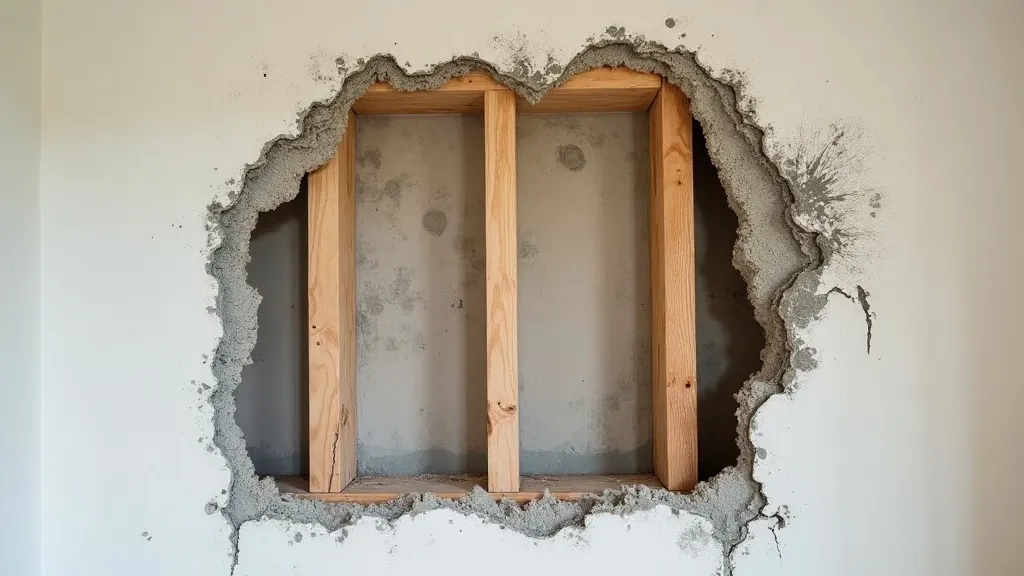
On porous materials — drywall, insulation, wood framing — the EPA’s guidance goes further. The standard is not to clean the surface but to physically remove and replace the contaminated material. No treatment of a porous surface that has mold growing into it is a substitute for removal.
Where bleach has a real but narrow role
To be accurate: bleach does have a legitimate, if limited, role in mold cleanup.
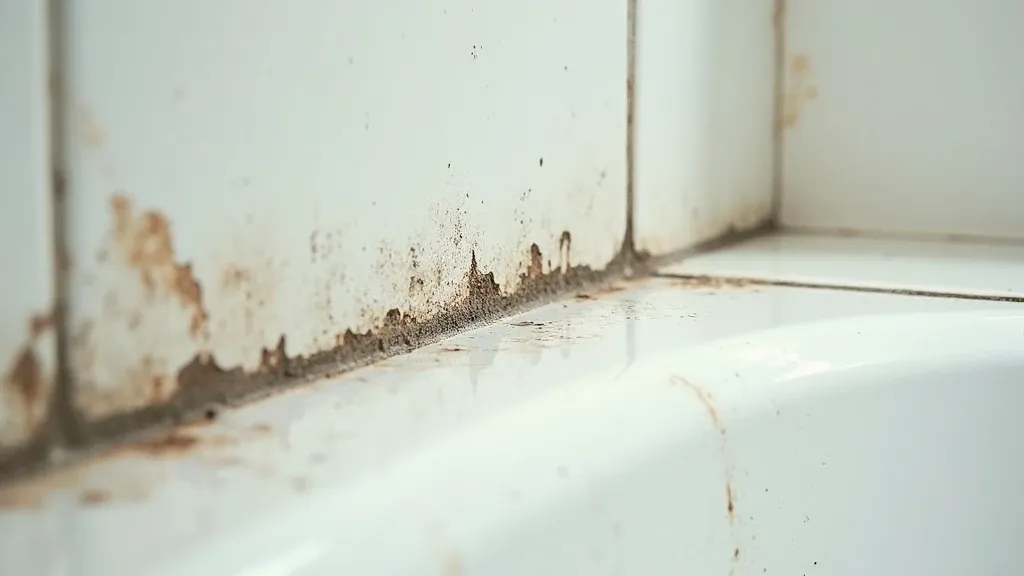
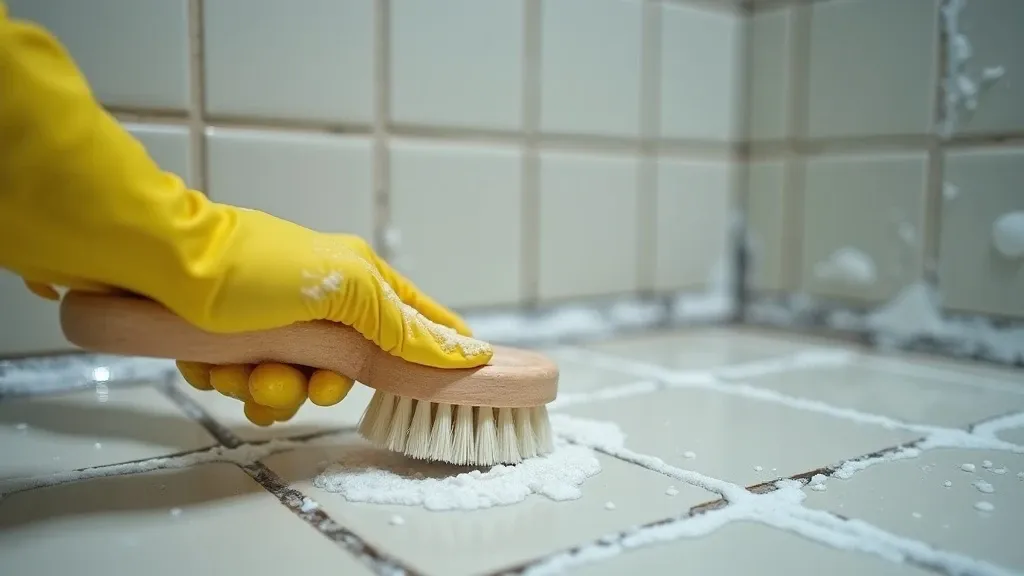
When it works: hard, non-porous surfaces — glazed ceramic tile faces, glass, sealed enamel tubs, stainless steel, chrome fixtures. On these surfaces, a dilute bleach solution contacts and kills surface mold; CDC guidance references no more than 1 cup of household bleach per gallon of water. Scrubbing after application removes the dead mold. Drying the surface thoroughly prevents regrowth.
When it does not work:
- Drywall (both paper facing and gypsum core absorb the water)
- Wood framing and subfloor
- Unglazed or cracked grout
- Concrete block
- Insulation (any type)
- Ceiling tiles
The distinction aligns with how the EPA separates hard-surface cleanup from porous-surface cleanup. For porous materials with rooted mold, professional mold removal means taking out the affected material, not treating the surface.
Bleach vs. vinegar vs. hydrogen peroxide
If bleach is the wrong tool for porous surfaces, what about the common alternatives? The honest answer: each has a narrow use, and none replaces fixing the moisture and removing contaminated material.
- White vinegar is about 5% acetic acid and roughly 95% water, and its effect on mold is species-dependent: in the peer-reviewed testing we could find, the vinegar tested (4.0–4.2% acetic acid) inhibited the growth of one common indoor mold species and had no measurable effect on another. Because it is mostly water, it is a poor choice for porous drywall and wood, and it still doesn’t make rooted mold safe to leave in place — dead mold has to be removed regardless. Full evidence: does vinegar kill mold.
- Hydrogen peroxide (3%) kills surface mold on many materials and leaves no chlorine fumes. It’s a reasonable option for non-porous surfaces, with the same limit as bleach: it treats the surface, not mold growing inside a material.
- Detergent and water is what the EPA actually recommends for routine hard-surface cleanup. The mechanical scrubbing does most of the work.
One rule overrides all of them: never combine these products. Bleach mixed with vinegar or with ammonia produces toxic gas, and bleach with hydrogen peroxide is a hazardous combination.
The porous surface problem in Phoenix homes
In a typical Phoenix home, most mold grows in places where bleach has no chance of working:
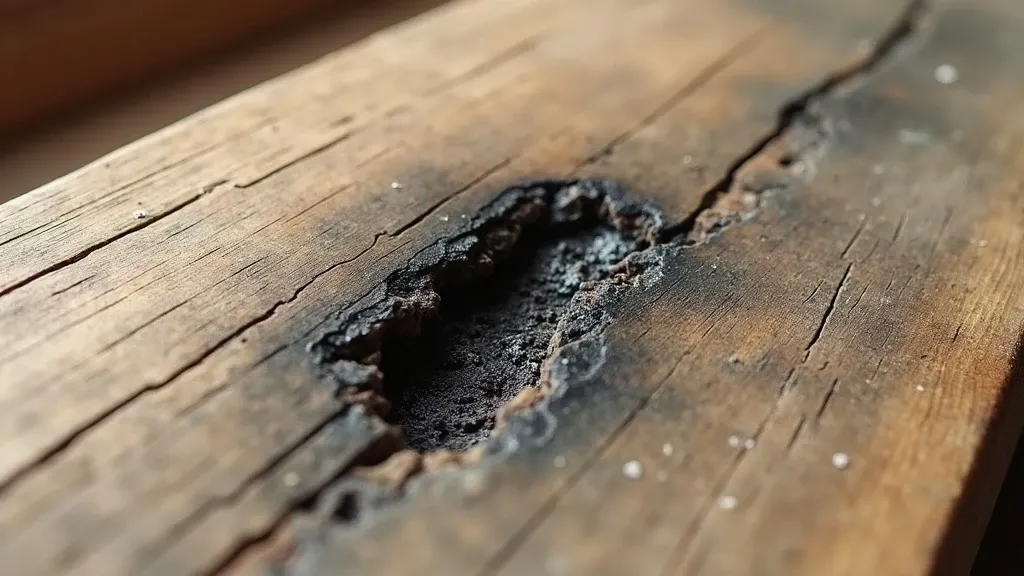
Drywall after an AC condensate overflow. A clogged condensate drain backs water into the ceiling or wall cavity below the air handler. The drywall absorbs that water for days or weeks before it’s noticed. By the time there’s a visible stain, mold is growing into the paper facing and framing. Spraying the face of the drywall with bleach does not reach the hyphae growing through the paper and into the gypsum. Mold remediation in this situation means cutting out and replacing the contaminated drywall.
Wood framing after a monsoon leak. Monsoon roof intrusion soaks attic insulation and roof decking — both porous. The mold that grows on those surfaces cannot be treated in place with bleach. The insulation must be removed and replaced; the roof decking typically needs HEPA-vacuuming, treatment, and encapsulation or replacement depending on depth of penetration.
Grout in aging Phoenix bathrooms. Older grout is deeply porous. Bleach may kill and bleach the surface mold, giving the appearance of clean grout. But the mold roots remain. Regrowth happens within weeks wherever the grout stays damp.
Our guide on black mold in Phoenix covers the specific surfaces where mold hides and why detection matters. The principle is the same: porous material with mold requires removal, not surface treatment.
The safety warning you cannot skip
Before using bleach for any mold cleanup, one safety point is non-negotiable:
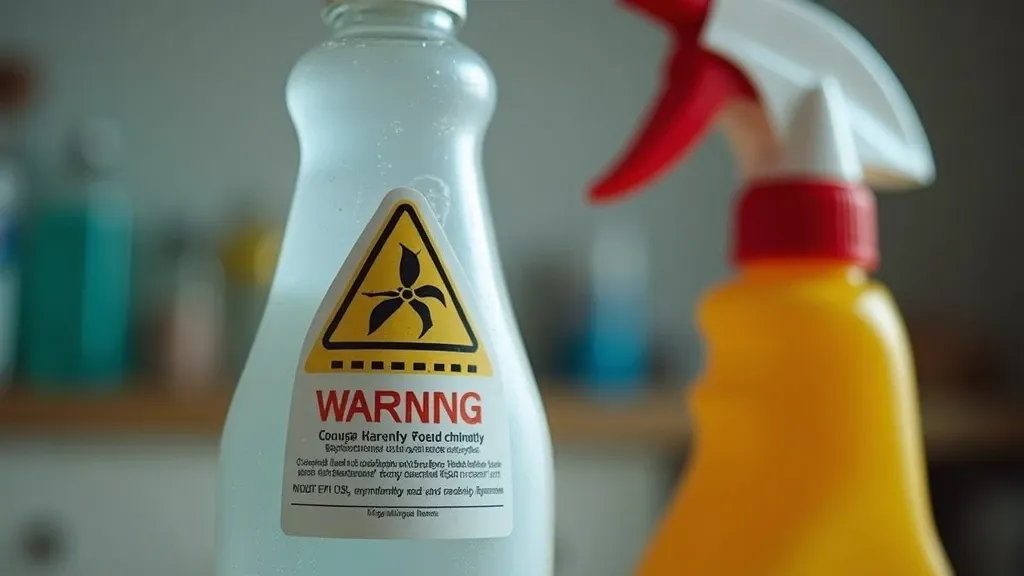
Never mix bleach with ammonia or ammonia-containing cleaners, or with acidic cleaners like vinegar. Bleach plus ammonia produces chloramine gas. Bleach plus an acid produces chlorine gas. Both are acutely toxic. This is not a fringe risk — many common household cleaners contain ammonia, and many “natural” mold treatments contain vinegar or citric acid. Always read labels before combining anything.
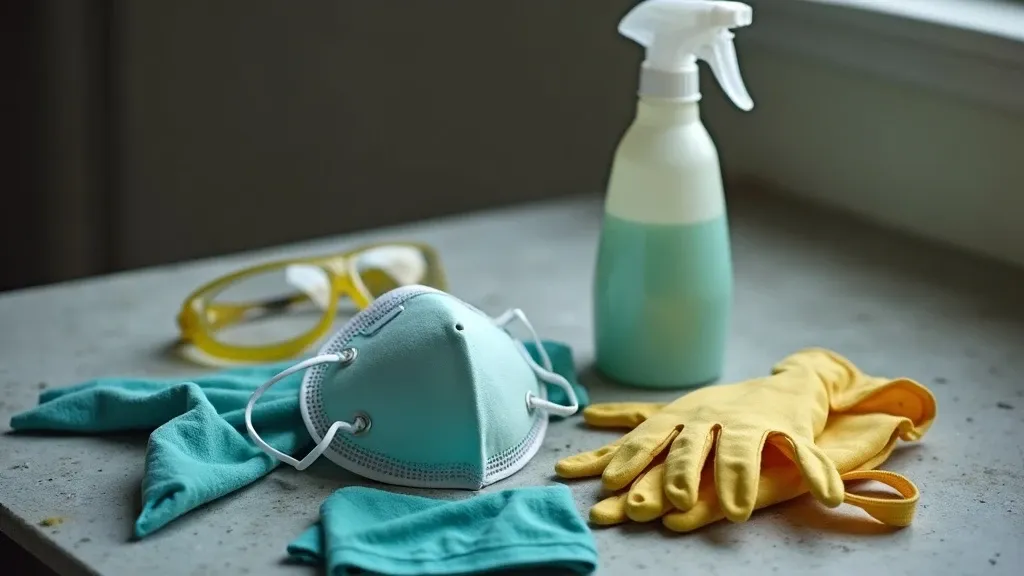
Beyond mixing: use bleach only in a well-ventilated space. Open windows, run an exhaust fan. Wear an N95 or better respirator (not a dust mask), rubber or nitrile gloves, and safety glasses or goggles. Fumes from bleach in a confined space — a small bathroom or a walk-in closet — reach harmful concentrations quickly.
The right sequence for mold cleanup
The EPA’s guidance, consolidated, points to the same sequence regardless of which cleaning product you’re considering:
1. Fix the moisture source first.
This is the step most homeowners skip, and it is the only reason mold returns after a seemingly successful cleanup. Bleach, detergent, HEPA vacuuming — none of it matters if the water source is still active. A clogged AC condensate line, a slow slab leak, a failed roof membrane, or a sweating pipe connection all need to be addressed before any surface is cleaned. As the EPA puts it, “moisture control is the key to mold control.”
2. For porous materials: remove and replace.
Drywall, insulation, and wood framing with significant mold contamination should be removed. The EPA’s professional remediation guidelines specify bagging contaminated material, using containment to prevent spore spread, and running negative air pressure with HEPA filtration. This is not a DIY scope for anything larger than a small isolated patch.
3. For non-porous surfaces: detergent, then optional bleach, then dry.
On tile, glass, or sealed surfaces, scrub with detergent and water. If you choose to follow with bleach, apply it, let it sit briefly, then scrub and rinse. Dry the surface thoroughly. A surface that stays damp will grow mold again regardless of what you cleaned it with.
4. Know the size threshold.
The EPA’s approximate rule of thumb: a mold area under 10 square feet on a hard, non-porous surface is generally a DIY scope with proper PPE. Larger areas, porous materials, mold inside walls or attics, or any mold following a sewage backup or flooding require professional remediation.
What to do if the mold is in drywall or behind a wall
If you’ve found mold on drywall, detected a musty smell without visible mold, or discovered water damage after a leak — these are not bleach-and-done situations. The mold is almost certainly into the material, and surface treatment will not get it.
The honest steps:
- Use a moisture meter to find the wet zone before opening walls. Surface dryness doesn’t mean the cavity is dry.
- If the contaminated area is significant (more than a small patch), contact a mold remediation professional who can contain the spores during removal.
- After removal and drying, confirm the area is dry before patching. Sealing a wet wall cavity creates conditions for regrowth.
If you’re in Phoenix and dealing with any of the common local moisture sources — AC condensate, monsoon water intrusion, slab leaks — the underlying cause needs a plumber or roofing contractor in addition to mold remediation. Our mold remediation page explains the full scope of what professional remediation involves.
The full Phoenix mold guides library covers specific mold locations, types, and local moisture drivers in detail. Also see our companion guide on what actually causes mold in Arizona’s desert climate — another question where the intuitive answer turns out to be wrong.
The bottom line
Bleach kills mold on glazed tile, glass, and sealed non-porous surfaces. On drywall, wood, grout, insulation, and virtually every other porous building material, it largely fails. The EPA says so directly. The chemistry explains why.
If you’re using bleach on a tile surface with good ventilation and proper PPE, and you follow it with scrubbing and thorough drying, you’re using it correctly in its narrow effective range.
If you’re spraying bleach on drywall or wood hoping to kill the mold growing inside it, you’re doing something that looks like remediation but isn’t. The mold will be back.
The actual fix for porous materials is physical removal, dry-out, and addressing the moisture source that started it. If you want to know how much material is affected, a free, no-obligation assessment can size the scope — no pressure either way.
Sources
- U.S. EPA — A Brief Guide to Mold, Moisture and Your Home: the “not recommended as a routine practice” biocide language; moisture control as the key to mold control; dead mold still causes reactions and must be removed.
- U.S. EPA — Should I Use Bleach to Clean Up Mold?: EPA’s dedicated bleach page — bleach is generally not necessary; the fix is removing the mold and correcting the moisture.
- U.S. EPA — Mold Cleanup in Your Home: the 10-square-foot DIY threshold; detergent-and-water for hard surfaces; porous materials may need to be discarded.
- OSHA — A Brief Guide to Mold in the Workplace: a biocide such as chlorine bleach is not recommended as a routine practice; primary controls are moisture elimination and physical removal.
- CDC — Mold — Basic Facts: mold health effects; bleach dilution of no more than 1 cup per gallon of water; fix-the-source guidance.