How to Vet a Mold Remediation Quote in Phoenix (Red Flags + Questions to Ask)

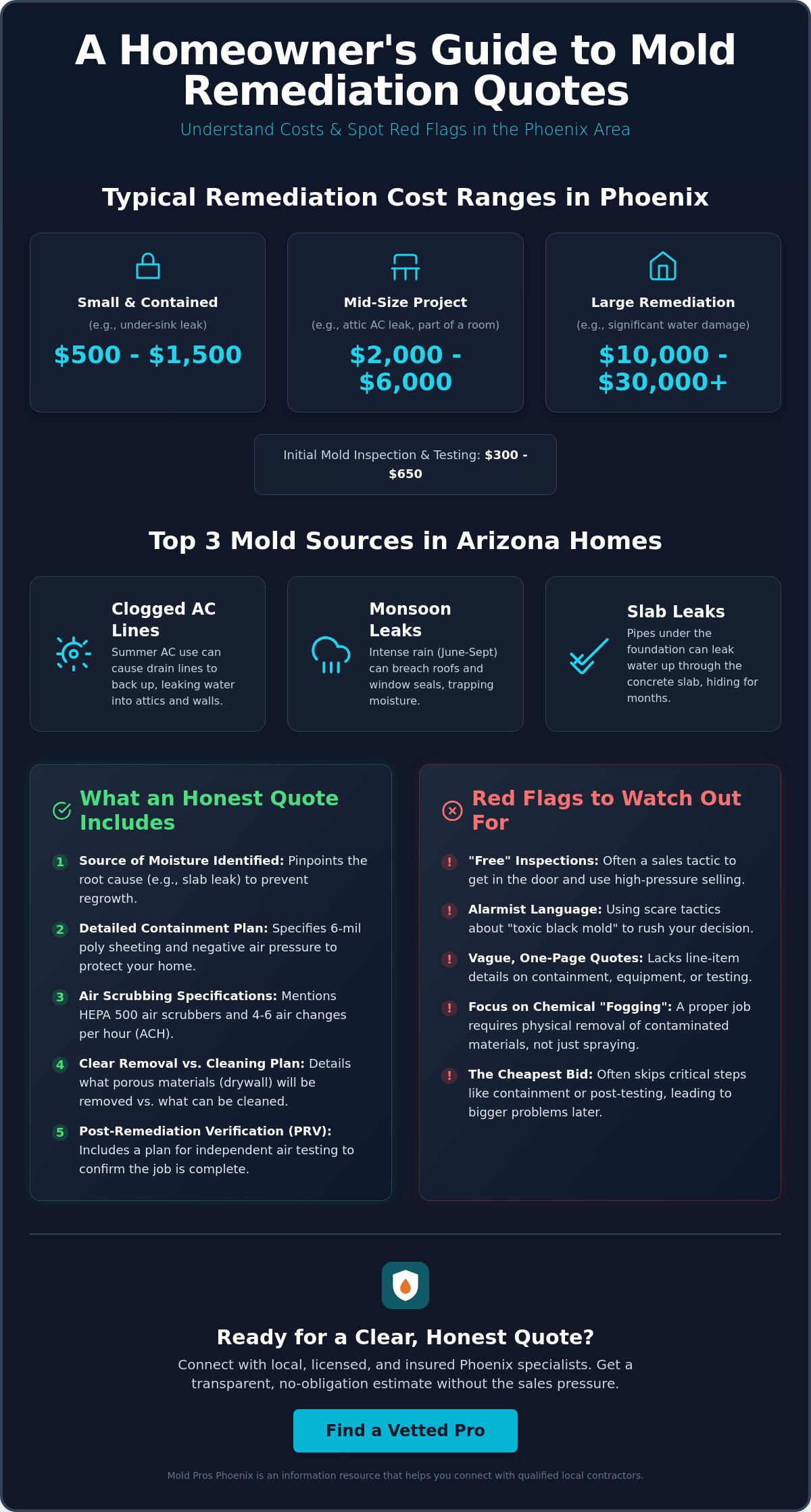
A fair Phoenix mold remediation quote breaks down the affected square footage, the moisture source, and the specific cleanup steps in plain English. For small jobs, expect an estimate range of $500 to $1,500. Mid-size projects usually run $2,000 to $6,000. A trustworthy bid skips the scare tactics and spells out the technical scope so you know what you are paying for.
Before you weigh one estimate against another, it helps to know what the work actually runs in the Valley — see our breakdown of mold removal cost in Phoenix.
Why does a small patch of mold from a summer AC condensate leak sometimes lead to a quote that feels like a down payment on a house? Technical jargon and the fear of hidden costs appearing once the drywall comes down leave most homeowners overwhelmed. Finding mold in your Gilbert or Scottsdale home is stressful enough without worrying about being overcharged. This guide shows you how to read an estimate, spot the common industry scams, and recognize a square deal. You will learn exactly what a professional scope should include so you can reject inflated prices and recognize a contractor who leads with facts instead of fear.
Key Takeaways
- The dry desert doesn't protect Phoenix homes from mold; clogged AC condensate lines, monsoon rain through stucco, and slab leaks all bring in the moisture it needs.
- An honest quote names the moisture source and itemizes the work in plain English, while a vague estimate with no detail is a major red flag.
- A "free inspection" is often a high-pressure sales visit, whereas a real diagnostic uses moisture meters and thermal cameras and runs about $300 to $650.
- Get at least three quotes and look for the IICRC S520 standard referenced in the written protocol before any work starts.
- Clearing a path to your attic and AC unit before the estimator arrives keeps the price from being padded for what the contractor can't see.
The Reality of Mold Remediation Quotes in the Phoenix Valley
Many homeowners in Phoenix, Mesa, and Scottsdale believe the dry desert air makes them immune to mold. It's a common myth. Humidity is low most of the year, but moisture still finds its way inside through specific local channels. The desert isn't a shield against fungal growth; it just changes how that growth starts. Hidden leaks in attic spaces or behind stucco can fester for months before you notice a smell or a stain.
During the monsoon season from June 15 to September 30, intense rain can overwhelm older roofing systems and window seals. If you own a "snowbird" home that stays closed up during the peak summer heat, even a minor leak can create a greenhouse effect inside. For those who want a comprehensive overview of mold and its biological habits, it's clear that temperature and a food source like drywall are all it needs to thrive once moisture arrives.
To better understand this concept, watch this helpful video:
Common Moisture Sources in Arizona Homes
Water intrusion in the Valley often comes from three main sources. First, AC condensate lines frequently clog during the summer when units run 24/7. This leads to water pooling in attics or overflowing into closets. Second, slab leaks are common in older Gilbert and Tempe neighborhoods, where shifting soil damages pipes under the floor. Finally, monsoon-driven rain can push through hairline cracks in stucco, trapping moisture against the wooden frame of your house.
- Clogged AC drain lines dripping into attic insulation.
- Monsoon rain seeping through damaged roof tiles or parapet walls.
- Slow leaks in wall cavities from high-usage plumbing during summer months.
Why Transparency Matters More Than Price
The Phoenix real estate market moves fast, and mold damage can lower a home's value by 20% to 37%. Picking the cheapest bid might save money today, but it often leads to "scope creep" where costs explode once the work begins. A vague estimate with no detail is a major red flag. You want a document that explains exactly how the containment will be built and how the air will be scrubbed. At moldprosphoenix.com, we help you decode these details so you can make an informed choice. The strongest bids include a fixed-price protocol.
Anatomy of an Honest Quote: Mandatory Line Items
When two or three estimates land for your Phoenix home, the total price is rarely the most important number. The line items tell you whether a bid will actually solve the problem. A professional scope of work has to identify the moisture source, such as a leaking swamp cooler or a slab leak, rather than just pointing at the visible growth. Without fixing the underlying water issue, the mold comes back no matter how much you pay for cleanup.
According to EPA guidelines on mold cleanup, any area of mold growth larger than 10 square feet usually requires professional help. An honest quote will detail the containment protocols used to protect the rest of your house. It should also include a plan for post-remediation verification (PRV) testing to prove the job was done correctly before you rebuild.
How is the air cleaned?
Containment is more than just taping up some plastic. It involves using 6-mil poly sheeting and zip-poles to create a physical seal around the work area. To keep mold spores from escaping into your living room or kitchen, the contractor must use HEPA 500 air scrubbers. These machines create negative air pressure, pulling air through a filter and exhausting it outside. A standard project should aim for 4 to 6 air changes per hour (ACH) to ensure the environment remains safe during the removal process.
Should it be cleaned or removed?
Not every surface needs to be thrown away. Non-porous materials like tile or metal can often be cleaned and sanitized. However, porous items like drywall or insulation usually require removal if they are heavily infested. Honest quotes prioritize source repair over chemical spraying. While antimicrobial sealants help prevent future growth, they are not a substitute for removing the actual mold. If a quote suggests "fogging" your entire house without removing the damaged drywall, it is likely a red flag.
The final mandatory item is the verification step. This is an independent test performed after the work is done to prove the mold levels are back to normal. If you are unsure about the estimates you have gathered, a free, no-obligation inspection quote gives you an independent read on the scope. This ensures the scope of work is both fair and technically sound for your specific situation.
Red Flags: How to Spot Scare Tactics and Predatory Pricing
Many Phoenix companies offer a "free inspection" to get their foot in the door. While it sounds like a deal, it is often a high-pressure sales pitch designed to skip the bidding process. You might hear alarmist terms like "toxic black mold" to make you act out of fear. Genuine professionals follow scientific standards rather than trying to scare you into a contract. A professional inspection estimate range of $300 to $650 is a small price to pay for an objective, third-party opinion.
Look for the IICRC S520 standard in your paperwork. It's the industry benchmark for professional mold removal. If a contractor refuses to provide a written protocol before they start, walk away. A legitimate bid clearly defines what work will be done and why. That documentation is your only protection against contractors who cut corners or inflate their labor hours.
Are they using scare tactics or scientific facts?
Contractors often claim you must move out of your home immediately for a minor issue. Unless the mold covers a large area or is inside your HVAC system, this usually isn't true. Check a Forbes guide to getting rid of mold to see how experts view the remediation process. Using a third-party tester keeps the remediator honest by providing an unbiased look at the spore counts. If a contractor tries to bypass this step, they might be exaggerating the health risks to justify a higher price.
How to avoid hidden costs and open-ended estimates
Never sign a quote that allows for "unlimited" material removal. This is a common way for costs to spiral out of control in Scottsdale and Tempe homes. A fair bid should include equipment rental and disposal fees upfront. In the restoration industry, a "bid" is a fixed price, while an "estimate" is a rough range. For a small job, you should see an estimate range of $500 to $1,500. If the price isn't clearly defined, you are at risk for massive change orders once the work starts.
Reading a bid well means separating the scope of work from the sales pitch. A written protocol that names the moisture source, the affected materials, and the containment plan lets you compare quotes on substance, so you aren't paying for unnecessary demolition or expensive chemical sprays that don't solve the root problem.
Preparing for Your Estimate: Getting the Most Accurate Pricing
An accurate price starts with a bit of homework: give the estimator a clear path to the problem. In Phoenix homes, that often means clearing out the closet that leads to the attic or moving boxes away from the AC unit. When a pro can't see the full extent of the damage, they pad the estimate to cover the unknown, and you pay more.
So clear the way before the technician arrives. If your mold is in a crawl space or a tight attic, make sure the pro can actually get in there. An hour spent moving your storage boxes is an hour not spent on the diagnostic. When a technician has to guess about square footage behind a pile of holiday decorations, the price climbs to protect their bottom line.
Define your goals before the meeting. A homeowner selling in Gilbert has different needs than a family dealing with health concerns. In the middle of a real estate closing, you need documentation that satisfies a buyer's inspector; if health is the priority, you might want more extensive air testing. Naming these goals early gets you a bid that matches your actual needs. If you aren't sure where to start, a professional mold inspection gives you an objective read before you weigh bids.
What should be on your pre-quote checklist?
Document the history of the moisture issue. Did a monsoon storm in July cause a ceiling stain? Did your AC condensate line clog last summer? Noting musty odors or visible staining helps the estimator find the source. You should also check your homeowners insurance policy for "mold riders." Some policies have specific coverage limits that might influence how you handle a mid-size job estimate range of $2,000 to $6,000.
What questions should you ask every estimator?
Ask if their technicians are IICRC certified for mold remediation. This ensures they follow national safety standards. You should also ask if they provide a written guarantee that the area will pass a third-party clearance test. Finally, clarify if the quote includes the cost of rebuilding. Many quotes only cover the removal of the mold. You don't want to be surprised by the extra cost of new drywall and paint once the cleanup is finished.
Finding Your Trusted Remediation Partner in Phoenix
Choosing a contractor in the Valley is about more than just picking the first name on a search page. You need a crew that understands the specific environmental challenges of the Arizona desert — one that knows exactly how a monsoon storm or a clogged AC line leads to hidden damage. Mold in a dry climate requires a different approach than mold in a humid one, and the right contractor treats it that way.
Local experience in cities like Mesa, Scottsdale, and Tempe is vital. A specialist who knows Phoenix building types understands where moisture hides in stucco walls or under floor slabs. They recognize the signs of a failing swamp cooler or a roof leak from shifting tiles. That local knowledge prevents the guessing that drives inflated estimates and surprise costs later in the project.
Mold issues don't resolve themselves; they only get more expensive as the moisture source keeps doing damage. With the steps in this guide, you can evaluate estimates with confidence and choose a specialist who prioritizes your property's health, so your home ends up safe and dry instead of fighting hidden fungal growth.
Our Commitment to Transparency
Mold Pros Phoenix handles mold remediation across the Valley with itemized, competitive quotes that break down labor and materials — no alarmist add-ons. Use this guide to benchmark any estimate against standard industry ranges so you never pay for services you don't need. The goal is simple: keep you informed and in control throughout the entire remediation process.
Get Your Free, Honest Quote Today
Mold Pros Phoenix handles mold remediation across the Valley — Glendale, Goodyear, Chandler, and beyond — with free, no-obligation quotes and clear written protocols for everything from small $500 jobs to large $10,000 whole-home remediations. You don't have to handle this alone or settle for vague pricing that leaves you exposed to hidden fees.
Taking the first step is easy and costs nothing. Request a free, no-obligation mold remediation quote and we'll get back to you with a clear next step. Work that follows the IICRC S520 standard is handled with technical precision and care. Stop worrying about "toxic" labels and start with the straight talk you need to protect your investment.
Take Control of Your Home's Health Today
Identifying the moisture source is the first step toward a fair price. You now know to look for IICRC standards and dodge the alarmist language some contractors lean on. Asking for line-itemized details protects your property value and keeps the work thorough. Pricing in the Phoenix Metro area doesn't have to be a stressful guessing game anymore.
Mold Pros Phoenix handles mold remediation across the Valley with clear communication and strict industry protocols, so your home is handled correctly. You can check typical cost ranges or request a free, no-obligation quote to get started on your restoration project. You now have the tools to spot a fair deal and return your home to a safe, dry condition.
Frequently Asked Questions
How much does mold remediation typically cost in Phoenix?
Costs depend on the size of the affected area and the moisture source. For small jobs, you should see an estimate range of $500 to $1,500. Mid-size projects usually fall between $2,000 and $6,000. Large or whole-home remediation can range from $10,000 to $30,000 or more.
Is a free mold inspection really free, or is there a catch?
A "free" inspection is often a high-pressure sales visit rather than a technical diagnostic. Real mold inspections require moisture meters and thermal cameras to find leaks in attics or behind stucco. A professional inspection estimate range is $300 to $650. This fee ensures you get an objective report instead of a sales pitch.
Do I need a separate quote for mold testing and mold removal?
Yes, keeping these services separate avoids a conflict of interest. An independent tester provides an unbiased protocol for the remediator to follow. That separation protects your pricing, because the removal company can't inflate the damage to pad its own profit.
Can my homeowners insurance in Arizona cover the cost of remediation?
Coverage depends on how the moisture started. Sudden events like a burst pipe during the summer are often covered. However, damage from a long-term leak or a poorly maintained swamp cooler might be denied. Review your policy for specific mold riders or coverage limits before you sign a contract.
What is the IICRC S520 and why should it be in my quote?
The IICRC S520 is the national standard for professional mold removal. It requires specific safety steps like setting up 6-mil poly containment and using HEPA air scrubbers. If your quote doesn't reference this standard, the contractor may be skipping essential safety protocols that protect your indoor air quality.
How many quotes should I get before choosing a mold company?
Get at least 3 quotes so you can compare the scope of work. Side by side, it's easy to see if one contractor is recommending unnecessary demolition or skipping mandatory containment steps. Comparing several bids helps you find a fair price for your specific property in Mesa or Scottsdale.
What happens if the remediator finds more mold than was in the original quote?
Hidden mold is often discovered after the drywall is removed. A fair contract should include a clear change order process with set pricing for additional materials. This prevents the contractor from adding random fees once your walls are already open and the work is underway.
Why are mold remediation quotes so different from one company to another?
Price differences usually come from the methods used. Some companies might suggest cheap "fogging," which does not meet professional standards for removal. Others include the full cost of negative air pressure and proper disposal. A higher quote that follows industry safety standards is often safer than a cheap, vague estimate.