Mold Encapsulation vs. Removal: An Honest Comparison
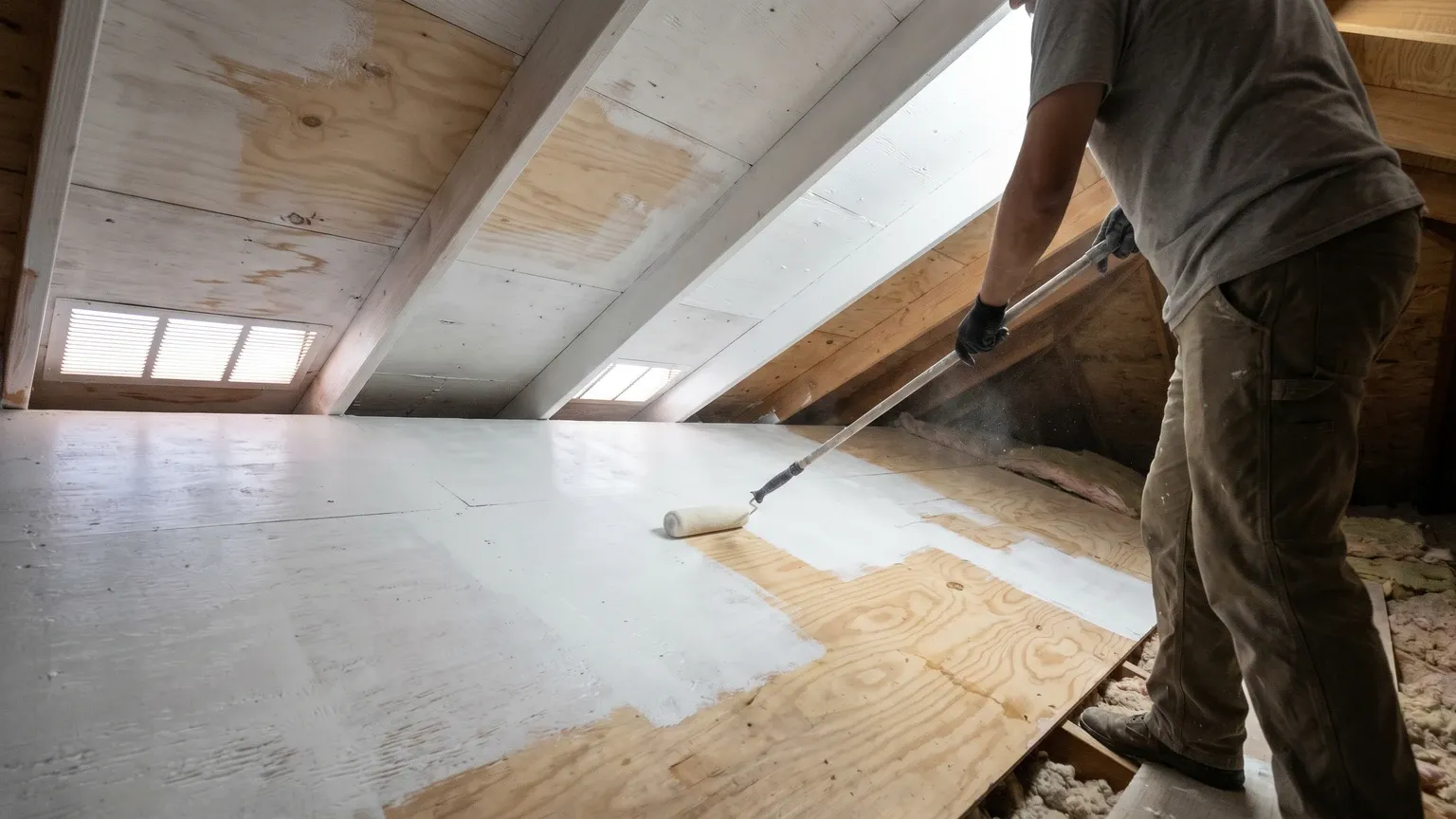
Encapsulation is not a substitute for physical mold removal. It may be a supplemental step after full remediation on structurally sound non-porous surfaces — specifically in scenarios where replacement would be destructive and only after the moisture source is confirmed fixed. For the most common Phoenix mold substrate, drywall, the EPA’s own material table assigns only removal methods. There is no encapsulate-in-place option for drywall.
What encapsulation actually is
Mold encapsulation refers to applying an antimicrobial coating over a surface after it has been treated. The coating is intended to seal in any residual mold and inhibit future growth on the coated surface.
That description, however, requires a critical qualifier: the coating goes on after the mold has been physically cleaned. It is not a paint-over-the-mold product. The distinction matters because the word “encapsulation” is sometimes used in contractor proposals in a way that implies it replaces the cleaning step rather than following it.
A homeowner who has been quoted an “encapsulation treatment” without any prior cleaning and drying of the affected surface is being offered something that no U.S. federal authority endorses and that common sense does not support. Paint — including antimicrobial paint — applied over active mold growth on a wet surface will peel. The EPA says so directly: “Paint applied over moldy surfaces is likely to peel.”
The word “encapsulation” does not appear in the EPA’s Mold Remediation in Schools and Commercial Buildings Guide (Chapters 1 through 5), the EPA’s Brief Guide to Mold, Moisture, and Your Home, or the CDC’s About Mold guidance — verified against all five sources. Federal authorities do not name encapsulation as a remediation method. The absence is the finding.
What EPA and CDC actually say
Two EPA quotes do the most work here. They are not paraphrased — both are pulled directly from the primary source.
On painting over moldy surfaces, from EPA Mold Remediation in Schools and Commercial Buildings Guide — Chapter 3:
“Don’t paint or caulk moldy surfaces; clean and dry surfaces before painting.”
This appears on the same EPA page with the additional note: “Paint applied over moldy surfaces is likely to peel.” The same instruction repeats on the EPA’s consumer-facing page, Mold Cleanup in Your Home: “Don’t paint or caulk moldy surfaces. Clean up the mold and dry the surfaces before painting.”
Encapsulation coatings and antimicrobial paints are a form of painting. The EPA’s consistent instruction is clean and dry first, then paint. Applying a coating to an uncleaned, wet moldy surface is exactly what the EPA says not to do.
On whether killing mold is enough, from EPA A Brief Guide to Mold, Moisture, and Your Home:
“Dead mold may still cause allergic reactions in some people, so it is not enough to simply kill the mold, it must also be removed.”
This is the quote that dismantles the core encapsulation-as-substitute pitch. The argument for encapsulation often runs: the coating kills the mold, the dead mold is sealed in, the health risk is gone. The EPA’s own position is that a killed mold colony is not a neutralized one — the fragments, spores, and allergens can still trigger reactions and must be physically removed.
The CDC’s posture is the same. On the About Mold page: “If you see or smell mold, you should remove it.” And: “The best thing you can do is to safely remove the mold and prevent future mold growth.” The verb is remove, not seal, not coat, not paint over. Both federal health authorities converge on the same action.
The moisture source has to go first
No coating — antimicrobial or otherwise — solves an active water problem. The EPA states the universal rule in identical language across multiple guides: “The key to mold control is moisture control.” From the CDC: “If mold is growing in your home, you need to clean up the mold and fix the moisture problem.”
An encapsulation coating applied over damp material on a still-leaking substrate will fail. The moisture will continue reaching the mold beneath the coating, the mold will continue growing, and the coating will eventually peel — exactly what the EPA predicts when paint goes over a wet surface.
Every remediation job — regardless of whether encapsulation is part of it or not — starts with fixing the water. That is not a preference; it is the precondition that determines whether any subsequent treatment holds.
The material chart: what EPA says to do by surface type
EPA Chapter 5, Table 2 assigns numbered cleanup methods to specific building materials. The materials and their methods are what determine whether any surface is even a candidate for being treated in place versus replaced.
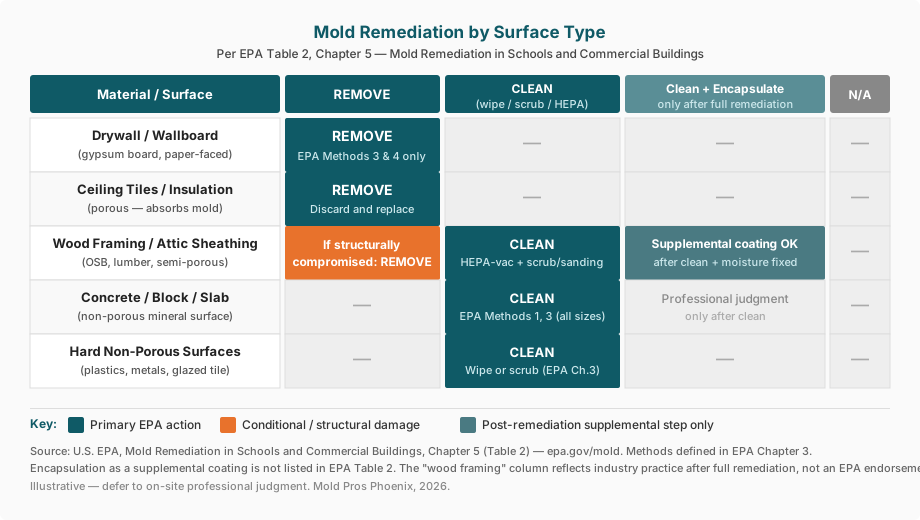
The findings that matter most for Phoenix homeowners:
Drywall and wallboard (gypsum board, paper-faced panels) receive only Methods 3 and 4 at every scale — Method 3 covers physical removal with HEPA vacuuming, Method 4 is disposal. The EPA does not assign Method 1 (wet vacuum) or Method 2 (damp wipe) to drywall at any size. There is no in-place cleaning option for drywall. This is also the substrate where the 10-square-foot threshold is hardest to meet — mold on drywall spreads through the paper facing and into the gypsum core before it is visible, which means by the time you see it, the affected area is usually larger than it appears. Per the EPA’s guide on drywall mold, the question to ask is not whether to clean or encapsulate, but whether the drywall is still firm enough to justify a careful surface clean before cutting or whether it needs to come out.
Ceiling tiles and insulation are also removal-only. The EPA’s Chapter 4, Table 1 uses “Discard and replace” for ceiling tiles and fiberglass insulation. There is no scenario in the EPA guidance where moldy insulation gets coated and left in place.
Wood surfaces — framing lumber, rafters, roof sheathing — are different. Wood that is non-porous or semi-porous and structurally intact can be cleaned in place. The EPA states in Chapter 3: “mold can be removed from nonporous (hard) surfaces by wiping or scrubbing.” Dimensional lumber and OSB roof sheathing occupy a middle ground — they are more porous than metal or plastic, less porous than drywall. After full physical cleaning (HEPA vacuuming, sanding where appropriate), a professional may apply an antimicrobial coating as a supplemental step. This is aligned with the EPA’s sequence: clean and dry the surface first, then a coating may follow.
Hard non-porous surfaces (metals, plastics, glazed tile) are cleaned in place. The EPA assigns Methods 1, 2, and 3 to these materials — never Method 4 (disposal). For these surfaces, wiping or scrubbing removes the mold. An antimicrobial coating is rarely added on non-porous surfaces because the cleaned surface does not provide the mold with anything to grow on once it’s physically clear and dry.
When encapsulation may be considered — and what that actually means
There are two scenarios where a licensed remediation professional might apply an antimicrobial coating as a supplemental step after completing full physical remediation. Neither scenario is a shortcut. Both require that physical removal and moisture correction are complete first.
Scenario one: attic sheathing after a fixed moisture source. If an AC condensate line has overflowed into the attic pan, soaked the OSB roof sheathing, and grown surface mold on structurally sound decking, a professional may clean the sheathing (HEPA vacuuming, sanding, antimicrobial solution), confirm the condensate line is repaired and draining freely, allow the wood to dry to target moisture content, and then apply a coating. The EPA’s “clean and dry before painting” sequence is satisfied. The coating is not doing the remediation work — it is an additional layer of assurance on a surface that has already been properly treated.
Scenario two: slab-on-grade bottom plates where replacement is destructive. A slab leak or slow plumbing drip that has saturated the bottom plate of an interior wall sitting on concrete creates a specific dilemma: replacing that plate means tearing the wall apart from the slab up. Where the plate is not structurally compromised, some professionals will clean the wood surface, verify moisture equilibrium, and apply a coating rather than demolish the wall. This sits at the edge of what’s defensible. The EPA does not address it specifically. It is an industry practice, not a federal-authority endorsement, and it requires professional judgment on the structural integrity of the wood and the completeness of moisture remediation.
What both scenarios share: the moisture source is fixed first. Physical removal or cleaning of the mold is complete. Moisture readings confirm the substrate is dry. Only then does a coating go on. If any of those three conditions is not met, encapsulation is not a hedge — it is a failure waiting to happen.
When encapsulation is not appropriate
Active mold growth on any surface. Coating active growth seals moisture in and does not stop the mold from continuing to grow beneath the coating.
Any porous material — drywall, ceiling tile, carpet, insulation. The EPA’s material guidance assigns removal methods to porous materials across every size category. The EPA says directly: “Absorbent or porous materials, such as ceiling tiles and carpet, may have to be thrown away if they become moldy.” Encapsulating a porous material with living or dead mold hyphae inside it does not remove the health risk.
As a first step, before cleaning. The EPA is explicit: clean and dry first. A coating applied before cleaning is the sequence the EPA says produces paint that peels.
Hidden mold behind walls or under flooring. Encapsulation by definition requires access to the surface being coated. Mold behind drywall cannot be encapsulated from the outside.
Any situation where the moisture source has not been fixed. This is the baseline. Without moisture correction, encapsulation is a temporary cosmetic measure on a problem that continues growing.
Phoenix-specific realities
Phoenix mold problems break into three common patterns, and the encapsulation question applies differently to each.
Drywall below an AC condensate leak. The most frequent Phoenix scenario: a clogged condensate drain line overflows from the attic pan into the ceiling drywall below, or an attic air handler drips onto the wall beside the utility closet. The affected material is drywall. Per EPA Table 2, this comes out. Encapsulation is not part of this conversation. The fix is cut-and-replace after the condensate line is cleared and confirmed draining. For the full picture on this type of job, our attic mold guide covers what drives moisture into Phoenix attic spaces and what professional remediation of the sheathing and ceiling involves.
Attic sheathing after an AC condensate overflow. If the overflow saturated not just the ceiling drywall below but also the OSB roof decking above, the sheathing is the one material in a Phoenix condensate job where the encapsulation question is legitimate — after the condensate line is repaired, the decking is dried and physically cleaned, and a professional confirms it is structurally intact. This is the scenario where a supplemental coating may be applied as an additional step by the contractor.
Slab-on-grade plumbing leaks reaching wall bottom plates. Phoenix builds mostly on concrete slabs. A slow supply-line leak or failed water heater can wick moisture into the bottom plate of adjacent walls. Whether that plate gets replaced or treated depends on the structural assessment and how accessible it is. This is the scenario most likely to surface a legitimate professional discussion about encapsulation as an alternative to destructive wall demolition.
The practical bottom line for a Phoenix homeowner: if you have mold on drywall — which is the most common substrate in any residential mold job — the encapsulation conversation should not be happening. If you have mold on attic sheathing after a fixed condensate problem, the encapsulation conversation may be legitimate after the cleaning is done. Understanding which scenario applies to your situation is what a proper mold remediation assessment should clarify before any treatment begins.
How to tell if a contractor’s encapsulation quote is honest
Ask three questions before agreeing to any encapsulation scope:
What has already been physically removed or cleaned? Encapsulation follows remediation. A contractor who opens with encapsulation as the primary treatment, without prior removal and cleaning, is not describing recognized remediation practice.
How was the moisture source confirmed fixed? Ask to see moisture readings from before and after. The EPA’s moisture-first rule applies regardless of what treatment follows. A coating on a still-damp substrate will fail.
What material is being coated? If the answer is drywall, push back. Per EPA Table 2, drywall is a remove-and-replace material. An honest contractor won’t propose encapsulating drywall because the EPA’s own guidance does not support it.
For deeper criteria on evaluating contractor proposals in Phoenix — scope of work, HEPA containment, clearance testing — the vet-a-mold-contractor tool walks through what a legitimate remediation proposal should include and what the red flags look like.
In my experience reviewing remediation quotes for this site, encapsulation gets pitched to Phoenix homeowners most often in two circumstances: when the full cost of remediation would require disclosing how much material needs to be removed, and when a contractor has the wrong product to match the substrate. Neither is a reason to accept the proposal as written. The government guidance on this is unambiguous: clean and dry the surface first, remove what is porous and cannot be cleaned, fix the moisture. A coating on a properly treated surface is a legitimate supplemental step. A coating instead of treatment is not.