Mold on Drywall: How to Tell If You Can Clean It — or Have to Cut It Out
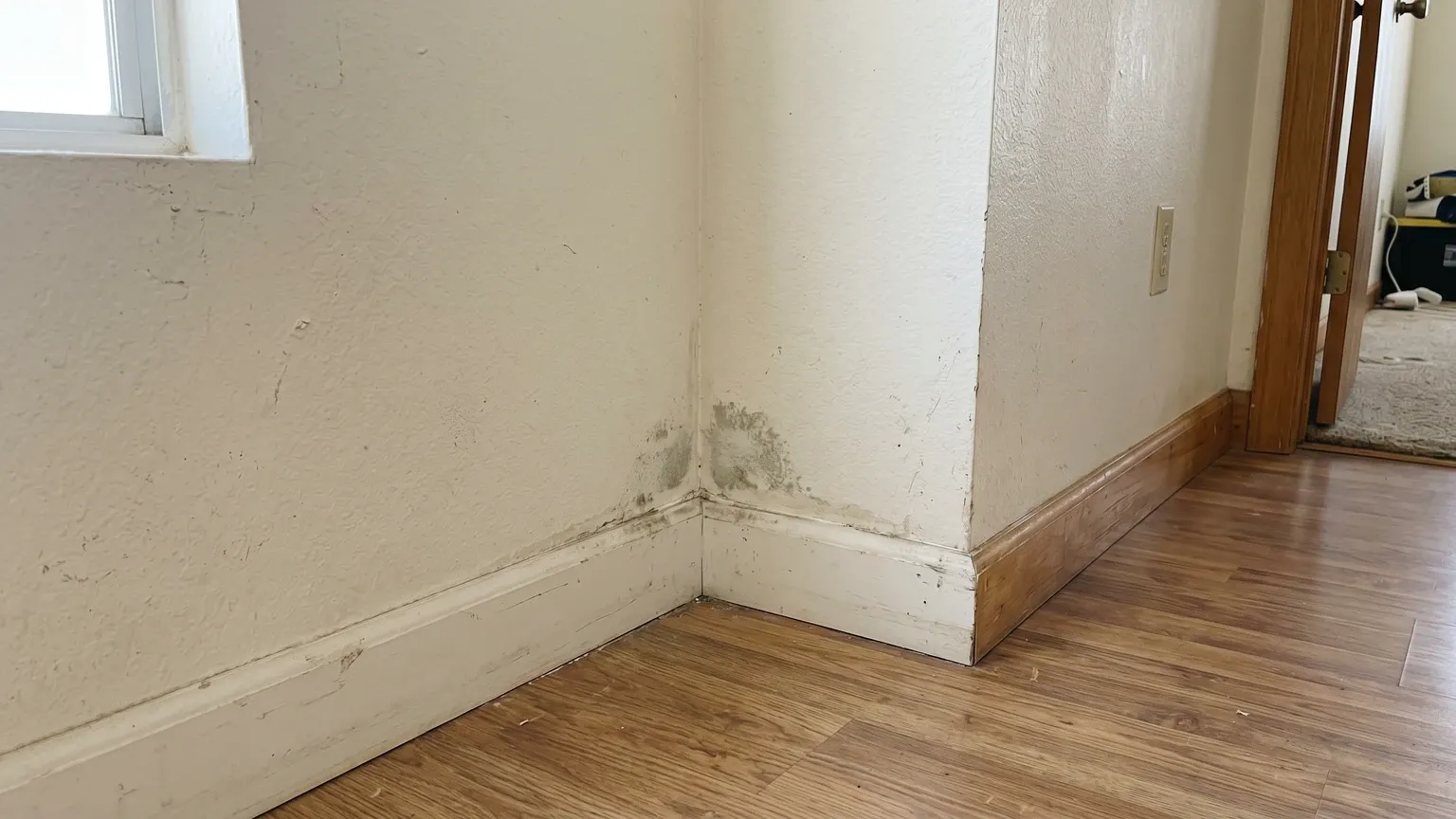
Surface mold on painted drywall under about 10 square feet can often be cleaned by a homeowner. Once mold soaks into the paper or gypsum, or grows behind the wall, it can’t just be killed — that section has to be cut out and replaced. Fix the moisture source first, or the mold returns regardless.
What does mold on drywall look like?
Mold on drywall shows up in several forms, and how it looks tells you something about how far it has progressed.
On the painted surface: Early mold often appears as small spots — gray, green, black, or white — that look fuzzy or powdery. It may cover a few inches in an area that got persistently damp. The paint around it might look dull or slightly discolored even where you can’t see distinct spots.
Discoloration that goes deeper: A mold stain with a darker center that seems to bleed into the paint, or a patch of mold that wipes off the surface but leaves a gray or brown shadow underneath, usually means it has started working into the paper facing of the drywall. At that point, surface cleaning won’t solve it.
White mold: A white, powdery or fluffy growth on drywall can be mold — or it can be efflorescence, a mineral deposit from water evaporating through concrete or block. Efflorescence doesn’t grow, doesn’t smell musty, and wipes away completely. Mold has a distinctive musty odor and tends to return. Our guide to white mold covers how to tell them apart.
Behind the wall: Mold growing on the cavity side of drywall won’t be visible from inside the room at all — until the drywall bows, the paint bubbles, or a persistent musty smell gives it away. This is common after a slow AC condensate leak or slab moisture, and it’s exactly the scenario where the whole section needs to come out.
What mold on drywall does not look like: not every stain, ring, or discoloration is mold. A brown water ring from a long-ago roof leak, fully dried out with no smell, may be an old stain with no active mold. The combination of a fresh or recurrent stain plus a musty odor is the reliable indicator that mold is present and active.
Can you just kill mold on drywall?
This is the core misunderstanding behind most failed DIY attempts.
The reason you can’t just spray something on mold on drywall and call it done comes down to how drywall is built. Drywall is a sandwich: a gypsum core (chalk-like mineral) wrapped in paper facing. Both layers are porous. When a spray or cleaning solution lands on mold growing on the surface, the liquid part soaks into the paper and gypsum. The mold’s root-like structures — hyphae — can extend well below the surface you can see. A surface spray reaches what’s visible, not what’s underneath.
There’s also the bleach question. Bleach is commonly suggested for mold and it does work on hard, non-porous surfaces like tile or glass. On drywall, its chlorine stays largely on the surface while the water in the bleach solution soaks into the porous material, which can actually create conditions that feed mold below. The EPA’s Brief Guide to Mold, Moisture and Your Home explicitly states that using a biocide such as chlorine bleach is not recommended as a routine practice during mold cleanup. For a fuller breakdown of why bleach underperforms on porous surfaces, see our guide Does Bleach Kill Mold?
One more point from EPA guidance: even if you kill mold on the surface, the dead mold must still be physically removed. Per the EPA, dead mold may still cause allergic reactions in some people — killing it is not enough. Killing it without removing it doesn’t make the space safe.
The practical rule: if the mold is on the painted surface of drywall that is still firm and intact, and the area is small, you can clean it off. If it has soaked in, or is behind the wall, or is large — it has to come out.
Clean it vs. cut it out — the decision
The EPA’s Mold Cleanup in Your Home guidance draws a clear line: “Absorbent or porous materials, such as ceiling tiles and carpet, may have to be thrown away if they become moldy.” Drywall is porous in exactly the same way — once mold soaks into the paper facing or gypsum core, it falls under the same rule. This is the porous-material rule.
Three questions tell you which side of the line you’re on.
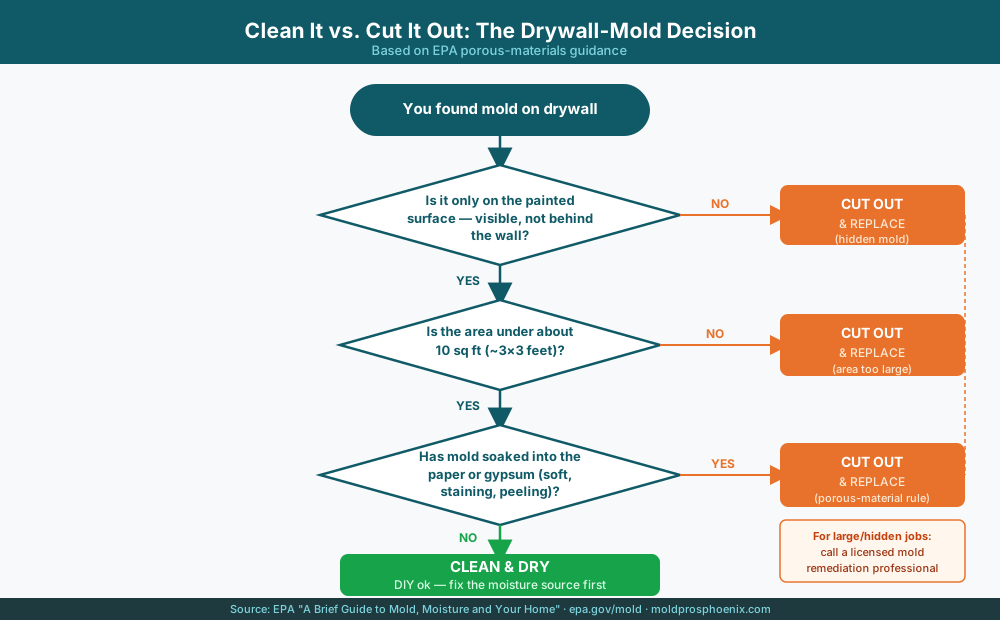
Question 1: Is it only on the painted surface, or is mold growing behind the wall? If you can smell mold but see nothing on the surface, or if the drywall feels soft and bowed, the mold is behind the wall. Cut out and replace.
Question 2: Is the affected area under about 10 square feet — roughly a 3-by-3-foot patch? The EPA’s guidance puts the homeowner DIY threshold at about 10 square feet. Larger than that, you’re into territory where professional remediation equipment — containment barriers, negative-air-pressure machines, HEPA vacuums — makes a meaningful difference in keeping spores from spreading through the home.
Question 3: Has the mold soaked into the paper facing or gypsum? Press gently on the area. Does the drywall feel soft? Has the paint peeled away from the paper? Does the stain go through the paint and into the material? If yes to any of these, the mold has penetrated the porous material. Per EPA’s porous-material rule, this section needs to come out.
If you answer NO to all three — the mold is only on the surface, it’s small, and the drywall is still firm — you’re in the cleanable window.
How to remove surface mold from drywall
This applies when the mold is clearly on the painted surface, the area is under about 10 square feet, and the drywall is still firm.
Before you start, fix the moisture. If you don’t find and stop what caused the mold, it will return within weeks. The EPA is direct on this: “The key to mold control is moisture control.” Find the source — a condensate leak, a failed caulk joint, a slow plumbing drip — and fix it before you clean.
What you need: N95 respirator (not a dust mask), rubber gloves, eye protection, a stiff scrub brush, dish soap or an EPA-registered cleaning product, clean rags, and a fan or dehumidifier.
Steps:
- Seal off the room if possible — close the door, cover the HVAC vent — to avoid spreading spores to other rooms.
- Dampen the mold patch gently before scrubbing to reduce spore dispersal.
- Scrub with dish soap and water, or an EPA-registered antimicrobial, using firm strokes across the full patch.
- Wipe with clean damp rags. Bag and seal the rags immediately.
- Dry the area completely. Use a fan pointed at the wall and, if available, a dehumidifier in the room. The EPA recommends drying wet materials within 24 to 48 hours to prevent mold from establishing.
- Let the wall dry fully before painting.
If mold reappears within a few weeks of a careful cleaning, the moisture source wasn’t fixed, or the mold had already penetrated deeper than the surface. At that point, you’re past the clean-it option.
When the mold is behind the drywall
Mold behind drywall is a different problem. You can’t reach it from the front, which means the only way to address it fully is to open the wall.
Signs that mold is behind the drywall:
- A persistent musty odor in a room with no visible mold on surfaces
- A section of wall that feels soft when you press it, or that bows slightly
- Paint that bubbles or peels without any visible moisture or impact damage
- A water stain that recurs after drying out, or that never lightened completely
- Allergy or respiratory symptoms that improve when you leave the room and worsen when you return
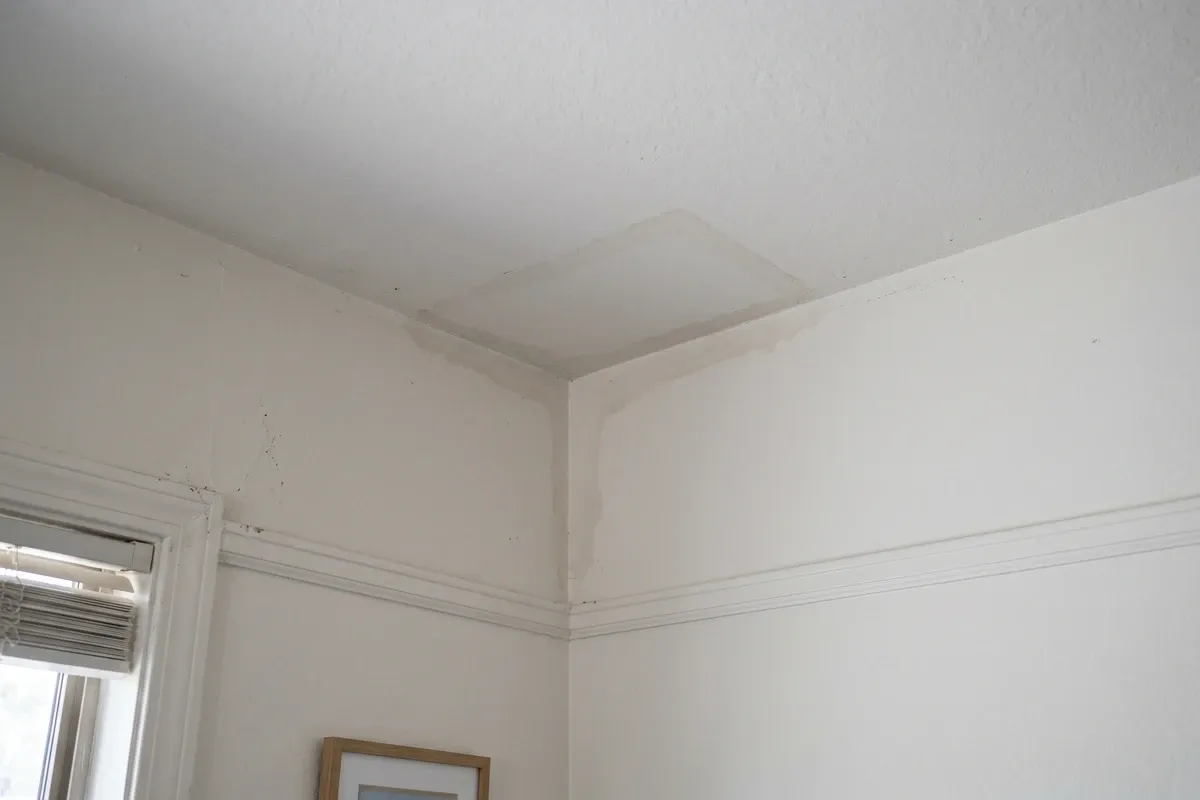
If you suspect mold behind the wall, a professional can use a moisture meter to map where moisture is in the structure — finding the extent of the problem without opening the wrong section of wall. Once the source is confirmed and stopped, cutting out the affected drywall is the repair.
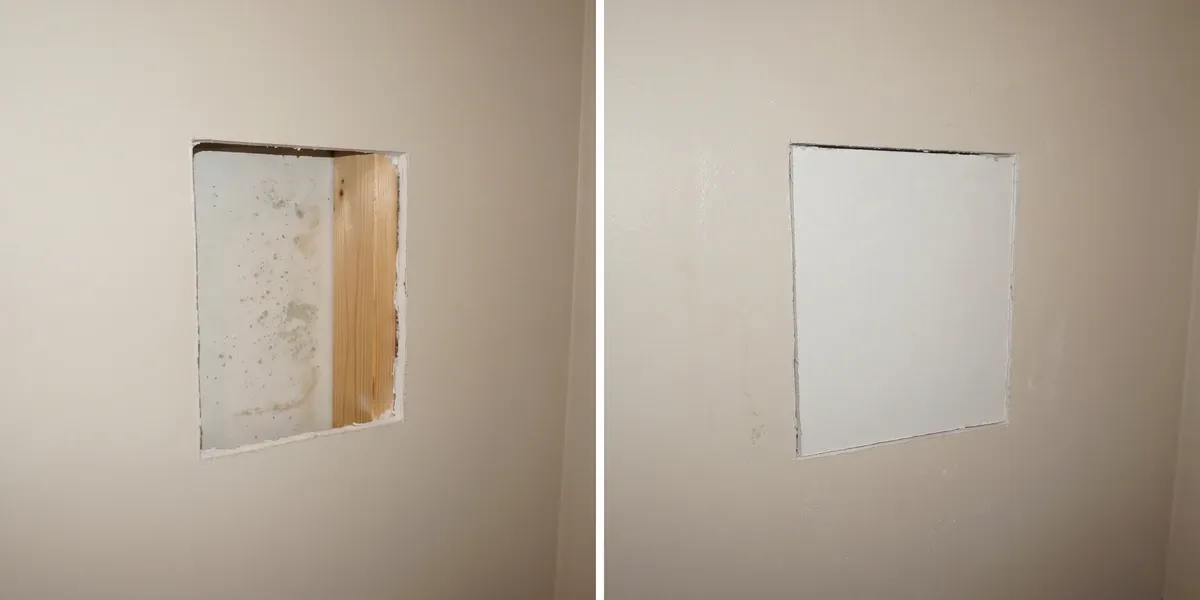
What the cut-out involves: A professional cuts away the moldy section to beyond the edges of visible damage, removes and bags the affected material, inspects the framing behind it for mold on the studs or plates (which may need treatment or replacement), then lets the cavity dry before installing new drywall and finishing it. Insulation in the cavity, if wet, comes out too — wet insulation can’t be dried in place. If the drywall is wet but there is no mold on it yet, that is a different decision: does wet drywall need to be replaced walks the two tests EPA actually names.
For larger or more complex jobs — mold that covers multiple sections of wall, mold inside an HVAC closet, or mold following water intrusion from flooding — professional mold remediation brings the right equipment to do the job without pushing spores through the home. That page covers what the full remediation process involves and how it protects the rest of the house during work.
Why Phoenix drywall gets mold
Phoenix’s reputation as a dry climate leads people to assume drywall mold can’t happen here. The reality is that desert drywall mold is common, and it comes from specific, local sources.
AC condensate overflow. Phoenix homes with attic-mounted or closet-mounted air handlers produce condensate every hour the system runs — from April through October at minimum. When the condensate drain line clogs with dust and algae (a seasonal occurrence without maintenance), the drain pan overflows. The water drips onto the ceiling or soaks into the wall around the unit. At Phoenix summer temperatures, mold can establish in that wet drywall within 24 to 48 hours, per EPA guidance. The mold grows on the hidden face of the drywall before it ever shows on the room side.
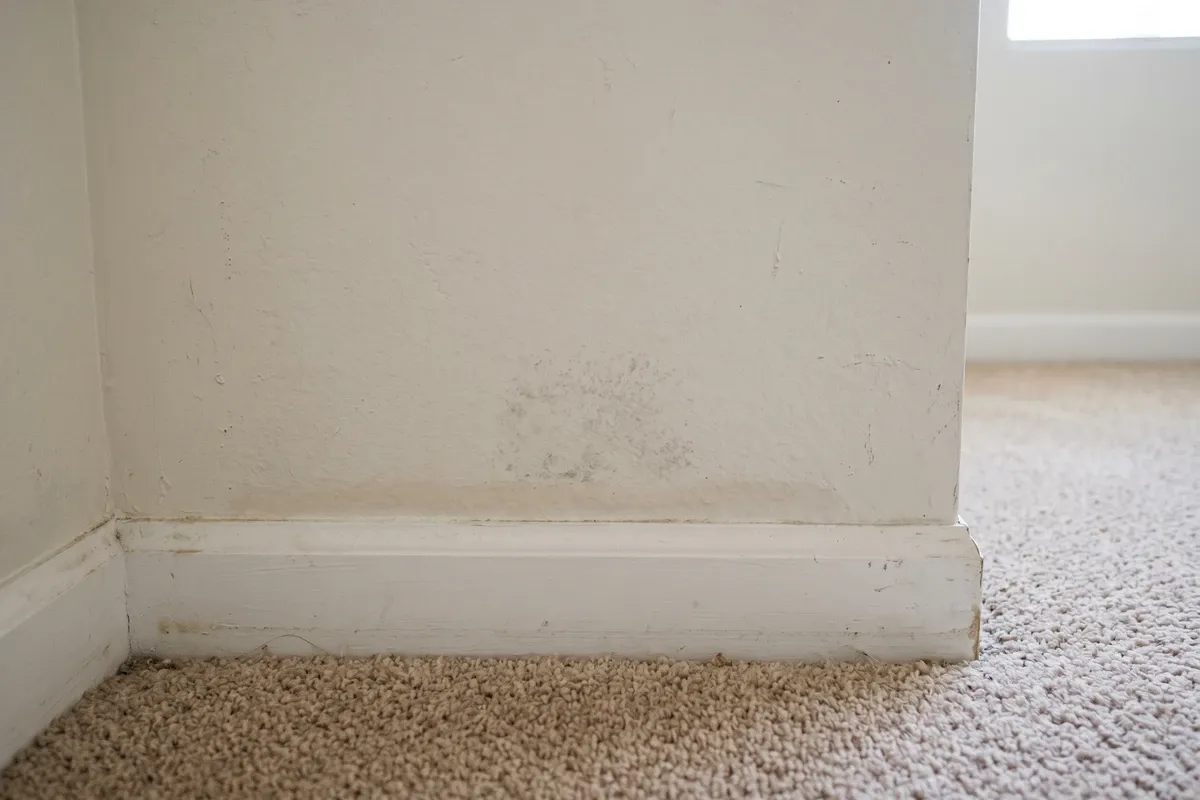
Slab leaks. Older Phoenix homes — especially the ranch and mid-century slab homes common in Arcadia, Encanto, and central Scottsdale — have copper or galvanized plumbing under or through the concrete slab. A pinhole leak wicks water up through the slab and into flooring, baseboards, and the base of the drywall. The mold grows at the floor line for weeks or months before a warped baseboard or musty smell prompts a look. This is the desert pattern that surprises people: the mold appears inside a dry room because the water is coming from below, not from outdoor air.
Monsoon roof and flashing leaks. From mid-June through September, Phoenix gets roughly half its annual rain in fast, intense storms. Flat and low-slope roofs common on Phoenix ranch homes pond water during hard downpours, and hairline cracks in the membrane or aged flashing let water into the attic and top-floor ceilings. That water soaks the back side of the ceiling drywall. At summer attic temperatures, mold gets a serious head start before the water stain shows on the living-room side.
Over-irrigation against stucco. Sprinkler systems in the Valley regularly hit exterior block and stucco walls. North-facing walls dry slowly, and chronic moisture against the exterior works through the stucco into the wall cavity. The interior drywall at the base of that wall ends up in a slow-wet environment. The pattern is subtle and easy to miss for months.
All of these moisture sources have one thing in common with each other and with mold behavior nationally: fixing the moisture stops the mold. Any treatment without that step is temporary. For a broader picture of why Phoenix homes develop mold despite dry air, the desert mold paradox guide covers the full picture, and mold in the desert explains the seven Phoenix moisture sources in detail.
Is black mold on drywall dangerous?
Finding dark mold on drywall prompts concern, and a measured answer is more useful than either “it’s fine” or alarm.
What the evidence says: per the CDC’s mold health guidance, mold can cause a stuffy nose, sore throat, coughing or wheezing, burning eyes, or a skin rash. People with asthma or a mold allergy may have more severe reactions, and people with weakened immune systems or chronic lung disease can get lung infections from mold.
One important clarification on “black mold”: you cannot identify a dangerous mold species by color. Stachybotrys chartarum — the mold most often called “toxic black mold” — is dark green to black, but so are many harmless species. The CDC is clear that when visible mold is present, you don’t need to identify the species to know what to do: remove it. Our black mold guide explains why the color-equals-danger assumption doesn’t hold up.
The practical risk from drywall mold isn’t the specific species — it’s ongoing exposure, especially from mold that’s been spreading in a closed wall or through the HVAC. A long-running mold problem in a wall cavity, or mold growing near an air handler that’s distributing it through the home, is meaningfully more concerning than a visible surface patch that gets cleaned promptly.
For anyone with respiratory conditions, the right response to mold in drywall is to avoid the area, keep the door closed and the HVAC vent covered, and get professional help — both to confirm the source and to do the remediation with proper containment.
If you have a musty smell that you can’t locate, or you’ve already found mold but aren’t sure how far it’s spread, the free mold risk check is a quick way to assess the situation before deciding next steps.
Sources
- U.S. Environmental Protection Agency. “A Brief Guide to Mold, Moisture and Your Home.” epa.gov/mold/brief-guide-mold-moisture-and-your-home
- U.S. Environmental Protection Agency. “Mold Cleanup in Your Home.” epa.gov/mold/mold-cleanup-your-home
- Centers for Disease Control and Prevention. “Mold — Basic Facts.” cdc.gov/mold-health/about/index.html
Mold Pros Phoenix works on drywall mold across the Valley. If you’ve found mold in your drywall — or you have a persistent smell and want to know what you’re dealing with — fill out the form below for a fast, free, no-obligation quote. Honest scope, clear pricing, IICRC-standard work.