Phoenix Mold Prevention Checklist: What to Check Before Monsoon

Do your Phoenix mold-prevention check in late April or early May, before the June 15 monsoon. Two things matter most: clear the AC condensate drain line, and inspect the roof and flashing. Then walk your drainage, plumbing, and bathrooms. Anything wet for more than 48 hours, or mold past about 10 square feet, is a job for a pro. The data behind the timing is here.
This guide covers occupied homes. If you’re closing up a Phoenix property for the summer, the snowbird summer home checklist addresses the vacant-home scenario. For the season-by-season risk calendar behind these checks, see the Phoenix mold risk report.
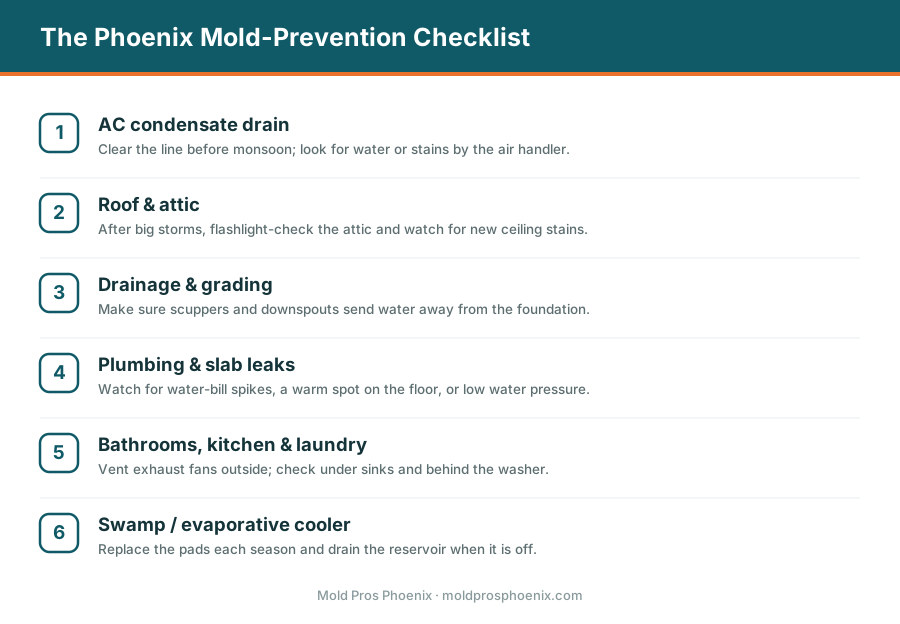
Checkpoint 1: AC condensate drain line (the top mold-prevention check)
Check this first. It is the most common hidden mold driver in Phoenix.
Phoenix AC systems produce almost no condensate from October through June — the desert air is simply too dry for the cooling coil to pull much moisture. That long dry period lets algae, biofilm, and fine desert dust accumulate inside the PVC drain line. When the monsoon arrives in July and the system suddenly shifts to producing two to four gallons per day, that buildup backs up the line. The drain pan fills, overflows, and water runs onto the ceiling below — often inside a wall where nobody sees it for weeks.
How to check it:
- Look at the area around the indoor air handler. If there is standing water in or near the unit, water staining on the ceiling tiles or drywall below it, or a musty smell coming from the supply vents, the drain line has likely backed up.
- Find the exterior drain line termination — usually a short piece of PVC pipe protruding from an exterior wall near the ground or exiting through the garage. During AC operation, there should be a slow steady drip. No drip at all while the unit is running is a sign the line is backing up.
- The drain pan safety switch on newer units shuts the AC off when the pan fills. If the AC cuts out unexpectedly, check the pan before calling for service.
The fix: clear the line before peak season. For the full clearing procedure, see how to clear a clogged AC drain line. Annual clearing in April or early May — before the monsoon condensate surge — is the single highest-value preventive maintenance item for Phoenix homes with attic or closet-mounted air handlers.
Checkpoint 2: Roof and attic after monsoon storms
Roof integrity matters more in Phoenix than most homeowners expect. Flat and low-slope roofs — common on Valley stucco builds — pond water during heavy monsoon downpours. The modified-bitumen membranes used on flat roofs can look intact and still have hairline cracks that only leak under hydrostatic pressure. Flashing around AC penetrations, vents, and parapet-to-roof transitions is the most common entry point for storm water.
How to check it:
- After any significant monsoon storm, scan your ceilings. A new brown ring or water stain means roof water has reached the structure. A stain caught the same day is a small repair; the same stain ignored until it smells musty is a remediation job.
- A flashlight attic check once or twice a season is the most reliable early-warning system. Look at the underside of the roof decking near the ridge, around any penetrations, and near the air handler. Dark, fuzzy, or powdery patches that do not wipe off cleanly are mold. Weathering stain is flat and uniform; mold has texture and spreads at the edges.
- Inspect the membrane and flashing on a flat or low-slope section in April or early May. Hairline cracks that do not leak in dry weather will fail in the first heavy storm. This is worth $150 in roof caulk to fix before it becomes a $3,000 remediation job.
The mold in the desert guide covers the specific sources in more detail — use it to understand why each driver happens; this page is about finding and preventing them.
Checkpoint 3: Drainage away from the foundation
Desert-home specifics: flat roofs use scuppers rather than gutters. A scupper that dumps water at the base of a stucco wall — instead of routing it out past the foundation — creates a slow moisture intrusion point right where the wall meets the slab.
How to check it:
- Walk the perimeter of the house during or immediately after a heavy monsoon rain. Water should drain away from the foundation, not pool against the stucco. Decomposed-granite grading settles over time and often creates a slight bowl against the wall.
- Check each scupper and downspout termination. The discharge should drop onto a splash block or into a drainage channel, not against the wall or into the decomposed granite directly under the parapet.
- Look at drip irrigation emitters. Lines positioned too close to the foundation — common in desert landscaping — send slow consistent moisture against the stucco. Move them at least 18 inches from the exterior wall.
- Pool splash-out against stucco does the same thing. The gravel or paving around a pool equipment pad should slope away from the house, not toward it.
Checkpoint 4: Plumbing and slab leaks
Post-tension slabs are common in Phoenix-area homes, especially in expansive-soil areas. A slab leak under a post-tension slab can be harder to spot, because the cabling and thicker concrete slow the visible cracking that signals a leak in a conventional slab. The tell-tale signs show up as behavior changes instead.
How to check it:
- Compare water bills month over month. A spike you cannot account for — no change in usage, irrigation, or occupancy — is the most reliable early signal of a hidden supply-line leak.
- Walk the floors barefoot after the house has cooled at night. A warm or damp spot on a tile floor in an area with no radiant heating is a potential slab leak signal.
- Low water pressure at a single fixture (not a whole-house drop) can point to a localized supply-line failure.
- Check under every sink, around the water heater, and behind the washing machine. Supply hoses on washing machines have a 5-to-7-year rated lifespan and fail without warning. A slow drip under a cabinet can run for months before it shows as staining.
A suspected slab leak needs a plumber, not a mold inspection. Fix the source first, then assess the moisture damage.
Checkpoint 5: Bathrooms, kitchen, and laundry
These rooms produce consistent humidity and have the most plumbing connections. Two items here are commonly missed.
Exhaust fan termination. Building code requires bathroom exhaust fans to vent to the exterior (IRC M1507.2). Not every older Phoenix home was built to current code, and fans venting into the attic are common in homes built before the 1990s. Every shower sends a pulse of warm, humid air onto the underside of the roof deck. The fix, connecting the flexible duct to a properly installed roof vent or soffit cap, is a two-hour repair that prevents years of attic mold.
Under-sink and supply connections. Open the cabinet under every bathroom vanity, the kitchen sink, and the laundry room. Look at the supply lines (the braided steel or plastic lines connecting the shutoff valve to the faucet) and the drain trap. Any staining on the cabinet floor, a mineral deposit ring, or musty smell in the cabinet means water has been there. Small, slow drips in enclosed cabinets often go unnoticed for months.
Checkpoint 6: Swamp cooler (if applicable)
Evaporative coolers, common in parts of the Valley and especially in older Mesa, Glendale, and Tempe homes, introduce water into the air supply system by design. When pads are not replaced seasonally or the water reservoir sits stagnant, mold grows directly inside the unit and distributes spores into the house every time it runs.
How to check it:
- At the start of cooler season (late spring), inspect the cooling pads. Pads that are matted, discolored, or smell musty need replacement before the unit runs.
- Check the water distribution lines for mineral buildup that can block flow and create dry spots where mold grows on partially wet pads.
- At the end of cooler season (late September or October), drain and dry the reservoir completely before winter. Standing water in a dormant cooler is an ideal mold environment.
The swamp cooler mold guide covers the full inspection and cleaning procedure.
The 24-to-48-hour rule for anything wet
When water gets into a home (a roof leak, an AC overflow, a flooded room), the critical variable is how fast you dry it. The EPA advises drying wet materials within 24 to 48 hours, because mold can begin to grow after that window. In Phoenix’s summer heat, where an unoccupied room can climb past 85°F, that window may be shorter.
Practical rule: any wet material that stays wet for more than two days should be treated as potentially moldy, not just damp. Drywall, carpet, and insulation that stay wet longer than 48 hours typically need to come out, not dry out. EPA’s own table is more conditional than that for wallboard specifically; when wet drywall can be dried in place walks the two tests it names. A dry surface is not proof the problem is resolved — the cavity behind wet drywall can stay damp for weeks after the face dries.
When a professional mold inspection is worth it
A mold inspection is not the same as a contractor estimate. An inspector uses a moisture meter to map hidden wet areas behind walls and above ceilings — areas a visual check cannot reach. It answers the question “where is the moisture and how far has it spread” before any work starts.
Four situations where it makes sense to pay for an inspection:
- Before buying a home. Especially if the property inspection flagged past water damage, the home is post-foreclosure, or the listing mentions any prior mold mitigation. Knowing the current state protects the purchase price negotiation.
- After a significant water event. A major roof leak, a slab leak, or a flooded room that was not dried within 48 hours. The inspection tells you whether the remediation is a surface job or a structural one.
- A musty odor that recurs. You have looked and cannot find the source. A moisture meter locates the wet area; the smell tells you the mold is already there.
- Unexplained respiratory symptoms. A household member with symptoms that improve when they leave the home. An inspection confirms or rules out mold before spending money on allergy testing.
A professional mold inspection typically includes a visual survey, moisture mapping, and a written report with findings and recommendations.
What to do if you find mold
Small areas on hard surfaces: The EPA’s guidance sets the DIY threshold at roughly 10 square feet. Areas smaller than that on hard, non-porous surfaces (tile, glass, solid-surface countertops) can be cleaned with detergent and water and dried completely. The mold has to be physically removed, not just killed with bleach: per the EPA, dead mold can still cause allergic reactions, so killing it is not enough.
Anything larger, porous materials, or recurring growth: Drywall, insulation, carpet, and wood framing are porous. Cleaning the surface does not reach the mold inside the material. These need to be removed and replaced. If the same spot keeps coming back after cleaning, the moisture source has not been fixed — find and address that first.
HVAC involvement: Mold near the air handler or in ductwork is a higher-priority professional job. The system can distribute spores to every room in the house while it operates. Do not run the HVAC until the mold has been addressed.
For professional remediation, the mold removal page covers how the full process works and what to expect.
For the full set of Phoenix mold guides, see our guide library.
Sources
- U.S. EPA — A Brief Guide to Mold, Moisture and Your Home: the 24–48 hour drying window to prevent mold growth, and that dead mold can still cause allergic reactions (killing it is not enough; it must be removed).
- U.S. EPA — Mold Cleanup in Your Home: the roughly 10-square-foot homeowner DIY threshold; remove porous materials.
- U.S. Department of Energy / Energy.gov — Air Conditioner Maintenance: keeping the condensate drain channels clear to prevent clogs and water damage.
- National Weather Service (Arizona) — Monsoon Information: the Arizona monsoon “officially runs from June 15th to September 30th.”
- Mold Pros Phoenix — The Desert-Mold Paradox: our psychrometric model of Phoenix AC condensate (the seasonal feast-famine pattern).