Snowbird Summer Home Mold Checklist: Closing Up a Phoenix House
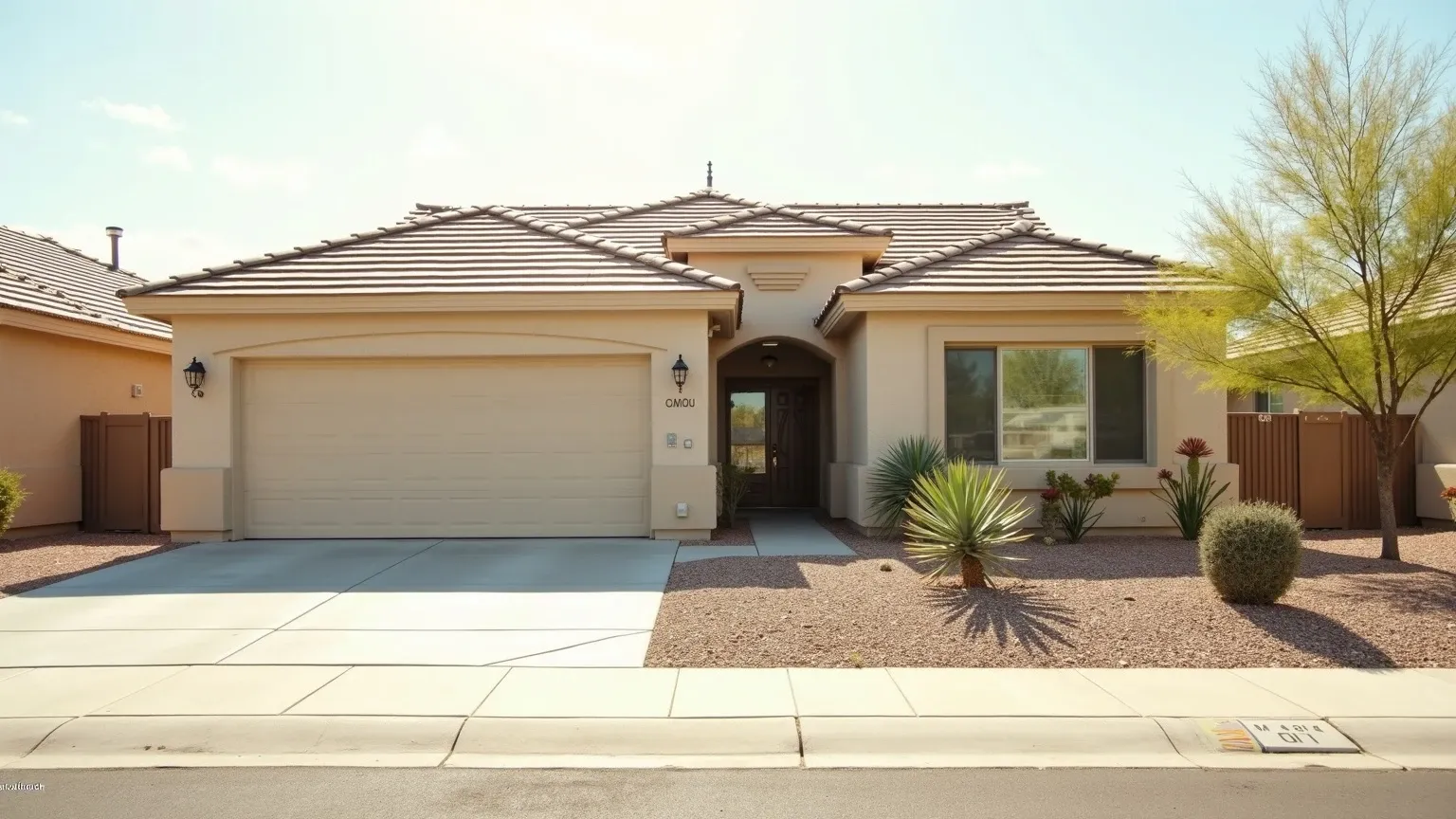
Snowbird Summer Home Mold Checklist
Don’t shut the AC fully off. To prevent mold while your Phoenix home sits empty all summer, keep the thermostat around 80 to 85°F (or run a dehumidifier) to control humidity, shut off the main water supply, clear the AC condensate line, and have someone check the house during monsoon season.
Every spring, tens of thousands of “snowbirds” close up a Phoenix-area home and head somewhere cooler, leaving the house empty from roughly April or May until October or November. That timing is the whole problem. The months you’re gone are the hottest and the most monsoon-heavy of the year — and an empty house is the perfect place for mold to grow unseen. This checklist is built specifically for the Valley snowbird who wants to come back to the house they left, not a remediation bill.
Why an empty Phoenix home is a summer mold risk
It’s tempting to think the desert protects a vacant house. The outside air is bone dry, the heat is brutal, and “mold needs moisture” — so what’s the risk? The risk is that a closed-up Phoenix home in summer combines three things that work against you at once.
Monsoon season hits while you’re away. Phoenix’s monsoon runs through the summer, and it’s the time of year when wind-driven rain finds the weak points in a roof — loose flashing, aging seams, a popped tile — and pushes water into the attic and down inside walls. Our Phoenix mold guides cover this in depth, but the short version is that the Valley’s worst water-intrusion season lands squarely in the window when snowbird homes sit empty.
Any water event has months to grow. When you live in a house, you catch problems fast. A drip under the sink, a stain blooming on the ceiling, a musty smell in a closet — you notice within a day or two and act. In an empty house, none of that happens. A slab leak, an AC condensate line that backs up, a water heater that finally gives out, or that monsoon roof intrusion can run for months with nobody there to see it. Mold doesn’t need much time once materials stay wet; it needs days, and it has the whole season.
The money-saving instinct makes it worse. The natural move when leaving for months is to cut the cooling bill by turning the AC off or cranking the thermostat as high as it goes. But with the AC off, nothing removes humidity from the indoor air. Heat and moisture build, and if any water does get in, the conditions to grow mold are already waiting for it. The “you can’t get mold in the desert” myth is exactly the kind of thinking that leaves a house defenseless — see our mold in the desert guide for why Phoenix mold is real and specific.
Put those together and the picture is clear: it isn’t the dry heat that gets a snowbird home. It’s an unwatched house meeting monsoon season with the AC switched off. Fix those three and you’ve handled most of the risk.
The core rule: don’t turn the AC off
If you remember one thing from this page, make it this: keep the air conditioning running enough to control humidity. The thermostat is your mold-prevention system while you’re gone.
Here’s the logic. Your AC doesn’t just cool air — it removes moisture from it every time it runs. The EPA recommends keeping indoor relative humidity below 60% (ideally between 30% and 50%) to limit mold growth, because above 60% you start getting the condensation and damp surfaces mold needs. In an occupied house, the AC holds humidity down as a side effect of keeping you comfortable. In an empty house with the AC off, nothing does that job, and indoor humidity is free to climb.
So you don’t turn it off — you turn it up. Set the thermostat high enough to keep the bill reasonable, but not so high that the system never runs:
- Aim for around 80 to 85°F. That’s warm enough to slash the cooling cost versus a comfortable setting, but the AC will still cycle on through the hottest part of the day and pull humidity out as it does. The Department of Energy’s guidance is that the smaller the gap between indoor and outdoor temperature, the lower your cooling bill — so set it as high as you can while still controlling moisture.
- Use a smart or programmable thermostat’s “hold” or “vacation” mode. Set one temperature for the whole time you’re away and let it run unattended. If you have a wifi thermostat, you can also check it from wherever you are.
- If your system has a humidistat, use it. Set it to hold relative humidity under 60% and let it call for cooling whenever the air gets damp, regardless of temperature.
- Consider a standalone dehumidifier as backup. Many snowbirds run a portable dehumidifier set to about 55% RH, draining to a floor drain or a condensate pump, so humidity stays controlled even on a mild day when the AC barely runs.
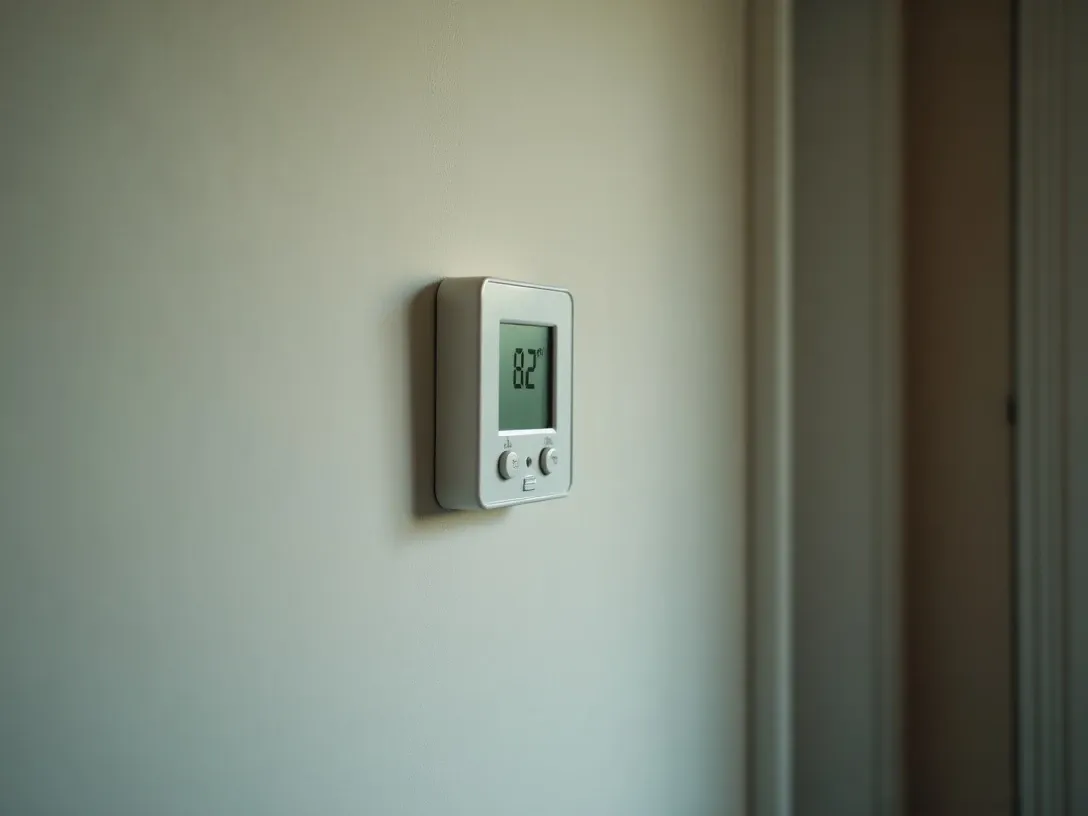
The trade-off is genuinely lopsided. Running the AC at a high summer setting for a few months costs real money, but it’s a fraction of what it costs to remediate mold that grew through an entire season behind a wall. Humidity control is the cheap insurance.
Shut off the water before you go
The second pillar is just as important and far simpler: turn off the water. A pipe, hose, or appliance that fails while the house is empty doesn’t make a small mess — it floods, because nobody is there to shut it off, and the water keeps coming until it runs out or someone discovers it weeks later.
The Insurance Information Institute advises knowing where your main shut-off valve is and turning off the water to appliances like the washing machine when you travel. For a months-long absence, take it further:
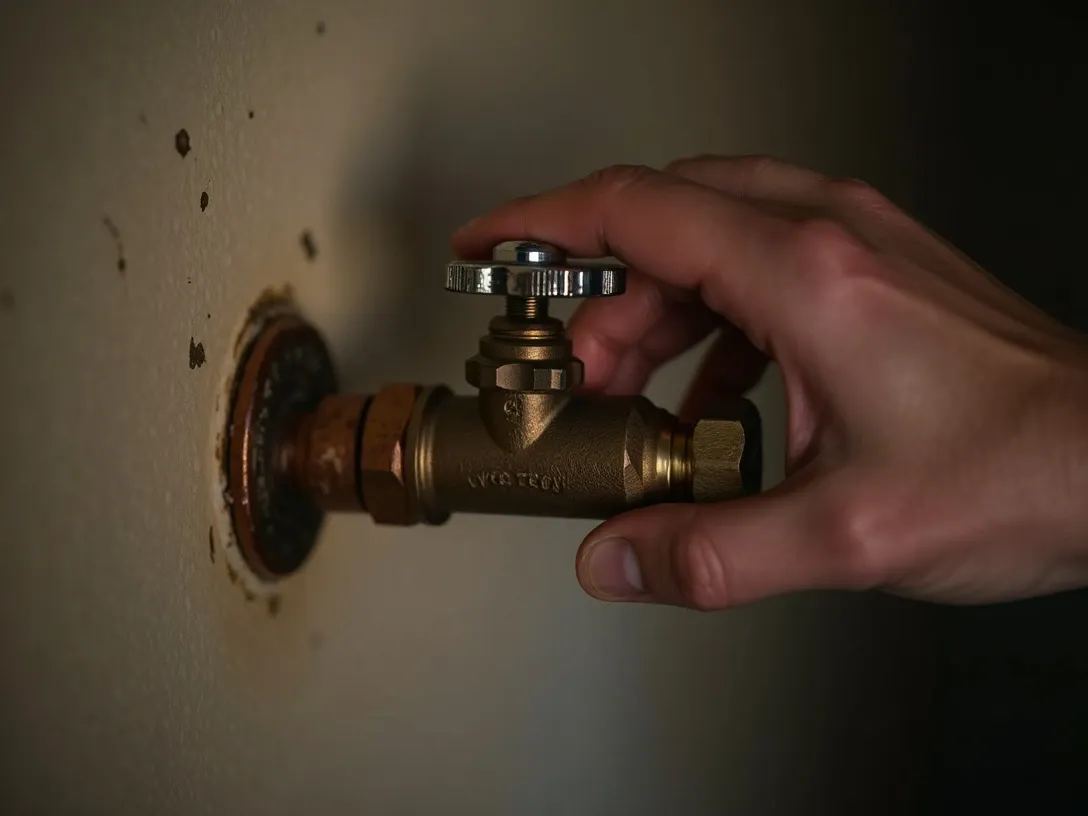
- Shut the main water supply valve for the whole house. This is the single most protective move — with the main closed, a burst supply line behind a wall simply can’t flood the house. Locate the valve before you leave and make sure it actually turns.
- At minimum, close the washer and water-heater supply lines. If you can’t or won’t shut the main, the washing-machine hoses and the water heater are the most common failure points; isolate those.
- Set the water heater to “vacation” or switch it off. The Department of Energy notes that for extended absences you can turn the water heater down to its lowest setting, use a vacation mode, or shut it off at the breaker — there’s no reason to keep a tank hot for an empty house, and a failed tank is a classic source of months-long leaks.
- Drain a swamp cooler you won’t run. If you have an evaporative (“swamp”) cooler and won’t be running it, drain it and shut off its water line so it isn’t sitting full of standing water feeding mold and bacteria.
One honest note on insurance, because it matters here: standard homeowners policies generally cover sudden and accidental water damage but exclude mold and gradual damage from neglect — and insurers increasingly deny claims on homes left unmaintained. A house you prepped and monitored is on much stronger ground than one you simply walked away from. Our guide on whether insurance covers mold in Arizona walks through where that line falls, and a burst line while you’re away is the textbook scenario it covers.
The full pre-departure checklist
Here’s the complete pass to make before you lock the door for the season. The two big rules above (humidity and water) lead it; the rest closes the smaller gaps.
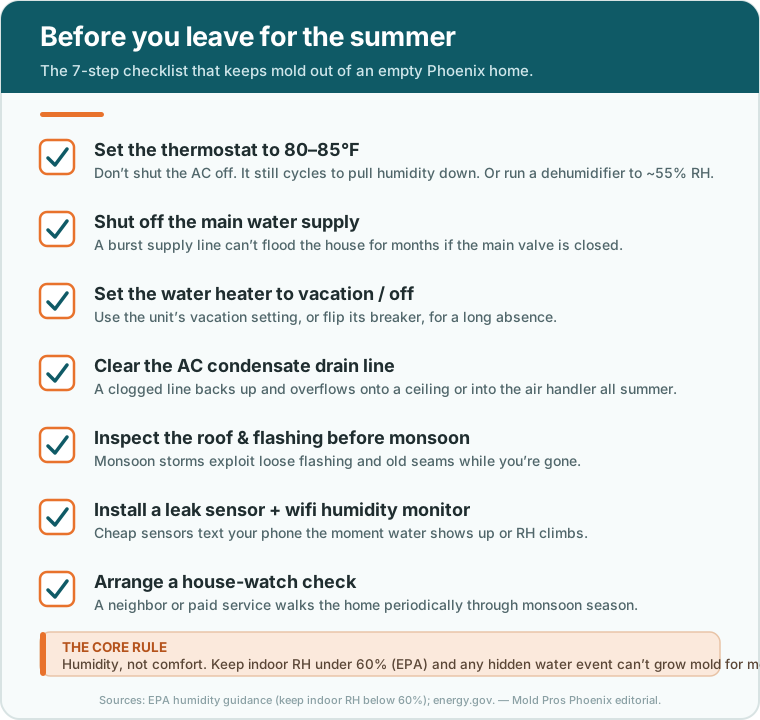
Working through it in plain language:
- Set the thermostat to 80–85°F (or run a dehumidifier to ~55% RH). Don’t shut the AC off — it’s your humidity control.
- Shut off the main water supply, or at least the washer and water-heater lines.
- Set the water heater to vacation / off for the duration.
- Clear the AC condensate drain line. A clogged line backs up and overflows onto a ceiling or into the air handler — exactly the kind of slow leak that runs all summer. Flush it before you go.
- Inspect the roof and flashing before monsoon. Have any loose flashing, popped tiles, or aging seams addressed before the storms arrive, not after they’ve already let water in.
- Fix any existing leak or damp spot now. A small drip or soft patch you’d “deal with later” becomes a mold colony over an empty season. Handle it before you leave.
- Leave interior doors open for airflow. Open doors let the conditioned, dehumidified air circulate into closets and back rooms instead of letting those stagnate.
- Install a smart leak sensor and a wifi temp/humidity monitor. Place leak sensors near the water heater, under sinks, and by the AC air handler; a humidity monitor that texts your phone tells you immediately if RH climbs or the AC quits.
Set up monitoring and a house-watch
Sensors are essential, but they have a hard limit: a leak sensor can tell you water showed up — it can’t put a tarp on a roof, shut a valve, or mop a floor. For a months-long absence during monsoon season, you want a human in the loop too.
Arrange for a neighbor you trust, a family member, or a paid house-watch service to check the home periodically while you’re gone. A good check takes ten minutes: confirm the AC is still running and the house feels cool and dry, scan ceilings and the tops of walls for any new stain, look around the water heater and under sinks for water, and walk the yard to spot obvious roof or exterior damage after a big storm. Monsoon damage and slow leaks happen on their own timetable, and the sooner someone catches one, the smaller the repair.
Pair the human checks with the sensors and you’ve covered both halves of the problem: the monitor tells you immediately that something’s wrong, and the person on the ground can actually do something about it. Either one alone leaves a gap; together they’re how a house survives a Phoenix summer empty.
The return inspection: catch what grew while you were gone
When you come back, do one deliberate thing before you settle in: a mold walk-through. Months of being away means months of not noticing, so the first hours back are when you find what the season did.
Start with your nose. A musty, earthy smell that wasn’t there when you left is the surest early warning that mold grew somewhere — and it often grows inside a wall or the air handler before it’s visible on any surface. If the house smells “off,” don’t dismiss it; that odor is information. Our guide on a musty smell in the house breaks down where that smell hides and what it usually means.
Then look, methodically:
- Ceilings and the tops of walls — new brown stains or bubbling paint point to a roof or plumbing leak that ran while you were away.
- Around the water heater, under sinks, and near the AC air handler and condensate drain — the usual sources of slow indoor leaks.
- Corners, closets, and the cool side of the house — where humidity and condensation collect and mold shows first.
If you catch a musty smell or spot a stain, the visible problem is almost always smaller than the moisture issue feeding it — so the right move is to find the source, not to paint over the symptom.
Coming back to a musty house? Here’s your next step
If you’ve just returned to a Phoenix home that smells musty, or you’ve found a stain or visible mold that wasn’t there when you left, the question isn’t really “how bad is this spot” — it’s “what’s the moisture source behind it, and how far has it spread.” That’s exactly what a mold inspection is built to answer: what the mold is, where it is, and the water source feeding it, so you fix the cause and not just the surface. Once the source is found and stopped, professional mold removal handles the cleanup of whatever grew while the house sat empty.
We handle mold across the Valley, and a free, no-obligation inspection quote is a straightforward place to start if you came back to something that doesn’t smell right. Fill out the form below and we’ll get back to you with a clear next step — better to know what a season did to an empty house than to move back in over it.