Can Mold Grow on Plastic? Yes — Here's What's Really Going On
Yes — mold can grow on plastic, but in most cases what you see is mold feeding on the thin organic film on the surface (dust, skin cells, soap scum, food residue), not the plastic polymer itself. Hard, smooth plastics are non-porous, so the EPA classifies them as cleanable surfaces: scrub with detergent and water, dry completely, and the item is reusable. The exception is foam and flexible plastic, where mold or organic film can penetrate more deeply.
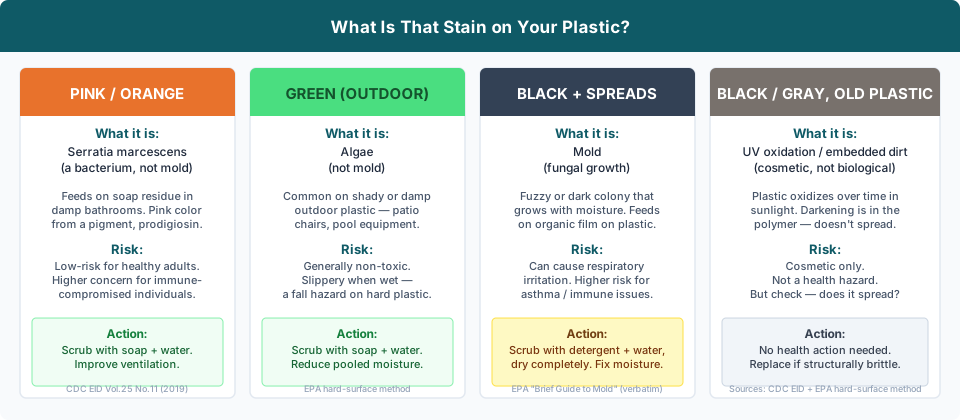
What you’re actually looking at — four stains, four answers
Before you grab the bleach or toss the item, look at the color and whether the stain is growing.
Pink or orange: usually bacteria, not mold
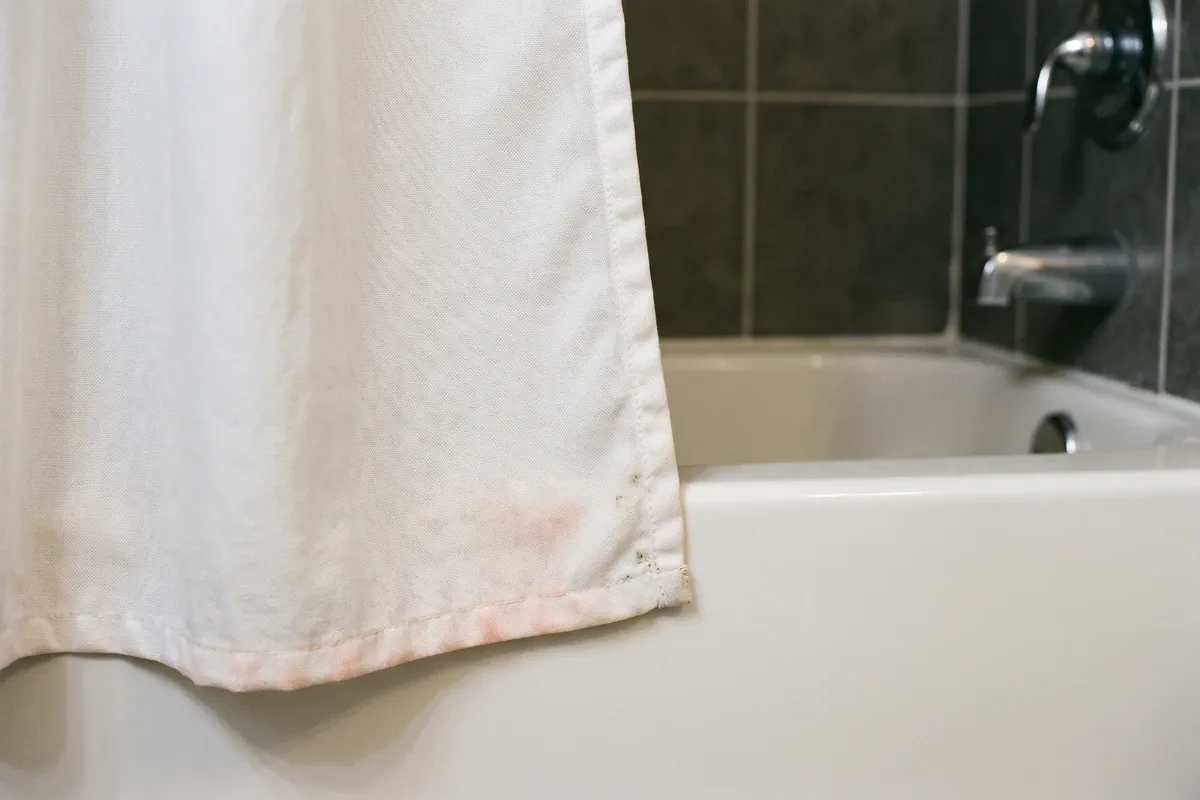
The pink-orange discoloration that shows up on plastic shower curtains, curtain liners, and shower corners is one of the most misidentified household stains. It is usually a pink-pigmented bacterial biofilm rather than mold — but which bacterium is not something you can settle by looking.
Serratia marcescens is the organism usually named. Per the CDC’s peer-reviewed Emerging Infectious Diseases journal, it “can be easily found in bathrooms, including shower corners and basins,” and its pink color comes from a pigment called prodigiosin. It is not the only candidate: the one comprehensive survey we could find isolated Methylobacterium from all 42 of its samples and the pink yeast Rhodotorula from 17. Whichever it is, it settles into the soap and shampoo residue that collects on damp plastic. Our guide to pink mold in the shower covers the identification and why the film comes back so fast.
For healthy adults it is low-risk. It is a genuine concern for immunocompromised people, infants, and those with open wounds — the CDC documents nosocomial (hospital-acquired) outbreaks involving this organism. Clean it the same way as mold: soap, water, dry completely.
Green on outdoor plastic: usually algae
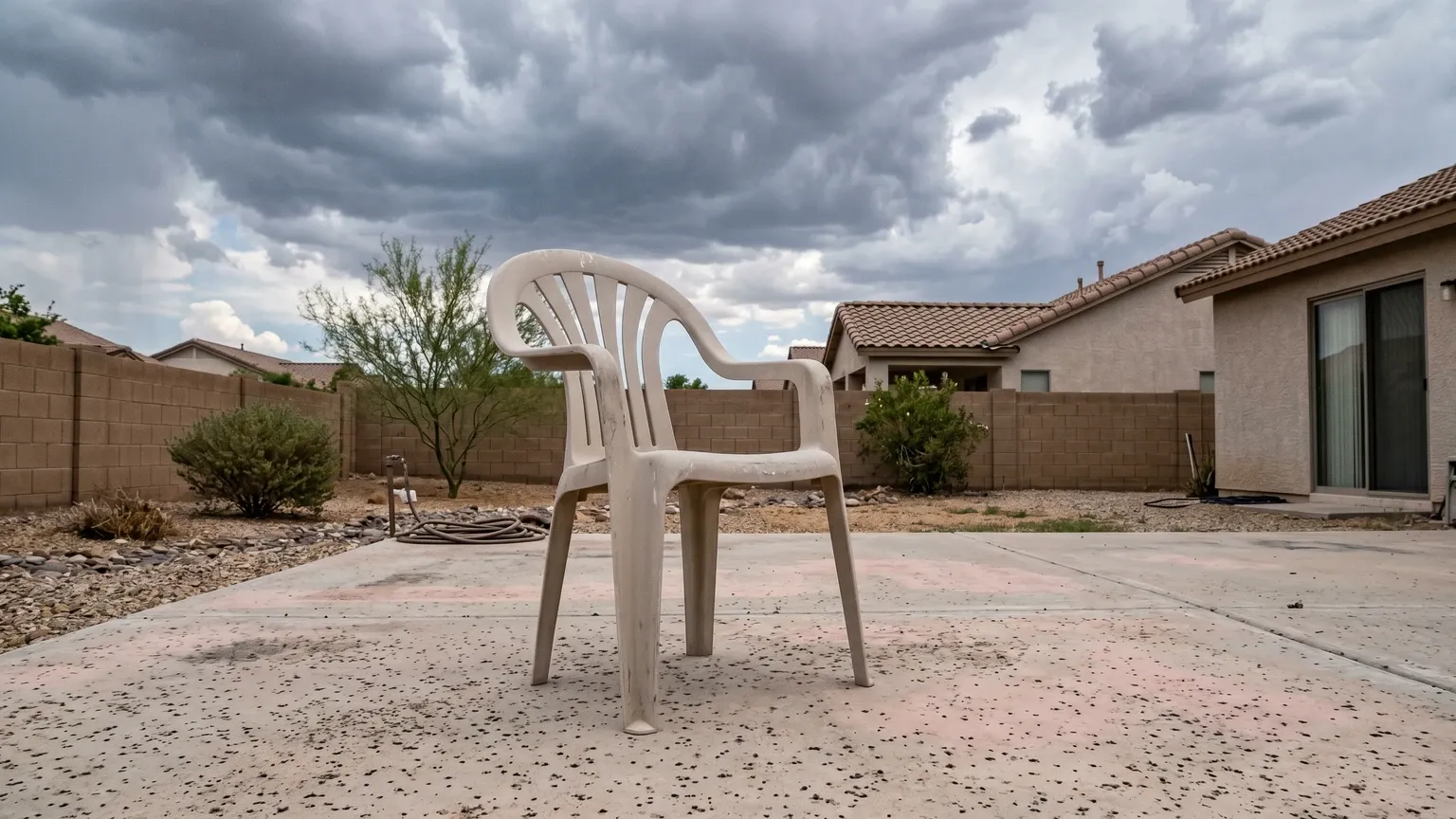
Green tinting on the shady or damp side of plastic patio furniture, pool equipment, or outdoor storage bins is typically algae, not mold. Algae thrive on moisture and sunlight exposure cycles — the wet side of an outdoor plastic chair fits that condition. It’s generally not a health hazard, though it can be slippery when wet. Soap and water remove it.
Black spots that spread with moisture: mold
Dark, fuzzy, or powdery patches that appear alongside moisture and spread over time — that is mold. It grows on the organic film that accumulates on plastic surfaces (soap scum, skin cells, food residue, dust) and needs a moisture source to continue. Hard, non-porous plastics can be scrubbed clean. Foam or cracked plastic is a different situation (see below).
Black or gray on old outdoor plastic: UV oxidation
Uniform darkening across old patio furniture, particularly plastic that has spent years in Arizona sun, is often UV oxidation embedded in the polymer surface. This darkening does not spread; it is in the material itself. It is cosmetic, not biological. The test: does the dark area grow at the edges when the plastic stays damp? If it stays put, it is likely oxidation or embedded dirt, not mold.
Does mold eat plastic?
In most cases, no — and the mechanism matters for knowing what you’re actually dealing with.
Most common household plastics (polypropylene, HDPE, the rigid polymers in food containers, patio chairs, LEGOs, and pool toys) give mold no organic carbon to metabolize. The polymer itself is not food. What mold feeds on is the layer of organic material that accumulates on the surface: soap scum, skin cells, dust, food film. Disrupt that film — clean the surface — and mold loses its food source.
However, there is a real exception worth knowing. Research published in Environmental Pollution (Khan et al., 2017) confirmed that Aspergillus tubingensis can biodegrade polyester polyurethane directly — the fungal mycelium colonized and physically degraded the polymer. Polyurethane is the material in foam pool noodles, foam seat cushions, and foam-backed rubber mats.
A second related exception: flexible PVC (the vinyl used in pool floats, inflatable toys, and some shower curtains) contains plasticizer additives — compounds added to make PVC soft and flexible. Certain fungi can metabolize those plasticizers, not the PVC backbone itself. This is a legitimate reason why a pool float or inflatable that has been stored damp for a season may develop mold even when the vinyl is clean.
The honest bottom line: for most hard plastic — the things you would put in your dishwasher or leave on a patio — mold grows on the surface film, not the plastic. For foam and soft vinyl, the line is less clear.
How to clean mold off plastic
The EPA’s guidance for non-porous hard surfaces is explicit: “Scrub mold off hard surfaces with detergent and water, and dry completely.” The CDC mirrors that exactly: “Clean with water and a detergent. Remove all mold you can see. Dry right away.”
The EPA classifies plastics and metals together in the same non-porous category (Chapter 5, Table 2 of Mold Remediation in Schools and Commercial Buildings) — the same surface class as concrete and sealed hard flooring. These surfaces get cleaned; they do not get thrown away the way porous materials do.
Here is the practical sequence:
- Put on gloves and an N95 mask before disturbing mold on any surface. CDC Tip #1.
- Ventilate the space — open windows, run a fan. CDC Tips #3 and #4.
- Scrub with dish soap or household detergent and warm water. Use a scrub brush on textured plastic, a sponge on smooth surfaces.
- Rinse clean and inspect. If any stain remains, repeat the scrub.
- Dry completely. In Phoenix, direct sunlight is effective — let the item dry in the sun after cleaning. The CDC flags incomplete drying as the most common reason mold returns.
- Do not paint or caulk over remaining stain. The CDC notes that “painting or caulking over mold will not prevent mold from growing.”
One safety note: do not mix bleach and ammonia. The CDC is direct: “DO NOT mix bleach and ammonia because it can create toxic vapors.” Soap and water is sufficient for cleaning plastic; there is no need to reach for bleach at all for most household plastic items.
When to discard instead of clean
The CDC’s discard threshold: “Anything that was wet with flood water and can’t be cleaned and dried out completely within 24 to 48 hours should be taken outside.” Apply that same standard to any mold situation, not just flooding.
Replace the item if:
- It is foam (pool noodles, foam cushions, foam-backed mats) and mold has grown into the material
- It is cracked or UV-crazed plastic where the fissures harbor mold that cannot be reached by scrubbing
- It is textured with deep grip grooves that cannot be cleaned thoroughly
- It still smells musty after a proper scrub and a full dry — that is the most reliable signal that mold remains
Phoenix realities: where plastic mold shows up locally
Phoenix is dry enough that mold on plastic is not a constant problem — but several local scenarios produce it reliably.
Pool floats and inflatables stored damp after monsoon season. From July through September, the Valley’s monsoon pushes garage humidity above 60% during storms. A vinyl pool float or inflatable tossed into the garage wet and stored on concrete can develop visible biofilm within a week. The vinyl case is the flexible-PVC plasticizer exception noted above: these items are genuinely more vulnerable than rigid plastic.
Plastic under sinks after a slab leak. Phoenix’s aging post-1980 slab-on-grade housing sees PEX and PVC supply line failures at slab penetrations. When a slow leak wets the inside of the sink base cabinet, the plastic P-trap drain and supply lines accumulate dark biofilm that looks alarming. The pipe is not the problem — the upstream leak is. Fix the water source first, then wipe down the plastic. If the leak has been running long enough to affect the cabinet itself, get a mold inspection to confirm nothing has grown in the wall cavity behind.
Under-sink and fridge leaks in otherwise dry kitchens. In Phoenix’s low ambient humidity, a slow fridge water-line leak behind the refrigerator can run for weeks before a smell develops. Plastic food storage containers on the floor of an adjacent cabinet can pick up biofilm from standing water at their base — not from the food inside.
Pool equipment closets. Plastic skimmer baskets, chemical buckets, and pool tools stored in a shaded equipment shed with a slow drip from a pump gasket grow surface biofilm. The plastic is the easy fix; the damp cinder-block or drywall corners of the shed are where to check for structural mold.
Which plastics resist mold better?
“Resist” is the right word — no common household plastic kills mold, and none is truly mold-proof. But the type of plastic affects how vulnerable it is.
HDPE (high-density polyethylene) — hard, rigid, waxy feel; used in cutting boards, storage totes, and outdoor furniture. No plasticizers, no organic substrate for mold to metabolize. Easiest to clean and keep clean.
Polypropylene (PP) — hard, slightly less waxy; used in food containers and dishwasher-safe items. Similar profile to HDPE. Cleans readily.
PVC (rigid) — used in pipes and some outdoor furniture. Relatively resistant in rigid form. Flexible PVC adds plasticizers and becomes more susceptible.
Flexible vinyl / flexible PVC — pool floats, inflatable toys, shower curtain liners. Contains plasticizer additives that certain fungi can metabolize. More vulnerable than rigid plastic, especially under prolonged damp storage.
Polyurethane foam — the most vulnerable common polymer. Peer-reviewed research has confirmed direct biodegradation by fungi. Pool noodles, foam seat cushions, foam-backed anti-fatigue mats: if mold has grown into the foam, clean and keep is not reliable.
When to call a professional
Plastic items themselves rarely warrant a professional mold call — they are either cleaned and kept, or replaced. The professional question arises when plastic is telling you there is a larger hidden problem.
Under-sink plastic with recurring biofilm often signals a slow supply line or P-trap leak that is also wetting the cabinet back wall and sub-floor. Once drywall, OSB, or wood gets involved, the mold removal scope changes and the 10-square-foot DIY window may not apply.
AC condensate system plastic — the PVC drain line, the drain pan, the ABS condensate trap — collects algae and biofilm from normal operation. A clogged drain line overflows into the ceiling or attic. If you see biofilm on the external end of the condensate line and notice any ceiling staining nearby, the line is probably blocked and water has overflowed somewhere. The plastic is a symptom; the ceiling is the actual mold risk.
Pool equipment with persistent drips — if the shed has a slow drip from a failing pump gasket and the walls are drywall or wood-framed, that damp corner may have established mold beyond what a surface wipe covers.
For anything that has wicked into drywall, insulation, or wood, see the mold remediation guide for what professional treatment involves.
Sources
- U.S. EPA. A Brief Guide to Mold, Moisture, and Your Home. epa.gov/mold/brief-guide-mold-moisture-and-your-home
- U.S. EPA. Mold Remediation in Schools and Commercial Buildings, Chapter 5. epa.gov/mold/mold-remediation-schools-and-commercial-buildings-guide-chapter-5
- CDC. 8 Tips to Clean Mold. cdc.gov/mold-health/communication-resources/8-tips-to-clean-mold.html
- CDC. Emerging Infectious Diseases, Vol. 25, No. 11 (November 2019) — “Etymologia: Serratia marcescens.” wwwnc.cdc.gov/eid/article/25/11/et-2511_article
- Khan, S., Nadir, S., Shah, Z. U., et al. (2017). Biodegradation of polyester polyurethane by Aspergillus tubingensis. Environmental Pollution, 225, 469–480. DOI: 10.1016/j.envpol.2017.03.012
- Yano, T., Kubota, H., Hanai, J., Hitomi, J., & Tokuda, H. (2013). Stress Tolerance of Methylobacterium Biofilms in Bathrooms. Microbes and Environments, 28(1), 87–95. DOI: 10.1264/jsme2.ME12146. pmc.ncbi.nlm.nih.gov/articles/PMC4070686