Pink Mold in Shower: Is It Dangerous?
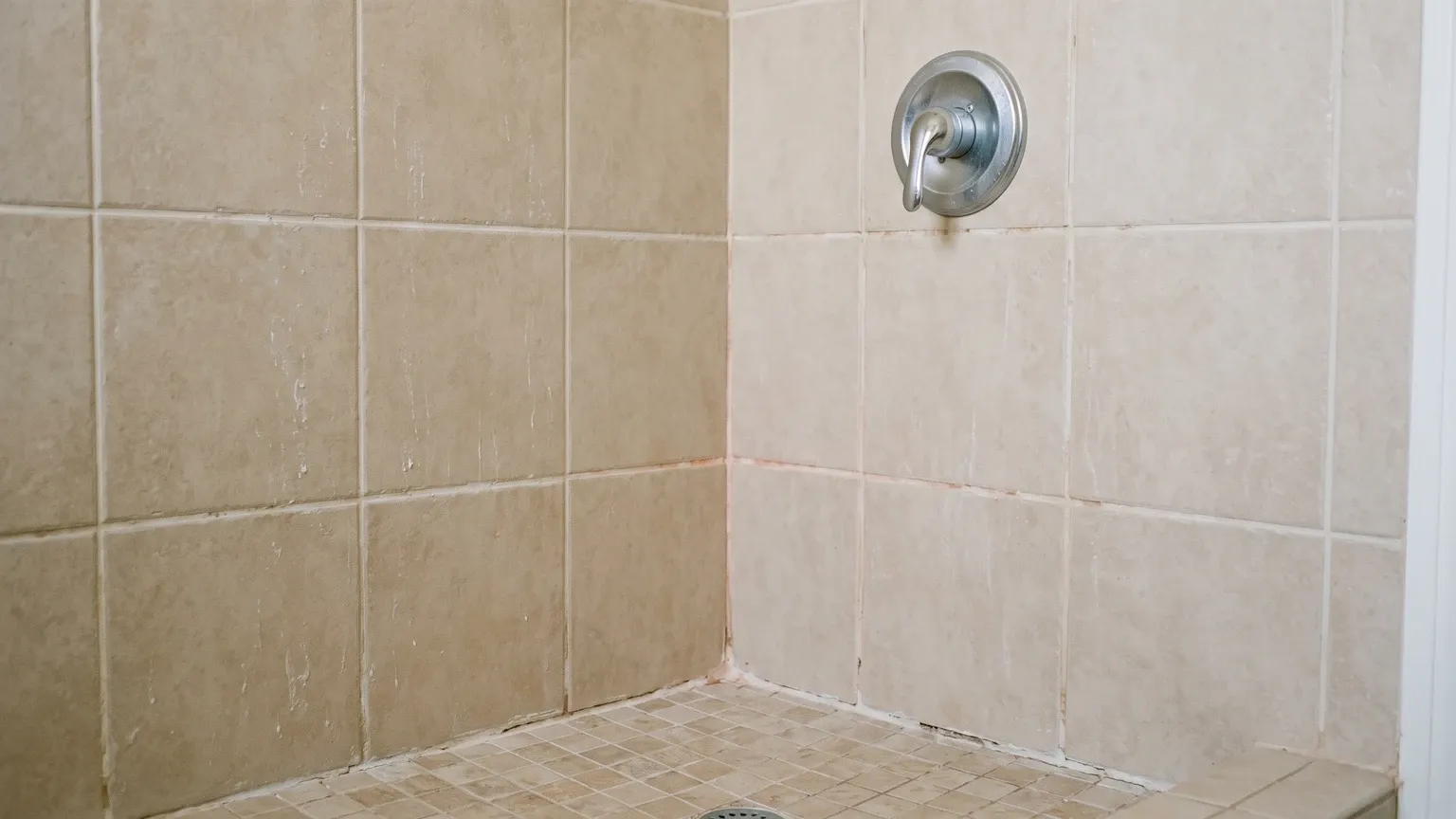
The pink mold people find in a shower is usually not mold at all — it is a bacterial biofilm. In the only comprehensive survey of pink bathroom biofilms we could find (Yano et al., 2013: 42 samples from 14 homes in Japan), Methylobacterium was isolated from every sample. A pink yeast, Rhodotorula, appeared in 17 of them, so “definitely not a fungus” overstates it too.
Most of the consumer pages we reviewed stop at that second sentence and name one organism the evidence does not single out. Here is what the research measured — including why the ring is back days after you scrubbed it out.
Is pink mold actually mold?
“Pink mold” names a color, not an organism. At least four things get called it, and the research separated them with a microscope, culture plates and genetic probes — not by eye.
| What it is | Kind of organism | What the evidence says | Where it turns up |
|---|---|---|---|
| Methylobacterium | Bacterium — “a pink pigmented facultative methylotroph” | Isolated from every one of the 42 pink biofilms surveyed; FISH on 14 of the samples indicated it was the major genus in all of them | Also isolated from tap water, human feet and mouths |
| Serratia marcescens | Bacterium; makes the pigment prodigiosin | CDC: “an environmental gram-negative bacterium that causes invasive disease in rare cases” | CDC’s entry says it “can be easily found in bathrooms, including shower corners and basins” |
| Rhodotorula | A yeast — so a fungus, though not a filamentous mold | ”Ubiquitous saprophytic yeasts”; isolated from 17 of the 42 biofilms | Has “a strong affinity for plastic”; found on shower curtains, bathtubs, toothbrushes |
| Filamentous mold | Fungus with hyphae and spores — what “pink mold” implies | Yeast-sized cells were seen in only 12% of the 42 surveyed biofilms; rod-shaped cells 0.3–0.5 by 0.9–1.4 μm predominated in all of them | Bathroom mold is usually the dark spotting on grout and caulk — a separate problem |
The authors name Brevundimonas and Rhodobacter among the pink-pigmented bacteria found in these settings too. Several organisms make the same-looking stain, which is the point: naming one of them as the cause is a guess you cannot settle by looking.
Worth stating: the electron microscopy also found networks of fungal filaments in 12% of the 42 biofilms. So mold can be living inside a pink film. It is just not what gives the film its color, and it was not what predominated in any of the samples.
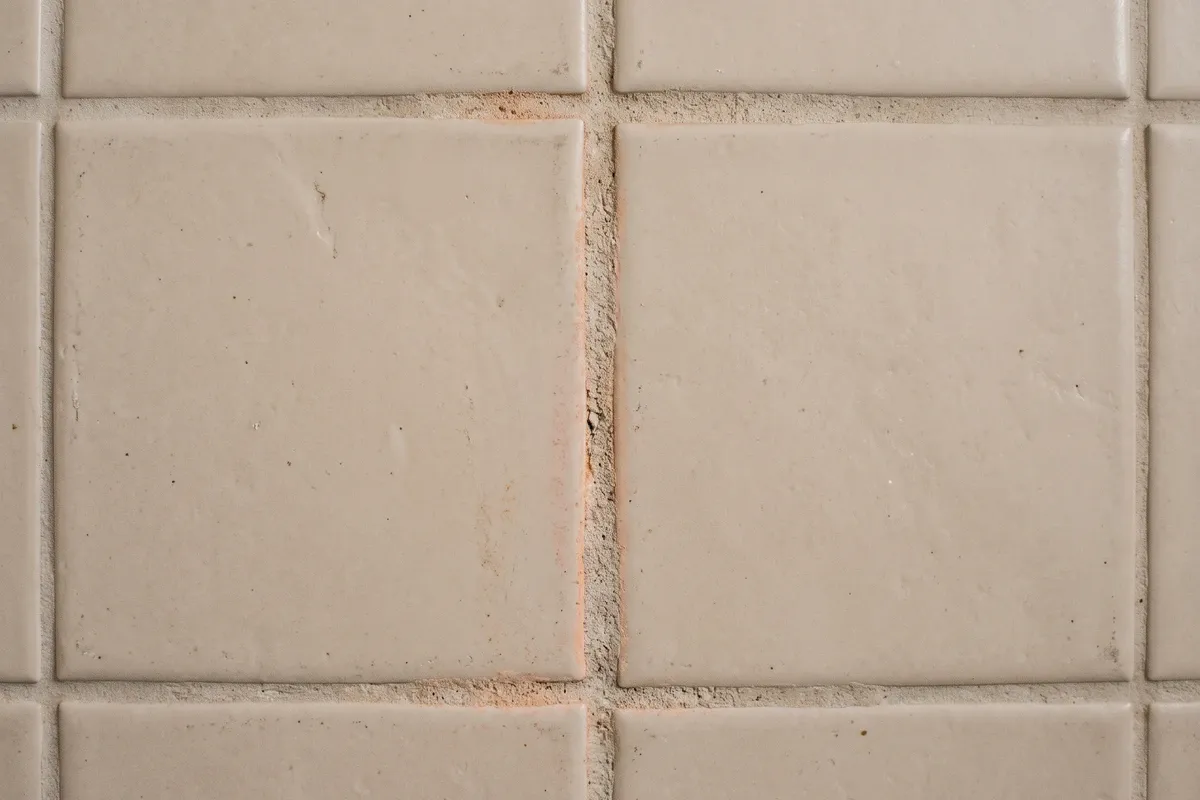
The slime test does not work
The standard shortcut — “slimy means bacteria, fuzzy means mold” — fails on its own numbers. In the survey, some 24% of the biofilms were wet and slimy, but the others were dry. Three in four would fail a test built on sliminess, including, to be fair, the way we have described this stain elsewhere on this site.
Texture works in the reverse direction: a dry, raised, fuzzy colony is the look of a filamentous mold, and why mold looks fuzzy covers that structure. For the broader question, see mold vs. mildew.
What the research actually found
Nearly everything above traces to one open-access paper: Yano, Kubota, Hanai, Hitomi and Tokuda, “Stress Tolerance of Methylobacterium Biofilms in Bathrooms,” Microbes and Environments, 2013 — as far as we can tell, the only comprehensive survey of what actually lives in pink bathroom film.
Biofilms were sampled with toothpicks from 42 points in the bathrooms of 14 houses in Japan — 42 samples from 14 homes, not 42 homes — yielding 1,691 colonies. Under a scanning electron microscope, bacterium-sized cells predominated.
The authors describe the behavior homeowners complain about in their own words: pink biofilms “develop relatively rapidly in bathrooms, can be difficult to remove, and are quick to recur,” and they “recur more rapidly than other forms of staining and are difficult to remove under dry conditions.” On the same group’s 2006–2007 survey, pink biofilms were the second most common microbial stain in Japanese bathrooms, after fungal black biofilms.
Where the film actually sits
The location breakdown is the most useful number in the paper, and we did not find it in any of the consumer coverage we reviewed:
| Where the sample came from | Share of the 42 biofilms |
|---|---|
| Near drains | 19% |
| Walls, floors, around doors or windows | 31% |
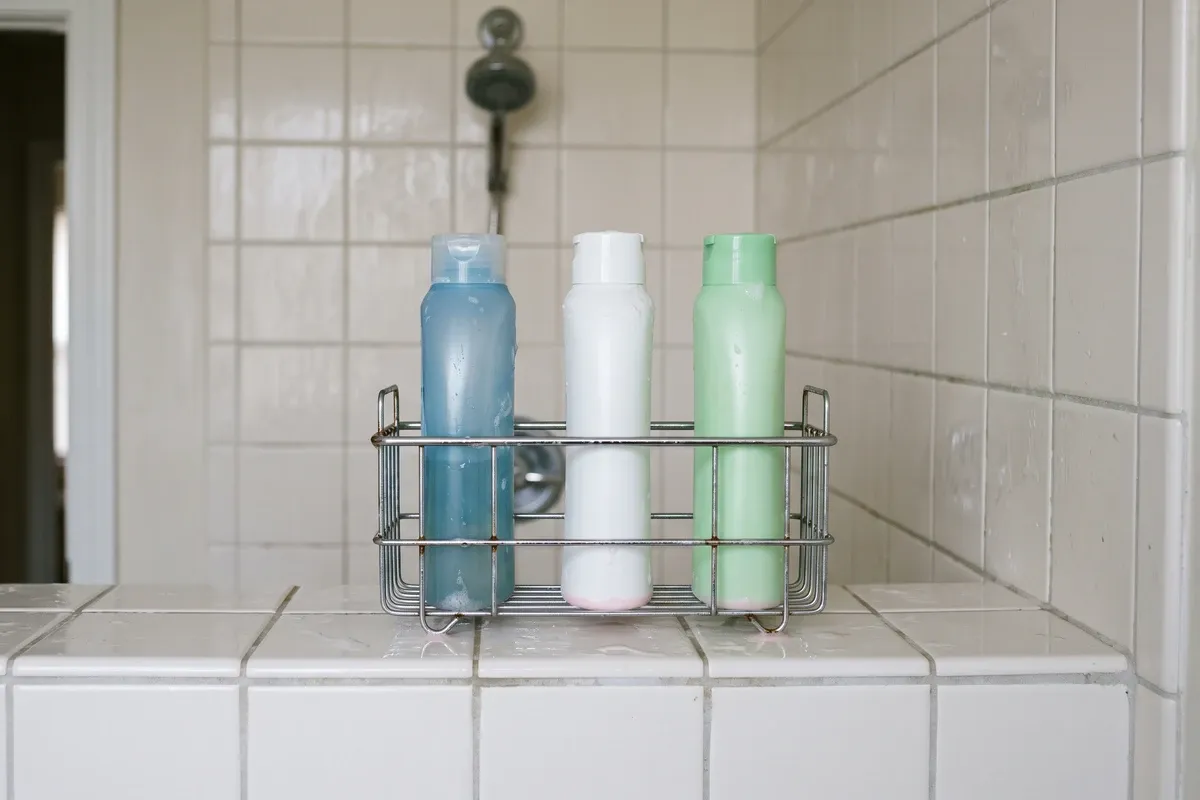
| In-bath products — chairs, bottles, brushes | 50% |
Half the pink film in the survey was not on the shower at all. It was on the stuff sitting in it.
Five limits on all of this
- Geography. Forty-two samples, 14 homes, all in Japan, and no equivalent US or Phoenix survey we could find. So we cannot claim Methylobacterium dominates a Phoenix shower — only that the one comprehensive survey we could find reported it dominant, which leaves the single-organism Serratia claim unsupported.
- Who paid for it. All five authors were R&D staff at Kao Corporation, a Japanese household-products maker — a commercial interest in bathroom cleaning, and it belongs alongside the findings.
- In vitro. The tolerance results below come from single-strain model biofilms on fiber-reinforced plastic sheets, not a lived-in shower.
- Soft water. Those model biofilms used water of 3.5° DH, described as the general degree of water hardness in Japan. That is soft water. Phoenix tap water is not.
- The confirmation subset was not random. The 14 samples re-examined by FISH were all taken from shampoo bottles and shower baskets — one of the three location buckets the same paper reports. The dominance finding rests on that frame.
Why it comes back a few days after you clean it
The same team tested how these organisms handle the two things a bathroom throws at them: disinfectant, and drying out. Both results run against intuition.
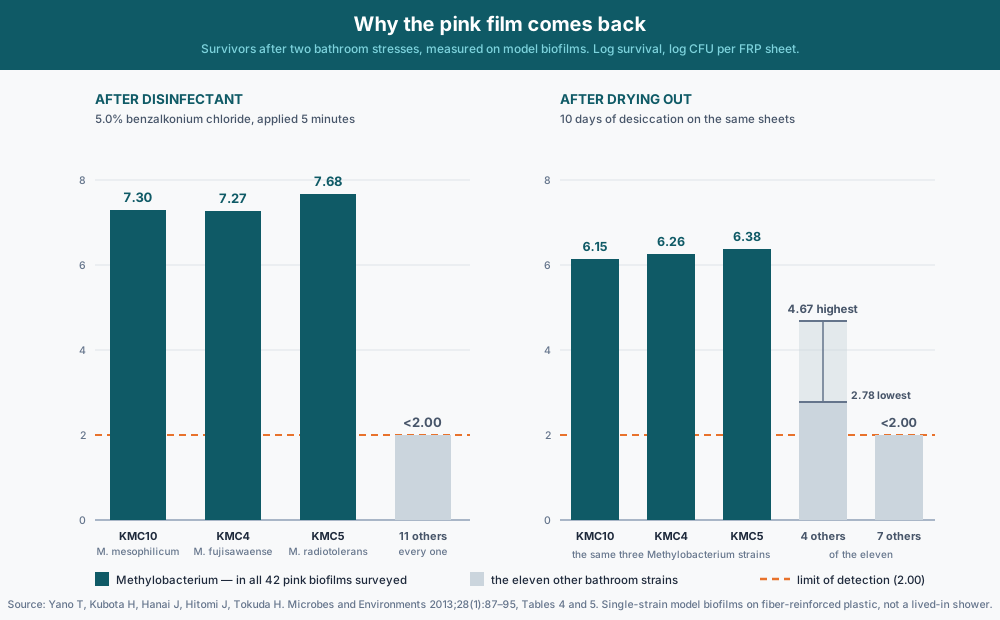
Disinfectant. On fiber-reinforced plastic sheets — the paper calls it “a general material of bath tubs, floors, and walls” — they applied 5.0% benzalkonium chloride for 5 minutes, then counted survivors in log CFU per sheet:
| Strain | Water, 5 min | 5.0% BAC, 5 min |
|---|---|---|
| M. mesophilicum KMC10 | 7.15 | 7.30 |
| M. fujisawaense KMC4 | 7.52 | 7.27 |
| M. radiotolerans KMC5 | 7.78 | 7.68 |
| All eleven other strains tested | <2.00 – 7.51 | <2.00 (every one) |
Read the bottom row first. Nine of the eleven other strains came through a plain-water rinse at 2.60 log or better; two were already below the detection limit after water alone. Five minutes of 5% BAC then put all eleven below it, and left the three Methylobacterium strains essentially where they started. The paper’s context: in a previous report of nosocomial outbreaks from inadequate antiseptics, bacteria were tolerant to at most 0.1–0.2% BAC, so the Methylobacterium in this flora was considered over 10 times more tolerant than previously reported strains.
Nor is it only quaternary disinfectants. In test tubes, Methylobacterium required greater than 5.0% of SDS, BDG and Triton X-100 for a four-log reduction at every exposure time tested — 5 minutes, 2 hours and 24 hours. SDS is soap chemistry. Most other species in that test died at less than 0.10% BAC or SDS.
Drying. The other half is worse for the usual advice. Ten days after drying, the reduction in Methylobacterium survival was less than one log:
| Strain | Log survival after 10 days dry |
|---|---|
| KMC10 | 6.15 |
| KMC4 | 6.26 |
| KMC5 | 6.38 |
| Seven of the eleven other strains | <2.00 |
| The other four (KMC15 / KMC16 / KMC18 / KMC22) | 3.40 / 2.78 / 4.67 / 3.88 |
Ten days is the measured figure in the paper’s table. Separately, the authors report in the abstract that some Methylobacterium survived and exhibited potential to grow after four weeks of desiccation without any nutrients.
An independent group reached the same place from the hospital side. Kovaleva, Degener and van der Mei describe Methylobacterium species as a cause of health care-associated infection, and say that ability — to form biofilms and to develop resistance to high temperatures, drying, and disinfecting agents — may explain their colonization of hospital equipment such as endoscopes. Two separate literatures, same property.
The practical conclusion: spray-and-wipe is the wrong model here. The agents that were tested, at concentrations far above anything under your sink, did not reliably reduce these organisms. Physical disruption of the biofilm is a different mechanism, and it is the step that carries the load. Scrub it off; the disinfectant is the finish, not the job — the same logic behind what bleach can and cannot do to mold.
Is pink mold dangerous?
Both of the easy answers are wrong, so here is the careful one.
All three pink organisms in this story are documented human pathogens — in healthcare settings. CDC’s Emerging Infectious Diseases describes Serratia marcescens as “an environmental gram-negative bacterium that causes invasive disease in rare cases,” with reported outbreaks linked to contaminated environmental sources such as water, soap, intravenous fluids and compounded drugs. Rhodotorula species, “previously considered nonpathogenic,” have emerged as opportunistic pathogens that colonize and infect susceptible patients; in humans they primarily cause bloodstream infections associated with central venous catheter use. Methylobacterium species are likewise described as a cause of health care-associated infection, including in immunocompromised hosts.
Notice what those settings share: catheters, endoscopes, contaminated solutions, patients already immunocompromised. We found no report of an infection acquired from cleaning a household shower — but none of these sources set out to look for one, so read that as an absence of evidence rather than evidence of absence.
Two readings, both true at once:
- For a healthy household, the pink ring is a hygiene and nuisance problem rather than an emergency. Clearing it is ordinary household work, provided you follow the bleach precautions in the next section.
- For someone immunocompromised, on chemotherapy, or managing a central line or other indwelling device at home, the cautious move is not to leave a known opportunistic organism on the bathing surfaces, and to have someone else do the cleaning. No study we found tests that either way; it is a precaution, not a finding.
This is general information, not medical advice. A specific health concern is a conversation for your doctor.
How to get rid of pink mold in a shower
Five steps, and the order is the point.
1. Scrub it off physically, with detergent. CDC’s instruction is to “first, clean visibly dirty surfaces with household cleaners containing soap or detergent before disinfecting with household bleach.” That sequencing does more work than usual here: in the test that measured it, the disinfectant and surfactants tried — benzalkonium chloride, SDS, BDG and Triton X-100 — did not reliably reduce these biofilms, so the brush, not the bottle, is what removes them. No one tested household bleach on them, though the same paper notes that some Methylobacterium have been reported to tolerate high chlorine concentrations. Stiff brush on grout, non-scratch pad on the surround.
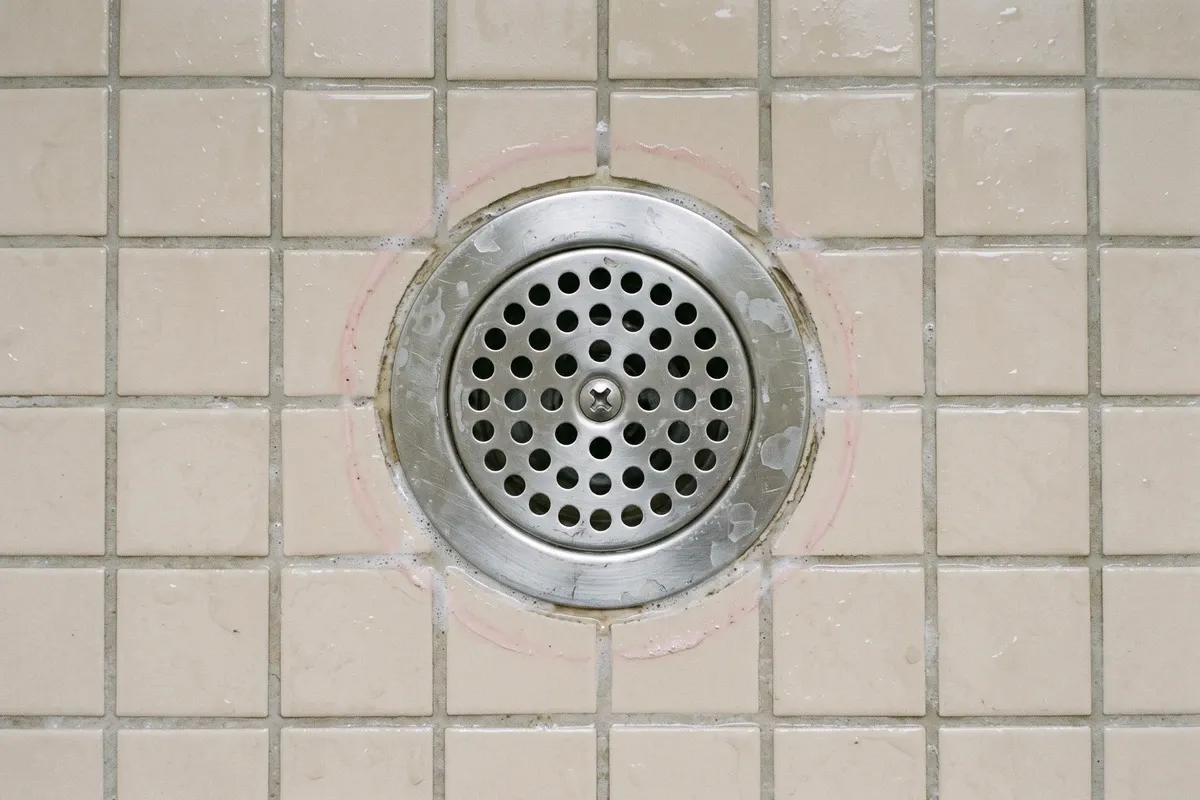
2. Do not skip the half you cannot see from the doorway. Half the surveyed biofilms were on in-bath products, and another 19% near drains. Take the bottles out and wash their bases. Wash the caddy, the shower chair, the loofah hook, the kids’ toys, the curtain and liner, and the drain surround — Rhodotorula in particular has “a strong affinity for plastic,” which is also why mold and plastic behave differently from mold on grout.
3. Disinfect, per CDC’s numbers. The dilution is “5 tablespoons (1/3 cup) of bleach per gallon of room temperature water or 4 teaspoons of bleach per quart of room temperature water,” left on the surface “for at least 1 minute before removing or wiping.” Most household bleach contains 5%–9% sodium hypochlorite. Never mix bleach with any other cleaner or disinfectant — CDC warns this “can release vapors that may be very dangerous to breathe in.” Open the door and run the fan while you work.
4. Rinse the residue down, and be honest about why. Squeegee the walls and door, rinse soap and shampoo film off the tile instead of leaving it there, and run the exhaust fan during the shower and for a stretch after. The usual explanation — that you are starving the organism — is the folk version, and we cannot source it: Yano and colleagues describe the bathroom as a low-nutrient environment, and the genus that dominated their samples is a methylotroph, not a documented soap-scum feeder. What rinsing does do is take away the film the biofilm sits on and the standing water it needs. Drying is not what kills these biofilms in the test that measured it, and ventilation remains the control for actual mold.
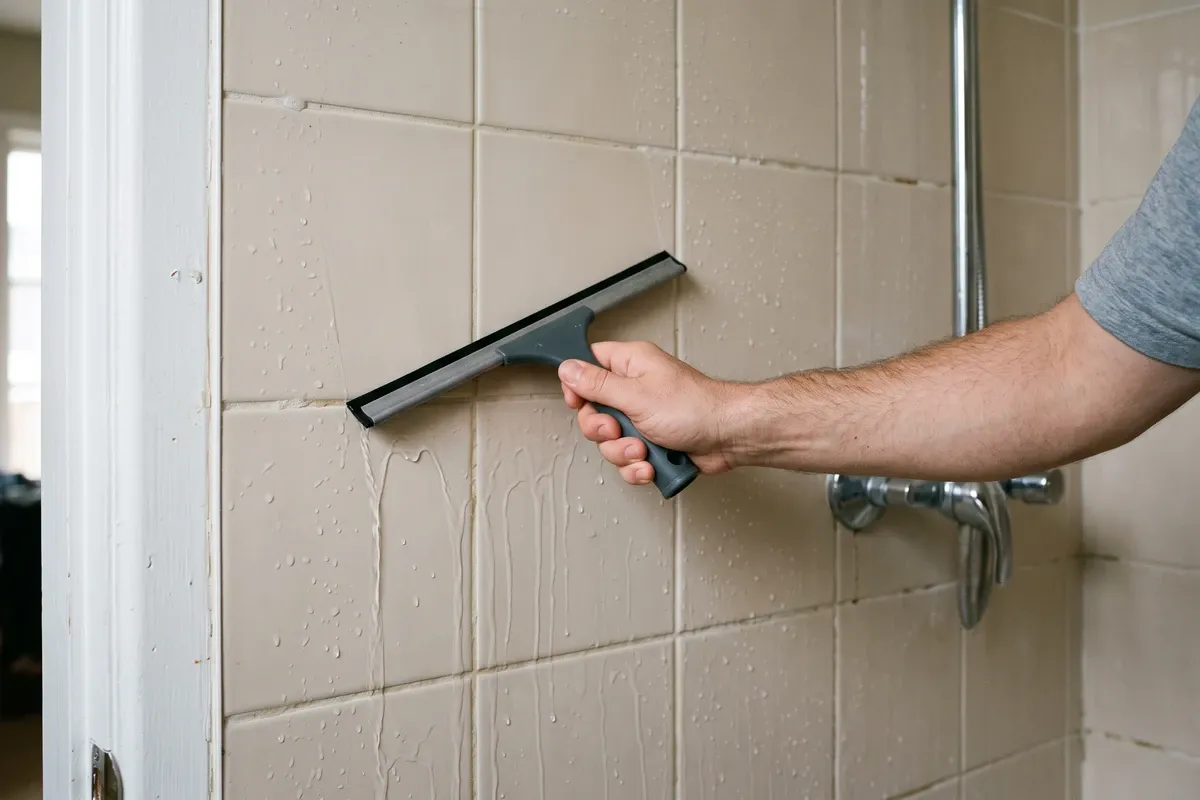
5. Set a cadence instead of expecting a cure. The honest expectation, from the paper’s own description, is that pink biofilms are quick to recur. A short scrub on a schedule beats a deep clean every few months followed by surprise.
Why Phoenix showers in particular
Start with the inversion. We spend a lot of this site explaining that “it’s too dry for mold in Phoenix” is false. For pink biofilm it is more than false: drying is a stress the organism that dominated that survey is documented to shrug off, so “keep it dry and it’ll go away” aims at a well-defended flank. Rinsing and drying still earn their place, for the reason in step 4 of the removal section — rinsing takes the residue and standing water away — and ventilation remains the control for actual mold. It is just not what clears this one.
Then the local conditions that keep showers wetter than people assume:
- Windowless interior baths with undersized or attic-dumping exhaust fans. A second or third bathroom placed mid-floorplan with one small ceiling fan is a common Valley tract-home layout. If that fan is weak, or ducted into the attic instead of outside, the moisture never leaves. Worth checking: where your bathroom fan actually vents.
- A shut bathroom door in summer. Air conditioning dries the house, but a closed interior bath with a weak fan does not get the benefit of it — the stall stays damp hours after anyone used it. A clogged AC condensate line adds water of its own; we cover that in clogged AC drain lines.
- Evaporative “swamp” cooler homes, which push humid air through the house for months at a time.
- The dry-season assumption. This one is our observation rather than a finding: in a climate this dry, a damp bathroom reads as a non-problem, and the film gets left alone until it is a ring.
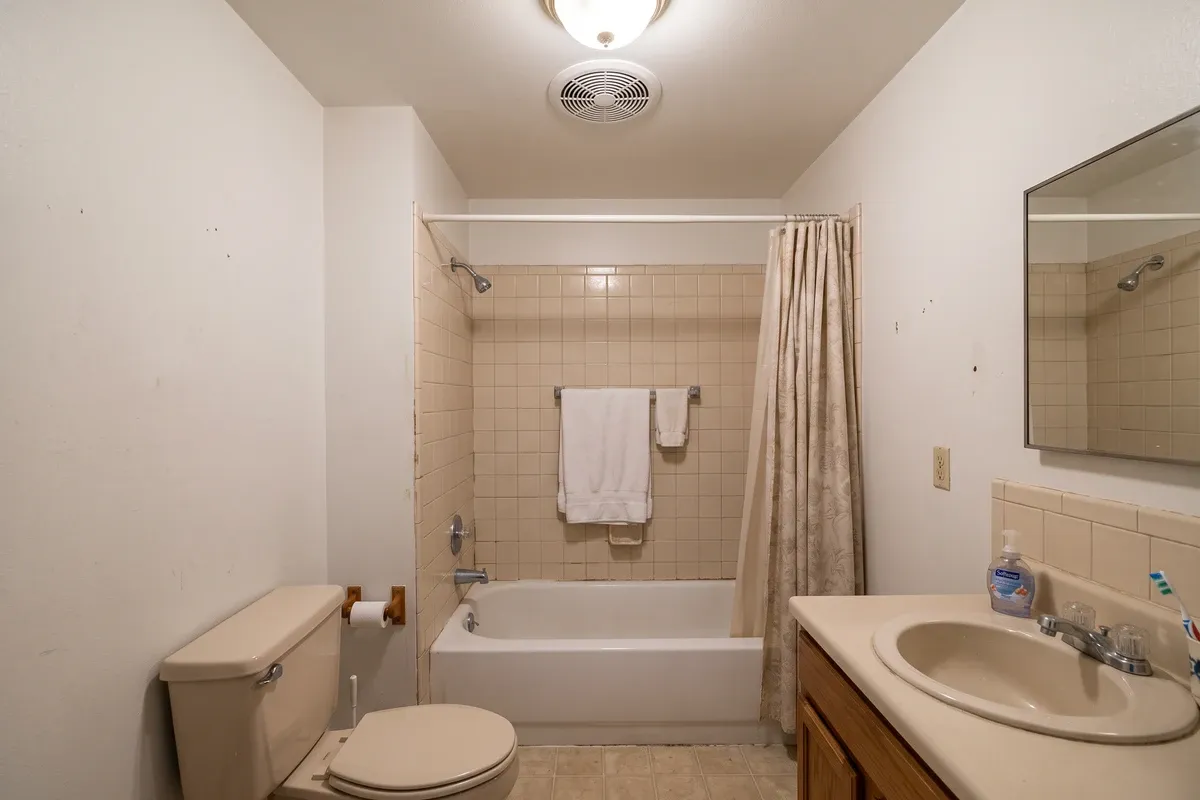
One local caveat, and it cuts against us. The study’s model biofilms were grown in soft water (3.5° DH, described as typical for Japan). Phoenix tap water is not: the City’s 2024 Water Quality Report puts total hardness at 158–344 ppm, or 9.2–20.1 grains per gallon. Phoenix conditions therefore sit outside what was tested, and we have no source linking hardness to biofilm growth rate.
When the pink film means there is real mold behind it
The pink film is not evidence of a mold problem. It is evidence of persistent water — and persistent water is also what real mold needs. So read it as a prompt to check the rest of the room, not as a diagnosis. That is reasoning from a shared cause, not a finding from any study cited here.
Four things move the question from housekeeping to building:
- Black or green spotting that returns within days of cleaning, especially on caulk lines and the ceiling above the shower.
- Grout or caulk gone soft or crumbly, or tile that sounds hollow when tapped — water getting behind the surface rather than sitting on it.
- A musty smell that outlasts the cleaning. If the room smells after everything visible is gone, the source is somewhere you cannot see.
- Staining spreading past the wet zone — the drywall beside the stall, the vanity base, or the ceiling below an upstairs bath.
Any of those is a water-path problem, not a cleaning problem, and that is where EPA’s mold cleanup guidance starts to apply — including its roughly 10-square-foot rule of thumb for what a homeowner can take on. That guidance is written for actual mold growth, not for this pink film. At that point our bathroom mold removal page covers how the work is scoped in a Phoenix bathroom.
Where this page stops and the next starts: this guide is the pink film. For black growth in the grout lines and the caulk bead, go to black mold in shower grout and caulk. For the rest of the room — ceiling spotting, the exhaust fan, a recurring musty smell — go to bathroom and shower mold. That page sends the pink-film question back here.
Sources
All accessed 2026-10-05.
- Yano T, Kubota H, Hanai J, Hitomi J, Tokuda H. “Stress Tolerance of Methylobacterium Biofilms in Bathrooms.” Microbes and Environments. 2013;28(1):87–95. doi:10.1264/jsme2.ME12146 — full text, PMC
- Nazzaro G. “Etymologia: Serratia marcescens.” CDC Emerging Infectious Diseases. 2019;25(11):2012. doi:10.3201/eid2511.et2511 — article
- Kamali A, Ferguson D, Dowless H, Ortiz N, Mukhopadhyay R, Schember C, et al. “Outbreak of Invasive Serratia marcescens among Persons Incarcerated in a State Prison, California, USA, March 2020–December 2022.” CDC Emerging Infectious Diseases. 2024;30(13):41–48. doi:10.3201/eid3013.230801 — article
- Wirth F, Goldani LZ. “Epidemiology of Rhodotorula: an emerging pathogen.” Interdiscip Perspect Infect Dis. 2012;2012:465717. doi:10.1155/2012/465717
- Kovaleva J, Degener JE, van der Mei HC. “Methylobacterium and its role in health care-associated infection.” J Clin Microbiol. 2014;52(5):1317–1321. doi:10.1128/JCM.03561-13
- U.S. CDC, Cleaning and Disinfecting with Bleach
- U.S. EPA, Mold Cleanup in Your Home
- City of Phoenix Water Services Department, 2024 Water Quality Report
For the rest of the library, see the full set of Phoenix mold guides.