Why Is Mold Fuzzy? (What the Fuzzy Growth Actually Is)
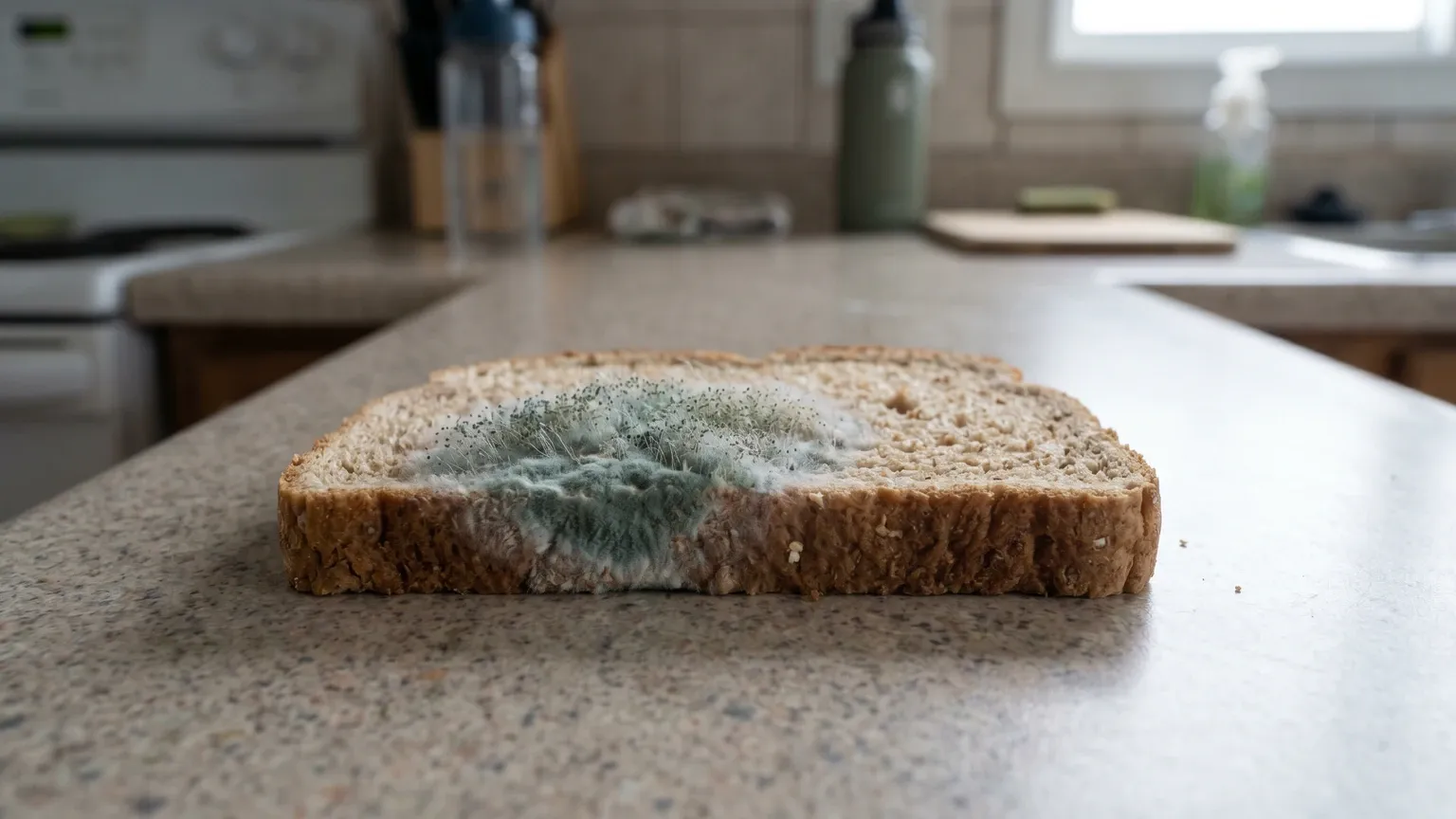
Mold is fuzzy because it grows two types of structures at once. The part you can see — the fuzz — is aerial mycelium: microscopic filaments called aerial hyphae that grow upward off the surface and carry spore-producing tips. The part you cannot see is vegetative mycelium: hyphae that grow down into the bread, drywall, or wood and absorb nutrients. According to Biology LibreTexts, “the portion of the mycelium that anchors the mold and absorbs nutrients is called the vegetative mycelium, composed of vegetative hyphae; the portion that produces asexual reproductive spores is the aerial mycelium, composed of aerial hyphae.” The fuzz is the aerial part doing its biological job.
What the fuzz actually is, biologically
Molds are multinucleated, filamentous fungi composed of hyphae. Each hypha is a branching tubular structure approximately 2–10 micrometers in diameter — about one-tenth the width of a human hair — usually divided into cell-like units by crosswalls called septa. The total mass of hyphae that makes up a mold colony is called the mycelium.
The two parts of that mycelium do different things:
Vegetative hyphae grow down into the substrate — into bread, drywall paper, wood grain, or fabric — and break down organic material to absorb nutrients. This part is invisible. It is doing the structural damage, feeding the colony from inside the surface.
Aerial hyphae develop as the colony matures. Per a University of Hawaii microbiology course, “specialized hyphae known as aerial hyphae develop as the mold colony matures.” These are the filaments that grow upward into the air. Their job is reproduction.
At the tips of aerial hyphae are structures called conidiophores — specialized spore-bearing stalks. Per Biology LibreTexts, spores are “borne externally on an aerial hypha called a conidiophore.” Each conidiophore produces conidia, which are the asexual spores that become airborne and seed new colonies when they land on a fresh damp surface.
So the anatomy of a fuzzy mold patch is this: a layer of vegetative hyphae feeding invisibly inside the surface, topped by a forest of aerial hyphae standing up into the air, each tipped with a conidiophore head loaded with spores.
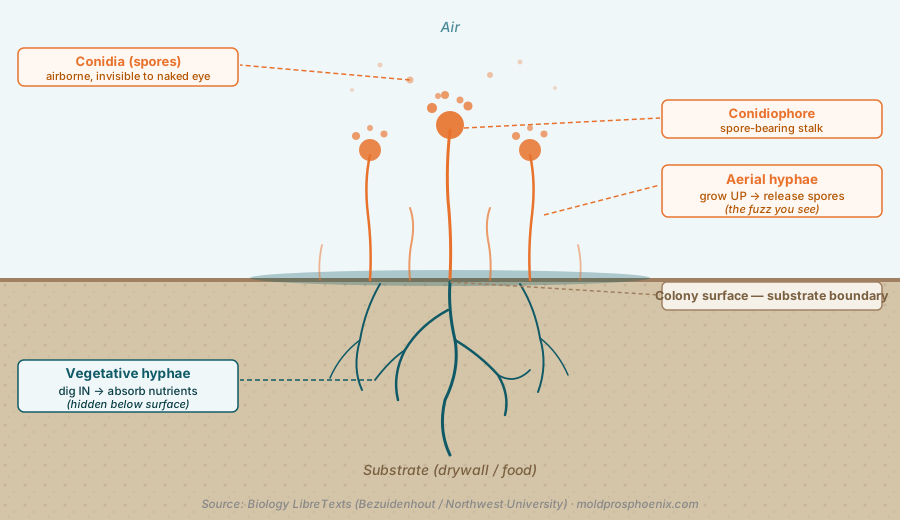
The mold on your bread, your bathroom wall, or your Phoenix garage cardboard boxes is doing exactly this — at a scale invisible to the naked eye per individual fiber, but visible as a colony.
Why fuzzy? What texture tells you about the growth stage
Texture is a real clue, but not a precise diagnosis. Here is what it generally means:
Cottony or candy-floss — tall, loose, tangled aerial hyphae with wide spacing. This is often characteristic of fast-growing Zygomycetes like Rhizopus (bread mold) or Mucor. These genera grow quickly on bread, soft fruit, and damp paper. The aerial hyphae are long and wide, which gives the colony a three-dimensional, cloud-like look.
Velvety or suede-like — short, dense aerial hyphae with a powdery colored surface. Aspergillus and Penicillium commonly look this way. The density of the short filaments gives a velvet texture, and the colored layer on top is the mature spores.
Powdery or dusty — this is mature sporulation on almost any genus. When you disturb a dusty mold patch and see a puff of colored particles, those particles are conidia — the spores themselves, not the hyphae. This is the most important safety note about fuzzy mold: dry-brushing or wiping without wetting the surface first launches spores into the air. Wet-wipe, do not dry-brush.
Slimy or wet-looking — this is usually not mold at all. Bacterial biofilms and yeast do not produce aerial hyphae, so they grow flat and wet. Pink slimy growth is almost always bacteria; the fuzz test fails immediately. More on that below.
The CDC notes that mold can look like spots of many different colors. Neither the texture nor the color alone is a reliable species ID — that requires microscopy or lab culture. The EPA confirms that both white and black molds exist across many genera.
Mold vs. yeast vs. Serratia (the pink-shower question)
These three things look different for a specific biological reason. Understanding the difference saves a lot of unnecessary alarm — and prevents cleaning the wrong thing.
Per NCBI’s Introduction to Mycology, “yeasts are microscopic fungi consisting of solitary cells that reproduce by budding. Molds, in contrast, occur in long filaments known as hyphae, which grow by apical extension.” Yeast is unicellular. It has no aerial hyphae to be aerial with. That is why a sourdough starter or kombucha SCOBY is slimy, not fuzzy. No filaments, no fuzz.
Serratia marcescens is different again — it is not a fungus at all. It is a gram-negative bacterium that forms pink-to-orange biofilms in showers, drains, toilet bowls, and the underside of shampoo bottles. Its pink color comes from a pigment called prodigiosin, which smears wet when rubbed. Real mold, by contrast, produces spores that rub off as dry-ish colored dust. That rub test is one of the fastest ways to distinguish mold from bacterial slime.
| Feature | True mold | Yeast | Serratia (pink slime) |
|---|---|---|---|
| Kingdom | Fungi | Fungi | Bacteria |
| Cell structure | Multicellular filaments (hyphae) | Solitary cells | Single cells |
| Appearance | Dry fuzzy / cottony / velvety | Slimy smooth film | Slimy pink-to-orange |
| Reproduction | Spores from conidiophores | Budding | Cell division |
| Aerial 3D structure | Yes — aerial hyphae | No | No |
| Common location | Food, drywall, wood, fabric | Beer, bread, kombucha, damp starches | Shower grout, drain rings, toilet lines |
| Rub the color | Dry dust (spores) | Smooths flat | Smears (prodigiosin pigment) |
Pink slime in a Phoenix shower drain is Serratia, not mold. It scrubs off with baking soda and diluted bleach or hydrogen peroxide. The moisture source — warm standing water, soap scum — feeds it the same way moisture feeds mold, per the EPA’s guidance that “none of them will grow without water or moisture.” Fix the wet surface and both problems become easier to control.
What mold color actually tells you
The color of a fuzzy mold patch comes from the pigmented conidia — the spores at the tips of the conidiophores. It is not the hyphae themselves that are blue or green; it is the spore coating.
Common color patterns in mycology teaching materials: blue-green fuzz on citrus or bread is often (though not always) Penicillium. Black-green velvet on humid walls is often Cladosporium or Aspergillus niger. Yellow-green fuzzy patches are often Aspergillus. White cottony growth is often Rhizopus or Mucor.
The hedge here matters: color alone cannot confirm species. Many genera overlap in color, and the same species can shift pigmentation depending on age, temperature, and what it is growing on. Real species identification requires microscopy or lab culture.
More practically: the CDC is direct that color does not determine how dangerous a mold is. The “black mold = toxic mold” framing that circulates online does not reflect the evidence. The EPA confirms that many molds are black. Mycotoxin production depends on the specific strain and growing conditions, not the color visible to the naked eye. Any indoor mold growth warrants the same response regardless of color: fix the moisture source and remove the growth.
For Phoenix homes specifically, mold color follows the local moisture sources. The blue-green on citrus left on the counter during monsoon season. The black-brown velvet ring around an AC supply-register grille — condensation at the boot-to-ceiling joint. The white cottony patches on cardboard boxes on a garage floor after a monsoon humidity swing. The color tells you roughly what grew. It does not tell you what to do about it differently.
Phoenix fuzz: what you are actually seeing by location
Behind the fridge after a slab leak or vacation: pale, cottony, often tinged gray-black at the tips. The cottony texture is characteristic of Rhizopus-style aerial mycelium — long, loose, three-dimensional. The gray-black tips are mature conidia. Phoenix slab leaks stay dark and dry-looking on the concrete surface while the drywall behind them holds moisture for weeks. Homeowners who leave the AC off in July come home to a colonized area behind the refrigerator line.
Blue-green fuzzy dots on citrus stored on the counter during monsoon: velvety blue-green colonies with a white halo at the growing edge. The white halo is new aerial hyphae that have not yet produced mature spores. The blue-green center is mature conidia. Monsoon-season humidity can spike indoor relative humidity significantly overnight, and citrus skin provides a ready food source.
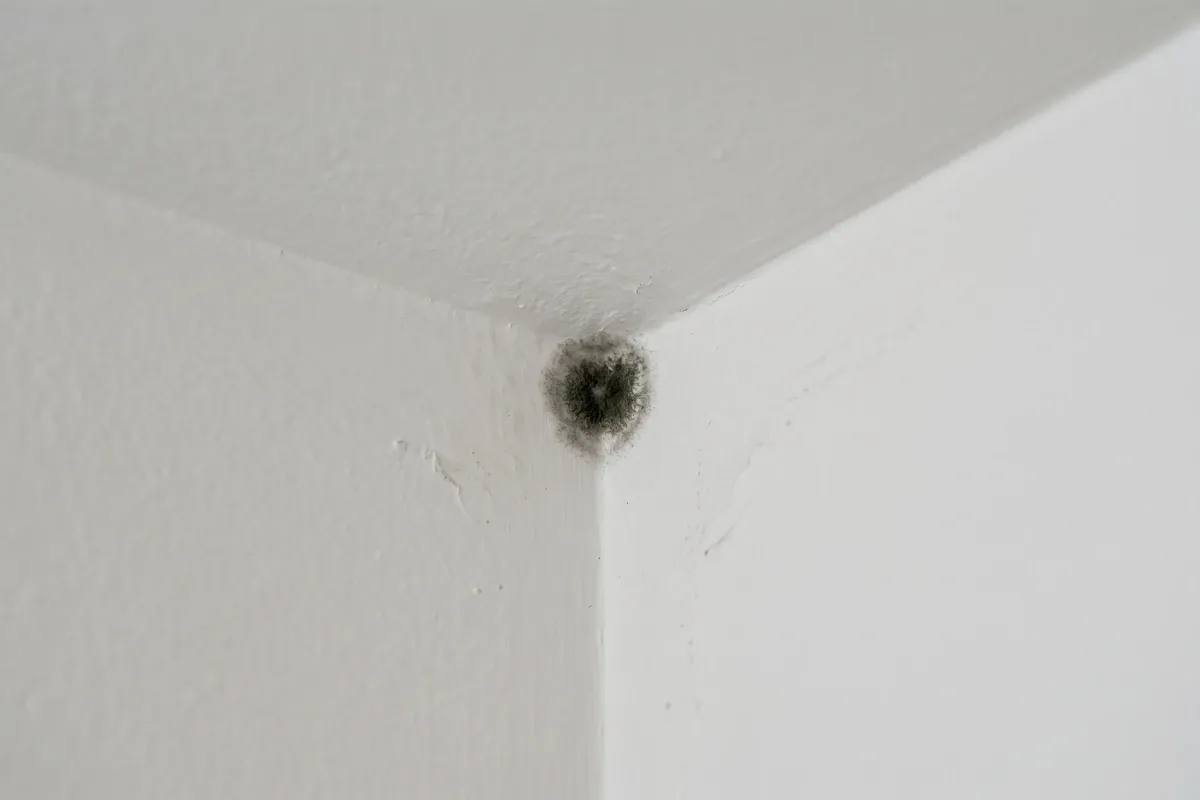
Black velvet around an AC register grille: dark, flat-ish velvet ring on the ceiling drywall around the supply opening. This is one of the most common ceiling-mold patterns in the Valley — condensation at the boot-to-ceiling joint, where 55°F supply air meets the ceiling surface in a hot attic environment, every summer, every day.
White fuzz on garage cardboard after monsoon: dry, whiskery white growth on boxes stored on a concrete floor. Garages are unconditioned; monsoon humidity enters through the door gap and the concrete wicks additional moisture from below.
Slimy pink in the shower drain or grout: not mold. Serratia marcescens. The slimy texture and smearing color are the giveaways. Treat it as a bacterial biofilm, not a mold colony.
What to do once you can see the fuzz
The EPA’s rule of thumb: moldy areas under about 10 square feet on hard, non-porous surfaces can be handled by a homeowner. The critical steps — and the ones most often skipped — are: fix the moisture source first, then clean the mold.
If you can see fuzzy growth, the colony is already sporulating. The EPA recommends wetting the surface before cleaning to reduce airborne spore release, wearing gloves and an N95 mask, and not using dry methods (brushing, dusting) that aerosolize conidia. For more on cleaning methods and what works on which surfaces, our guide on whether bleach kills mold covers the common approaches and their limitations on porous vs. non-porous materials.
When fuzzy mold appears on grout, tile, or shower surfaces, the question of where the moisture is coming from matters more than the cleaning method. Our bathroom and shower mold guide covers the Phoenix-specific ventilation and leak causes that make bathroom mold keep coming back.
If you find fuzzy growth on a wall and you are unsure whether it is mold or mildew, our mold vs. mildew guide explains the physical differences in depth — depth of penetration is the key variable.
For fuzzy mold that covers more than a small patch, or that you can smell but cannot find, or that involves an HVAC system, a professional mold inspection is the fastest way to find the moisture source and confirm the scope before you start cleaning.
The whole pattern of Phoenix indoor mold — what causes it, what it looks like, and what stops it — comes down to the same thing the EPA states plainly: “mold may begin growing indoors when mold spores land on surfaces that are wet.” The fuzz is biology doing its job efficiently. The moisture source is what you can actually control. See our full Phoenix mold guide hub for coverage of every local scenario.