Can Mold Make Your Pets Sick? What Vet Science Says
Yes — but it depends on the route. Inhaled household mold acts as an allergen in dogs: itchy skin, sneezing, nasal discharge. The bigger danger is eating moldy food, which can cause vomiting, tremors, and seizures. Serious airborne poisoning is rare. In Arizona, don’t confuse household mold with valley fever — a different soil fungus entirely, covered below.
How inhaled mold spores affect dogs
The clearest evidence for mold affecting pets through inhalation is in dogs, and the mechanism is allergic, not toxic.
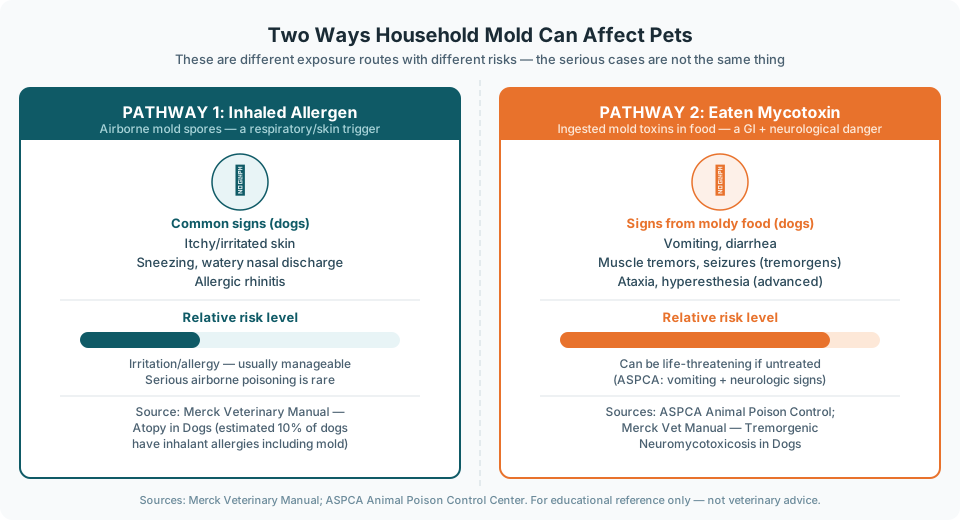
The Merck Veterinary Manual’s entry on atopy in dogs notes: “It has been estimated that 10% of all dogs have these allergies, which are commonly due to inhaled substances, such as dust mites, pollen, mold, or dander.” The signs are skin-first: itching, redness, and irritation. Dogs with mold allergy may also show allergic rhinitis — sneezing and watery nasal discharge.
This is a real response, but it is allergic sensitization, not poisoning. The dog’s immune system is overreacting to airborne proteins the same way a hay-fever sufferer reacts to pollen. Remove the mold source, reduce the spore load indoors, and the allergy signs typically ease.

What the evidence does not show is that household mold in the air commonly causes serious poisoning or death in dogs. Serious airborne-mold illness is rare. The scary cases you read about trace overwhelmingly to a different route: eating.
The more serious danger: eating moldy food
When a dog — or cat — eats something contaminated with mold, the risk profile changes. Moldy food can contain mycotoxins: compounds the mold produces that have direct toxic effects on the nervous system and liver.
The ASPCA Animal Poison Control Center is direct: eating moldy food can cause vomiting and diarrhea along with neurologic signs such as muscle tremors and seizures, and these symptoms can be life-threatening if left untreated. Many exposures are caught early and treated successfully, though; the outcome depends on the dose, the mold species, and how fast the animal gets care.
The specific clinical picture from tremorgenic mycotoxins is described in the Merck Vet Manual’s entry on tremorgenic neuromycotoxicosis in dogs: “the predominant clinical signs in dogs are vomiting, tremors, intention tremors, hyperesthesia, ataxia, nystagmus, tachycardia, and seizures.” Common culprits include moldy dairy, nuts (such as walnuts and peanuts), pasta, and backyard compost piles that dogs raid.
A separate but related risk is aflatoxin — a mycotoxin produced by Aspergillus flavus that grows on corn, peanuts, and other grains. The Merck Manual on aflatoxicosis notes: “Aflatoxins adversely affect birds, companion pets (dogs and cats), livestock, rodents, fish, and humans, with the young at particular risk.” Aflatoxin is the toxin behind major contaminated-food recalls and causes liver damage at high doses. It is a manufacturing and storage concern more than a home-kitchen one — but it is why you should store pet food sealed and dry, and never feed food that smells off or shows visible mold.
If your dog ate something moldy, contact your veterinarian or the ASPCA Animal Poison Control Center (888-426-4435) immediately. Do not wait to see whether signs develop.
Inhaled vs. eaten mold: two different dangers
The two ways mold reaches a pet call for completely different responses. Breathing household mold is mainly an allergy trigger; eating mold toxins is a gut-and-nervous-system danger that can escalate fast.
Which pets may be more sensitive to airborne toxicants
Different species are not equally affected by inhaled substances, though an exact ranking is not supported by the primary literature. The general principle comes from smoke-inhalation science: the Merck Manual notes that “smaller animals and in particular birds are usually more susceptible to inhaled toxicants because of their greater respiratory minute volume per unit mass and relatively larger respiratory surface area per unit mass.”
| Pet type | Why potentially more sensitive | Documented mold-related condition | Source |
|---|---|---|---|
| Birds | Larger lung surface per body mass; higher breath rate | Aspergillosis is the most common fungal infection in birds, affecting lungs and air sacs | Merck Vet Manual — Pet Bird Airway Disorders |
| Dogs | Direct evidence for mold as an inhalant allergen; nasal aspergillosis documented mainly in longer-nosed breeds | Atopy (inhaled allergies); nasal aspergillosis | Merck Vet Manual — Atopy in Dogs |
| Cats | Same general allergen exposure potential; less direct primary-source data on mold-specific allergy in cats | General allergen exposure; aflatoxin affects cats as well as dogs | Merck Vet Manual — Aflatoxicosis in Animals |
| Small mammals | Similar body-mass reasoning to birds; limited specific data | No primary-sourced condition named here — general sensitivity principle only | Merck Vet Manual (smoke inhalation analogy) |
Note: this table reflects general principles and documented conditions, not a ranked list of who suffers most. Animals with existing respiratory conditions may be more sensitive, as a matter of common sense, but that is not a sourced claim. If you are concerned about a specific pet, talk to your veterinarian.
Phoenix-specific: do NOT confuse household mold with valley fever

This is the single most important local clarification for Arizona pet owners.
Valley fever (coccidioidomycosis) is caused by Coccidioides, a soil fungus — not a household mold. According to the UA Valley Fever Center: “Valley Fever is caused by a fungus that lives in the desert soil… Dogs and other animals mainly acquire Valley Fever by inhaling these fungal spores in the dust and air.” Dogs pick it up outdoors, from digging in dirt, running through dry desert areas, or breathing dust kicked up by construction and monsoon winds.
The CDC confirms valley fever is not transmitted from animals to people, or person to person — it comes from the environment. That non-transmission fact also means your dog’s valley fever cannot spread to your cat, or to you.
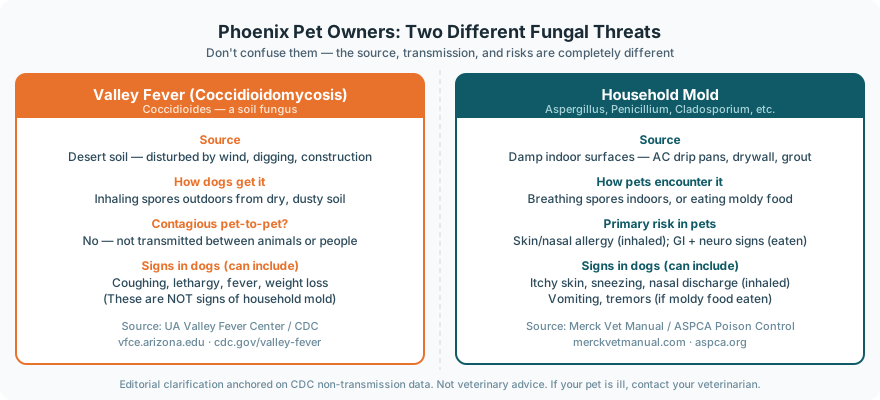
Why this matters: the signs of valley fever in dogs — coughing, lethargy, fever, weight loss — are NOT what the vet literature associates with household mold exposure (which is skin/nasal allergy from inhalation, or GI/neuro signs from eating). If your Arizona dog is coughing or lethargic, valley fever is a much more likely explanation than your bathroom ceiling, and your vet can test for it. Our guide to mold in the desert covers the Phoenix-specific mold drivers — the AC, the monsoon, the slab leaks — that are genuinely the household mold sources here.
The UA Valley Fever Center’s FAQ and symptom page are the best resources for distinguishing valley fever from other conditions in your dog.

How to protect your pets from household mold
Both the EPA’s mold-and-health guidance and the Merck Manual make the same point from different directions. EPA: “The key to mold control is moisture control… dry water-damaged areas… within 24–48 hours… Fix leaky plumbing.” Merck, on mycotoxin exposure: “Removing the source of the toxin (such as the moldy feedstuff) is necessary.”
Translation for a pet owner:
- Inhaled-allergen risk: Find and remove the moisture source, get the mold professionally remediated, and your pet’s airborne exposure drops with the spore count.
- Dietary risk: Keep pet food in sealed containers in a cool, dry place. Never feed food with visible mold or an off smell. Throw out old open bags — especially if they have been stored in a humid space like a garage or utility room.
- If your pet ate something moldy: Call your vet or the ASPCA Animal Poison Control Center right away. Don’t wait.
If you have visible mold or a moisture problem and you also have pets showing unexplained skin irritation or allergy symptoms, our mold remediation page explains the full process — from identifying the source to getting materials properly removed and the area cleared. That’s the actual fix, not air fresheners.
For a deeper look at the specific risks of black mold around pets — including one of the only published case reports of a serious outcome from indoor mold exposure in animals — see our companion guide on black mold and pets. And if your concern is the food and water bowl specifically, the mold in pet bowls, beds, and toys guide covers the NSF research on just how germy those surfaces get.
If you are ever unsure whether your pet’s illness has become an emergency rather than a mild upset, recognizing when a dog’s illness crosses into a critical situation — a guide from the pet-care team at Hallowed Paws — helps owners know when to act fast. Mold-related GI and neurological signs from mycotoxin ingestion can escalate quickly, and knowing the difference between “monitor at home” and “call the emergency vet now” matters.
For the full library of Phoenix mold guides, start at the guides hub.
Sources: Merck Veterinary Manual — Atopy in Dogs; ASPCA Animal Poison Control — Dangers of Moldy Food; Merck Vet Manual — Tremorgenic Neuromycotoxicosis in Dogs; Merck Vet Manual — Aflatoxicosis in Animals; EPA — Mold and Health; Merck Vet Manual — Fungal Poisoning; UA Valley Fever Center — How Dogs Get Valley Fever; UA Valley Fever Center — FAQs; UA Valley Fever Center — Symptoms; CDC — About Valley Fever.
This guide is for general information only and is not veterinary advice. If your pet has symptoms, contact your veterinarian.