Is Black Mold Dangerous to Pets? The Honest Answer
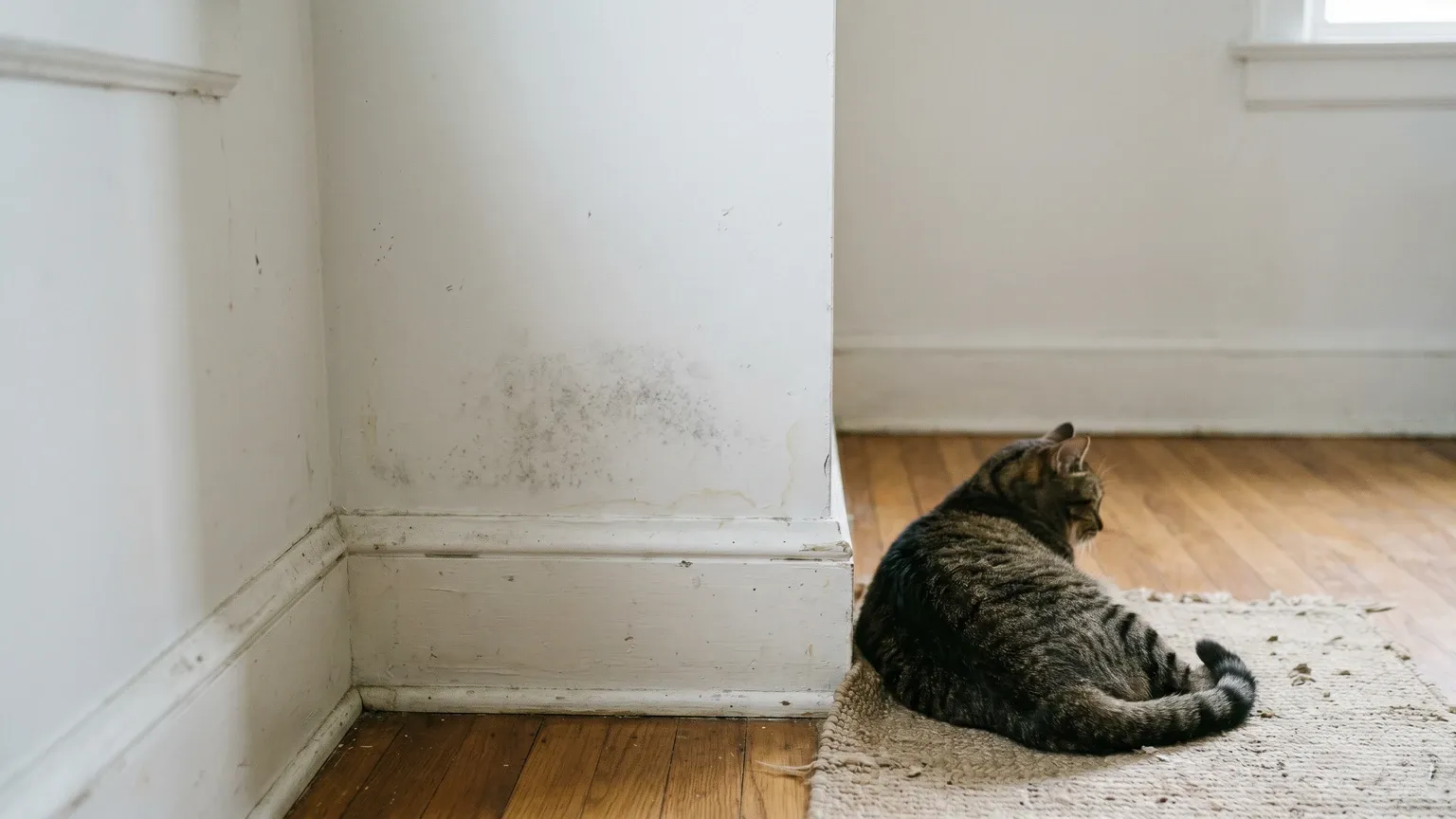
Yes, black mold can harm pets — but the two dangers are different: breathing household black mold more likely causes irritation or allergy than serious poisoning. The deadliest documented events trace to aflatoxin in contaminated commercial pet food, not bathroom ceilings. Fix the moisture source, remove the mold, and check for active food recalls.
The two pathways — and why they must never be mixed
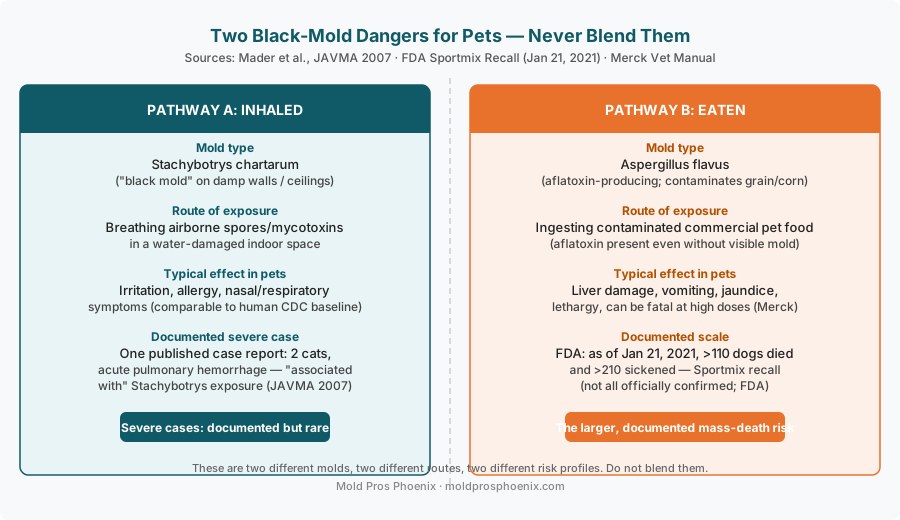
Almost every scary headline about black mold and pets conflates these two scenarios. The inhalation case involves Stachybotrys chartarum — what most people call “black mold” — in a water-damaged home. The food-poisoning case involves Aspergillus flavus, a different mold entirely, producing aflatoxin in contaminated grain used to make commercial pet food. They share the word “mold.” The biology, the exposure route, and the documented scale are completely different.
Pathway A: Breathing household black mold
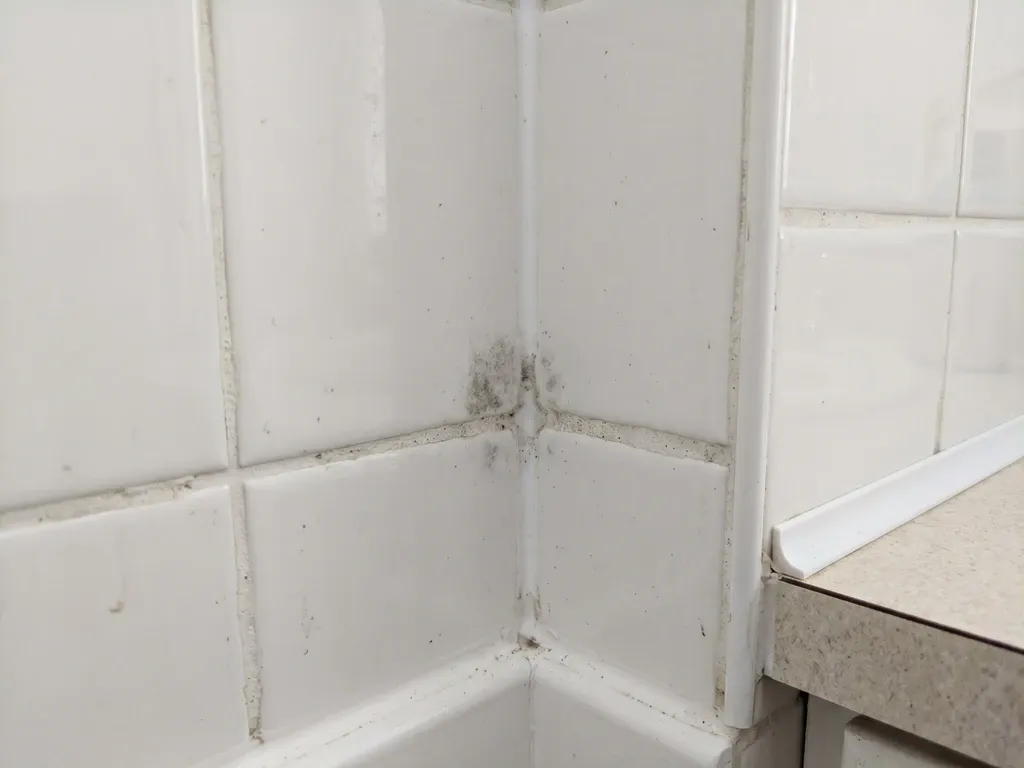
For most pets in most homes with a mold problem, the airborne pathway produces irritation and allergic responses rather than poisoning.
The CDC describes the general human baseline this way: for some people, mold can cause a stuffy nose, sore throat, coughing or wheezing, burning eyes, or skin rash. That is a human/CDC baseline. For pets, the calibrated extrapolation is similar: irritation rather than acute poisoning, with reactions varying by individual sensitivity.
In dogs, the Merck Veterinary Manual puts it more precisely. Household mold is documented as an inhaled allergen: it has been estimated that 10% of all dogs have these allergies, which are commonly due to inhaled substances, such as dust mites, pollen, mold, or dander. The result is atopy — itchy, irritated skin plus allergic rhinitis (sneezing, watery nasal discharge). This is a real health effect. It is not poisoning.
The one published case of fatal inhalation exposure
There is one published case report that sits at the serious end of the inhalation spectrum. Mader et al., writing in the Journal of the American Veterinary Medical Association (JAVMA 2007;231(5):731–735), described two Himalayan sibling cats that developed acute pulmonary hemorrhage during routine dental anesthesia. Their home was later found to be severely mold-contaminated following earlier storm damage, and Stachybotrys satratoxin G was detected in banked serum samples. Both cats died.
The researchers described this as illustrating a “potential risk.” This is a single uncontrolled case report, not a controlled study, and it remains one of the only published reports linking indoor Stachybotrys exposure to a fatal outcome in a companion animal. The honest reading: the deaths were associated with Stachybotrys exposure, not proven to be caused by it. Documented, but rare.
If a cat is showing sudden respiratory distress — labored breathing, open-mouth breathing, or collapse — in a home with visible mold and water damage, that warrants emergency veterinary attention. Recognizing critical illness in cats early is important; signs your cat is dying covers what to watch for when a cat has moved past illness into decline.
Pathway B: Eating aflatoxin in contaminated food
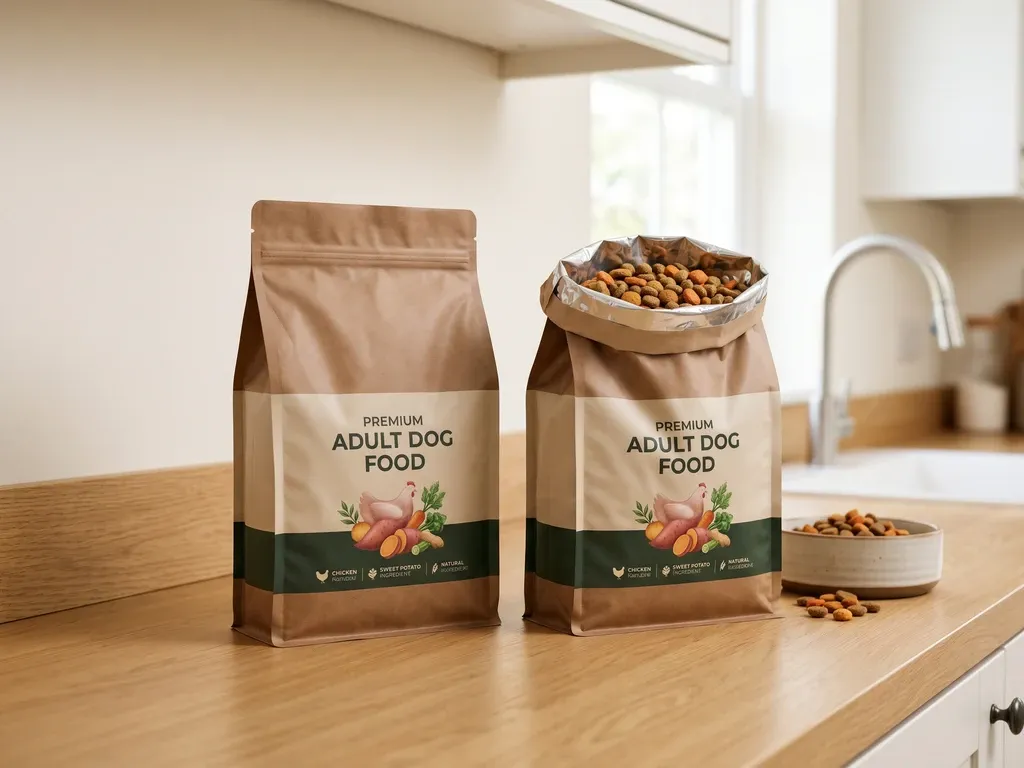
This is the pathway behind the pet deaths that make news. It involves Aspergillus flavus — not Stachybotrys — producing aflatoxin in corn, peanuts, or other grain-based pet food ingredients. The route is ingestion, not inhalation.
The Merck Veterinary Manual states: high doses of aflatoxins result in severe liver damage. Both dogs and cats are affected.
The FDA explains why pets are particularly exposed by this route: pets are highly susceptible to aflatoxin poisoning partly because pets generally eat the same food continuously — meaning a contaminated batch can produce repeated, accumulating exposure rather than a one-time incident.
The scale of what can happen when a contaminated batch reaches distribution is documented by the FDA’s Sportmix/Midwestern recall. As of January 21, 2021, the FDA had been made aware of more than 110 dogs that died and more than 210 that were sick after eating the affected products. The FDA notes that not all of these cases have been officially confirmed as aflatoxin poisoning — that caveat belongs in any honest account of the figures.
The critical distinction: there is no evidence to suggest that pet owners who handle products containing aflatoxin are at risk. Aflatoxin poisoning is an ingestion event. The concern is what goes into the food bowl, not what is on the bathroom wall.
What aflatoxin signs look like
Aflatoxin poisoning in dogs presents as liver failure: vomiting, lethargy, jaundice (yellow discoloration of gums and eyes), loss of appetite, and in severe cases, death. The Merck Veterinary Manual documents aflatoxin as affecting birds, companion pets (dogs and cats), livestock, rodents, fish, and humans, with the young at particular risk.
If you notice any of these signs and your pet has been eating a recently recalled food, contact a veterinarian immediately and check the FDA recall database.
What about eating moldy food at home?
A separate but related concern: dogs eating moldy food from the trash or a compost pile. The ASPCA Animal Poison Control Center warns that in dogs, eating moldy food can cause vomiting and diarrhea along with neurologic signs such as muscle tremors and seizures, and these symptoms can be life-threatening if left untreated.
This is a different mechanism from aflatoxin — it involves tremorgenic mycotoxins produced by molds like Penicillium. The Merck Veterinary Manual describes the clinical signs in dogs as vomiting, tremors, intention tremors, hyperesthesia, ataxia, nystagmus, tachycardia, and seizures, typically from moldy dairy, nuts, pasta, or compost. The outcome is dose-dependent, so these signs can develop but are not a certainty. If a dog has eaten moldy food and is showing neurological signs, this is a veterinary emergency.
Keep trash secured and compost bins inaccessible to dogs.
The fix is the same regardless of route
Whether the concern is household airborne mold or food-contamination risk, the action steps follow the same logic: identify the source, remove the exposure, and fix the underlying problem.
For household mold, the EPA is clear: the key to mold control is moisture control. Dry water-damaged areas within 24–48 hours. Fix leaky plumbing. Remove the mold and the material it is growing in. For contaminated food, the Merck guidance is equally direct: removing the source of the toxin (such as the moldy feedstuff) is necessary.
A professional mold inspection is the right first step if you can see or smell mold in your home — it identifies the moisture source and documents the extent of growth, which is the information needed to fix it properly rather than just treat the surface.
For the broader picture of how household mold affects pets — including the dog allergen data, the valley fever distinction important for Phoenix pet owners, and the species-sensitivity comparison — the parent guide mold and pets covers all of that in one place.
For the human side of the same question — whether black mold is as dangerous as the “toxic black mold” narrative suggests — is black mold dangerous? works through the CDC, WHO, and IOM evidence on human health effects.
What to do now
If you have visible mold in your home and pets:
- Remove pets from rooms with active mold growth while you arrange remediation.
- Fix the moisture source first — mold removed without fixing the water returns.
- Check the FDA recall database for any active alerts on your pet food brand.
- Store dry food sealed, in a cool dry spot, and discard anything past its best-by date.
- For any pet showing sudden respiratory distress or neurological symptoms in a moldy home, contact a veterinarian promptly.
Return to the guides hub for the full library of Phoenix mold guides, or fill out the form below for a free mold inspection quote.
Sources
- Mader et al., JAVMA 2007;231(5):731–735 — Stachybotrys case report in cats: pubmed.ncbi.nlm.nih.gov/17764432/
- FDA — Sportmix pet food recall, aflatoxin alert: fda.gov/animal-veterinary/outbreaks-and-advisories/fda-alert-certain-lots-sportmix-pet-food-recalled-potentially-fatal-levels-aflatoxin
- FDA — Aflatoxin poisoning in pets (route distinction): same URL above
- Merck Vet Manual — Aflatoxicosis in Animals: merckvetmanual.com/toxicology/mycotoxicoses/aflatoxicosis-in-animals
- Merck Vet Manual — Fungal Poisoning (aflatoxin liver damage; source removal): merckvetmanual.com/special-pet-topics/poisoning/fungal-poisoning
- Merck Vet Manual — Tremorgenic Neuromycotoxicosis in Dogs: merckvetmanual.com/toxicology/mycotoxicoses/tremorgenic-neuromycotoxicosis-in-dogs
- Merck Vet Manual — Atopy in Dogs (mold as inhaled allergen): merckvetmanual.com/dog-owners/immune-disorders-of-dogs/disorders-involving-anaphylactic-reactions-type-i-reactions-atopy-in-dogs
- ASPCA — Dangers of Moldy Food (tremorgenic mycotoxicosis): aspca.org/news/animal-poison-control-alert-dangers-moldy-food
- CDC — Mold: About (human baseline, mold on fabric): cdc.gov/mold-health/about/index.html
- EPA — Mold and Health (moisture control key): epa.gov/mold/mold-and-health