How to Test for Mold (And When You Don't Need To)
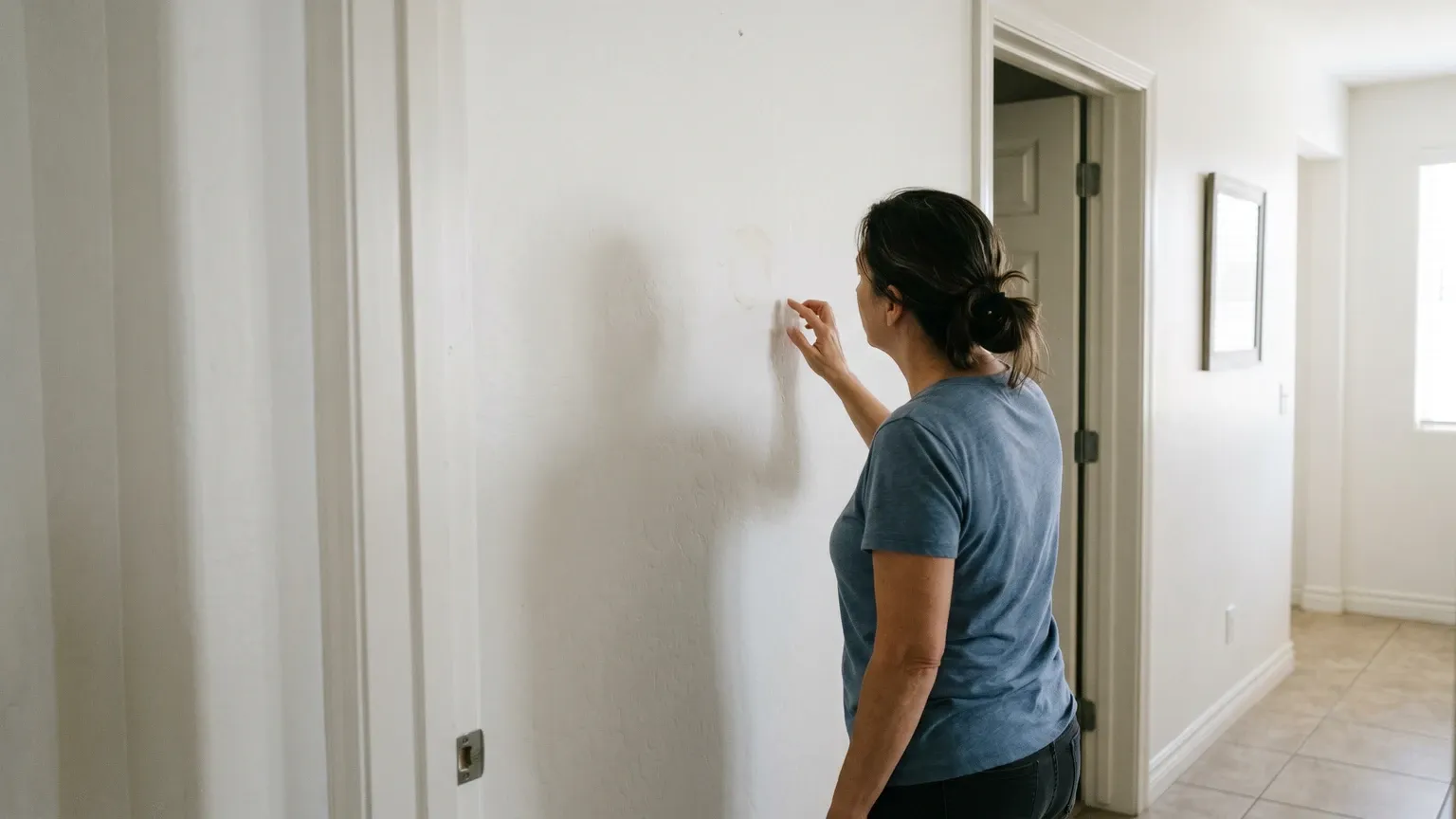
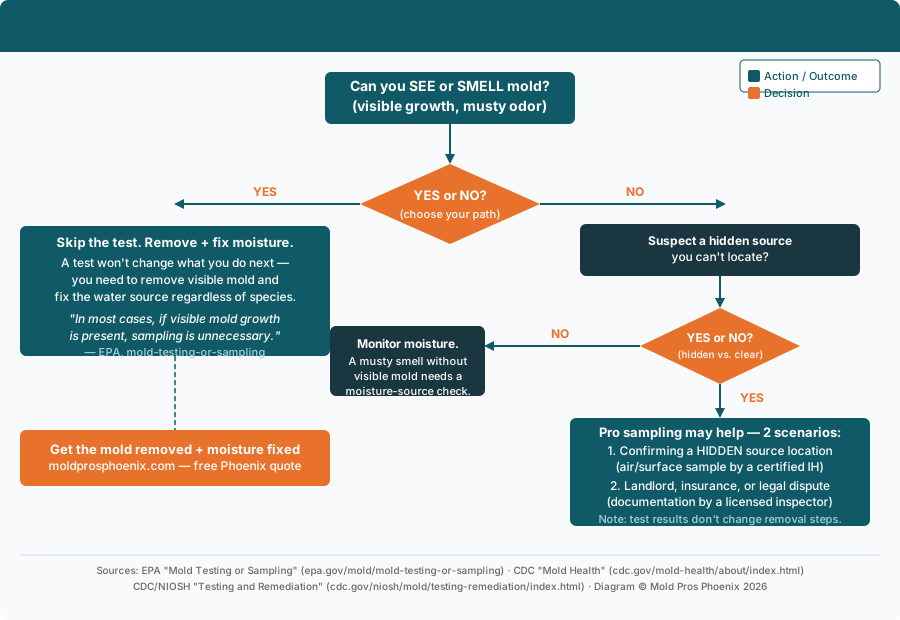
To test for mold, in most cases you don’t need to. If you can see it or smell it, the EPA and CDC both say the same thing: skip the test, remove the mold, and fix the moisture source. Pay for a professional assessment only when the source is hidden, or when you need documentation for a real estate, insurance, legal, or post-cleanup clearance situation.
That honest short answer surprises most people. The $15 petri-dish kits sold at hardware stores will grow colonies from ordinary household air, because mold spores exist in essentially all indoor environments. A positive result tells you nothing useful about whether you actually have a problem.
Do you even need to test?
This is the question most guides skip over, so we’ll start here.
Both federal health agencies are clear on this. The EPA’s official guidance on mold sampling states: “In most cases, if visible mold growth is present, sampling is unnecessary.” The reasoning is practical: a test result does not change what you do next. Whether the mold is Cladosporium or Aspergillus or anything else, you remove it and you fix the moisture. The species is irrelevant to either step.
The CDC goes further: “CDC does not recommend mold testing.” Their guidance adds: “You do not need to know the type of mold. If mold is growing in your home, you need to clean up the mold and fix the moisture problem.”
This is not a fringe opinion. It is the official position of the two agencies most homeowners look to for mold guidance.
The honest decision rule, in three steps:
- You can see or smell mold. Skip the test. Remove the mold and fix the moisture source. A test will not change either step.
- You cannot find it but suspect a hidden source. A professional assessment can locate it. A DIY kit cannot.
- You need documentation. For a real estate, insurance, legal, or post-remediation clearance situation, pay for a professional report.
If you can neither see nor smell mold and have no specific reason to look, the answer is simpler still: monitor moisture, and skip the kit.
What DIY mold test kits actually tell you (and don’t)
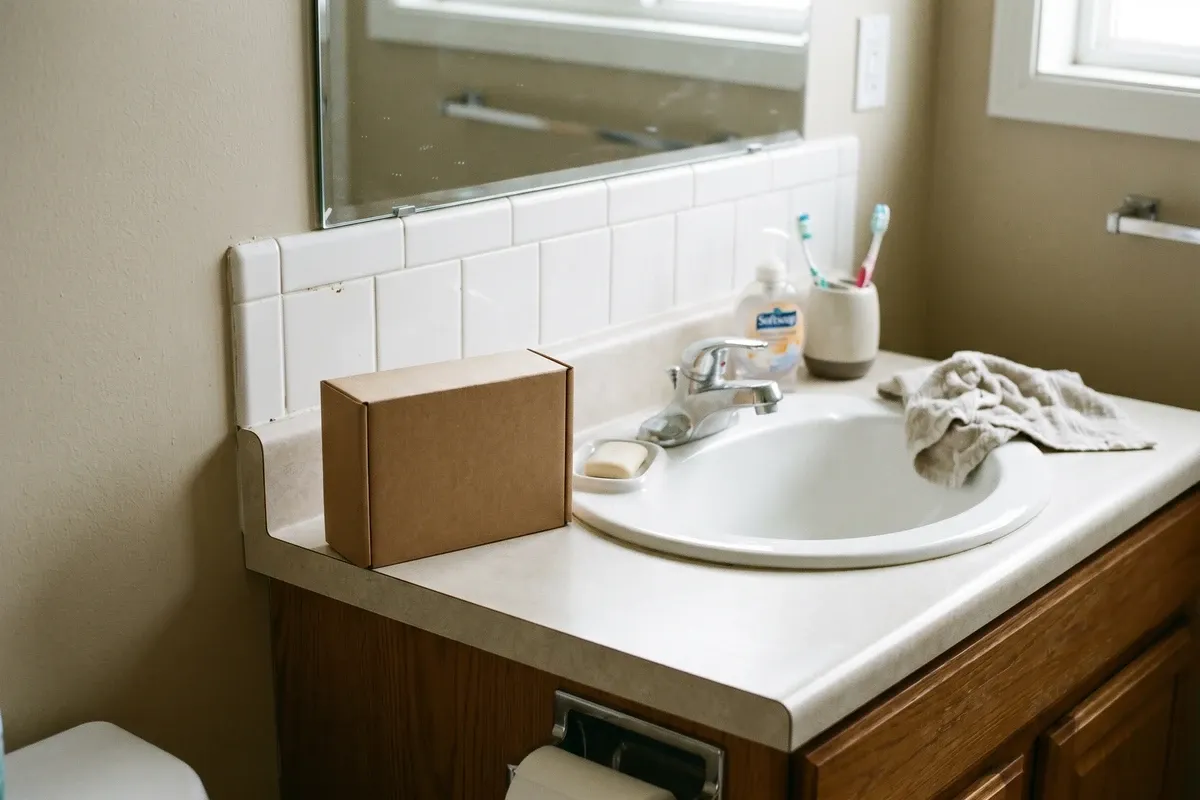
Walk into any Home Depot or Lowe’s and you’ll find petri-dish settle-plate kits for $15 to $30. They work by leaving an open dish of growth medium on your floor or counter for a set period, then you either read the result at home or mail it to a lab.
Here is what the result means:
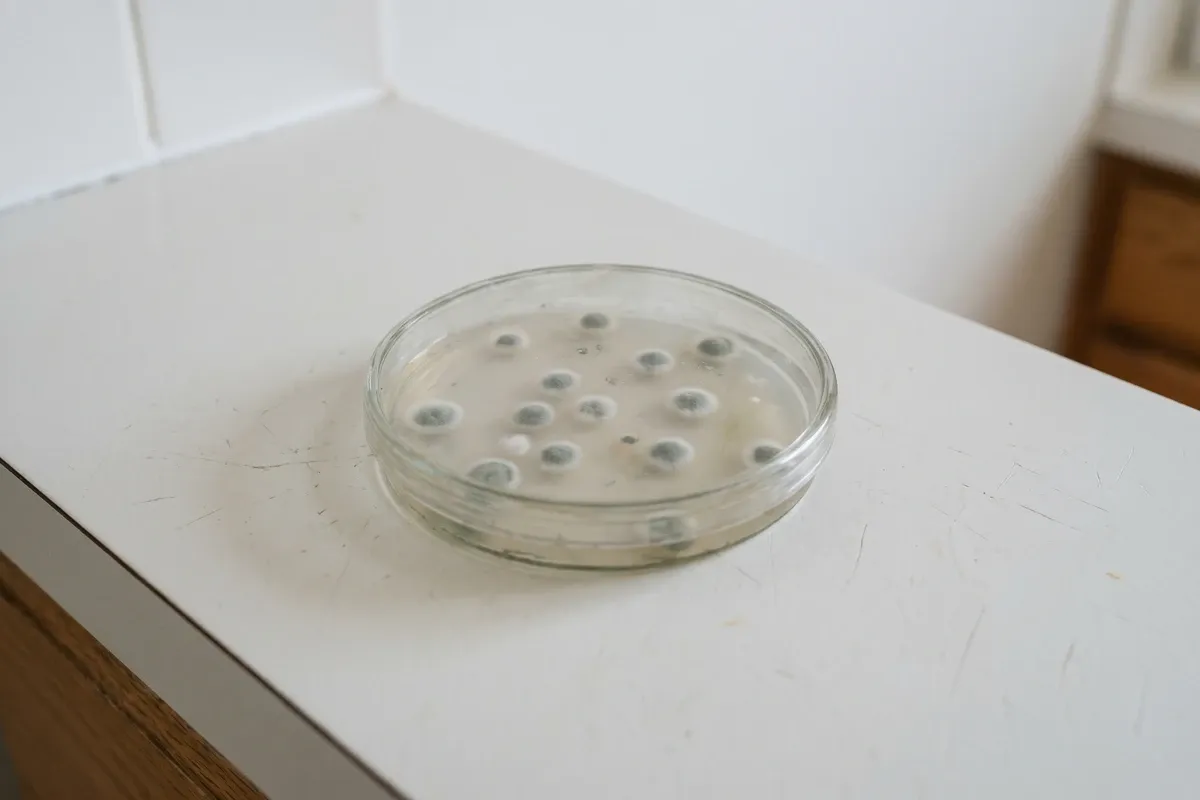
If mold grows in the dish: Mold spores are present in the air. This is true of essentially every home in the country, with or without a moisture problem. Mold spores exist in outdoor air, on clothing, on household dust, and on nearly every surface. A settle plate picking up spores from normal background air is expected behavior, not evidence of a problem.
If little or nothing grows: You may have had a clean air sample, a sealed-up dish, or a growth medium that did not support the species present. This outcome is not a clean bill of health.
The deeper problem is that even a lab result has no standard to be compared against. The EPA is explicit: “Since no EPA or other federal limits have been set for mold or mold spores, sampling cannot be used to check a building’s compliance with federal mold standards.” There are no thresholds. A lab can tell you that a dish grew 50 colonies of Penicillium, but no agency has defined what count is acceptable, what count is concerning, or what to do about any particular number.
A swab or tape-lift kit, where you press a sticky surface against visible mold and mail it in, can confirm species identity on a growth you can already see. That information rarely changes what you do about it.
The three kit types and their limits:
- Settle-plate / petri dish: Opens in a room, collects airborne spores. Measures spore presence, not problem severity. No standard to compare against.
- Swab or tape lift: Pressed onto visible growth, then mailed for lab ID. Useful only to identify a species you already know is there, which does not change the removal process.
- DIY air pump kit: A small pump draws air through a collection cassette for a set time. More controlled than a settle plate, but still produces a result with no federal threshold to compare against.
What professional mold assessment actually is
A professional inspection is a different thing than a DIY kit. The value is not the lab result. The value is what a skilled inspector does before any sampling happens.
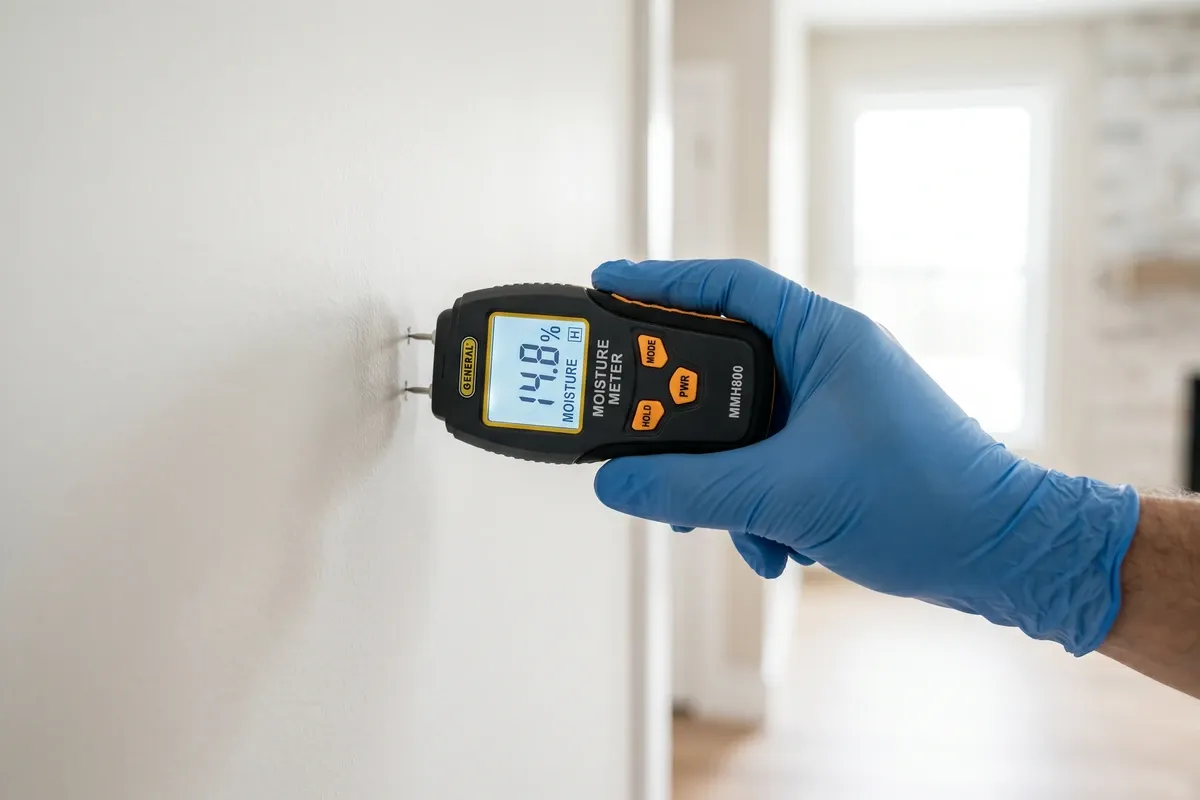
A proper mold assessment starts with a visual inspection and moisture mapping. The inspector walks the home with a moisture meter, checks wall cavities, looks at the HVAC system, identifies areas of condensation, and traces any water intrusion paths. In Phoenix, this often means looking at the AC air handler, condensate drain lines, attic spaces, and any drywall adjacent to plumbing.
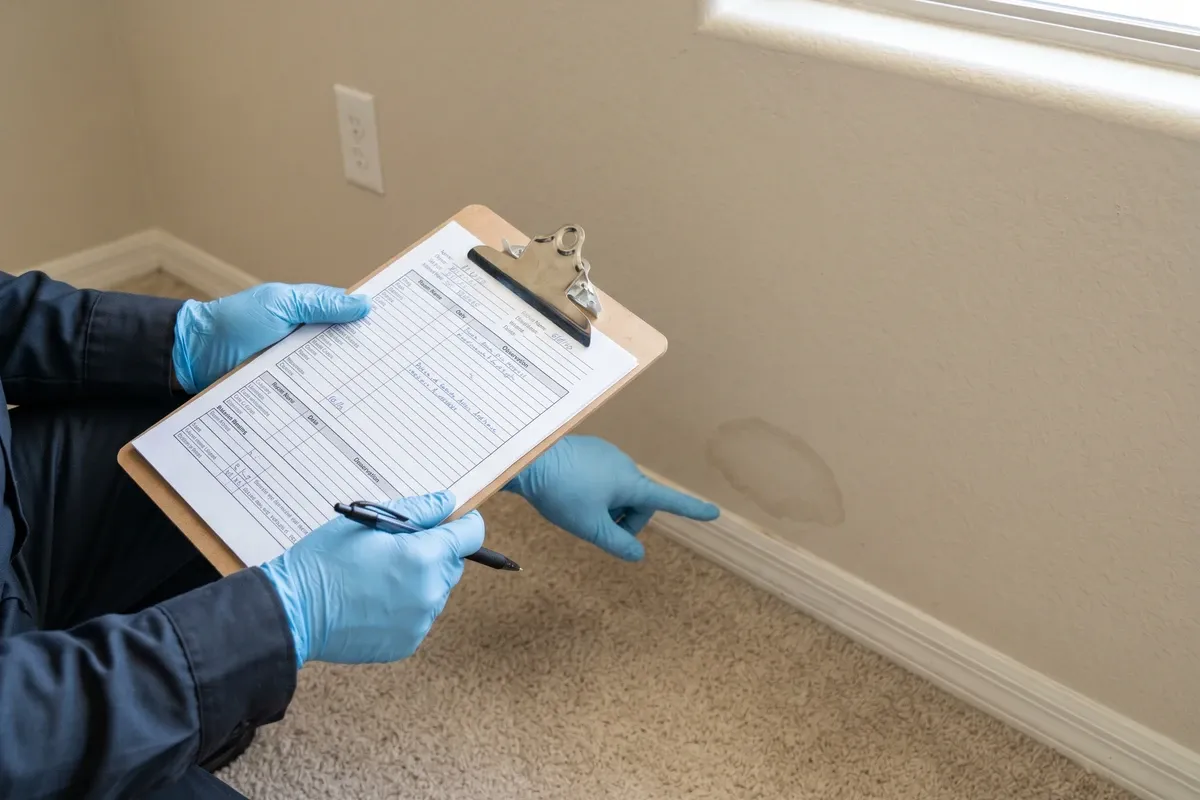
If air or surface sampling is done, the EPA states it should be conducted by professionals who have specific experience in designing mold sampling protocols, sampling methods and interpreting results. A professional can interpret a lab result in context, comparing indoor to outdoor baseline counts, looking at species ratios, and cross-referencing with moisture readings, in a way that a homeowner with a petri dish result cannot.
The professional also produces a written report. That report is usable in a real estate transaction, a landlord dispute, an insurance claim, or as documentation that a job was needed.
For the post-remediation case, a clearance test is a specialized professional air sample taken after work is done. It confirms that spore counts have returned to or below outdoor background levels. This is the one test situation where the result directly changes your next action. It tells you whether the remediation worked or needs more work. Ask your inspector about post-remediation clearance testing when you schedule an assessment.
When professional assessment is worth it in Phoenix
Most of the time, the decision is simple: see it or smell it, remove it. But there are specific situations where paying for a professional assessment makes sense.
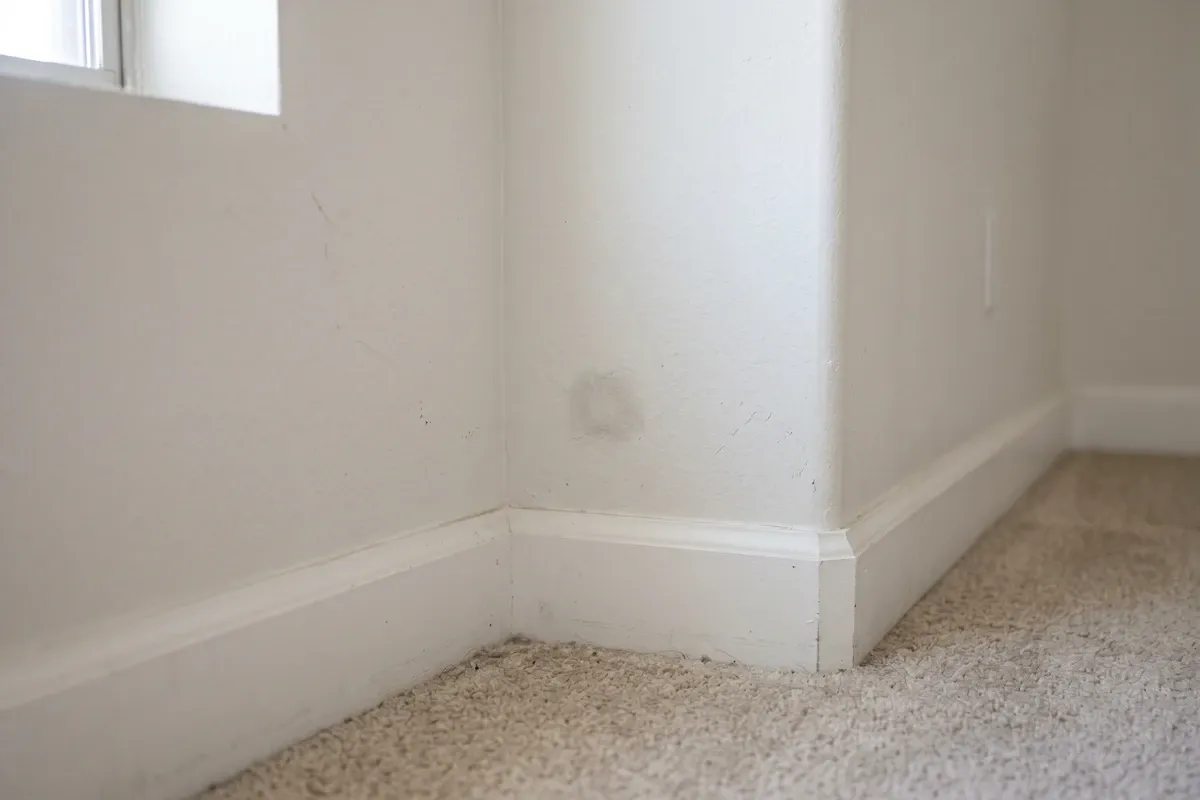
You smell mold but cannot find the source. This is the most common legitimate case in Phoenix. The desert climate is dry, which means most visible mold is from a specific moisture source, such as an AC condensate line, a slow slab leak, or a roof intrusion. When the source is hidden behind drywall or inside ductwork, a visual self-inspection fails. A professional with moisture-mapping tools can locate it.
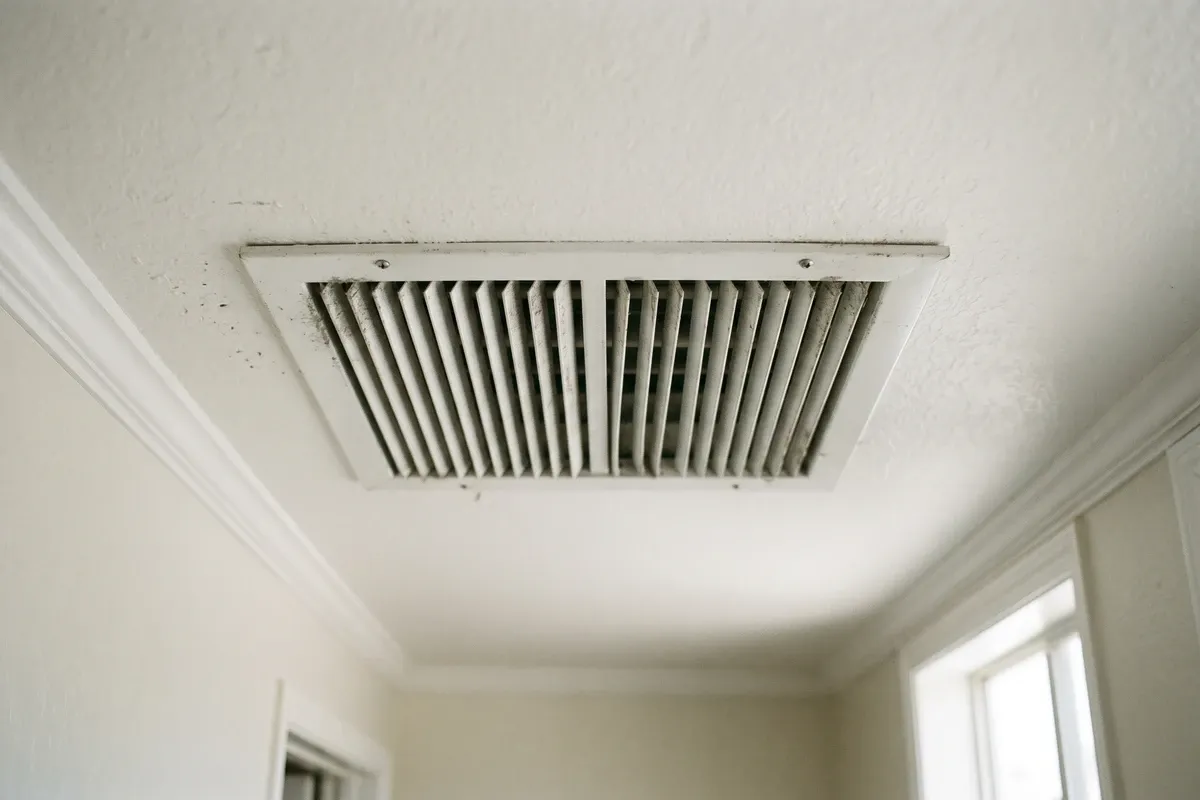
Mold is suspected inside the AC system or ductwork. Phoenix homes run their AC units for eight months of the year or more. The air handler and coil assembly pull moisture from conditioned air all day. When a condensate drain clogs or a pan overflows, mold can establish inside the plenum and distribute spores through the entire duct network. If you notice a musty smell specifically when the AC starts running, or if your ductwork smells off, that is a case for professional mold inspection, not a settle plate in the living room.
You are in a real estate transaction. Buyers, sellers, and lenders increasingly require or request documented mold inspections. A DIY kit result carries no weight in a transaction. A signed report from a qualified, certified inspector does.
Landlord, insurance, or legal dispute. If you are a tenant documenting a landlord’s failure to address mold, or if an insurance claim requires evidence of the scope, a professional inspection produces the documentation that makes the case. Our guide on mold in a Phoenix apartment covers tenant rights and how to document a landlord dispute.
Post-remediation clearance. After professional mold removal, a clearance test confirms the work is done. This is standard on larger jobs and on any job where the HVAC system was involved.
A household member is immunocompromised or has a confirmed mold sensitivity. For most households, visible mold means remove it. For households with someone who has asthma, an allergy to mold, or a weakened immune system, a professional assessment provides more specific information about exposure levels and locations.
The Phoenix angle: why the “no visible mold” case is common here
Phoenix’s dry climate changes the mold picture in one specific way. In humid climates, a moisture problem often produces visible mold relatively quickly, on walls, on ceilings, in corners. In Phoenix, the moisture sources are mostly concealed: inside AC air handlers, behind drywall on slab-leak paths, in attic spaces near the roof deck after a monsoon event.
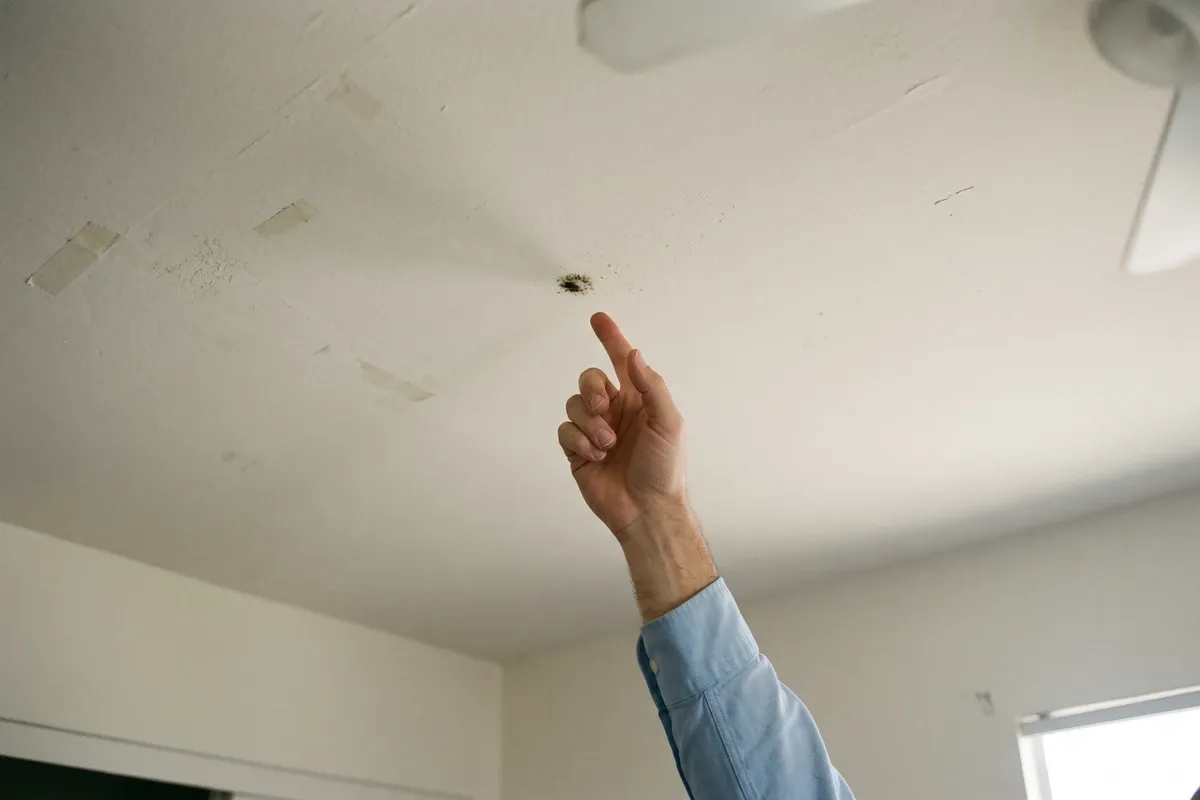
This means that Phoenix homeowners have a higher-than-average rate of the “I smell mold but cannot find it” scenario. A $15 kit on the kitchen counter tells you nothing about a mold colony growing inside the plenum box of your attic air handler. For hidden-mold cases in Phoenix, the professional assessment is not just better. A DIY kit is genuinely the wrong tool.
The dry-air myth also plays a role: because Phoenix is desert, many homeowners assume they cannot have a mold problem. The musty smell in house guide covers the common Phoenix hidden-moisture sources in detail. The mold in AC and air vents guide covers the AC-specific case. If either of those scenarios applies to your home, the starting point is finding the moisture source, not buying a test kit.
The comparison in plain terms
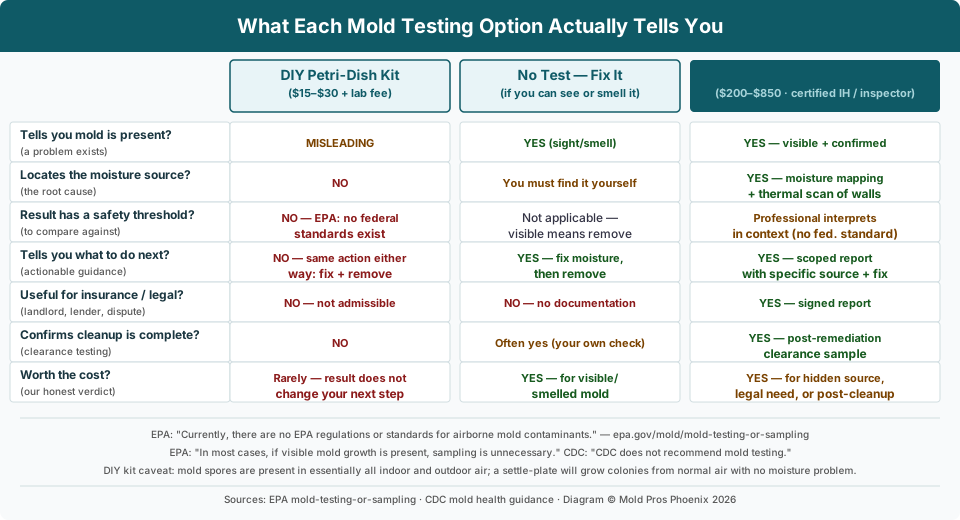
The short version
Test kits are not worthless. They are a product that does what it says. The limitation is that what they say is rarely what you need to know. Mold spores in your air does not tell you whether you have a problem. No federal standard exists to compare a result against. The result does not tell you where the mold is, what the moisture source is, or whether the levels in your home are different from any other home.
If you can see mold or smell it, remove it and fix the moisture. That is the EPA and CDC position, and it is the right one.
If you cannot find it and have a real reason to look, such as a musty smell with no visible source, an AC-related odor, a real estate or legal need, or a post-remediation confirmation, a professional mold inspection is the appropriate tool. A professional inspection locates the source, measures the actual affected area, and produces a report that is usable for documentation. That is what the assessment is for.
Browse all of our Phoenix mold guides for specific types, locations, and situations. The guides on black mold and musty smells cover the two most common related concerns. And for those weighing whether to inspect before or after buying a home, our mold inspection cost guide breaks down what inspection and assessment actually cost in Phoenix.
Sources:
- EPA — Mold Testing or Sampling: epa.gov/mold/mold-testing-or-sampling
- CDC — Mold: Basic Facts: cdc.gov/mold-health/about/index.html
- CDC/NIOSH — Mold: Testing and Remediation: cdc.gov/niosh/mold/testing-remediation/index.html