Mold on Wood: How to Remove It (and When You Can't)
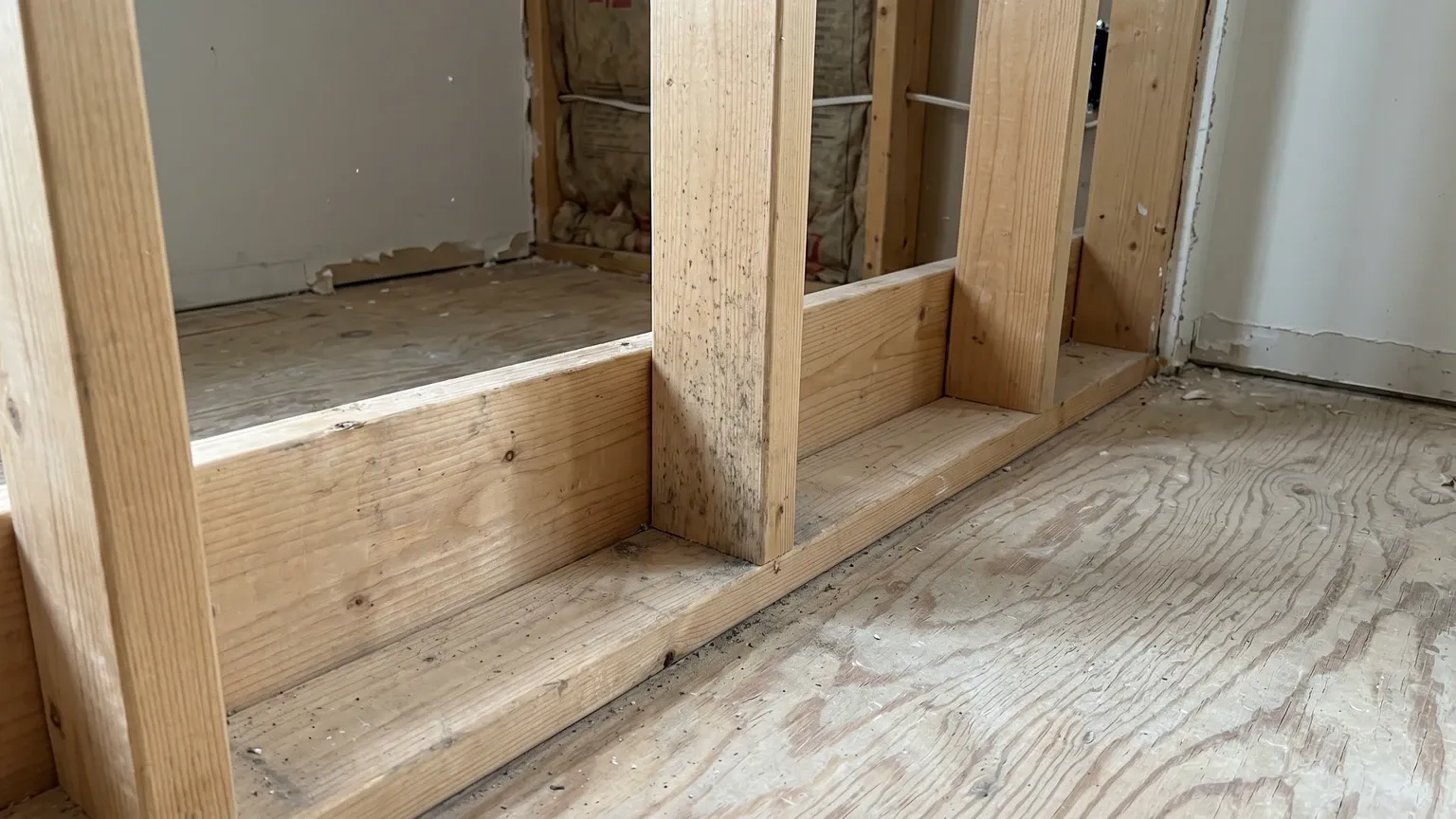
Often, yes — you can save it. If mold sits on the surface of structurally sound wood, you can usually scrub it off, HEPA-vacuum, and dry the wood without replacing anything. What forces a replacement isn’t the mold itself; it’s decay — wood that has gone soft, crumbling, or spongy has been weakened by rot fungi and needs to be cut out. This guide covers how to tell the difference, the correct way to clean wood that can be saved, and where wood mold tends to show up in Phoenix homes.
Can you remove mold from wood, or do you have to replace it?
The instinct with moldy wood is often to rip it out. Usually that’s overkill.
The EPA’s own material guidance treats finished wood as cleanable, not automatically disposable. In its remediation guidance, treated or finished wood surfaces may be cleaned with mild detergent and clean water and allowed to dry. That’s the opposite of soft, absorbent materials — the EPA notes that absorbent or porous materials, such as ceiling tiles and carpet, may have to be thrown away if they become moldy, because you can’t get the mold back out of them. Wood sits in between: it’s semi-porous, and if it’s still solid, mold can be removed from it.
The dividing line is not how dark or how widespread the mold looks. It’s whether the wood is still structurally sound. That’s the one thing worth getting right before you decide to clean or replace, so it’s the next section.
Surface mold vs. wood rot: the distinction that decides everything
There are two very different things that grow on damp wood, and they are not the same problem.
Surface mold discolors wood but doesn’t eat it. The USDA’s Forest Products Laboratory — the federal wood-science authority — is explicit that molds do not typically cause structural damage. Mold on a stud is a cosmetic-and-air-quality problem: remove it, fix the moisture, and the wood is fine.
Decay fungi (rot) are the serious case. They consume the wood itself, and the Forest Products Laboratory warns that they destroy wood substance and seriously reduce the strength of wood. This may happen before there is any pronounced change in external appearance of the wood; thus even early decay can dangerously weaken a wood structural component. That last part is why you can’t judge by looks alone — wood can be losing strength before it obviously rots.
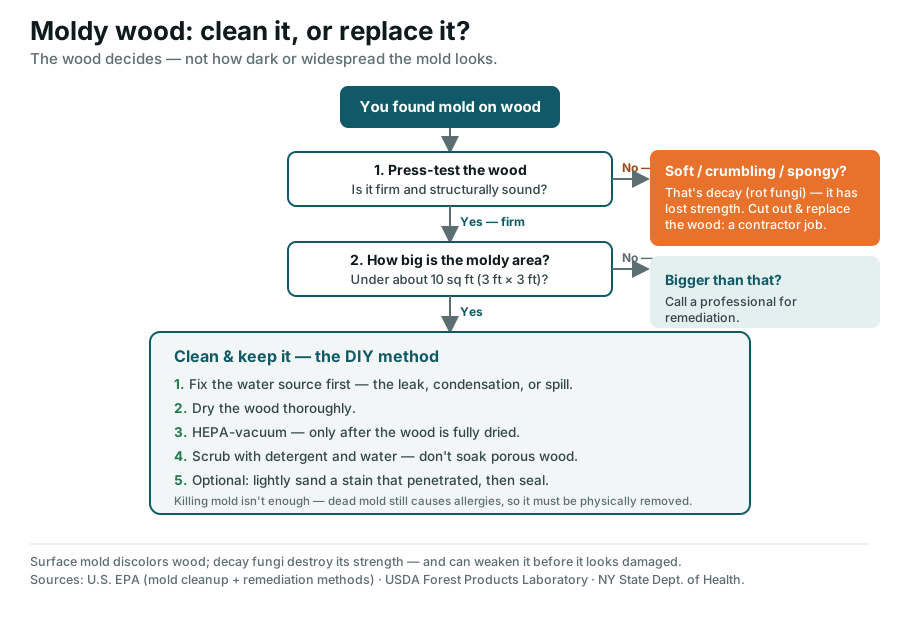
So the test is physical, not visual. Press on the wood, or probe it with a screwdriver. If it’s firm, it’s a cleaning job. If it’s soft, punky, crumbling, or the tool sinks in, the wood has been weakened by decay and needs to be cut out and replaced — and on framing, joists, or roof structure, that’s a job for a contractor, not a scrub brush. New York State’s health department draws the same line in plain terms: hard surfaces that are not decayed (rotten) can be cleaned.
Why you can’t just bleach it and walk away
A quick myth to clear, because it changes what you do: killing the mold is not the same as removing it, and bleach isn’t the tool.
The EPA states plainly that it is not enough to simply kill the mold, it must also be removed — dead mold spores still trigger allergic reactions, so a surface that’s been “killed” but not physically cleaned is still a problem. And the EPA does not recommend reaching for bleach as your default: the use of a chemical or biocide that kills organisms such as mold (chlorine bleach, for example) is not recommended as a routine practice during mold cleanup. On porous wood the case is even weaker — household bleach is mostly water, so it tends to leave the mold sitting on the surface while soaking the wood with the very thing mold needs. Physical removal is what works. The full breakdown of where bleach does and doesn’t work is in the does bleach kill mold guide.
How to remove mold from sound wood
Once you’ve confirmed the wood is solid and the area is small enough to DIY, the method is mechanical and in a specific order.
1. Fix the water first. Mold on wood is a symptom of a moisture source — a leak, condensation, or a spill that wasn’t dried. The key to mold control is moisture control, and the EPA’s timing rule is to dry water-damaged areas and items within 24-48 hours to prevent mold growth. If you clean the wood but leave the leak, the mold comes back.
2. Dry the wood thoroughly. This matters before you vacuum, because of the next step.
3. Clean the surface, then HEPA-vacuum. As noted above, the EPA’s guidance for finished wood is to clean it with mild detergent and water and let it dry. Scrub to lift the growth and collect it rather than spread it, and because wood is porous, clean and dry the surface rather than soaking it. As a final step, the EPA notes that HEPA (High-Efficiency Particulate Air) vacuums are recommended for final cleanup of remediation areas after materials have been thoroughly dried.
4. If a stain has penetrated, sand it (optional). When discoloration remains in the wood grain after scrubbing, lightly sanding sound wood can take it down. This is standard remediation practice rather than a specific EPA instruction, so treat it as optional finishing on wood you’ve already confirmed is solid — not a way to “fix” rotted wood.
5. Sealing afterward is optional, and comes last. Some people prime or seal the wood after it’s fully cleaned and dried. If you do, it’s a cosmetic/finishing choice that happens after full removal — not a shortcut. Sealing or painting over mold that’s still there does not work; the CDC is blunt that you should remove it rather than cover it.
When to call a pro instead
Two things move a wood-mold job out of DIY range.
Size. The EPA’s threshold: if the moldy area is less than about 10 square feet (less than roughly a 3 ft. by 3 ft. patch), in most cases, you can handle the job yourself. Past that, the containment and safe-removal demands scale up and it’s professional territory.
Structure. Any wood that failed the press-test — soft framing, spongy joists, crumbling roof decking — is a repair question, not a cleaning one. Weakened structural wood has to be evaluated and replaced, and that’s contractor (sometimes structural-engineer) work. For the full “should I do this myself?” decision across size, material, and health factors, the can I remove mold myself tool walks you through it. If the mold is on the drywall next to the framing rather than the wood itself, the mold on drywall guide covers that material — drywall almost always comes out rather than getting cleaned.
For anything structural, or larger than that 10-square-foot patch, professional mold remediation removes the affected material, contains the area during the work, and confirms the moisture source is fixed before the wood is closed back up.
Where wood mold shows up in Phoenix homes
“It’s too dry in the desert for mold” is the assumption, and it’s wrong. Phoenix wood molds for specific, local reasons. (The full myth-buster is the mold in the desert guide; here’s the wood-specific version.)
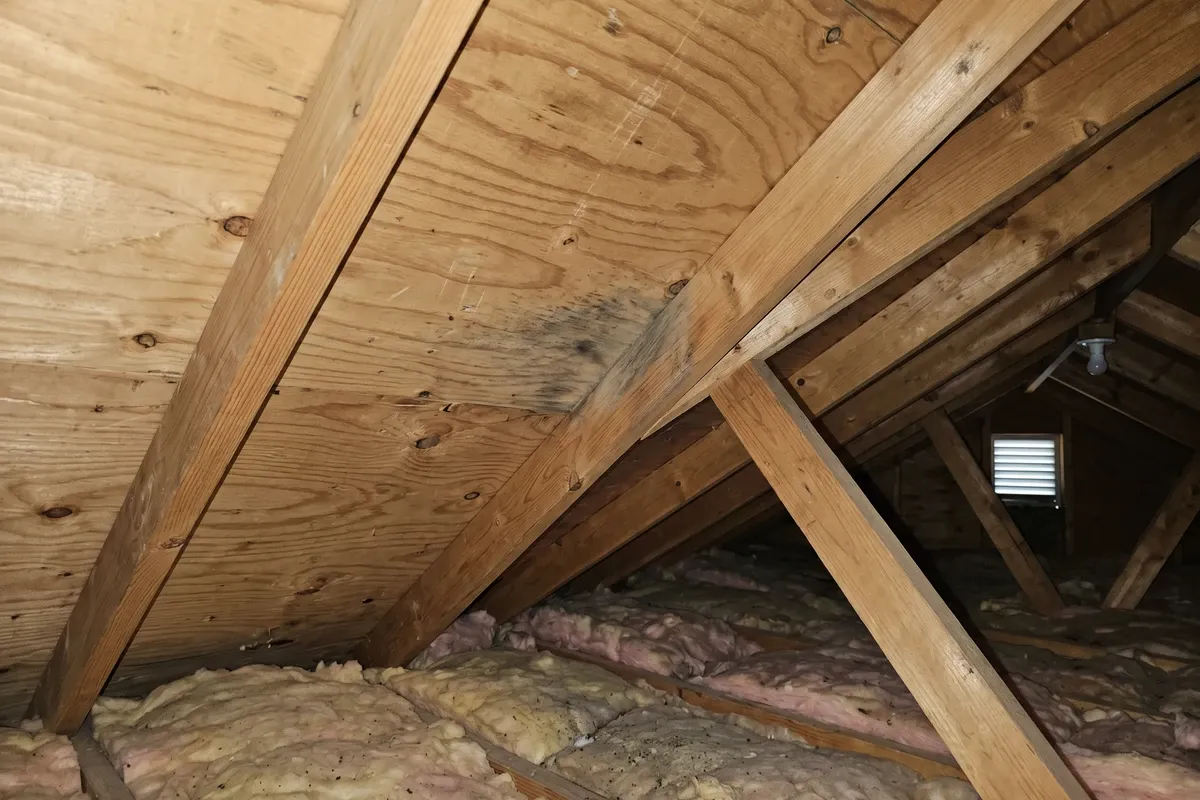
Roof decking and attic sheathing. Air handlers are commonly mounted in Phoenix attics, and a clogged or overflowing AC condensate line can drip onto insulation and the wood sheathing above it. Add monsoon-season roof intrusion (a lifted tile, or a failed flashing seam under a hard downpour) and the plywood decking overhead is exactly where attic mold appears. It’s usually out of sight until an attic inspection or a ceiling stain gives it away.
Subfloor and bottom-plate framing. A slab leak or a failed supply line wicks moisture up from the ground into the wood resting on the slab. The Forest Products Laboratory notes that wetting of plates and other wood resting on groundline slabs can occur by capillary transfer through the concrete — so mold (and, given enough time, rot) can start low on framing and in the subfloor with no obvious leak above. A musty smell near the floor, or staining at the base of a wall, is worth a look.
In both cases the wood-mold rule holds: confirm whether the wood is still sound, fix the water source that fed it, and remove the mold mechanically — or, if the wood is decayed or the area is large, get it remediated properly.
Sources
- U.S. Environmental Protection Agency — A Brief Guide to Mold, Moisture and Your Home: epa.gov/mold/brief-guide-mold-moisture-and-your-home
- U.S. Environmental Protection Agency — Mold Cleanup in Your Home: epa.gov/mold/mold-cleanup-your-home
- U.S. Environmental Protection Agency — Mold Remediation in Schools and Commercial Buildings (material table & cleanup methods): chapter 4 · chapter 3
- Centers for Disease Control and Prevention — 8 Tips to Clean Mold: cdc.gov/mold-health/communication-resources/8-tips-to-clean-mold.html
- New York State Department of Health — Mold and Your Home: health.ny.gov/publications/7287
- USDA Forest Products Laboratory — Kirker, G.T. (2018), Wood Decay Fungi: fpl.fs.usda.gov
- USDA Forest Products Laboratory — Principles for Protecting Wood Buildings from Decay (FPL-RP-190): fpl.fs.usda.gov