Does Ozone Kill Mold? Only at Unsafe Levels
Does ozone kill mold? At high enough concentrations, yes. But EPA’s review of the evidence says those concentrations would have to run five to ten times higher than public health standards allow, levels EPA says can damage the lungs when inhaled. Ozone also doesn’t reach mold inside drywall or wood, and it masks a musty smell rather than removing its source.
What does ozone actually do to mold?
Ozone (O3) is a reactive gas, and reactive gases oxidize organic material on contact, including mold. That’s the entire basis for the sales pitch behind ozone generators marketed for mold and musty odors.
EPA has reviewed that claim directly, on a page titled “Ozone Generators that are Sold as Air Cleaners.” Its conclusion doesn’t split the difference: “Available scientific evidence shows that, at concentrations that do not exceed public health standards, ozone is generally ineffective in controlling indoor air pollution.” The same page is more specific about mold by name: “If used at concentrations that do not exceed public health standards, ozone applied to indoor air does not effectively remove viruses, bacteria, mold, or other biological pollutants.”
That’s the whole answer in one sentence: at the concentrations that are safe to breathe, ozone does not do what the marketing claims.
Does ozone kill mold spores in the air?
This is the version of the question most people actually mean, and EPA’s answer runs through particles rather than mold. Its review states that “ozone does not remove particles (e.g., dust and pollen) from the air, including the particles that cause most allergies,” and two sentences later, discussing ionizers, it groups “fungal spores” with dust, tobacco smoke and pollen as exactly that kind of airborne particle. Mold spores are particles suspended in room air, not a gas that ozone reacts away. That also rules out the secondary allergy-relief pitch these machines often carry.
How much ozone would it take?
So could a stronger machine, run longer, actually get there? EPA answers that with a specific number, and the full sentence matters more than the number: “Some data suggest that low levels of ozone may reduce airborne concentrations and inhibit the growth of some biological organisms while ozone is present, but ozone concentrations would have to be 5 - 10 times higher than public health standards allow before the ozone could decontaminate the air sufficiently to prevent survival and regeneration of the organisms once the ozone is removed.”
Read that carefully, because it concedes the seller’s point and then takes it away. Low levels may reduce airborne concentrations and hold growth back while the gas is in the room. The 5-10x threshold is what it would take to stop the organisms coming back once the ozone clears. A machine you can safely run is operating in the first category, not the second.
Here’s what those public health standards actually are, and who sets each one, straight from EPA’s own table:
- The Food and Drug Administration (FDA) requires ozone output of indoor medical devices to be no more than 0.05 ppm.
- The Occupational Safety and Health Administration (OSHA) requires that workers not be exposed to an average concentration of more than 0.10 ppm for 8 hours.
- The National Institute for Occupational Safety and Health (NIOSH) recommends an upper limit of 0.10 ppm, not to be exceeded at any time.
EPA’s ozone-generator page also lists its outdoor air quality standard for comparison: a maximum 8-hour average outdoor concentration of 0.08 ppm.
That last figure is out of date on EPA’s own page. The agency strengthened the 8-hour ozone NAAQS to 0.070 ppm in 2015, and the ozone-generator page still prints the older number. Using the current, stricter standard widens the gap between what’s safe to breathe and what a machine would have to produce indoors. It doesn’t narrow it.
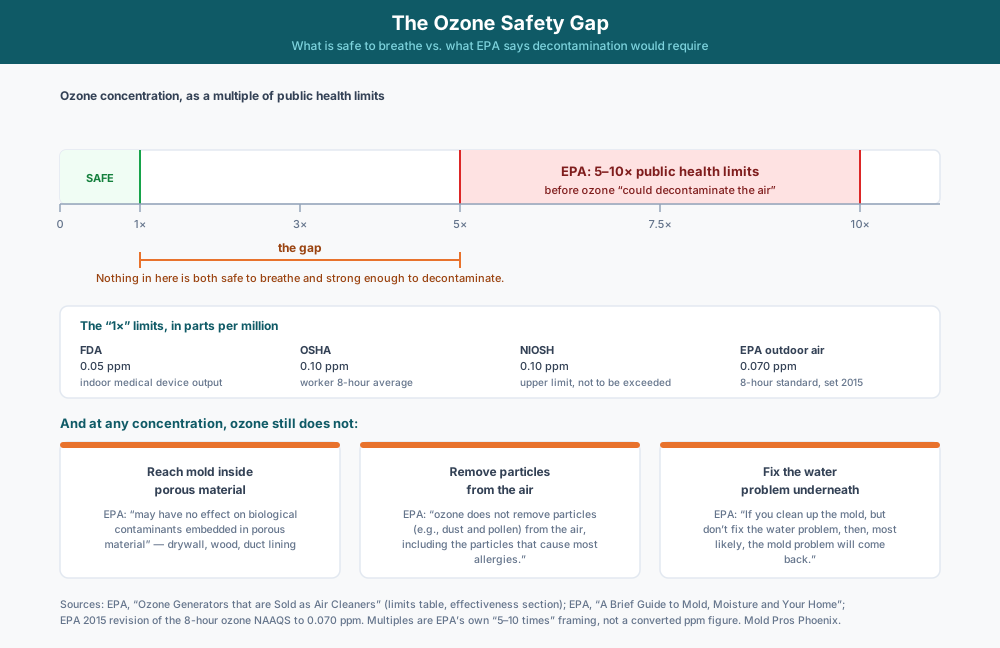
Multiply any of those breathable limits by five to ten and you are far outside what any of them allow, and EPA says relatively low amounts can already cause chest pain, coughing, shortness of breath and throat irritation. That is the trade the machine asks for: air nobody can be in while it works.
Why can’t an ozone machine reach mold inside drywall or wood?
Even setting the concentration problem aside, EPA names a second, separate limit that would still apply at a hypothetically effective dose: “ozone may have no effect on biological contaminants embedded in porous material such as duct lining or ceiling tiles.”
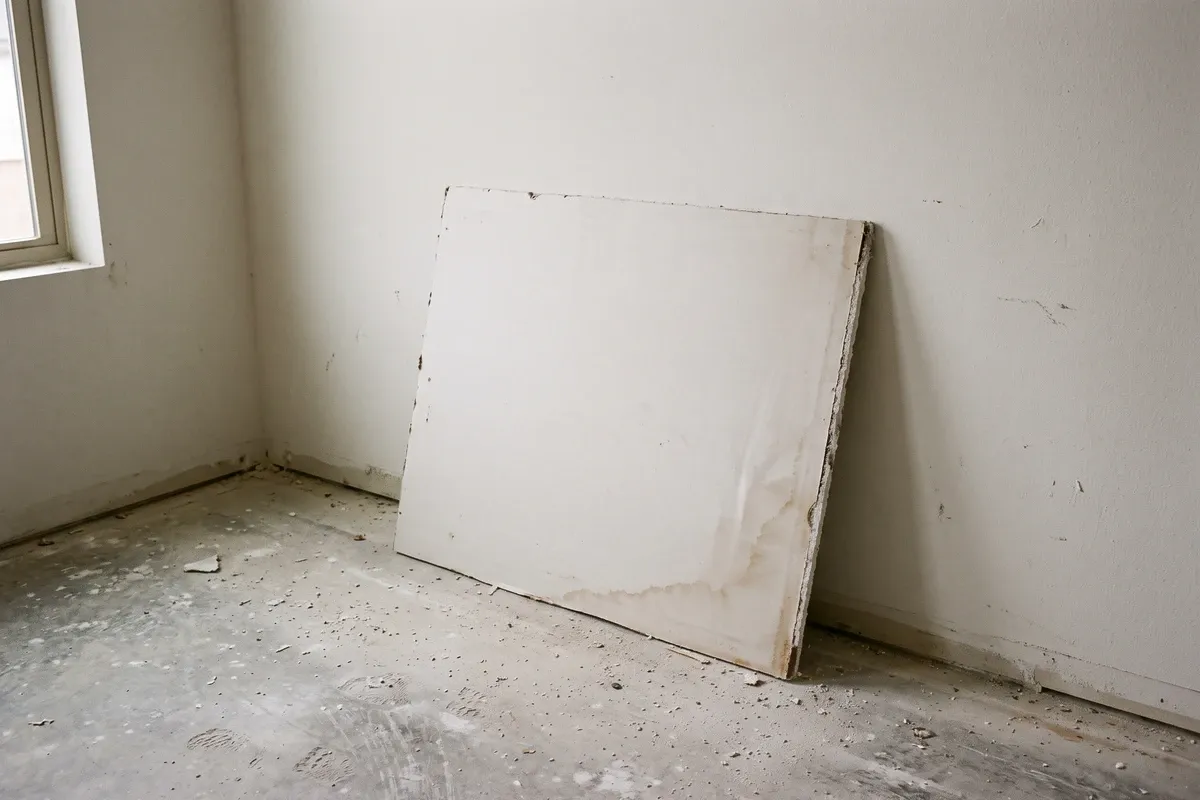
A gas moving through open air reacts with whatever surface it touches. It doesn’t drive itself into a porous material to reach what’s rooted inside. Drywall paper facing, wood framing, and insulation are exactly that kind of porous material, the same kind mold actually grows in and on inside a house. A machine running in the middle of a room isn’t reaching a colony established behind paint or inside a wall cavity any more than it’s reaching the fibers of a duct liner or a ceiling tile.
This is the identical dead end we hit checking the other kill-it-yourself claims against the evidence. Our guide to whether bleach kills mold covers why bleach’s water content soaks into porous material while the chlorine stays on the surface. Ozone doesn’t even get that far in. It’s a gas working from outside a material it never penetrates.
Will an ozone machine get rid of the musty smell?
If you’ve run one, the pattern usually goes like this. The room smells sharp and faintly metallic while the machine is on, and the musty smell is gone. Then, days or weeks later, it’s back.
EPA’s page addresses that mechanism directly for one specific odor source: “body odor may be masked by the smell of ozone but is not removed by ozone.” Masking and removing are two different outcomes, and ozone’s own strong smell is enough to cover a lot of other odors while it’s present. Applying that same masking effect to a musty mold smell is our reading of the mechanism rather than a claim EPA makes about mold odor specifically, but the chemistry doesn’t change with the source of the smell.
If a musty smell returns after an ozone treatment, take it seriously. The likeliest explanation is that the colony and the moisture feeding it were never removed. Our guides to what a musty smell in your house means and what mold actually smells like cover what to check next.
Can an ozone generator make your indoor air worse?
Running an ozone generator doesn’t just risk failing to help. EPA’s review found it can actively add pollutants to indoor air: in the reactions researchers studied, “the reaction produced a variety of aldehydes, and the total concentration of organic chemicals in the air increased rather than decreased after the introduction of ozone.” Ozone reacting with ordinary household chemicals drives that increase, and EPA notes ozone “may also increase indoor concentrations of formic acid,” adding that formic acid and the aldehydes it produces “can irritate the lungs if produced in sufficient amounts.”
That’s before accounting for what ozone does to a person breathing it directly. EPA states plainly: “When inhaled, ozone can damage the lungs. Relatively low amounts can cause chest pain, coughing, shortness of breath and throat irritation.” That’s EPA’s general statement about what the gas can do to lung tissue, not a diagnosis of what any particular symptom means for you. It’s also the reason “run it while nobody’s home” isn’t a minor caveat on the label. It’s the entire safety condition the device depends on.
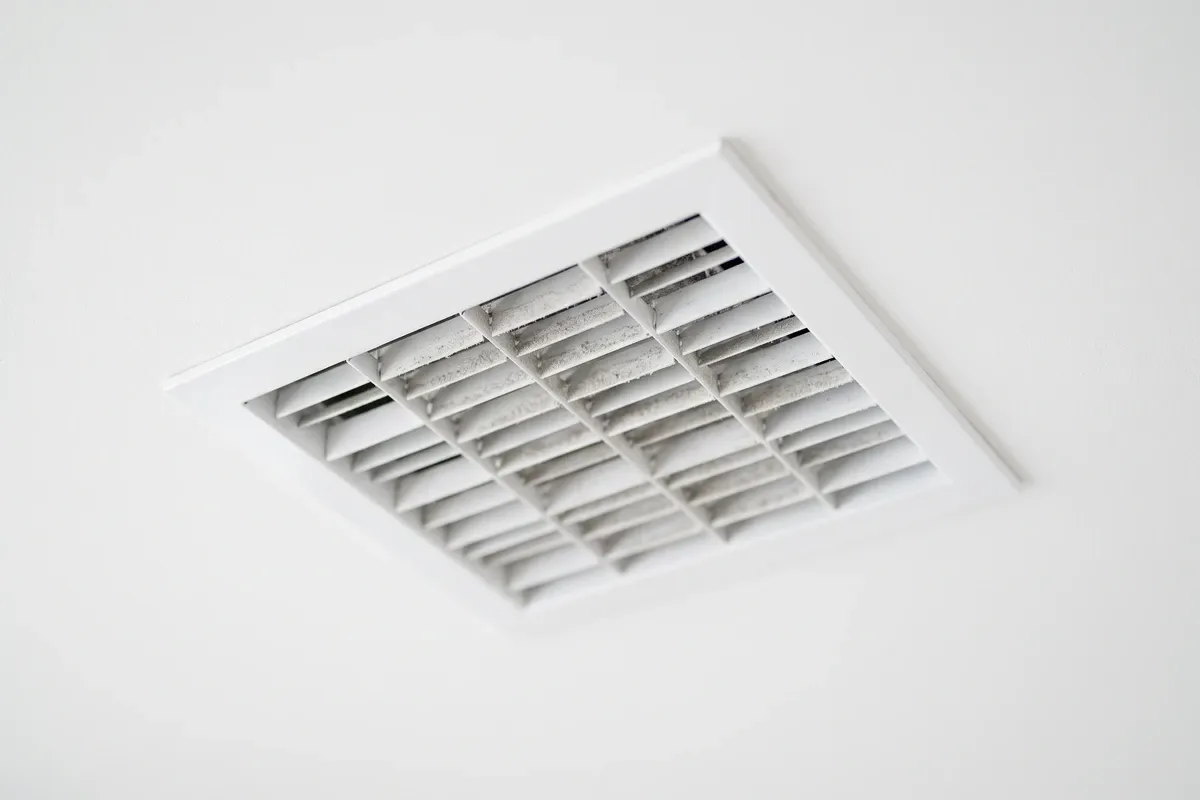
Some ozone-generator setups tie into the ductwork, running ozone through the same supply registers that distribute conditioned air through the house. That doesn’t change any of the chemistry above, and it doesn’t get around the porous-material limit either, since duct lining is one of the specific materials EPA names as a place ozone may have no effect on embedded biological contaminants. If mold is showing up in the AC system itself, our guide to mold in your AC and air vents covers what that actually takes to fix.
Is running an ozone generator a worse idea in Phoenix?
There’s a local wrinkle to this that national mold-and-ozone articles never mention: outdoor ozone is already a regulated problem in the Valley.
EPA’s Green Book lists “Phoenix-Mesa, AZ,” covering parts of Gila, Maricopa, and Pinal counties, as a nonattainment area for the 2015 8-hour ozone national air quality standard. In a March 2026 news release, EPA confirmed the area’s status directly: “The Phoenix-Mesa area is designated as nonattainment for this standard and had a Moderate attainment date of August 3, 2024,” and “all other requirements for a Moderate ozone nonattainment area continue to apply.”
Put plainly: Phoenix-Mesa is a designated nonattainment area for the federal 8-hour ozone standard. That’s a fact about the classification, not a claim that Phoenix air is unsafe or getting worse. The same EPA release found the area would not be reclassified to the more restrictive “Serious” category, because the region would have met the standard if not for factors outside local control. What the designation does mean is that outdoor ozone in the Valley is already managed as a regulated pollutant. Adding another ozone source indoors isn’t the neutral decision it might be somewhere without a nonattainment designation on the books.
Is any ozone use legitimate?
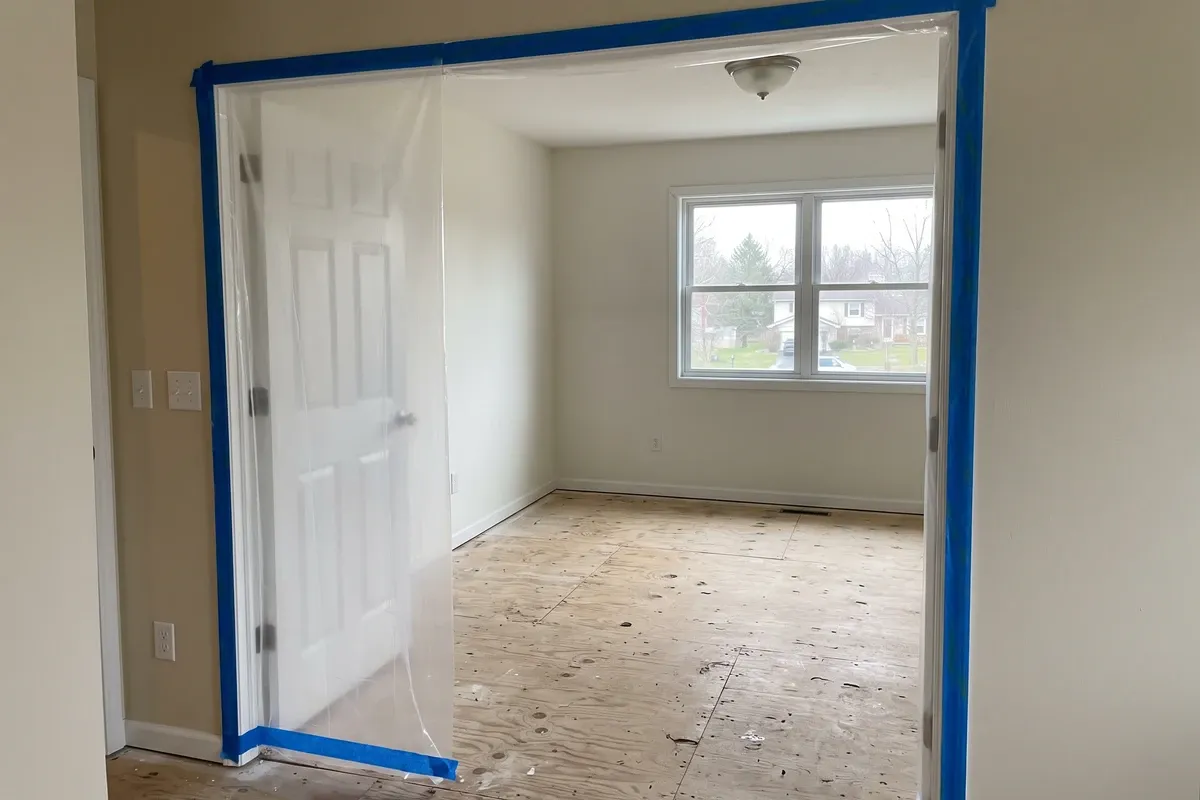
EPA doesn’t say ozone has zero legitimate use. It describes the opposite of the indoor, occupied-room case: “High concentrations of ozone in air, when people are not present, are sometimes used to help decontaminate an unoccupied space from certain chemical or biological contaminants or odors (e.g., fire restoration).” The condition attached to that use is explicit too: “conditions should be sufficiently controlled to insure that no person or pet becomes exposed.”
That describes a narrow, specific job: a sealed, empty space, run at concentrations well above anything a person could safely breathe, with someone controlling exposure the whole time. It does not describe a consumer machine running in a bedroom overnight, and it doesn’t describe treating mold that’s still wet and still growing. The realistic version of a legitimate ozone use on a mold job is professional post-remediation odor work, done after the moisture source is fixed and the moldy material has already been physically removed, in a space nobody is occupying. Used before that point, or in place of removal, it’s aimed at the wrong problem.
Worth knowing: the California Air Resources Board has required since 2010 that indoor air cleaners sold in that state be certified below 0.050 ppm of ozone output, a rule specific to California’s market. Arizona has no equivalent state rule, so a machine that could not be certified for sale in California can be sold here.
What actually removes mold instead of ozone?
Skip the ozone question and go straight to what works. EPA is direct about the hierarchy of approaches to indoor air pollution generally. It lists three — source control, ventilation, and air cleaning — and says of them: “Of the three, the first approach — source control — is the most effective.” For mold, source control means finding and fixing the moisture and physically removing what’s already growing, not treating the air around it.
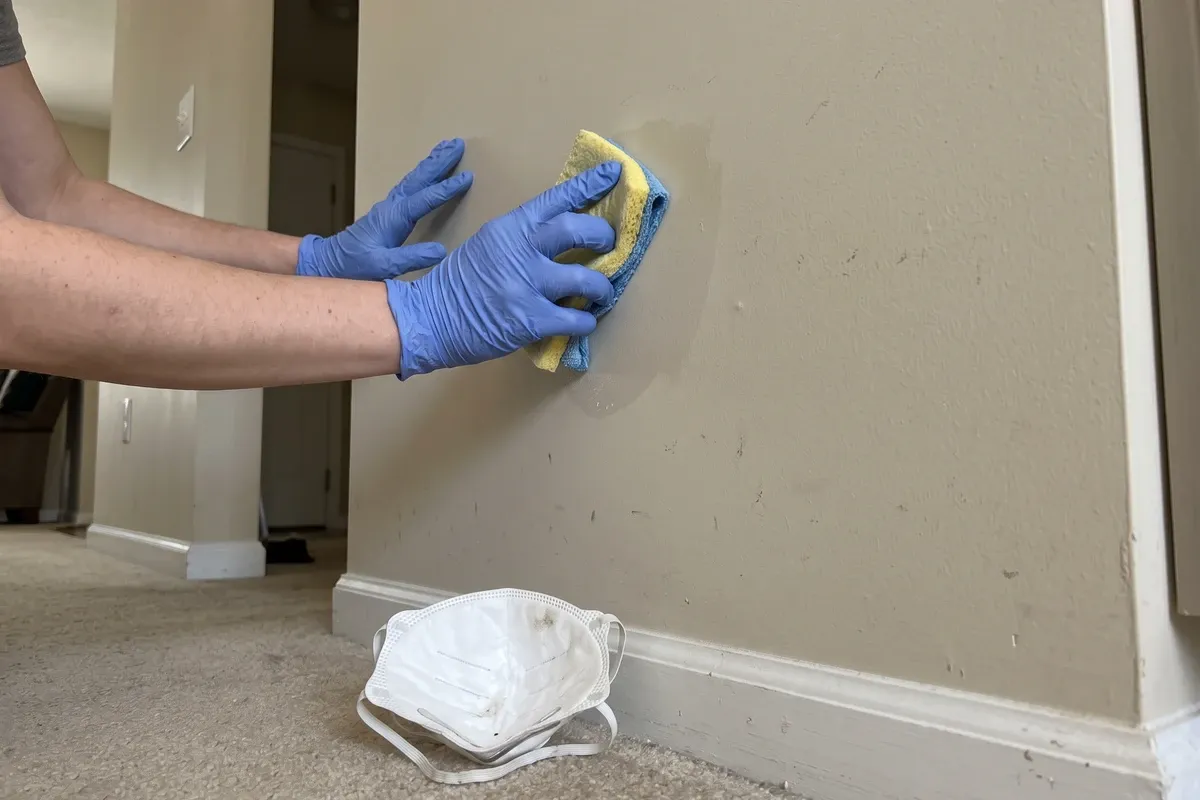
EPA’s own mold guidance backs that up on both ends of the job. Killing isn’t the finish line: “Dead mold may still cause allergic reactions in some people, so it is not enough to simply kill the mold, it must also be removed.” And the water problem has to be fixed or none of it holds: “If you clean up the mold, but don’t fix the water problem, then, most likely, the mold problem will come back.” For a small job, EPA’s own size guideline is a reasonable starting point: “If the moldy area is less than about 10 square feet (less than roughly a 3 ft. by 3 ft. patch), in most cases, you can handle the job yourself.”
In a Phoenix home, the water problem behind a stain or a musty smell is rarely obvious rain, since our storms are seasonal rather than constant. More often it’s an AC condensate line that’s overflowed into an attic or ceiling cavity, a slab leak nobody can see, or monsoon-season water that found its way past a roof or window flashing during one storm months ago. Treating the smell or the surface with anything, ozone included, doesn’t touch any of those sources.
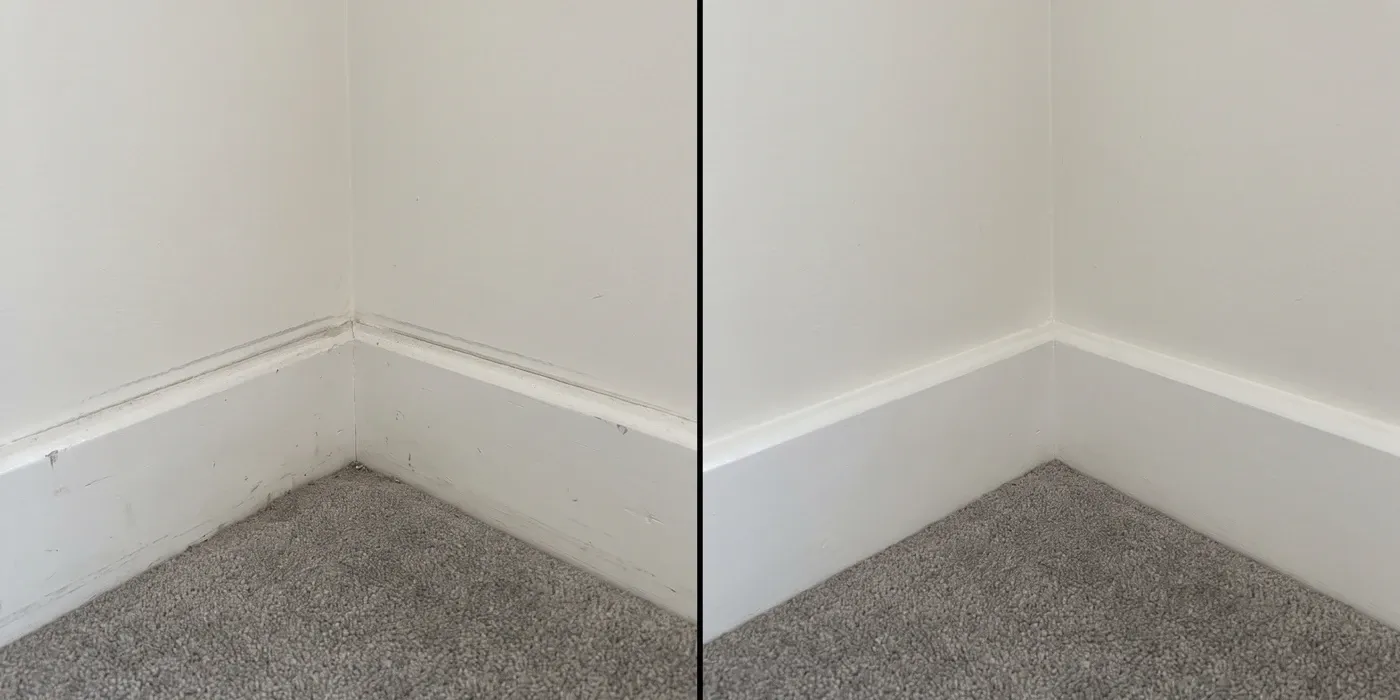
Where the job is bigger than a 3-by-3 patch, is inside a wall cavity, or keeps coming back after you clean it, that’s the point to bring in mold remediation rather than another gadget. We ran this same evidence check against two other shortcuts people try before calling anyone: does heat kill mold and does vinegar kill mold.
Sources
- U.S. EPA — Ozone Generators that are Sold as Air Cleaners: effectiveness findings, the FDA/OSHA/NIOSH/EPA concentration limits, the porous-material and odor-masking limits, aldehyde and formic acid reactions, and lung health effects.
- U.S. EPA — A Brief Guide to Mold, Moisture and Your Home: dead mold must still be removed; the 10-square-foot DIY guideline; fixing the water problem to prevent recurrence.
- U.S. EPA Green Book — 2015 8-hour ozone nonattainment area listing: the Phoenix-Mesa, AZ nonattainment designation and covered counties.
- U.S. EPA news release (March 23, 2026) — EPA Determines Phoenix-Mesa Area Will Not Be Unfairly Punished for International Emissions: the area’s Moderate nonattainment status and attainment date, and EPA’s statement that it set the 2015 ozone NAAQS at 70 parts per billion (0.070 ppm).
- California Air Resources Board — Regulation to limit ozone emissions from indoor air cleaning devices: the 0.050 ppm certification limit for indoor air cleaners sold in California, in force since 2010.