Does Heat Kill Mold? What Temperature Works
Heat can kill mold, but only at temperatures — roughly 140–160°F sustained for hours — that household heat sources cannot reach where mold actually lives. Inside Phoenix wall cavities, ceiling voids, and AC components, temperatures stay 80–100°F even on a 115°F day. That is warm enough for mold to grow. It is nowhere near the lethal threshold. The only fix is physical removal after fixing the moisture source.
What temperature kills mold — and what the research actually says
The honest starting point: neither the EPA nor the CDC publishes an official “kill temperature” for household mold. What exists are figures from remediation practice and food-safety research.
Remediation and food-safety sources commonly place the lethal threshold at roughly 140–160°F sustained for several hours. Some put full eradication higher — 160–180°F — depending on the mold species and the substrate it has colonized. The word “sustained” is load-bearing here. A brief spike to a high temperature is not the same as maintaining it continuously throughout an entire structural cavity long enough to penetrate the material and kill the colony.
Mold’s active growth range is roughly 60–95°F. That covers almost every indoor environment in the country for most of the year, which is exactly why mold is such a widespread problem.
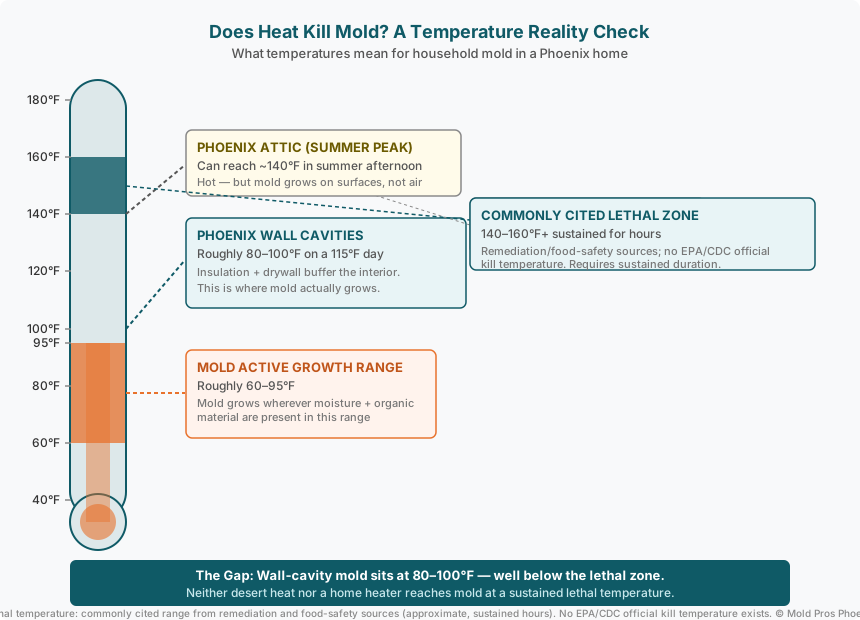
The diagram above shows the fundamental problem for any household heat strategy. The lethal zone and the places where mold actually grows are in completely different temperature bands.
Where household mold actually lives — and why heat can’t reach it
Most people asking “does heat kill mold?” are thinking about mold they can see: a spot on a bathroom wall, a patch under a sink. The more consequential problem is mold in concealed spaces where heat has even less chance of penetrating.
In a Phoenix home, mold grows primarily:
- Inside wall cavities between drywall and exterior sheathing
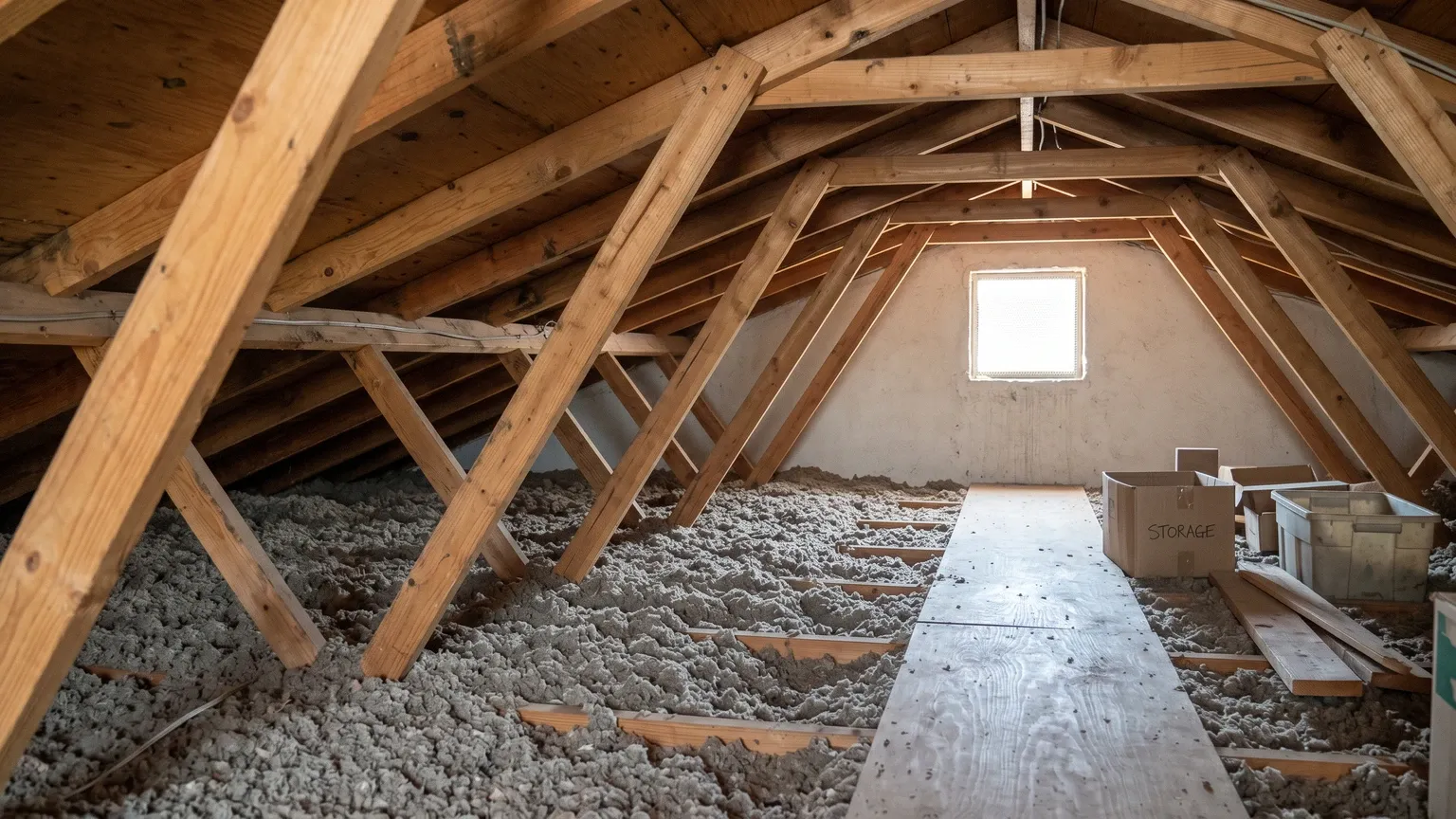
- On the underside of roof decking in the attic
- Under hardwood and tile flooring above the slab
- Around the AC air handler’s condensate drain pan and adjacent ductwork
- Behind kitchen and bathroom cabinets near plumbing lines
- In crawl spaces and enclosed soffit voids
Every one of those spaces is insulated — physically — from ambient air temperatures. A wall cavity in a Phoenix home, with drywall on one face and exterior stucco on the other, with insulation between, sits at roughly 80–100°F even on a day when outdoor temps hit 115°F and the attic is approaching 140°F.
That 80–100°F range is well inside mold’s active growth window. The insulation that keeps those spaces livable for humans is also what keeps them at a temperature where mold thrives.
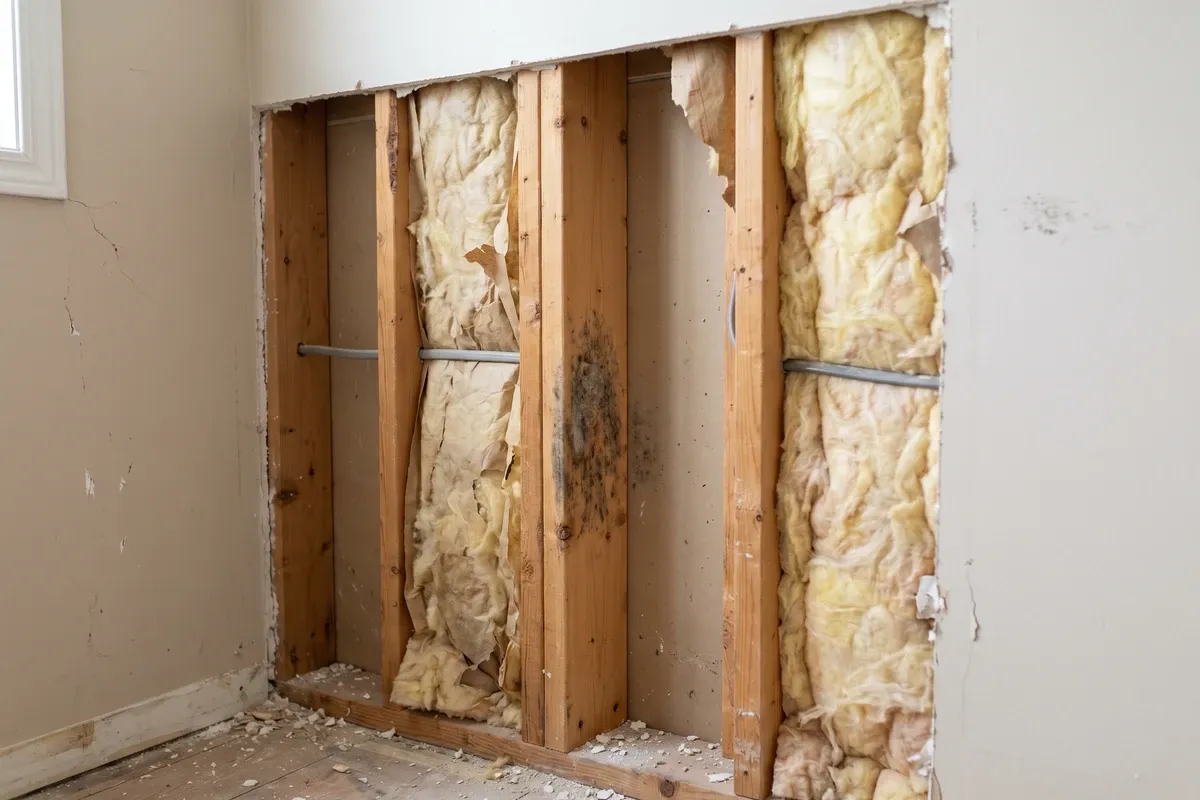
The EPA’s Brief Guide to Mold, Moisture and Your Home makes the core principle clear: “The key to mold control is moisture control.” Not temperature, not heat, not climate. Moisture. A dry wall cavity at any temperature won’t grow mold. A wet one at almost any household temperature will.
The Phoenix attic argument — and why it doesn’t hold up
A question we hear often: “Phoenix attics hit 140°F in summer — doesn’t that bake out any mold?”
It is true that Phoenix attics can approach 140°F on summer afternoons. That is at the low end of the commonly cited lethal range. But several things work against the “desert heat bakes it out” logic.
Surfaces cool at night. A Phoenix attic that peaks at 140°F in the afternoon drops to 85–90°F by midnight. Mold on the underside of roof decking is not exposed to 140°F continuously for hours; it sees daily thermal cycling. Our guide on why Phoenix homes get mold covers the specific condensate and monsoon drivers that keep attic moisture available even in that cycling heat.
Attic air temperature is not roof decking temperature. The mold colony growing on the underside of plywood roof decking is embedded in the wood’s surface layer. Getting that substrate to a sustained lethal temperature requires more than hot air — it requires sustained thermal penetration into the material. Plywood is a modest insulator.
Wall cavities are not attics. Even granting that a Phoenix attic might theoretically approach lethal mold temperatures on the hottest days, the living spaces where the most consequential mold grows — inside walls, under floors, around HVAC components — never come close.
Can a hair dryer, space heater, or turned-up thermostat kill mold?
This comes up in a lot of online forums, particularly for small bathroom mold problems. The honest answer is no, for two separate reasons.
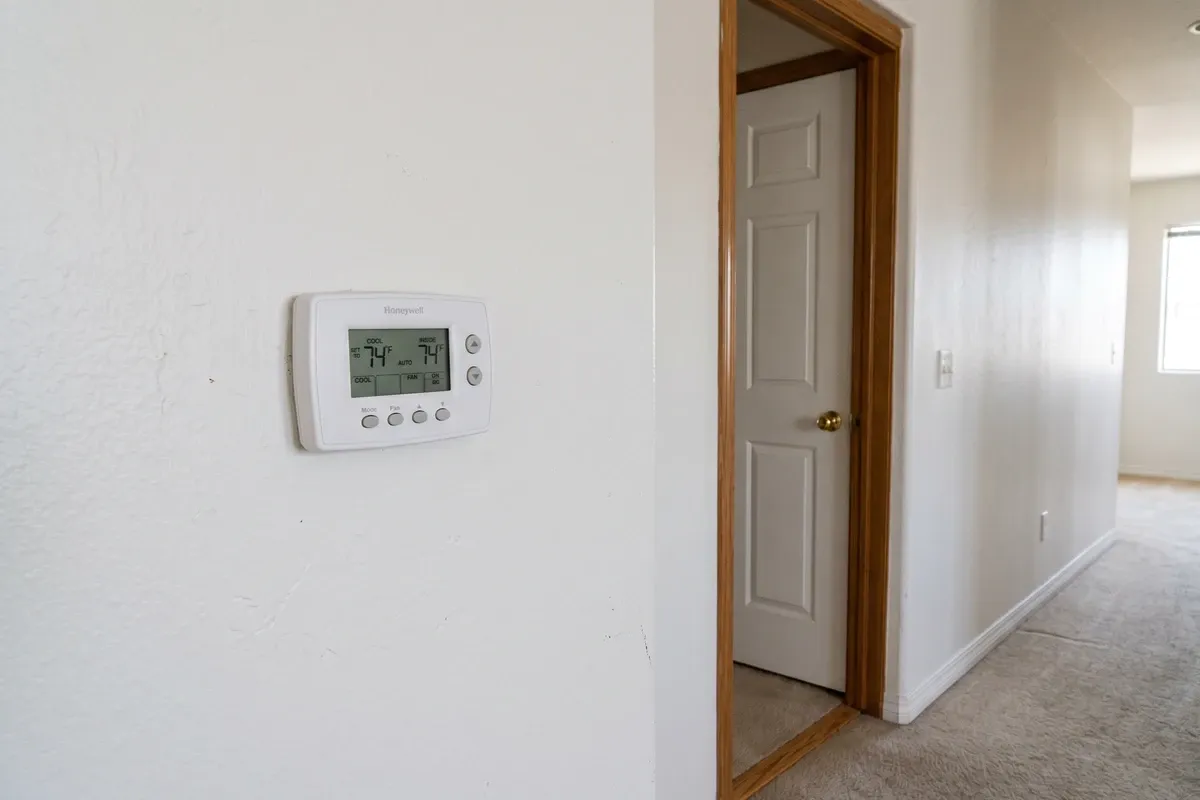
The temperature gap. A household space heater operating in a sealed room will raise air temperature in that room. It will not raise the temperature inside the wall cavity behind the mold-covered drywall to 140°F and hold it there for hours. Hair dryers can hit high temperatures at the nozzle but cannot sustain that heat in any meaningful volume of space. The physics simply do not work for reaching a sustained lethal temperature where the mold lives.
Killing is not removing. Even if a hair dryer could heat a mold patch to the lethal threshold, the result would be dead mold spores on the surface. The EPA is direct on this: dead mold spores can still produce allergic reactions in sensitive people. Mold must be physically removed — not just killed, not just dried, physically taken out — and the moisture source that allowed it to grow must be fixed. A hair dryer produces neither of those outcomes.
What a hair dryer can do is temporarily dry a wet surface, which stops active growth. But without removing the colony and fixing the moisture, mold that goes dormant from drying will reactivate the next time that surface gets wet.
Does professional heat treatment work?
Yes, with important caveats. Professional thermal remediation is a real technique used by some remediation contractors. It differs from household heat sources in a fundamental way: the equipment is designed to raise and sustain temperatures throughout an entire structure — including inside wall cavities and structural components — at the lethal threshold for a set duration, while probes placed at multiple points in the space confirm the temperature is actually being reached and maintained throughout.
This is not a space heater in the corner of a room. It involves industrial heating equipment, calibrated airflow systems, and continuous monitoring to verify that the thermal kill target is met everywhere in the treatment zone — not just in the open air.
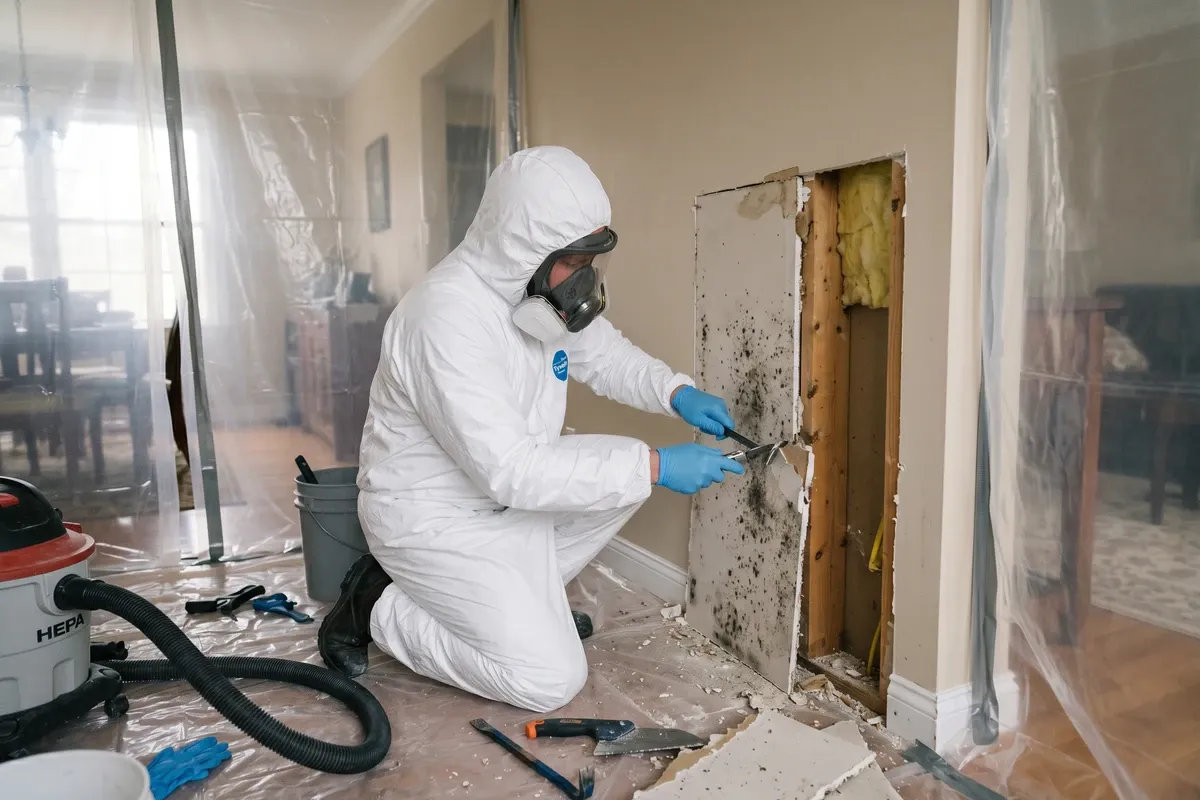
Professional thermal treatment is also used as a complement to physical removal, not a standalone solution. The dead mold and contaminated material still need to come out. And the moisture source that created the problem still needs to be fixed — otherwise any surviving spores, or new spores from the air, will reestablish the colony as soon as humidity returns.
If you are evaluating a contractor who offers heat treatment as the primary or only remediation method without physical removal, that is a question worth pressing on.
What about mold on food? A brief honest note
The Google results for “does heat kill mold” are dominated by food-safety content from the USDA and food-science sources. Since you may be here with a food question, the honest answer is different from the building-materials answer.
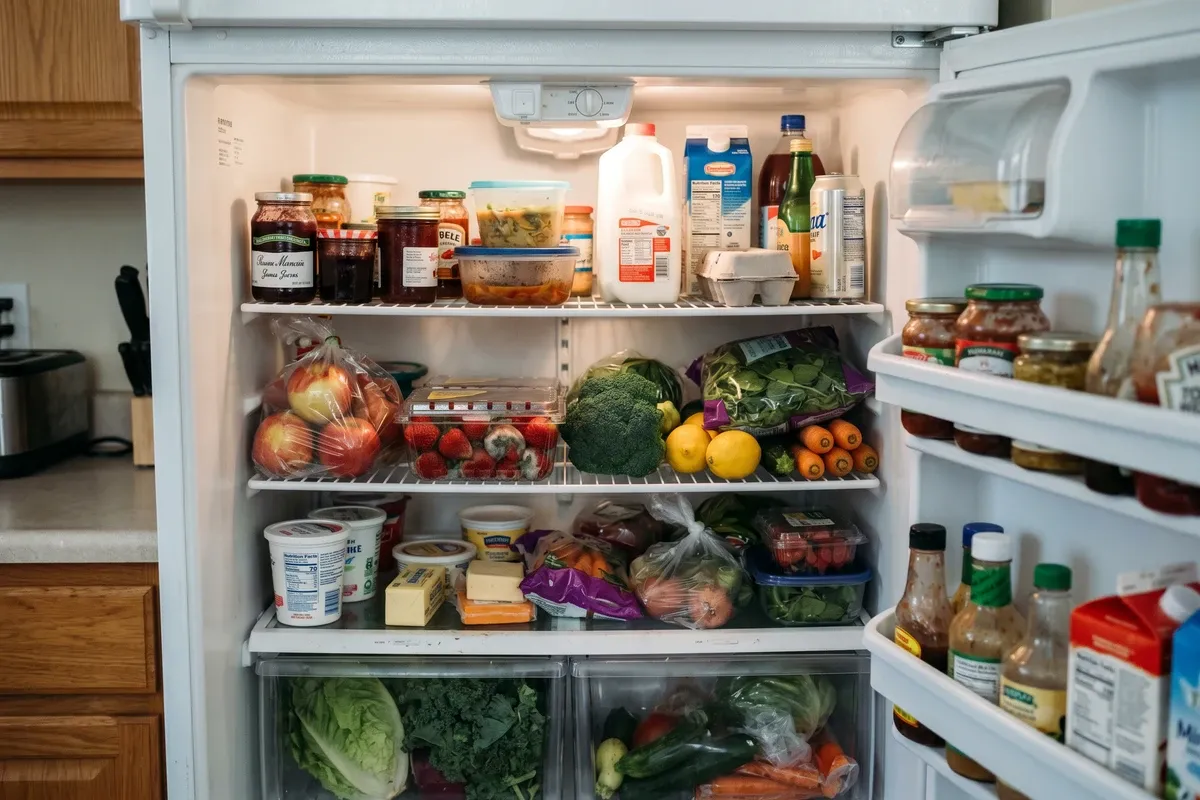
Cooking temperatures can and do kill surface mold on food. But the USDA’s guidance on molds on food makes an important distinction: for many foods — particularly soft fruits, vegetables, bread, and dairy — you should discard the entire item rather than cutting around or cooking out the mold. The reason: mycotoxins (the metabolic byproducts some molds produce) can penetrate deeper into food than the visible mold colony, and cooking destroys the mold organism but may not destroy the toxins.
The advice is food-specific and nuanced: hard cheeses and firm produce with low moisture content are treated differently from soft, porous foods. This page is focused on building-materials mold, but it is worth knowing the food-safety answer is also more complicated than “cook it off.”
The dormancy point: dried mold is not gone
This matters regardless of whether you’re thinking about heat, sunlight, or any other approach that stops short of physical removal.
When mold is exposed to temperatures that dry it out — or hot enough to push it dormant — it does not die, and it does not disappear. It waits. The EPA’s guidance is direct: it is impossible to eliminate all mold spores from an indoor environment, and dead or dormant mold still causes allergic reactions in sensitive people. Mold must be physically removed from affected surfaces.
The practical consequence: heating a mold colony — even successfully knocking it dormant — and then leaving it in place sets up the same problem to reoccur. The next time that surface gets wet, whether from a new leak, condensate, or humidity, the colony reactivates. The mold is still there.
This is why the EPA mold cleanup guidance centers on two steps in sequence: fix the moisture source first, then remove the mold physically. Heat is not one of those steps.
Phoenix-specific: the indoor moisture sources that matter
Understanding that heat won’t solve the problem is useful, but only if you also know what the actual drivers of Phoenix mold are. The dry outdoor climate is irrelevant to a wet wall cavity. The specific Phoenix drivers:
AC condensate line clogs and drain pan failures. Phoenix air conditioners run continuously from roughly April through October. Every hour of operation produces condensate that has to drain out. A clogged condensate line or failed drain pan directs that water into a ceiling or wall cavity — in the dark, at room temperature, on drywall. The desert heat outside has no effect on that moisture.
Monsoon roof leaks. Phoenix’s monsoon season (mid-June through September) delivers half the city’s annual rainfall in intense storms. Flat and low-slope roofs are common in the Valley, and hairline cracks in roofing membrane or failed flashing can pass water under hydrostatic pressure from a storm while appearing intact in dry weather.
Slab and pinhole leaks. Older homes in Arcadia, Encanto, Coronado, and similar mid-century neighborhoods have copper or galvanized plumbing that’s 60–70 years old. Slow leaks wick into slab materials and subfloor for months before they’re detected — in a dark, constant-temperature environment where mold has every advantage.
Evaporative cooler moisture. Many older Phoenix homes in Maryvale, Sunnyslope, and South Mountain use swamp coolers that add humidity to indoor air. A neglected cooler grows mold inside its media pads and ducts and distributes it whenever it runs.
Our guide on mold in the desert covers each of these drivers in detail, including why Phoenix mold patterns differ from what national remediation guides are written for.
What actually works
The EPA’s framework is straightforward and supported by the evidence:
-
Fix the moisture source first. Mold remediated without stopping the water source returns within weeks. Find the specific driver — the condensate line, the roof, the slab — and fix it before or alongside remediation.
-
Dry water-damaged materials within 24–48 hours. Per EPA guidance, materials dried within this window after water contact often don’t develop mold growth. This is where rapid response genuinely matters.
-
Physically remove mold-affected material. Wipe-down treatments on a surface with mold behind it don’t address the colony. Affected drywall, insulation, and porous wood typically needs to come out.
-
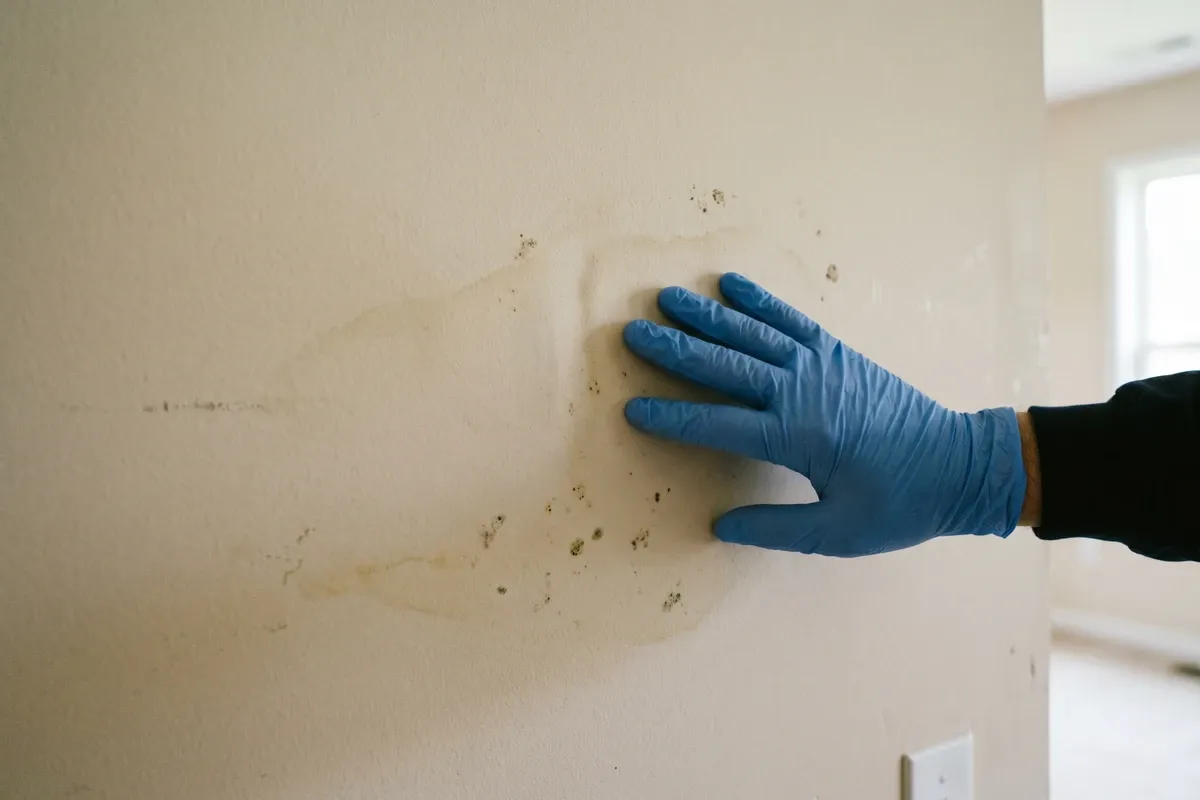
Know the DIY threshold. The EPA’s rule of thumb: mold areas under roughly 10 square feet on hard, non-porous surfaces can be handled carefully by a homeowner with an N95, gloves, and EPA-registered cleaner. Larger areas, mold inside walls or attic, or mold following sewage or flooding warrant professional remediation.
For context on the heat-vs-sunlight distinction, the companion guide on whether the Arizona sun kills mold covers the UV and light angle and explains why the desert’s outdoor climate doesn’t protect against indoor mold. The same access problem applies: neither the sun nor heat reaches where mold lives inside a home.
If you have found mold, or found moisture that hasn’t turned to mold yet, the fastest path is a professional assessment of the source. Our Phoenix mold removal service covers remediation across the Valley — what the process involves, what it costs, and how to get a free, no-obligation quote to understand the scope of what you’re dealing with. The Phoenix mold guides hub has more on specific mold types and locations.
Sources
- U.S. EPA — A Brief Guide to Mold, Moisture and Your Home: moisture control as the key to mold prevention; the 24–48-hour window to prevent mold after water contact; statement that dead mold spores can still produce allergic reactions and must be physically removed.
- U.S. EPA — Mold Cleanup in Your Home: the 10-square-foot rule of thumb for DIY vs. professional remediation.
- CDC — Mold — Basic Facts: where mold grows, health effects, and at-risk populations. (No official kill temperature for household mold is published by the CDC.)
- USDA FSIS — Molds on Food: Are They Dangerous?: guidance on discarding versus treating moldy foods; distinction between hard and soft foods; mycotoxin risk in porous foods.
- Lethal temperature range: commonly cited figure of roughly 140–160°F sustained for hours from remediation practice and food-safety research; not an EPA or CDC official standard. Some sources cite 160–180°F for complete eradication depending on species and substrate.