What Does Mold Eat? Why Fixing Moisture Is the Whole Fix
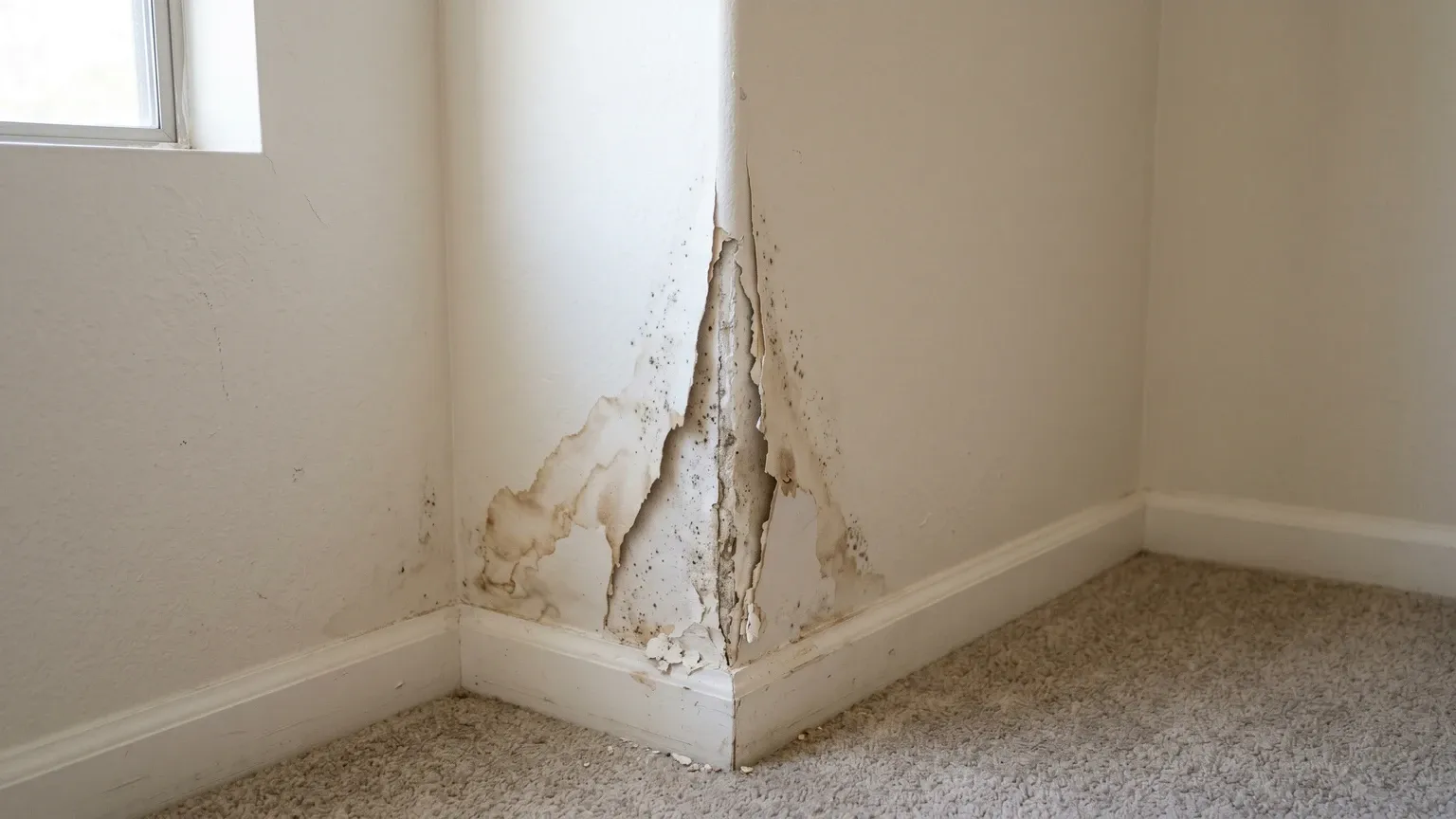
Mold feeds on organic material — cellulose in wood and paper, starches and sugars in food products, organic dust on virtually any surface. Of the four things mold needs to grow (moisture, food, oxygen, and temperature), food is everywhere indoors. So is oxygen. So is a moderate temperature. The only variable a homeowner can actually change is moisture. Fix the moisture problem and mold has nothing. That one sentence explains every successful mold remediation.
What does mold actually need to grow?
Mold belongs to the kingdom Fungi. Unlike plants, it produces no chlorophyll and makes no food of its own. The EPA’s Mold Web Course explains that molds “play an important role in the environment by breaking down and digesting organic material” — leaves, dead wood, and, indoors, the organic materials your house is built from.
The USDA Forest Products Laboratory, in its Wood Handbook (Chapter 14), names four things fungal growth depends on: moisture, food, oxygen, and a suitably mild temperature. All four have to be present for mold to grow.
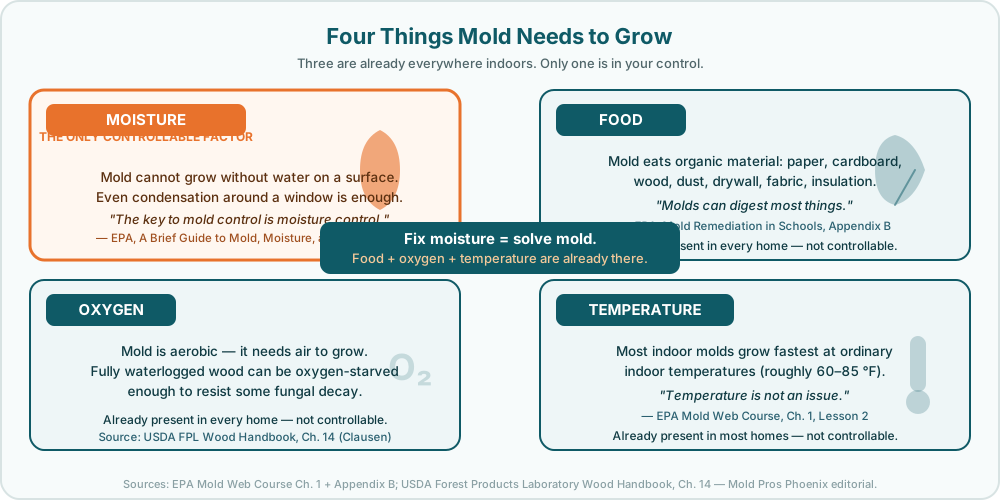
Moisture
This is the controllable factor. The EPA puts it plainly: “Mold does not need a lot of water to grow. A little condensation, in a bathroom or around a window sill, for example, can be enough.” No moisture means no growth, regardless of how much food, oxygen, or warmth is present.
Food — organic material
The EPA’s Mold Web Course states that mold “can grow on virtually any organic substance. Most buildings are full of organic materials that mold can use as food, including paper, cloth, wood, plant material, and even soil.” Because food is essentially everywhere indoors, it is rarely the limiting factor.
Oxygen
Mold is aerobic — it requires air. In practice, this means mold almost never grows in completely waterlogged conditions. The USDA Wood Handbook notes that “wood can be too wet for decay as well as too dry” because fully waterlogged wood lacks the air supply fungal growth requires. For practical purposes, any normally ventilated indoor space has enough oxygen.
Temperature
Most indoor molds grow fastest at ordinary indoor temperatures. The EPA’s Mold Web Course is direct on this point: “In most cases, temperature is not an issue; some molds grow in warm areas, while others prefer cool locations such as bread stored in a refrigerator.” A broad range of molds are active at typical household conditions, so temperature is rarely a useful control lever.
What mold eats in a house
The CDC’s published guidance on mold lists the common household substrates directly:
“Mold grows on paper, cardboard, ceiling tiles, and wood. Mold can also grow in dust, paints, wallpaper, insulation, drywall, carpet, fabric, and upholstery.”
That list covers most of the materials a house is built and furnished from. A few of these deserve closer attention.
Paper and cardboard. Paper is nearly pure cellulose — the long-chain sugar polymer that makes up plant cell walls. Mold breaks cellulose down with enzymes, releasing sugars it can metabolize. Cardboard boxes stored in a garage after a monsoon storm, paper-backed insulation in a damp attic, cardboard file boxes in a flooded storage room: all are rapid-growth substrates.
Wood. Same biology: wood is made mostly of cellulose and lignin. Most surface molds eat the cellulose. The outer softwood layers are faster food than the dense heartwood.
Drywall. Standard drywall has paper facing on both sides. That paper is primarily cellulose. When drywall gets wet, the paper absorbs moisture and the mold grows directly into the food source. The gypsum core also contains trace organic additives. This combination makes wet drywall one of the most hospitable substrates in a typical home.
Dust. This is the less obvious one. Metal, glass, and rigid plastic do not supply organic food. But the CDC’s list includes “dust” because every surface in a home accumulates a film of organic particles — skin flakes, fabric fibers, food residue, pollen. That film is enough to grow mold. No surface is truly mold-proof if it stays damp and accumulates dust.
The wood biology: why cellulose matters
Understanding why mold targets wood and paper so readily comes down to one molecule: cellulose.
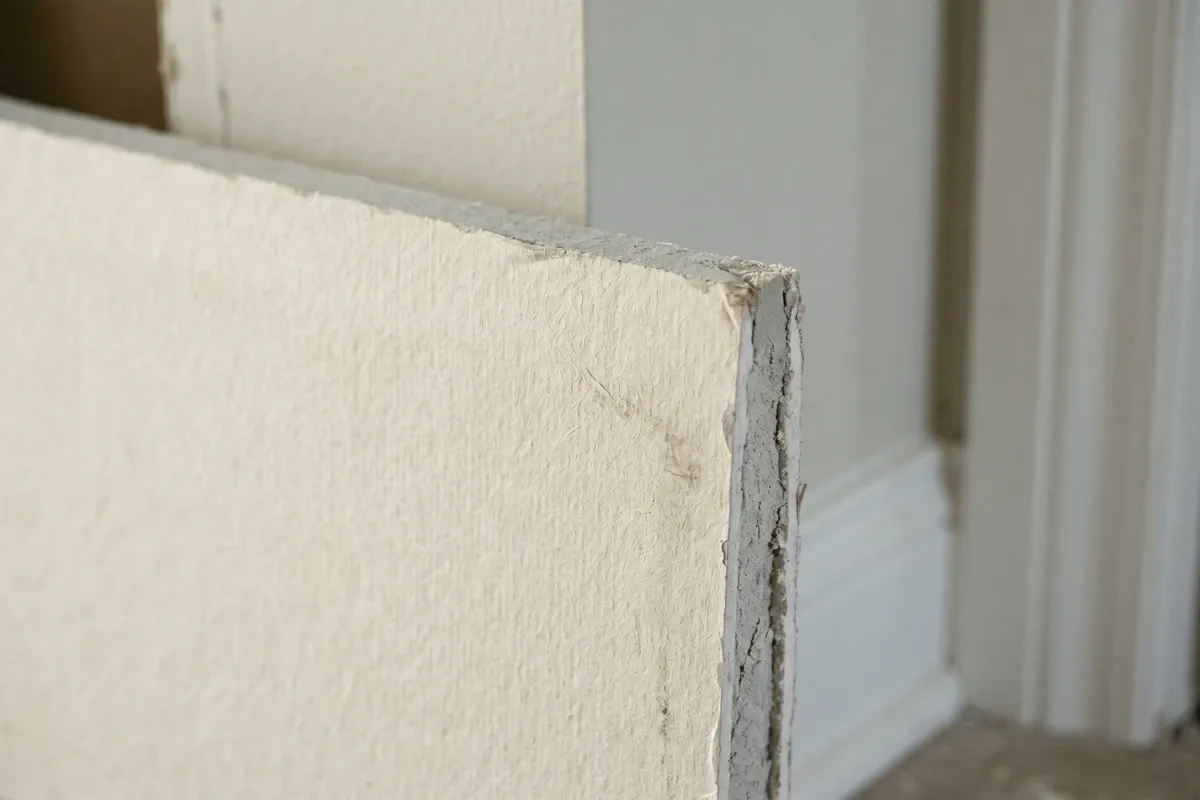
The USDA Forest Products Laboratory Wood Handbook describes how a wood-decay fungus “permeates the wood and uses parts of it as food. Some fungi live largely on cellulose, whereas others use lignin and cellulose.” For the surface molds you encounter on a wet board or a water-damaged wall — the kind that shows up as black, green, or gray patches — cellulose is the primary food source. Lignin (the polymer that makes wood stiff) is harder to break down and requires specialized decay fungi like brown rot or white rot organisms.
What this means practically: the soft paper backing on drywall is digested faster than structural lumber, which is why a water-damaged drywall panel with surface mold is rarely salvageable even if the framing behind it looks fine. The paper is gone; the gypsum loses structural integrity once the binder is wet. See our guide on mold on drywall for the full picture of when drywall can be cleaned versus when it has to come out.
The moisture threshold for wood. The USDA Wood Handbook puts a useful number on when wood becomes vulnerable: serious decay occurs only when wood’s moisture content exceeds the fiber saturation point, which averages around 30%. Wood kept consistently below about 20% moisture content “should provide a reasonable margin of safety against fungal damage.” Surface molds have somewhat broader tolerance, but the same principle applies: keep wood dry and it resists. Get it wet repeatedly and the biology takes over.
For a deeper look at how wood responds to mold versus structural decay, see mold on wood.
Moisture is the only lever
This is the central fact the EPA makes explicit. From Appendix B of the EPA’s Mold Remediation in Schools and Commercial Buildings guide:
“Molds need both food and water to survive; since molds can digest most things, water is the factor that limits mold growth.”
Food is in every room. Oxygen is in every room. Temperature is in every room, and changing it is impractical. Moisture is the one input that (a) you can actually control, (b) is the limiting factor the EPA identifies, and (c) is the one variable that, when removed, stops growth regardless of all the others.
The EPA’s Brief Guide to Mold adds the corollary: “If possible, keep indoor humidity below 60 percent relative humidity (ideally, between 30–50 percent).” That’s the practical version of moisture control for a homeowner — not eliminating every drop of water, but keeping surfaces dry and indoor humidity in a range where mold cannot establish.
This is also why the standard remediation advice is always “fix the moisture source first.” Paint over mold, and the moisture keeps feeding it from behind. Clean the visible growth without stopping the leak, and it comes back within weeks. The sequence matters: stop the water, then remove the mold.
Phoenix makes this concrete
Phoenix’s dry outdoor climate creates a counterintuitive indoor mold problem. The moisture isn’t coming from outside — it’s coming from specific mechanical and structural sources inside the home. And because the desert air misleads homeowners into assuming mold can’t happen here, those sources often run for weeks before anyone notices.
Swamp cooler pads. Traditional evaporative cooler pads — aspen shavings and cellulose-pad designs — are literally cellulose kept wet on purpose. The mechanical design of a swamp cooler puts water directly onto an organic food source continuously throughout the cooling season. The result is predictable: without seasonal maintenance, the pads and the inside of the cooler housing grow mold. The bleed-off or purge cycle exists specifically to flush dissolved solids and reduce microbial load. A cooler with a broken bleed cycle and uncleaned pads is a mold-growth machine. The swamp cooler mold guide covers the maintenance sequence that prevents this.
Attic AC condensate on plywood. Even in a dry Phoenix attic, months of drifting dust — fiberglass particles, skin flakes, insulation debris — settle on the underside of the roof deck. An overflowing condensate drain pan from an attic-mounted air handler pushes water into that organic film. You now have cellulose in the plywood itself plus a fresh organic layer on top of it, all of it wet. That is the biology from the first section of this guide playing out exactly.
Slab-leak-wet drywall paper. A slow slab leak (common in Phoenix concrete-slab construction, especially homes 20 or more years old) wicks up through the concrete, into the bottom plate, and into the drywall paper facing from the back side. Homeowners find mold behind the baseboard weeks later and wonder where it came from — they never saw standing water. The water was there; it was just slow and hidden. The paper-cellulose food source did the rest.
For a complete map of Phoenix-specific mold drivers and when to call a professional, the mold removal page covers the full remediation process.
What actually resists mold — and the honest limit
Metal, glass, fired ceramic tile, and rigid plastic supply no organic food for mold to digest. In clean, dry conditions they will not grow mold.
The limit of that claim is the dust film. Every surface in a home collects organic particles over time. The CDC’s substrate list specifically includes “dust” and “paints” — paints because latex paint contains organic binders that can feed mold, and dust because every inorganic surface eventually carries enough organic matter to support growth if it stays damp.
The practical guidance from the EPA: no surface is mold-proof. The honest framing is “mold-resistant under normal conditions” — which holds as long as the surface stays dry and is cleaned regularly. A perpetually damp metal surface in a dark corner with years of dust accumulation will grow mold. The food is the dust, not the metal.
This is why the guidance from the EPA and CDC never offers a list of “mold-proof materials.” Moisture control — not material selection — is the primary defense.
How this connects to the guide library
Mold biology runs through every specific problem you might encounter in a Phoenix home. The substrate determines how fast mold grows and whether a surface can be cleaned or must be replaced. The moisture source determines whether mold comes back. And the guides index links to the full catalog of substrate-specific and location-specific guides — from attic roof decking to bathroom grout — all built on the same underlying biology covered here.
The one-sentence version: mold eats organic material, and everything in your house qualifies. Water is the only thing you can actually remove from that equation.
Sources: EPA Mold Web Course (Ch. 1, Lessons 1–2); EPA A Brief Guide to Mold, Moisture, and Your Home; EPA Mold Remediation in Schools and Commercial Buildings, Appendix B; USDA Forest Products Laboratory Wood Handbook GTR-190, Ch. 14 (Clausen); CDC About Mold.