Hypersensitivity Pneumonitis: The Serious Mold Illness Most Doctors Miss

Hypersensitivity pneumonitis is a lung disease caused by an immune reaction to inhaled organic particles, including mold spores. It is recognized by mainstream medicine — the IOM 2004 placed it at the SUFFICIENT evidence tier for damp indoor environments, and the American Thoracic Society published formal clinical practice guidelines in 2020. In its chronic fibrotic form, HP carries a 31.5% 5-year mortality rate. Most primary care doctors miss it because early symptoms look like asthma, bronchitis, or “just being run down.” This is not medical advice — it is a review of the published medical evidence and clinical guideline, so you can have a more informed conversation with your doctor.
What hypersensitivity pneumonitis actually is
HP is not an infection and not a simple allergy. It is a specific immune-mediated inflammation of the alveoli and small airways — the parts of the lung where oxygen crosses into the bloodstream.
When certain organic particles, including mold spores, are repeatedly inhaled, the immune system can generate an exaggerated response involving both antibody-mediated (Type III) and cell-mediated (Type IV) reactions. The result is granulomatous inflammation — clusters of immune cells building up inside the lung tissue. In the early acute stage this inflammation is reversible. In the chronic fibrotic stage, repeated immune attacks cause permanent scarring that progressively reduces lung function.
The NHLBI describes HP this way: “Breathe in certain substances in the environment, such as mold or the skin cells shed by animals with fur. These substances trigger the immune system and cause short- or long-term inflammation in the lungs.” The NHLBI goes further: “Without treatment, hypersensitivity pneumonitis can cause permanent damage to the lungs” including “pulmonary hypertension, permanent lung damage, or heart failure.”
That progression — from reversible inflammation to permanent scarring to heart failure — is the reason the diagnosis matters so much. The window for intervention is real, but it is not unlimited.
The three clinical stages and what they feel like
The ATS/JRS/ALAT 2020 Clinical Practice Guideline formally classifies HP into nonfibrotic and fibrotic phenotypes. Clinically, this maps to three presentations:
Acute HP starts within four to eight hours of a heavy or repeated exposure. Symptoms are fever, chills, muscle aches, headache, cough, and shortness of breath — a pattern that often looks like a bad flu or pneumonia. Symptoms resolve within days if you leave the environment. Because they go away, many people never connect the pattern to where they were when it started. Each episode re-sensitizes the immune system, making the next reaction more severe.
Subacute HP develops over weeks to months of ongoing lower-level exposure. The signature is progressive breathlessness on exertion, fatigue, weight loss, and a chronic cough that doesn’t clear with standard treatment. This stage is where most misdiagnoses happen — it mimics asthma, COPD, heart failure, and chronic bronchitis closely enough that primary care physicians treating the symptoms never order the imaging that would reveal it.
Chronic fibrotic HP is what results when subacute HP goes undiagnosed or the exposure source is never removed. Irreversible fibrosis builds in the lung tissue. Lung function declines progressively. Pulmonary hypertension can develop, putting strain on the right side of the heart. The 5-year mortality rate in peer-reviewed cohort studies is 31.5%.
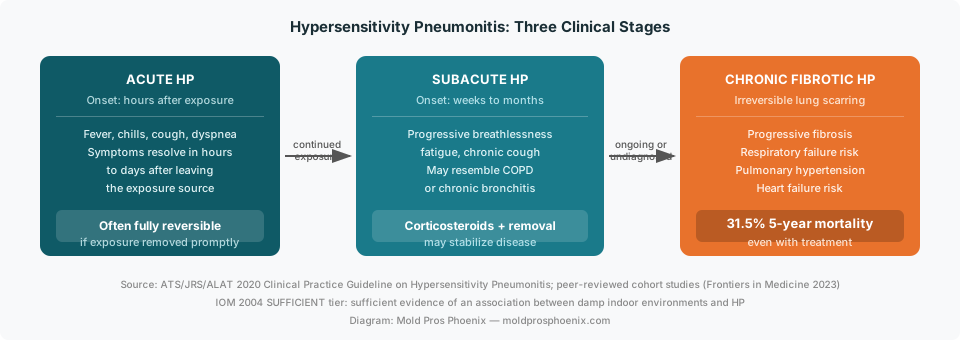
The stage you are in when diagnosed is largely determined by how long the exposure lasted and whether the source was identified and removed. This is why doctors who know to look for HP ask immediately: “Where were you when this started? Does it get better when you leave home or work?”
The mold species that trigger HP at home
HP is not caused by every mold. Specific organic antigens — proteins on the surface of mold spores and fragments — are required to sensitize and then activate the immune response. The following mold species and microbial sources have documented evidence of causing HP in residential and occupational settings:
Aspergillus species — common indoor molds found in water-damaged drywall, AC systems, and damp basements. Aspergillus fumigatus and related species are documented HP antigens in multiple exposure studies.
Penicillium species — among the most common indoor molds in water-damaged buildings globally. Multiple Penicillium species have been implicated as HP antigens across the peer-reviewed literature, most prominently in occupational cheese-worker’s lung (P. roqueforti, P. camemberti); their role in residential HP is less species-specific and generally reported at the genus level.
Cladosporium — extremely common indoor and outdoor mold, frequently found on window frames, bathroom caulk, and HVAC surfaces. Documented in residential HP cases.
Alternaria — common on plant material, damp cardboard, and window condensation. Documented as an HP antigen.
Thermophilic actinomycetes — the classic cause of farmer’s lung and humidifier lung. These heat-loving bacteria-like organisms thrive in composting organic material and in contaminated humidifiers and HVAC systems. Modern taxonomy assigns the farmer’s-lung organism as Saccharopolyspora rectivirgula (formerly Micropolyspora faeni).
Mycobacterium avium complex — the documented cause of hot tub lung; aerosolized from hot tub water in enclosed spaces.
The mold removal guides hub covers what these species look like and where they grow. For people with immunocompromise or pre-existing lung conditions, the who is most at risk from mold guide covers why HP risk varies significantly between individuals.
The classic HP syndromes — and their home connections
HP has accumulated a long list of named syndromes, each tracing to a specific exposure source. Several are directly residential:
Humidifier lung — caused by thermophilic actinomycetes, fungi, and amoeba contaminating the water reservoir of household humidifiers, especially ultrasonic and cool-mist units. The aerosolized mist carries the antigens directly into the breathing zone. Case reports of humidifier lung go back decades in the peer-reviewed literature.
Hot tub lung — caused by Mycobacterium avium complex (MAC) aerosolized from hot tub water in enclosed spaces like indoor pools or bathrooms. Symptoms develop after weeks to months of use. HP from a hot tub at home is a well-documented cause of what often gets diagnosed initially as atypical pneumonia.
Bird fancier’s lung — caused by proteins in bird droppings and feather dust. This is one of the most common HP presentations worldwide and is entirely domestic — parakeets, parrots, pigeons, and cockatiels in the home are the exposure source. Importantly, the proteins can linger in the home environment for months after a bird is removed, making diagnosis tricky.
Farmer’s lung — the classic occupational HP caused by Micropolyspora faeni in moldy hay. This is the exposure that first defined HP as a medical entity. While primarily occupational, people who store hay, compost, or moldy organic material in a home workshop or garage can develop the same reaction.
Home mold HP — environmental exposure to Aspergillus, Penicillium, Cladosporium, and Alternaria in water-damaged homes. Less classically named, but documented in the peer-reviewed literature and explicitly covered by the IOM 2004 SUFFICIENT-evidence tier statement: “There is sufficient evidence of an association between the presence of mold and bacteria in damp indoor environments and hypersensitivity pneumonitis in such people.”
Why doctors miss it — and what the misdiagnoses are
The diagnostic problem is well recognized in the pulmonology literature: HP mimics a long list of common conditions that primary care physicians see every day.
The misdiagnosis list includes:
- Asthma — the cough and breathlessness overlap nearly perfectly. Many HP patients carry an asthma diagnosis for years before the pattern is recognized as something different.
- Chronic bronchitis / COPD — the progressive breathlessness in subacute HP matches textbook COPD, especially in smokers or older patients where COPD is “expected.”
- Community-acquired pneumonia — acute HP episodes with fever and chest infiltrates on plain X-ray can look identical to bacterial pneumonia. Patients improve (because they leave the hospital and the exposure) and are discharged, only to return weeks later with the next episode.
- Heart failure — the breathlessness, fatigue, and reduced exercise tolerance of subacute HP overlap significantly with early heart failure.
- “Being run down” or anxiety — when objective testing comes back within normal limits or shows only mild abnormalities, patients are sometimes told their symptoms are non-specific.
The single most important diagnostic gap is the environmental and occupational exposure history. A physician who asks “Do your symptoms improve when you’re away from home or work for a few days?” is doing something that changes the diagnostic pathway. A physician who doesn’t ask that question often never discovers the pattern.
Plain chest X-ray is unreliable for HP — it can appear normal even in active disease. HRCT scanning is the key imaging tool.
The diagnostic protocol — what the ATS/JRS/ALAT 2020 guideline says
The ATS/JRS/ALAT 2020 Clinical Practice Guideline, published in the American Journal of Respiratory and Critical Care Medicine, is the current medical society standard for HP diagnosis. The guideline formalizes a multidisciplinary approach:
Step 1: Environmental and occupational exposure history. This is the entry point. Clinicians should ask systematically about bird ownership, hot tub use, humidifiers, workplace exposure to organic dust, and residential water damage or visible mold. HP requires an antigen — finding the antigen exposure is the diagnostic foundation.
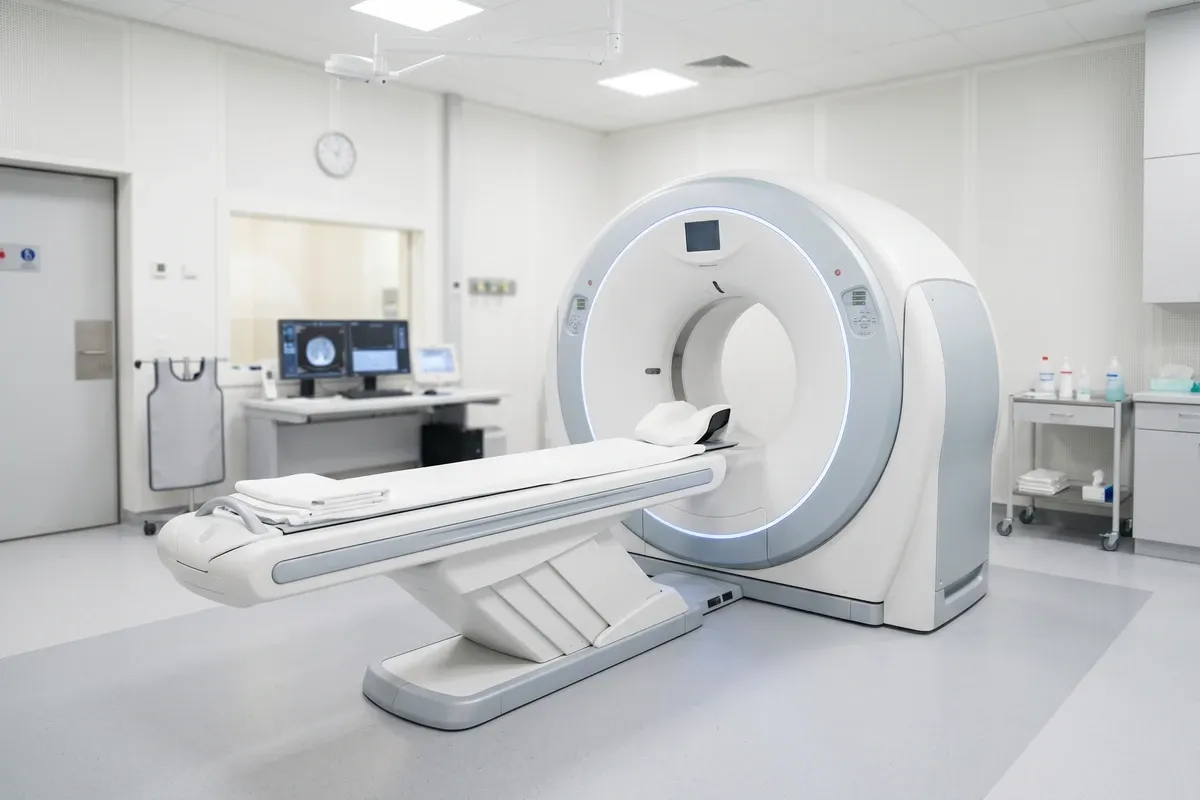
Step 2: High-resolution CT (HRCT) of the chest. HRCT is the key imaging study. Classic findings in nonfibrotic HP include bilateral ground-glass opacities, mosaic attenuation (patchy air-trapping), and centrilobular nodules — patterns that plain X-ray cannot reliably show. Fibrotic HP shows honeycombing or irregular reticulation on top of these findings. The ATS/JRS/ALAT guideline notes that HRCT alone, combined with a clear exposure history, can sometimes support a diagnosis without biopsy.
Step 3: Bronchoalveolar lavage (BAL). BAL — a procedure where fluid is instilled into the airway and collected for analysis — is performed by a pulmonologist. In HP, BAL characteristically shows a marked increase in lymphocytes (white blood cells that mount immune responses). A BAL lymphocyte count above 30–40% is strongly suggestive of HP, though not exclusive to it.
Step 4: Antigen-specific IgG (serum precipitins). Blood tests for antibodies against specific HP antigens — bird proteins, thermophilic actinomycetes, Aspergillus, etc. — can support the diagnosis when positive. However, positive precipitins indicate exposure and sensitization, not necessarily active disease. Negative precipitins do not rule out HP, especially when the specific antigen panel doesn’t include the patient’s actual exposure.
Step 5: Surgical lung biopsy (in selected cases). When the diagnosis remains uncertain after imaging and BAL, or when fibrotic HP needs to be distinguished from idiopathic pulmonary fibrosis (IPF), surgical biopsy may be recommended. The histological pattern — granulomatous inflammation with lymphocytic infiltrates and bridging fibrosis — is characteristic.
The guideline emphasizes that HP diagnosis is a multidisciplinary judgment — radiologist, pulmonologist, and pathologist reading the evidence together. A general practitioner who suspects HP should make the referral rather than attempting to manage it alone. The guideline also stresses that if HP is suspected, antigen avoidance should begin immediately — before the full diagnostic workup is complete — because continued exposure during a diagnostic delay worsens prognosis.
Treatment and prognosis — what the evidence shows
Acute HP: The primary treatment is removing the antigen source. In many cases, this alone produces full or near-full recovery. Corticosteroids (such as prednisone) may be used to speed resolution of acute inflammation, though they do not affect the underlying sensitization. If the source is removed and exposure does not recur, the prognosis is excellent.
Subacute HP: Antigen removal remains the cornerstone. Corticosteroids are typically prescribed to reduce ongoing inflammation and slow progression. Disease may stabilize or partially improve, but some residual lung changes often persist. The ATS/JRS/ALAT guideline notes that even in subacute HP, the degree of fibrosis present at diagnosis is a key predictor of long-term outcome.
Chronic fibrotic HP: This stage is irreversible. Treatment aims to slow progression rather than achieve recovery. Corticosteroids and immunosuppressants may be used; antifibrotic agents used in idiopathic pulmonary fibrosis (nintedanib, pirfenidone) are being studied in chronic fibrotic HP and may be prescribed in some cases. Pulmonary rehabilitation improves functional capacity. Supplemental oxygen is often required as disease progresses. The 5-year mortality rate is 31.5% in peer-reviewed cohort data, making early diagnosis — before fibrosis establishes — the single most impactful intervention.
The prognosis is substantially better when HP is caught early. A person with acute HP who identifies and removes the exposure source recovers. A person whose HP advances to the fibrotic stage because the exposure went unrecognized for years faces a substantially worse trajectory.
Phoenix-specific HP risks — evaporative coolers and AC systems
Phoenix homes carry specific HP-relevant exposures that are worth knowing if you live in the Valley:
Evaporative coolers (swamp coolers) are one of the most relevant Phoenix-specific HP risk factors. Swamp coolers work by drawing outside air across water-soaked pads. The pads stay damp by design. Thermophilic actinomycetes — the organisms behind farmer’s lung — thrive in warm, damp organic material. A swamp cooler with old or poorly maintained pads that are not drained and cleaned between seasons can become a reservoir for exactly the organisms that cause humidifier lung and farmer’s lung HP. The cooler then aerosols these organisms directly into the home air throughout the day.
This is not hypothetical. The published literature on humidifier lung and HVAC-related HP identifies contaminated forced-air systems as documented exposure sources. A swamp cooler that smells musty, or whose pads have not been replaced for multiple seasons, is a credible HP exposure source that physicians in Phoenix should be asking about.
Residential AC systems — particularly those with condensate drain problems — can support mold growth on the evaporator coil and in the drain pan. A system running with active mold colonies in the air handler distributes mold spores throughout the living space on every cycle, for as many hours per day as the AC runs. Phoenix AC systems run continuously from May through October. Our mold inspection page covers how AC-system mold is assessed and what remediation involves.
Damp walls after monsoon intrusion — monsoon season (June 15 through September 30) is when Phoenix homes face roof leaks, foundation intrusion, and window failures from heavy rain on a structure designed primarily for dry weather. A wall cavity that stays wet for more than 48 hours can establish an Aspergillus or Penicillium colony. That colony, running in a home where the AC recirculates interior air for months, is exactly the sustained low-level mold-spore exposure documented in residential HP case series.
For context on why Phoenix homes get mold despite the desert climate, the mold in the desert guide covers the specific indoor moisture sources — AC condensate, slab leaks, monsoon roof intrusion, and swamp coolers — that drive mold even where outdoor humidity is low.
What to ask your doctor if you suspect HP
This section is for educational purposes only. It is not medical advice and does not substitute for a clinical evaluation by a physician.
If you have persistent cough, progressive breathlessness, or fatigue that follows a pattern — worse at home, better when you travel — consider raising these questions with your doctor:
-
“Could this be hypersensitivity pneumonitis?” Naming the condition matters. Primary care physicians see a high volume of respiratory complaints; a patient who asks specifically about HP prompts a diagnostic pathway the physician might not otherwise enter.
-
“Should I have a high-resolution CT scan of my chest?” Plain chest X-ray frequently misses HP. HRCT is the key imaging study. If your symptoms have been attributed to asthma or COPD without HRCT, ask whether HP has been excluded.
-
“Can we go through my home exposures in detail?” An environmental exposure history is the entry point in the ATS/JRS/ALAT 2020 guideline. Birds, hot tubs, humidifiers, evaporative coolers, visible mold, and past water damage in your home are all relevant to discuss.
-
“Should I see a pulmonologist?” HP — especially when it is progressing past the acute stage — is best managed by a pulmonologist with interstitial lung disease experience. Your primary care doctor can make this referral.
-
“Should I avoid this exposure while we work up the diagnosis?” The guideline is clear: if HP is clinically suspected, antigen avoidance should begin immediately, before the full workup is complete. Continued exposure during a diagnostic delay worsens prognosis.
If your home has visible mold or a known moisture problem and you are experiencing respiratory symptoms, addressing the source is a reasonable step regardless of the HP diagnosis. The mold and asthma guide covers the overlap between mold-triggered respiratory disease and asthma in more detail.
If you are in the Phoenix metro and need an assessment of what is growing in your home, a mold inspection is the first step toward knowing what you are actually being exposed to.
The evidence base in plain language
Two mainstream frameworks anchor what medicine accepts about HP and indoor mold:
IOM 2004 (Damp Indoor Spaces and Health, National Academies Press): found SUFFICIENT evidence of an association between mold and bacteria in damp indoor environments and hypersensitivity pneumonitis. This is the highest evidence tier in the framework — it means the scientific evidence was judged sufficient to conclude the association exists.
WHO 2009 (WHO Guidelines for Indoor Air Quality: Dampness and Mould): classified HP as having sufficient clinical evidence linking mould-associated microbiological agents to the condition.
ATS/JRS/ALAT 2020: published the first multi-society clinical practice guideline specifically for HP, formalizing the diagnostic approach and the fibrotic/nonfibrotic classification.
This is not a contested or fringe diagnosis. HP is in mainstream medical textbooks, has an ICD code, has formal clinical practice guidelines, and has peer-reviewed mortality data. The problem is not whether the condition is real — it is that the diagnostic pathway requires an environmental history and HRCT that many primary care encounters never include.
Free quote for Phoenix mold assessment
If you are dealing with respiratory symptoms and have visible mold or a known moisture problem in your home, addressing the mold source is the appropriate first step — regardless of whether your physician has raised HP specifically. We handle mold removal and remediation across the Phoenix metro. Fill out the form below for a free, no-obligation quote. There is no pressure and no commitment until you know the full scope of what you’re dealing with.